Reta Microdosing (<1.5mg) to improve lipids?

Banana Joe

Member
I had already asked here, but it sadly didn't get any replies.

How many of you guys are taking microdoses of Reta (<1.5mg?) mainly to improve HDL/LDL?
I have seen quite a few people on YT making similar claims, but Big Paul is the first one that provided actual numbers.

Other benefits should be:
- improved insulin sensitivity (might be even a given)
- reduced visceral and liver fat via glucagon receptor signaling


I always had bad HDL/LDL (hereditary) and have started taking 0.2mg e2d of Reta just recently. So far I feel no reduction in appetite, which is critical for me, as I have become a terrible eater over the years. If I feel no ill effects, I might up the dose to 0.3mg e2d.
Haven't gotten a new blood panel as my diet is a bit terrible atm, and I need to fix that first to get any meaningful data.
 
no bloating, and it seems my turds are a little more solid, i still shit like clockwork in the morning, My diet is "to steady" lol , i eat the same things everday, so my upcoming bloodwork will be a sure fire way of knowing how Reta has effected me.
Any ETA on your upcoming bloodwork? I have the itch to give this another run. My 5mg kit will last me a literal lifetime I guess.
 
would you say is ok to jump straight at 10mg or is this the classic case of "we are all unique" ? thanks
The MED of Reta is about 1 mg IIRC, so it's best to start on the lower end. In your case, 1.5 mg and evaluate from there. Don't rush it. Many people notice an elevated resting heart rate and decreased appetite from just taking a lower dose.

You can always increase the dose later if needed, but if you overshoot, you'll just have to deal with the side effects. Start low and monitor your response.
 
Any ETA on your upcoming bloodwork? I have the itch to give this another run. My 5mg kit will last me a literal lifetime I guess.
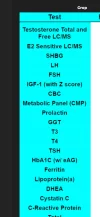
In the next couple weeks tops , i'm waiting to have my primary care doctor. Do my blood work that I request. I ask him to pull this panel twice a year and then the rest of the year. I do my own individual blood work that I see fit so between my nephrologist, PCP, and my own panels I pull, I get pretty good picture of my health in depth if you will oh and don't forget my DEXA scans that I do every once in a while, depending on what I wanna know
 

Attachments

  • IMG_3210.webp
    IMG_3210.webp
    65 KB · Views: 17
would you say is ok to jump straight at 10mg or is this the classic case of "we are all unique" ? thanks
Isn't 10mg max dose? Been on sema, tirz and ret well over a year, not simultaneously.. On glp1 site they start with the min dose and wait months to titrate up. I jump in the middle and titrate up every 2 weeks cuz I'm stupid. However alot of folks say watch the reta it builds up slow over a month and then comes on fast.... think I started with 4mg then 6 two weeks later, then 8mg after 4 or 5 weeks. They would never do that but im not a 180lb 5' female and feel I'm not the best responder.
 
Given I don't really see a way to get that LDL-shot, what single drug should I go for?
I guess Pitava is the most likely to show the significant effect, then Ezemtibe?

My GP will not prescribe me 3 different drugs at once. Not even sure about two of them.
 
Given I don't really see a way to get that LDL-shot, what single drug should I go for?
I guess Pitava is the most likely to show the significant effect, then Ezemtibe?

My GP will not prescribe me 3 different drugs at once. Not even sure about two of them.

Pita and Eze will drop your LDL 60-65% within a month, potentially even more. It'll improve all other lipid markers too, and lower systemic inflammation. You have a 99% chance of no sides whatsoever imo.

Most primary care physicians are years or decades behind the science (good cardiologists are on top of this stuff), and believe things should only be addressed after they go seriously wrong. Prevention. even more so "longevity" and "healthspan" are alien concepts to these people.

You should ask him if he follows the 2025 European Society of Cardiology guidelines, and if not, how old are the guidelines he does use.

IMG_2905.webp

TLDR: It's far better to reduce LDL earlier in life to prevent plaque buildup then to wait until after cardiovascular disease develops, the way it's done now. The main problem is that whether you are given 1, 2, or 3 classes of lipid lowering meds is based on a risk that's measured over the next 10 years. So sure, risk from 25-35 looks low, even with LDL levels we knew are building plaque in your arteries. They acknowledge what's coming. Lifetime risk formulas, which will clearly show how high LDL at 25 greatly increases risk in 20, or 30 years.

The main reason it's not been looked at that way is mainly money. They reserve the most effective treatments and lower LDL targets for people who are already so far gone they've had a heart attack or stroke. Not because some risk from the meds.

 
Ok, to make a long story short, I will get a prescription for Pita+Ezem.

Thanks to everyone insisting on me getting myself checked!
It raised my awareness about LDL, that I didn't have before, because no doctor said it would be something he is really worried about.


I still want to know more about using Reta in microdoses, because I really want to take this supposed miracle drug.^^
 
Ok, to make a long story short, I will get a prescription for Pita+Ezem.

Thanks to everyone insisting on me getting myself checked!
It raised my awareness about LDL, that I didn't have before, because no doctor said it would be something he is really worried about.


I still want to know more about using Reta in microdoses, because I really want to take this supposed miracle drug.^^
Then get on a low dose Reta and start "experimenting" like the rest of us, no way of telling how it will work for "you" , so start low and figure it out!
 
Then get on a low dose Reta and start "experimenting" like the rest of us, no way of telling how it will work for "you" , so start low and figure it out!
I already did and it was okay at .7mg a week or so in, but a few days after I increased to 1mg ew my appetite became negative.
And yes, I microdosed even that dose.

I guess the only thing I can now still try is to titrate up in .1mg steps, starting at .2-.3mg ew. But I seriously doubt that is going to work for me.
 
I already did and it was okay at .7mg a week or so in, but a few days after I increased to 1mg ew my appetite became negative.
And yes, I microdosed even that dose.

I guess the only thing I can now still try is to titrate up in .1mg steps, starting at .2-.3mg ew. But I seriously doubt that is going to work for me.
How do you know "it won't work for you " ? No sense in defeating yourself before you try, geez bro you're a debbie downer ;)
 
How do you know "it won't work for you " ? No sense in defeating yourself before you try, geez bro you're a debbie downer ;)
Dunno, I can only draw my conclusions from having already used it, with the outcome as described.

But I will need to get on Cyproheptadine or GHRP6 anyway. I don't like taking a drug for this, but the effect of not being able to eat, or regualrly is far more disastrous than anything else for my BB and also health in general.
 
I actually meant Cilnidipine because it not only lowers BP but also does, or at least can, remove plaque.
And high LDL-->plaque, isn't it?

Well among BP lowering meds it's one of the top 2 for improving lipids. Lowers LDL and Triglyceride, raises HDL slightly, insulin sensitivity improves a little. Ciln and Telm are the two best BP meds for improving but that's more of a bonus and not a primary effect.

To reverse plaque you have to drive LDL below 55, and that usually takes a statins unless your LDL is already below 80. Pitavastatin is the best of the statins for reversing plaque.
 
Sometimes off-label use for secondary effects is the whole point. It's not like I'm pinning all this shit cuz I actually have breast cancer, anemia, and osteoporosis. :p

I love a med that's good twofer, or threefer, lol.

Recent research is increasingly finding Amlodipine is associated with lower rates of all types of psychiatric / cognitive issues. Apparently many are related to calcium channel dysfunction in the frontal cortex.

Amlodipine works because it enters the brain (in tiny amounts). Now it's being considered as an alternate ADHD treatment.

As it turns out, Cilnidipine passes the blood brain barrier twice as effectively as Amlodipine.

Unfortunately Ciln hasn't been included in these studies (they're all US based so only using available CCBs). But in theory it should be much better than Amlodipine for this.

A lot of folks report just feeling better on Ciln, overall well being. I attributed that to the way Ciln blocks the release of adrenaline in response to stress (without sedation) but perhaps there'd even more than that going on...
 
Back
Top