Post up your Natty IGF-1 Level

But, I am not approaching glutathione with anything other than antioxidant properties as its benefits.
I use it for that and Inflammation and 200mg 3x a week was extremely effective. More is likely overdoing it without adding much benefit unless you’re running oral steroids or something seriously straining the liver.
 
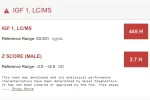
41 yo male. Never touched HGH.

Z score -1.2

Bottom 10% of peers.

If accompanied by low GH symptoms that are bad enough, it could be partial adult growth hormone deficiency.

It could also be from some temporary cause, you’d need a second test to confirm that you might have an issue.
 
Wtf is your problem? Comment on other people's numbers. You did the same shit last night on my post. My Z score is 0.0 btw

Pretty spicy for your first day here huh? :)

Its ok bro, I know it’s the disease talking

IMG_3453.webp


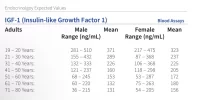
Some labs don’t show negative Z, the mean is 200 for a 41 year old and you’re far below that.

Go ahead and write your intro post the rules require. Whenever you can gather enough energy to do it, lol.
 
Before I ever started HGH last year, my IGF-1 was 84. My peak was 762 on 4iu.

That explains a lot. You may want to get IGFBP-1, 2, and 3 checked, out of curiosity if nothing else.

Then actual active IGF-1 can be calculated vs what’s being neutralized by 1 and 2. (3 only temporarily neutralizes, and extends IGF half life. 1 and 2 basically destroy IGF-1).

Often very low IGF-1 levels prime you for excessive binding protein production, which can be countered (lowering insulin for instance with a GLP), so you can benefit from the IGF you’re producing instead of It being, literally, pissed away.

The IGFBP tests are not expensive and available at any lab via the discount test services we use.
 
My level natty is 83, and I do not produce high IGF-1 numbers from injected growth hormone.

So . . . is all of our testing for IGF-1 useless without these other tests you are describing?
 
My level natty is 83, and I do not produce high IGF-1 numbers from injected growth hormone.

So . . . is all of our testing for IGF-1 useless without these other tests you are describing?

Not useless, but incomplete. Like total testosterone without checking free test (and shbg).

Two different people can have the same total IGF-1 but very different responses,

IGFBP-1 acts like a clamp, it binds IGF-1 and deactivates it. So it tells you how much IGF-1 is actually free and active. It changes with diet, stress, fasting, and insulin, which is why GH can feel stronger or weaker on different days even at the same dose.

IGFBP-3 level is useful for two reasons.

1. It performs the same function as SHBG does for testosterone. It acts like a “reservoir”, extending IGF-1 half life, keeping circulating levels stable by releasing it back into free, bioactive form as needed. If it’s low, IGF-1 isn’t going to work as well (levels drop fast because of short half life).

2. It’s a marker that tells you something is holding back the liver from making as much IGF-1 as possible (so you can look for the reason, ie, inflammation, liver disease, insulin issues, estrogen, etc.). If it’s high, that confirms liver IGF-1 production is optimal (for your liver, everyone has different max capacity) and you can stop chasing higher IGF-1, it’s as good as it’ll get for that dose of rHGH.

IGFBP-2 is similar to 1, but it’s a minor player and can be ignored (5-10% of IGFBP-1’s IGF-1 neutralizing effect). It changes slowly, and mostly driven by long term illness. Cancer, hiv, chronic kidney disease etc). So it’s useful to monitor if you’ve got a fat lab test budget, and if it rises can catch serious diseases long before they show obvious symptoms.

 
Last edited:
That explains a lot. You may want to get IGFBP-1, 2, and 3 checked, out of curiosity if nothing else.

Then actual active IGF-1 can be calculated vs what’s being neutralized by 1 and 2. (3 only temporarily neutralizes, and extends IGF half life. 1 and 2 basically destroy IGF-1).

Often very low IGF-1 levels prime you for excessive binding protein production, which can be countered (lowering insulin for instance with a GLP), so you can benefit from the IGF you’re producing instead of It being, literally, pissed away.

The IGFBP tests are not expensive and available at any lab via the discount test services we use.
How safe is it to keep IGF around 450? I tried asking ChatGPT and it told me that staying at 450 for a year or two is generally fine and that issues usually start showing up when you’re sitting around 700+. Should I lower the dose a bit, maybe run 1 to 1.5iu and stay in the 300–350 range instead?
 
How safe is it to keep IGF around 450? I tried asking ChatGPT and it told me that staying at 450 for a year or two is generally fine and that issues usually start showing up when you’re sitting around 700+. Should I lower the dose a bit, maybe run 1 to 1.5iu and stay in the 300–350 range instead?

Depends on age. Younger people have naturally higher levels and more tolerance for excess IGF-1. What matters is how much higher than physiological limit (Z score 2) IGF-1 is for your age. Within or slightly above (up to 3), essentially no risk.

The higher above 3, the shorter the time at that level before problems develop.

IMG_3486.webp

The question to ask is something like:

“Typical timeline of acromegaly effects at z score 4 vs 7” or whatever your specific Z score is.

*don’t use this chart as a guide, it’s only a rough estimate, precise Z score depends on the lab performing the IGF test.
 
Last edited:
Depends on age. Younger people have naturally higher levels and more tolerance for excess IGF-1. What matters is how much higher than physiological limit (Z score 2) IGF-1 is for your age. Within or slightly above (up to 3), essentially no risk.

The higher above 3, the shorter the time at that level before problems develop.

View attachment 361999

The question to ask is something like:

“Typical timeline of acromegaly effects at z score 4 vs 7” or whatever your specific Z score is.

*don’t use this chart as a guide, it’s only a rough estimate, precise Z score depends on the lab performing the IGF test.
How can you figure out your z score. Lab corp doesn't give it to me and when I go to their calculator it doesn't accept ages over 20. Fwiw last igf was 484 and I'm 40
 
How can you figure out your z score. Lab corp doesn't give it to me and when I go to their calculator it doesn't accept ages over 20. Fwiw last igf was 484 and I'm 40

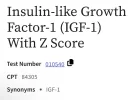
Next time you order the test, get the “With Z score” version. It’s the same price, just use the test number:

IMG_3547.webp

Labcorp’s adult Z score data isn’t made public. The only way to get it is with the test.


But from some broad ranges they publish in their testing guide we can estimate it’ll most likely be approx 6.6. (Correction).

IMG_3546.webp
 
Last edited:
50 year old male on TRT and Tirzepatide. IGF1 169 Z score .4.

Would my health benefit from 2 or 3 IUs a day? I train regularly, looking foe health and longevity.
 
50 year old male on TRT and Tirzepatide. IGF1 169 Z score .4.

Would my health benefit from 2 or 3 IUs a day? I train regularly, looking foe health and longevity.

We don’t know what your response will be, but imo Z score should guide your dose, rather than some arbitrary IU. If you want to stay within the same physiological limits an an endocrinologist would, similar to the way TRT is handled by a doctor, the target in an anti aging dose would be “high normal”, (z score 2) vs your current “low normal” level. This is a conservative level you can maintain for life without incurring the risks associated with excess IGF-1. I need 4iu to get there. You may only need 2iu.

2iu is often recommended starting point anyway (for PED users, lower in clinics), to reduce any initial side effects and allow your body to adjust, before increasing the dose. GH changes kidney function making it hang on to sodium, which leads to water retention, and sometimes minor joint issues. Water typically equalizes after a few weeks, sides, if any, go away, and then you can titrate up if needed.

The main issues that should steer you away from this are pre-diabetes and active cancer. Since you’re on a GLP the small impact on glucose should be no issue whatsoever at these doses of rHGH.

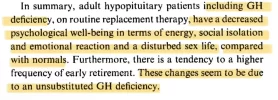
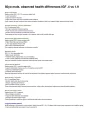
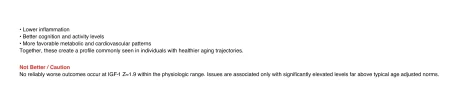
Here’s a summary of what’s seen clinically between 50 year old’s with natty IGF-1 Z Score of 0.4 vs 1.9.

IMG_3551.webpIMG_3552.webp
 
Last edited:
Back
Top