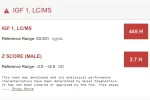
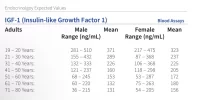
My level natty is 83, and I do not produce high IGF-1 numbers from injected growth hormone.
So . . . is all of our testing for IGF-1 useless without these other tests you are describing?
Not useless, but incomplete. Like total testosterone without checking free test (and shbg).
Two different people can have the same total IGF-1 but very different responses,
IGFBP-1 acts like a clamp, it binds IGF-1 and deactivates it. So it tells you how much IGF-1 is actually free and active. It changes with diet, stress, fasting, and insulin, which is why GH can feel stronger or weaker on different days even at the same dose.
IGFBP-3 level is useful for two reasons.
1. It performs the same function as SHBG does for testosterone. It acts like a “reservoir”, extending IGF-1 half life, keeping circulating levels stable by releasing it back into free, bioactive form as needed. If it’s low, IGF-1 isn’t going to work as well (levels drop fast because of short half life).
2. It’s a marker that tells you something is holding back the liver from making as much IGF-1 as possible (so you can look for the reason, ie, inflammation, liver disease, insulin issues, estrogen, etc.). If it’s high, that confirms liver IGF-1 production is optimal (for your liver, everyone has different max capacity) and you can stop chasing higher IGF-1, it’s as good as it’ll get for that dose of rHGH.
IGFBP-2 is similar to 1, but it’s a minor player and can be ignored (5-10% of IGFBP-1’s IGF-1 neutralizing effect). It changes slowly, and mostly driven by long term illness. Cancer, hiv, chronic kidney disease etc). So it’s useful to monitor if you’ve got a fat lab test budget, and if it rises can catch serious diseases long before they show obvious symptoms.