


cvictorg
New Member
Too much protein could lead to early death, study says - The Washington Post
Could too much protein put you on the path toward an early grave?
For middle-aged people who consume lots of meat, milk and cheese, the answer could be a resounding yes, according to a new study published Tuesday in the journal Cell Metabolism.
U.S. and Italian researchers tracked thousands of adults for nearly two decades and found that those who ate a diet high in animal proteins during middle age were four times more likely to die of cancer than contemporaries with low-protein diets -- a risk factor comparable to smoking. They also were several times more likely to die of diabetes, and nearly twice as likely to die in general.
“The great majority of Americans could reduce their protein intake,” said one of the study’s co-authors, Valter Longo, a University of Southern California gerontology professor and director of the school’s Longevity Institute. “The best change would be to lower the daily intake of all proteins, but especially animal-derived proteins.”
That advice comes with a caveat.
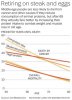
Even as researchers warned of the health risks of high-protein diets in middle age, they said eating more protein actually could be a smart move for people over 65. “At older ages, it may be important to avoid a low-protein diet to allow the maintenance of healthy weight and protection from frailty,” another co-author, USC gerontology professor Eileen Crimmins, said in a release detailing the findings.
Exactly how much protein belongs in the average diet has proven a topic of perpetual debate, one complicated by popular diets such as Atkins and Paleo, which rely heavily on animal-based proteins to help people shed weight. While such diets might succeed in that short-term goal, Longo said they could be leading to worse health down the road.
Part of the confusion, he argues, is that researchers too often have treated adulthood as a single period of life, rather than closely examining the many ways in which our bodies change as we grow older. In studying data about protein intake over many years, he says the picture becomes clearer: What’s good for you at one age might be harmful at another.
In the study published Tuesday, researchers defined a “high-protein” diet as one in which at least 20 percent of calories came from protein; a “low-protein” diet was defined as less than 10 percent. They found that even moderate amounts of protein consumption among middle-aged people had detrimental effects over time, a result that held true across ethnic, educational and health backgrounds.
Longo said many middle-aged Americans, along with an increasing number of people around the world, are eating twice and sometimes three times as much protein as they need, with too much of that coming from animals rather than plant-based foods such as nuts, seeds and beans.
He said adults in middle age would be better off adhering to the recommendation of several top health agencies to consume about 0.8 grams of protein per kilogram of body weight each day -- roughly 55 grams for a 150-pound person, or the equivalent of an 8-ounce piece of meat or several cups of dry beans.
Ideally, Longo said, Americans would start following the example of the inhabitants in the small, southern Italian town of Molochilo, home to one of the highest rates of centenarians in the world. Their secret: For much of their lives, a large number of villagers maintained a low-protein, plant-based diet. In their older years, many ended up moving in with their children and eating higher-protein diets more common today. Whether on purpose or by happenstance, they seem to have hit on the ideal recipe for a long life.
“There is no harm,” Longo said, “in eating the way our grandparents used to eat.”
Low-Protein Diet May Extend Lifespan | Science/AAAS | News
A new theory about the foods that can extend life is taking shape, and it’s sure to be a controversial one. Two studies out this week, one in mice and another primarily in people, suggest that eating relatively little protein and lots of carbohydrates—the opposite of what’s urged by many human diet plans, including the popular Atkins Diet—extends life and fortifies health.
The research challenges other common wisdom, too. The authors of both studies believe that calorie restriction, a drastic diet that helps mice and other species live much longer than normal, may work not because it slashes calorie intake, but mostly because it cuts down on protein. They also speculate that the low-protein/high-carbohydrate balance that appears to extend life in the two studies, published in Cell Metabolism, could clarify why slightly plump people live longer on average than skinny ones—something epidemiologists have been hard-pressed to explain.
“If these two studies are really correct, what people in general are trying to do” to get and stay thin “might be completely wrong in terms of maintaining health and even longevity,” says Shin-ichiro Imai, a molecular biologist at Washington University in St. Louis who studies aging
The “if” is a big one, however. The interplay between diet and health is extraordinarily complicated, and protein diets in particular have sparked confusion. On the one hand, some researchers have found a correlation between consuming lots of protein and heart disease. On the other, high-protein diets have been linked to improved metabolic profiles, such as lower blood glucose levels. Teasing out the role of protein versus total calories or carbohydrates is no easy task. “There are a whole lot of variables here,” says Cynthia Kenyon, who studies the biology of aging at the University of California, San Francisco.
An Australian group led by nutritional physiologist Stephen Simpson and biogerontologist David Le Couteur at the University of Sydney tried to clear up some of the confusion by assigning 858 mice to one of 25 diets with different mixes of protein, carbs, fats, and fiber. All were allowed to eat as much as they wanted.
The mice whose diets included 5% to 15% protein and 40% to 60% carbohydrates lived the longest, up to 150 weeks compared with 100 weeks for those on a diet of about 50% protein. By comparison, Americans on average take in about 16% of their calories from protein. The animals on the low-protein/high-carb plan also had lower blood pressure, better glucose tolerance, and healthier cholesterol. (Levels of fat in their diet didn’t seem to make much difference.)
The second study, led by gerontology researcher Valter Longo and graduate student Morgan Levine at the University of Southern California in Los Angeles, focused on data from 6381 adults over 50 years old who were interviewed once about their diet as part of NHANES, a national survey of health and nutrition. Longo’s team used death records to conclude that those under 65 whose self-reported diets they classified as high-protein—the participants said at least 20% of their calories came from protein—were at much higher risk of illness and death than a group who took in 10% or fewer of their calories from protein. The high-protein eaters were more than four times as likely to die from cancer over the 18 years after they were surveyed, and 75% more likely to die of any cause.
Those leaping to grab a breadstick instead of sausage should note, however, that as the NHANES cohort aged, protein became more important. In the over-65 crowd, those who ate lots of protein survived longer, on average, than those who ate less. Geriatricians, Longo says, have long extolled the value of protein in older people, and “they’re right.” Longo and Imai speculate that elderly individuals may be less likely to absorb the protein they take in, so need more of it.
The findings do fit with some molecular clues. Cutting protein intake is known to reduce levels of a growth factor called IGF-1, and lower IGF-1 levels are linked to longer lifespan and reductions in the risk of cancer and diabetes. Limiting protein intake also reduces levels of a protein called mTOR, and lower mTOR extends life in mice. The Australians saw the mTOR effect in their animals. Longo’s team, testing stored samples from the survey participants, saw that higher IGF-1 levels correlated with more dietary protein.
“There’s certainly some truth to this relationship” between protein consumption and lifespan, says Matt Kaeberlein, a molecular biologist at the University of Washington, Seattle, who studies longevity. “But it’s probably overly simplistic to say that everyone should go on a low-protein diet at this point.” Among the many caveats, for example, is that the mouse study used a single strain, though different strains can have different reactions to diets such as calorie restriction.
Kaeberlein also thinks it’s unlikely that reduced protein alone explains the dramatic impact of calorie restriction on lifespan. Le Couteur wants to find out for sure: He and his colleagues are planning a study that pits a low-protein/high-carb diet head-to-head with restricted calories, to see which mice live the longest.
High-Protein Diet Raises Cancer Risk As Much As Smoking | LiveScience
To investigate why there may be a link between protein consumption and cancer, the researchers looked at mice that were injected with mouse skin cancer cells. They showed that a high amount of protein in the mouse diet promoted the tumor's survival and growth by increasing the levels of a growth hormone, called IGF-1.
The researchers also measured the levels of IGF-1 for 2,000 people, randomly selected among those in their study, and found that for every 10 nanograms per milliliter increase in IGF-1, those on a high-protein diet were 9 percent more likely to die of cancer than those on a low-protein diet.
"When you have a lot of protein, these growth factors go up, and we've shown that they help normal cells become cancer-like cells, and then they help the cells grow," Longo said.
Study: Eating Meat and Cheese as Deadly as Smoking | American News Report
In a study of tumor rates and progression among mice, the researchers show lower cancer incidence and 45 percent smaller average tumor size among mice on a low-protein diet than those on a high-protein diet by the end of the two-month experiment.
“Almost everyone is going to have a cancer cell or pre-cancer cell in them at some point. The question is: Does it progress?” Longo said. “Turns out one of the major factors in determining if it does is is protein intake.”
Could too much protein put you on the path toward an early grave?
For middle-aged people who consume lots of meat, milk and cheese, the answer could be a resounding yes, according to a new study published Tuesday in the journal Cell Metabolism.
U.S. and Italian researchers tracked thousands of adults for nearly two decades and found that those who ate a diet high in animal proteins during middle age were four times more likely to die of cancer than contemporaries with low-protein diets -- a risk factor comparable to smoking. They also were several times more likely to die of diabetes, and nearly twice as likely to die in general.
“The great majority of Americans could reduce their protein intake,” said one of the study’s co-authors, Valter Longo, a University of Southern California gerontology professor and director of the school’s Longevity Institute. “The best change would be to lower the daily intake of all proteins, but especially animal-derived proteins.”
That advice comes with a caveat.
Even as researchers warned of the health risks of high-protein diets in middle age, they said eating more protein actually could be a smart move for people over 65. “At older ages, it may be important to avoid a low-protein diet to allow the maintenance of healthy weight and protection from frailty,” another co-author, USC gerontology professor Eileen Crimmins, said in a release detailing the findings.
Exactly how much protein belongs in the average diet has proven a topic of perpetual debate, one complicated by popular diets such as Atkins and Paleo, which rely heavily on animal-based proteins to help people shed weight. While such diets might succeed in that short-term goal, Longo said they could be leading to worse health down the road.
Part of the confusion, he argues, is that researchers too often have treated adulthood as a single period of life, rather than closely examining the many ways in which our bodies change as we grow older. In studying data about protein intake over many years, he says the picture becomes clearer: What’s good for you at one age might be harmful at another.
In the study published Tuesday, researchers defined a “high-protein” diet as one in which at least 20 percent of calories came from protein; a “low-protein” diet was defined as less than 10 percent. They found that even moderate amounts of protein consumption among middle-aged people had detrimental effects over time, a result that held true across ethnic, educational and health backgrounds.
Longo said many middle-aged Americans, along with an increasing number of people around the world, are eating twice and sometimes three times as much protein as they need, with too much of that coming from animals rather than plant-based foods such as nuts, seeds and beans.
He said adults in middle age would be better off adhering to the recommendation of several top health agencies to consume about 0.8 grams of protein per kilogram of body weight each day -- roughly 55 grams for a 150-pound person, or the equivalent of an 8-ounce piece of meat or several cups of dry beans.
Ideally, Longo said, Americans would start following the example of the inhabitants in the small, southern Italian town of Molochilo, home to one of the highest rates of centenarians in the world. Their secret: For much of their lives, a large number of villagers maintained a low-protein, plant-based diet. In their older years, many ended up moving in with their children and eating higher-protein diets more common today. Whether on purpose or by happenstance, they seem to have hit on the ideal recipe for a long life.
“There is no harm,” Longo said, “in eating the way our grandparents used to eat.”
Low-Protein Diet May Extend Lifespan | Science/AAAS | News
A new theory about the foods that can extend life is taking shape, and it’s sure to be a controversial one. Two studies out this week, one in mice and another primarily in people, suggest that eating relatively little protein and lots of carbohydrates—the opposite of what’s urged by many human diet plans, including the popular Atkins Diet—extends life and fortifies health.
The research challenges other common wisdom, too. The authors of both studies believe that calorie restriction, a drastic diet that helps mice and other species live much longer than normal, may work not because it slashes calorie intake, but mostly because it cuts down on protein. They also speculate that the low-protein/high-carbohydrate balance that appears to extend life in the two studies, published in Cell Metabolism, could clarify why slightly plump people live longer on average than skinny ones—something epidemiologists have been hard-pressed to explain.
“If these two studies are really correct, what people in general are trying to do” to get and stay thin “might be completely wrong in terms of maintaining health and even longevity,” says Shin-ichiro Imai, a molecular biologist at Washington University in St. Louis who studies aging
The “if” is a big one, however. The interplay between diet and health is extraordinarily complicated, and protein diets in particular have sparked confusion. On the one hand, some researchers have found a correlation between consuming lots of protein and heart disease. On the other, high-protein diets have been linked to improved metabolic profiles, such as lower blood glucose levels. Teasing out the role of protein versus total calories or carbohydrates is no easy task. “There are a whole lot of variables here,” says Cynthia Kenyon, who studies the biology of aging at the University of California, San Francisco.
An Australian group led by nutritional physiologist Stephen Simpson and biogerontologist David Le Couteur at the University of Sydney tried to clear up some of the confusion by assigning 858 mice to one of 25 diets with different mixes of protein, carbs, fats, and fiber. All were allowed to eat as much as they wanted.
The mice whose diets included 5% to 15% protein and 40% to 60% carbohydrates lived the longest, up to 150 weeks compared with 100 weeks for those on a diet of about 50% protein. By comparison, Americans on average take in about 16% of their calories from protein. The animals on the low-protein/high-carb plan also had lower blood pressure, better glucose tolerance, and healthier cholesterol. (Levels of fat in their diet didn’t seem to make much difference.)
The second study, led by gerontology researcher Valter Longo and graduate student Morgan Levine at the University of Southern California in Los Angeles, focused on data from 6381 adults over 50 years old who were interviewed once about their diet as part of NHANES, a national survey of health and nutrition. Longo’s team used death records to conclude that those under 65 whose self-reported diets they classified as high-protein—the participants said at least 20% of their calories came from protein—were at much higher risk of illness and death than a group who took in 10% or fewer of their calories from protein. The high-protein eaters were more than four times as likely to die from cancer over the 18 years after they were surveyed, and 75% more likely to die of any cause.
Those leaping to grab a breadstick instead of sausage should note, however, that as the NHANES cohort aged, protein became more important. In the over-65 crowd, those who ate lots of protein survived longer, on average, than those who ate less. Geriatricians, Longo says, have long extolled the value of protein in older people, and “they’re right.” Longo and Imai speculate that elderly individuals may be less likely to absorb the protein they take in, so need more of it.
The findings do fit with some molecular clues. Cutting protein intake is known to reduce levels of a growth factor called IGF-1, and lower IGF-1 levels are linked to longer lifespan and reductions in the risk of cancer and diabetes. Limiting protein intake also reduces levels of a protein called mTOR, and lower mTOR extends life in mice. The Australians saw the mTOR effect in their animals. Longo’s team, testing stored samples from the survey participants, saw that higher IGF-1 levels correlated with more dietary protein.
“There’s certainly some truth to this relationship” between protein consumption and lifespan, says Matt Kaeberlein, a molecular biologist at the University of Washington, Seattle, who studies longevity. “But it’s probably overly simplistic to say that everyone should go on a low-protein diet at this point.” Among the many caveats, for example, is that the mouse study used a single strain, though different strains can have different reactions to diets such as calorie restriction.
Kaeberlein also thinks it’s unlikely that reduced protein alone explains the dramatic impact of calorie restriction on lifespan. Le Couteur wants to find out for sure: He and his colleagues are planning a study that pits a low-protein/high-carb diet head-to-head with restricted calories, to see which mice live the longest.
High-Protein Diet Raises Cancer Risk As Much As Smoking | LiveScience
To investigate why there may be a link between protein consumption and cancer, the researchers looked at mice that were injected with mouse skin cancer cells. They showed that a high amount of protein in the mouse diet promoted the tumor's survival and growth by increasing the levels of a growth hormone, called IGF-1.
The researchers also measured the levels of IGF-1 for 2,000 people, randomly selected among those in their study, and found that for every 10 nanograms per milliliter increase in IGF-1, those on a high-protein diet were 9 percent more likely to die of cancer than those on a low-protein diet.
"When you have a lot of protein, these growth factors go up, and we've shown that they help normal cells become cancer-like cells, and then they help the cells grow," Longo said.
Study: Eating Meat and Cheese as Deadly as Smoking | American News Report
In a study of tumor rates and progression among mice, the researchers show lower cancer incidence and 45 percent smaller average tumor size among mice on a low-protein diet than those on a high-protein diet by the end of the two-month experiment.
“Almost everyone is going to have a cancer cell or pre-cancer cell in them at some point. The question is: Does it progress?” Longo said. “Turns out one of the major factors in determining if it does is is protein intake.”
Attachments
Last edited:


