Perimenopause and menopause treatment options/best practices

bananafeet

Member
I couldn't actually find the correct forum to post it, so I will post it here.

So I've been looking into female health and especially the prolonged period of perimenopause/menopause which seems to be an extended period of up to 10 years where the female body undergoes the most drastic changes since puberty.

It seems to be the case that women have never lived so long, and have never delayed having children for so long. This means that for the first time in a long time two things are happening at once:
1. Extended period of periods/menstruation and the associated hormone fluctuations wreaking havoc on mental health
2. Extended period of infertility/menopausal which can actually be longer than the peak fertile period (18-35)

It's well established that breastfeeding and pregnancy stabilise the hormonal system. So up until now women probably haven't been exposed to this many periods or this extended post menopausal stage.

It seems mother nature never intended these things to happen. Furthermore not to happen all at once.

So the question is how do we prepare to look after a women peri and menopausal for 40+ years.

The treatment options aren't great either. I will collect the data here as I go.

But as far as I've got is estrodial cream and progesterone cream or injections are the only long term viable options. They need to be cycled to imitate the menstrual cycle even tho the fertility is gone.

This is due to the antagonistic behaviour of progesterone on the ER and the prolific effects of E2 on the uterus.
 
My wife began perimenopause about a year ago. We got all her labs done with good labs, and then started self guided treatment. She started with 5 mg test C per week, and that got rid of the hot flashes. She’s on 10mg a week now and that puts her at the top of women’s normal total test range. After a couple months with the test stable, she started on Estrodial cypionate. We slowly worked up the dose to get her mid-high normal e2 range for a woman. She feels great now. Energy, libido, mood are all like she was when she was young. She hasn’t had to mess with progesterone pills, but I know a lot do. My advice would be to slowly optimize one variable at a time, and when it’s in a steady state, work on optimizing another.
 
My wife began perimenopause about a year ago. We got all her labs done with good labs, and then started self guided treatment. She started with 5 mg test C per week, and that got rid of the hot flashes. She’s on 10mg a week now and that puts her at the top of women’s normal total test range. After a couple months with the test stable, she started on Estrodial cypionate. We slowly worked up the dose to get her mid-high normal e2 range for a woman. She feels great now. Energy, libido, mood are all like she was when she was young. She hasn’t had to mess with progesterone pills, but I know a lot do. My advice would be to slowly optimize one variable at a time, and when it’s in a steady state, work on optimizing another.
My understanding is that the progesterone is required to deal with the uterus lining being stimulated by estrogen.

This is why women have cycles of estrogen and progesterone. Testosterone is generally the most stable hormone in their system.

I'm still learning all this shit. But yes one hormone at a time is probably the best bet.

There are gels available for testosterone and estrogen. My understanding is the gel has probably less chance of virilisation due to the reduced exposure time. Even then I'd be cautious as virilisation is permanent....

 
It’s hard to find a doctor actually knowledgeable on women’s hormones. Most just want to give them pellet implants and be done. You’ll probably have to go through a lot of doctors to find the right one for her. Most likely a younger specialist in a larger city. Most older doctors either don’t keep up with new studies or are just burned out and don’t care. I read through the website you linked and it does look like progesterone is important for the uterus. My wife has had a partial hysterectomy, so she still has her ovaries, but no uterus.
 
Progesterone does not need to be cycled. You can if you want, if you still want a period, but you don’t have to.

Also, oral progesterone can be stuffed in any hole. If oral progesterone makes you crazy (and for some women it’s a for real crazy), try vaginally. If you’re sexually active and don’t know if you want to mess with timing it vaginally, administer the capsules anally.
 
Progesterone does not need to be cycled. You can if you want, if you still want a period, but you don’t have to.

Also, oral progesterone can be stuffed in any hole. If oral progesterone makes you crazy (and for some women it’s a for real crazy), try vaginally. If you’re sexually active and don’t know if you want to mess with timing it vaginally, administer the capsules anally.
Progesterone is directly antagonistic to estradiol in some tissues.

Continuously using it may oppose some of the positive effects of estradiol. This is why it's may be better to cycle it. Taking it only during the second half of the cycle.

The oral micronised progesterone is converted by first pass metabolism into allopregnanolone. This is some women has been linked to mood disorders [1]. It has been theorised to be behind PMS and PMDD.

Unfortunately the vaginal route doesn't result in reliable systemic circulation and the injectable form doesn't have an ester - so it doesn't provide a steady supply.

Progesterone and progestins in general also bind to the AR (think tren, nandralone):

"Depending on thederivative molecule (either P or testosterone, T) some progestins bind to androgen receptors (AR) as well,inducing either androgenic or anti-androgenic effects.Molecules similar to the native hormone P may exert a competitive inhibition to the mineralocorticoidreceptor and some derivatives of 17-hydroxy progesterone or testosterone may exert glucocorticoid-likeeffects."
[2]

Because of this continuous progesterone supplementation MAY potentially interfere with testosterone signalling and anabolic benefits.


Sources:
1. https://www.sciencedirect.com/science/article/abs/pii/S0301008213000671
"Conclusion: These findings suggest that negative mood symptoms in women with PMDD are caused bythe paradoxical effect of allopregnanolone mediated via the GABA-A receptor."

2. Redirecting Pharmacological profile of progestins
 
I’ve been on hrt for just over 2y and take progesterone daily, still having a monthly cycle. I tried cycling in the beginning but slept like shit, and currently use both oral and injections. Kept having mid cycle bleeding, and wasn’t interested in inserting it daily. Oral still helps with sleep though, so I was prescribed both forms. Could change after meno, who knows. I hope it does, I hate progesterone. I fill my rx p, but use IN pharm because it’s in an eo base, and the rx form has history of pip and knots. My hscrp is .2mg/l, never been an issue.

Progesterone exists in creams and gels, I was prescribed it in a pregnancy, couldn’t do oral because of hyperemesis and didn’t have the energy for injx. Nunya’s right, oral can be used as a suppository for endometrial protection, most data is going to be found in pregnancy/infertility research, and using it this way is considered off label. Some women have poor oral absorption, can’t get serum levels high enough to control bleeding, or want to avoid first liver pass side effects.

Including one link, but there are more if you wanna search. British meno society has put info out online, too. Don’t have it handy, just recall reading it before.


Amy Killen, Corrine Menn, Noor Al-Humaidhi, and Louise Newsom, are drs active on insta who have talked about oral p intolerance and suppository use. If you’re on there and search progesterone intolerance, their accounts should come up. Kelly Casperson, Rachel Rubin, Jordan Emont, Menopause and Taylor, are a few others that I like. Some of these have books or podcasts. Rubin did a podcast with Peter Attia a few months ago that was easy to follow. If you’re interested in brain health and women, Lisa Mosconi is another excellent one to follow. She just did a podcast with Attia and authored a book.

Just a note, reading data can be tricky since it typically doesn’t differentiate between synthetic and bioidentical forms. There’s been some good discussion on hrt in this sub if you haven’t seen them yet.

Last thing is iirc, serum estrogen needs to be minimum 60pg/ml for osteoporosis prevention. I don’t remember the number, but bone remodeling was at a higher serum, I believe around 100. I prefer higher with levels above 200 for symptom relief, using eod e cyp injx.
 
Last edited:
I’ve been on hrt for just over 2y and take progesterone daily, still having a monthly cycle. I tried cycling in the beginning but slept like shit, and currently use both oral and injections. Kept having mid cycle bleeding, and wasn’t interested in inserting it daily. Oral still helps with sleep though, so I was prescribed both forms. Could change after meno, who knows. I hope it does, I hate progesterone. I fill my rx p, but use IN pharm because it’s in an eo base, and the rx form has history of pip and knots.

Progesterone exists in creams and gels, I was prescribed it in a pregnancy, couldn’t do oral because of hyperemesis and didn’t have the energy for injx. Nunya’s right, oral can be used as a suppository for endometrial protection, most data is going to be found in pregnancy/infertility research, and using it this way is considered off label. Some women have poor oral absorption, can’t get serum levels high enough to control bleeding, or want to avoid first liver pass side effects.

Including one link, but there are more if you wanna search. British meno society has put info out online, too. Don’t have it handy, just recall reading it before.


Amy Killen, Corrine Menn, Noor Al-Humaidhi, and Louise Newsom, are drs active on insta who have talked about oral p intolerance and suppository use. If you’re on there and search progesterone intolerance, their accounts should come up. Kelly Casperson, Rachel Rubin, Jordan Emont, Menopause and Taylor, are a few others that I like. Some of these have books or podcasts. Rubin did a podcast with Peter Attia a few months ago that was easy to follow. If you’re interested in brain health and women, Lisa Mosconi is another excellent one to follow. She just did a podcast with Attia and authored a book.

Just a note, reading data can be tricky since it typically doesn’t differentiate between synthetic and bioidentical forms. There’s been some good discussion on hrt in this sub if you haven’t seen them yet.

Last thing is iirc, serum estrogen needs to be minimum 60pg/ml for osteoporosis prevention. I don’t remember the number, but bone remodeling was at a higher serum, I believe around 100. I prefer higher with levels above 200 for symptom relief, using eod e cyp injx.
Wow thanks for the very comprehensive reply.

I wasn't aware of the data on vaginal progesterone. Seems to have less side effects than the oral route. I know the vaginal estrogens seem to work in a similar way (avoid large systemic circulation and target the needed tissues).

I have gotten most of my information from the following women:
Felice Gersh, MD
Jayashri Kulkarni

If I get time I will look into the others.

Out of curiosity how much estrogen cypionate are you taking to achieve the levels you find effective?

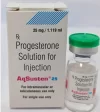
Also have you tried progesterone suspension?
 

Attachments

  • 1769675760538.webp
    1769675760538.webp
    27.3 KB · Views: 0
Back
Top