


ChemBB
Member
Welcome to "Mythbusters" Part 2: The Fentanyl Conspiracy
In this edition, we're dismantling one of the most bizarre myths circulating in the community!
"Masteron and Primobolan share synthesis precursors or reagents with fentanyl and other synthetic opioids."
The Core Problem: Completely Different Chemical Classes
Let's be clear: AAS are derivatives of testosterone with a characteristic four-ring steroid nucleus (the gonane skeleton).
Fentanyl is a synthetic phenylpiperidine opioid. It's structurally related to piperidine.
These are as chemically different as caffeine and testosterone. They don't share:
Synthesis Reality Check
AAS Synthesis (Masteron/Primobolan):
Anabolic steroids are semi-synthetic derivatives starting from steroid precursors.
Key reagents include things like acetic anhydride for acetylation, oxidizing agents (Jones reagent, PCC), and catalysts for specific transformations.
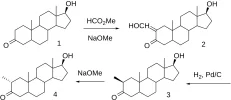
Masteron is most easily produced via DHT as the starting material
The Wiki page even lists this as the canonical synthesis method:
Fentanyl Synthesis:
Fentanyl is synthesized from completely different starting materials:
Why This Myth is Chemically Illiterate
Let's use an analogy:
Claiming Masteron and fentanyl share synthesis precursors because both syntheses might use acetic anhydride is like claiming:
You cannot accidentally synthesize a steroid when trying to make an opioid, or vice versa. The core scaffolds are built through entirely different chemical logic.
There is no convergent pathway where "oops, we added the wrong reagent and got fentanyl instead of Masteron."
Thanks for attending my TED talk.
In this edition, we're dismantling one of the most bizarre myths circulating in the community!
"Masteron and Primobolan share synthesis precursors or reagents with fentanyl and other synthetic opioids."
The Core Problem: Completely Different Chemical Classes
Let's be clear: AAS are derivatives of testosterone with a characteristic four-ring steroid nucleus (the gonane skeleton).
Fentanyl is a synthetic phenylpiperidine opioid. It's structurally related to piperidine.
These are as chemically different as caffeine and testosterone. They don't share:
- Core molecular scaffolds
- Functional groups
- Biosynthetic or synthetic precursors
- Manufacturing reagents of any significance
Synthesis Reality Check
AAS Synthesis (Masteron/Primobolan):
Anabolic steroids are semi-synthetic derivatives starting from steroid precursors.
Key reagents include things like acetic anhydride for acetylation, oxidizing agents (Jones reagent, PCC), and catalysts for specific transformations.
Masteron is most easily produced via DHT as the starting material
The Wiki page even lists this as the canonical synthesis method:
Fentanyl Synthesis:
Fentanyl is synthesized from completely different starting materials:
- N-phenethyl-4-piperidone (NPP or "4-ANPP")
- Aniline derivatives
- Propionyl chloride or propionic anhydride for the amide formation
Why This Myth is Chemically Illiterate
Let's use an analogy:
Claiming Masteron and fentanyl share synthesis precursors because both syntheses might use acetic anhydride is like claiming:
- Cars and bicycles are made from the same materials because both use metal and rubber
- A skyscraper and a wooden shed are identical because both require hammers during construction
You cannot accidentally synthesize a steroid when trying to make an opioid, or vice versa. The core scaffolds are built through entirely different chemical logic.
There is no convergent pathway where "oops, we added the wrong reagent and got fentanyl instead of Masteron."
Thanks for attending my TED talk.


