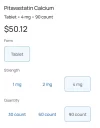
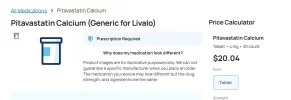
Damn, kind of is funny they cover all that but won't cover simple Pitavastatin. A generic version very recently appeared in the USA.
Yes - it's called Zypitamag. And while it is cheaper than Livalo, it's still
very expensive and insurance won't generally pay for it, because Rosuvastatin is cheap and works well. There is a Zypitamag manufacturer program through a NC pharmacy which I tried to use, but they refused to honor a self-written prescription, expected with a controlled drug but never heard of that with something like a statin. So... I'm getting it from India.
Pitvastatin is 1.7x as potent as rosuvastatin on a mg-per-mg basis, is essentially free of one major statin adverse effect (insulin resistance and possible NODM), is superior at raising HDL, and has fewer drug interactions. It is also lipophilic as opposed to hydrophilic, which is a sort of a mixed bag... there is better distribution throughout the body for the beneficial/pleiotropic effects (ie anti-inflammation, antineoplastic, neuroprotection, endothelial health, plaque stabilization) but theoretically this can cause more muscle symptoms. But in practice the opposite seems to be reported, with Pitavastatin less likely to cause muscle issues compared to rosuvastatin - perhaps because lower equivalent dosages are typically prescribed. Pitavastatin is available as used at 1, 2, or 4mg/day while Rosuvastatin is 5, 10, 20, or 40mg/day.
Potency equivalents:
2mg Pitavastatin ~ 5mg rosuvastatin
4mg Pitavastatin ~ 10mg rosuvastatin
I see physicians commonly prescribing rosuvastatin at 20mg or even 40mg per day which I think is absurd. There are diminishing returns after 5-10mg, where the therapeutic effect approaches a plateau while side effects go up exponentially. For rosuvastatin there is just no need to go beyond 10mg/day. If more LDL lowering is needed, then potentiate with ezetimibe and/or bempedoic acid.
I think men with supraphysiologic androgens (test or whatever, it doesn't really matter) should suppress their LDL < 55, at which point HDL becomes largely irrelevant. Doing this and keeping BP well controlled should mitigate most cardiovascular risks. All AAS inherently raise LDL and lower HDL, skewing the lipid profile towards atherogenesis, so this is important to control when using these compounds long term. Controlling initiating factors like systemic inflammation are important too, but that is another whole topic.
Statins also deplete coenzymeQ, so supplemention is important. I recommend 400-600mg per day of ubiquinol - which is the form with best oral bioavailability - along with 40mg PQQ. If you can afford it a full mitochondrial stack is great and helps with anti-aging and keeping inflammatory levels low, this is my current one:
Inj:
SS-31 2.5mg/day
MOTS-C 1mg/day
SR9009 30mg/day
GW510516 8mg/day
L-carnitine 600mg/day
Oral:
Ubiquinol 400-600mg
PQQ 40mg
Pycnogenol 100-200mg/day
Astaxanthin 12mg/day
Methylene Blue 100mg/day\