

MESO-Rx
Anabolic Steroids

Navigation
Install the app
How to install the app on iOS
Follow along with the video below to see how to install our site as a web app on your home screen.
Note: This feature may not be available in some browsers.
More options
Style variation
Guest viewing limit reached
- You have reached the maximum number of guest views allowed
- Please register below to remove this limitation
- Already a member? Click here to login
You are using an out of date browser. It may not display this or other websites correctly.
You should upgrade or use an alternative browser.
You should upgrade or use an alternative browser.
In The $$$MONEY$$$
- Thread starter Michael Scally MD
- Start date

Re: I Am In The $$$MONEY$$$
The Wall Street Gene
What makes a top trader? Researchers point to dopamine
Jonah Lehrer on Genetics, Dopamine and Wall Street | Head Case - WSJ.com
It's been a tough few years for Wall Street. Traders got big bonuses for taking foolish risks, while taxpayers got stuck with the bill. But without the financial industry's machinations, Facebook couldn't go public, your neighbor couldn't get a mortgage and we'd all be stuck buying cars with cash.
This raises the obvious question: How can we ensure that Wall Street doesn't get carried away as it did before the 2008 meltdown? That traders aren't seduced by foolish risks in the near future?
One approach has been increased governmental regulation, such as the Dodd-Frank Act of 2010, which attempts to reign in the excesses of the financial industry with new rules and restrictions. Only time will tell if this strategy works.
A different approach to reducing the irrationality of Wall Street can be found in new research led by Steve Sapra and Paul Zak, neuroeconomists at Claremont Graduate University. Dr. Zak got the idea for the paper after spending time with leading analysts and traders at a conference. "These guys are a pretty weird bunch," he says. "They're very rational and very competitive."
Dr. Zak wanted to see if he could find the genetic signature of this personality type. Did certain genes correlate with investment success? What's the difference between the prudent decisions of somebody like Warren Buffett—he's famously unwilling to invest in bubbles—and the reckless bets that cause so many other traders to lose vast sums of money?
There was reason to think that such a link might exist. Previous research had shown, for instance, that 29% of the variation in whether or not people invest in stocks depends on their DNA. Studies of professional traders had demonstrated that approximately 25% of individual variation in portfolio risk is due to genetics. Other scientists had found correlations between testosterone levels and risk-taking—more hormone equals more risk—and shown that, at least among London traders, men with higher hormone levels in the morning generate larger profits.
Drs. Sapra and Zak began by analyzing the genes of 60 professional traders working in five major Wall Street firms. (They collected the DNA samples in 2008—only three of the firms are still in business.) The scientists focused on a short list of genes that are known to affect the activity of dopamine, a neurotransmitter in the brain.
In recent years, it's become clear that dopamine helps to regulate decisions involving risk and reward, allowing us to experience both the thrill of getting what we want and the pain of losing it all.
Consider the decision to invest in an initial public offering. As Dr. Zak notes, these investment offerings are pretty exciting, leading "to lots of dopamine activity," he says. "There's the thrill of novelty and the potential for a big future reward." The problem, however, is that 63% of newly public companies fail within 10 years.
The challenge for investors, then, is to balance the allure of the new stock against the risk that the company might go bankrupt. Such calculations are often extremely difficult, even for experienced traders.
So what did the scientists find? It turned out that successful traders—Drs. Zak and Sapra measured success in terms of longevity on Wall Street—tended to hit a sweet spot of dopamine activity; their genes kept them from experiencing either very high or very low levels of the molecule. These prosperous professionals were much more likely to have so-called Goldilocks genes, placing them solidly in the middle of the dopamine distribution.
"The best traders are willing to take risks," Dr. Zak says. "They definitely want to make lots of money. But they're also able to take a long-term perspective and check their impulses. Being able to balance these competing interests seems to require a balanced dopamine system."
Dr. Zak notes that it's far too soon to use his genetic assay as a hiring tool—the results still need to be replicated. Still, it's possible to imagine a future in which the financial sector requires less oversight because firms have found a way to hire more prudent employees.
Given the massive amounts of money at stake, spending a few hundred dollars on a DNA kit might strike Wall Street as a particularly wise investment.
Sapra S, Beavin LE, Zak PJ. A Combination of Dopamine Genes Predicts Success by Professional Wall Street Traders. PLoS ONE 2012;7(1):e30844. PLoS ONE: A Combination of Dopamine Genes Predicts Success by Professional Wall Street Traders
What determines success on Wall Street? This study examined if genes affecting dopamine levels of professional traders were associated with their career tenure. Sixty professional Wall Street traders were genotyped and compared to a control group who did not trade stocks. We found that distinct alleles of the dopamine receptor 4 promoter (DRD4P) and catecholamine-O-methyltransferase (COMT) that affect synaptic dopamine were predominant in traders. These alleles are associated with moderate, rather than very high or very low, levels of synaptic dopamine. The activity of these alleles correlated positively with years spent trading stocks on Wall Street. Differences in personality and trading behavior were also correlated with allelic variants. This evidence suggests there may be a genetic basis for the traits that make one a successful trader.
The Wall Street Gene
What makes a top trader? Researchers point to dopamine
Jonah Lehrer on Genetics, Dopamine and Wall Street | Head Case - WSJ.com
It's been a tough few years for Wall Street. Traders got big bonuses for taking foolish risks, while taxpayers got stuck with the bill. But without the financial industry's machinations, Facebook couldn't go public, your neighbor couldn't get a mortgage and we'd all be stuck buying cars with cash.
This raises the obvious question: How can we ensure that Wall Street doesn't get carried away as it did before the 2008 meltdown? That traders aren't seduced by foolish risks in the near future?
One approach has been increased governmental regulation, such as the Dodd-Frank Act of 2010, which attempts to reign in the excesses of the financial industry with new rules and restrictions. Only time will tell if this strategy works.
A different approach to reducing the irrationality of Wall Street can be found in new research led by Steve Sapra and Paul Zak, neuroeconomists at Claremont Graduate University. Dr. Zak got the idea for the paper after spending time with leading analysts and traders at a conference. "These guys are a pretty weird bunch," he says. "They're very rational and very competitive."
Dr. Zak wanted to see if he could find the genetic signature of this personality type. Did certain genes correlate with investment success? What's the difference between the prudent decisions of somebody like Warren Buffett—he's famously unwilling to invest in bubbles—and the reckless bets that cause so many other traders to lose vast sums of money?
There was reason to think that such a link might exist. Previous research had shown, for instance, that 29% of the variation in whether or not people invest in stocks depends on their DNA. Studies of professional traders had demonstrated that approximately 25% of individual variation in portfolio risk is due to genetics. Other scientists had found correlations between testosterone levels and risk-taking—more hormone equals more risk—and shown that, at least among London traders, men with higher hormone levels in the morning generate larger profits.
Drs. Sapra and Zak began by analyzing the genes of 60 professional traders working in five major Wall Street firms. (They collected the DNA samples in 2008—only three of the firms are still in business.) The scientists focused on a short list of genes that are known to affect the activity of dopamine, a neurotransmitter in the brain.
In recent years, it's become clear that dopamine helps to regulate decisions involving risk and reward, allowing us to experience both the thrill of getting what we want and the pain of losing it all.
Consider the decision to invest in an initial public offering. As Dr. Zak notes, these investment offerings are pretty exciting, leading "to lots of dopamine activity," he says. "There's the thrill of novelty and the potential for a big future reward." The problem, however, is that 63% of newly public companies fail within 10 years.
The challenge for investors, then, is to balance the allure of the new stock against the risk that the company might go bankrupt. Such calculations are often extremely difficult, even for experienced traders.
So what did the scientists find? It turned out that successful traders—Drs. Zak and Sapra measured success in terms of longevity on Wall Street—tended to hit a sweet spot of dopamine activity; their genes kept them from experiencing either very high or very low levels of the molecule. These prosperous professionals were much more likely to have so-called Goldilocks genes, placing them solidly in the middle of the dopamine distribution.
"The best traders are willing to take risks," Dr. Zak says. "They definitely want to make lots of money. But they're also able to take a long-term perspective and check their impulses. Being able to balance these competing interests seems to require a balanced dopamine system."
Dr. Zak notes that it's far too soon to use his genetic assay as a hiring tool—the results still need to be replicated. Still, it's possible to imagine a future in which the financial sector requires less oversight because firms have found a way to hire more prudent employees.
Given the massive amounts of money at stake, spending a few hundred dollars on a DNA kit might strike Wall Street as a particularly wise investment.
Sapra S, Beavin LE, Zak PJ. A Combination of Dopamine Genes Predicts Success by Professional Wall Street Traders. PLoS ONE 2012;7(1):e30844. PLoS ONE: A Combination of Dopamine Genes Predicts Success by Professional Wall Street Traders
What determines success on Wall Street? This study examined if genes affecting dopamine levels of professional traders were associated with their career tenure. Sixty professional Wall Street traders were genotyped and compared to a control group who did not trade stocks. We found that distinct alleles of the dopamine receptor 4 promoter (DRD4P) and catecholamine-O-methyltransferase (COMT) that affect synaptic dopamine were predominant in traders. These alleles are associated with moderate, rather than very high or very low, levels of synaptic dopamine. The activity of these alleles correlated positively with years spent trading stocks on Wall Street. Differences in personality and trading behavior were also correlated with allelic variants. This evidence suggests there may be a genetic basis for the traits that make one a successful trader.
Re: I Am In The $$$MONEY$$$
Hidden Financial Risk: Understanding Off Balance Sheet Accounting
J. Edward Ketz, PhD
http://213.55.77.157/bitstream/123456789/41641/2/28615.pdf
An insider's guide to understanding and eliminating accounting fraud
How do these high-profile accounting scandals occur and what could have been done to prevent them. Hidden Financial Risk fills that void by examining methods for off balance sheet accounting, with a particular emphasis on special purpose entities (SPE), the accounting ruse of choice at Enron and other beleaguered companies. J. Edward Ketz identifies the incentives for managers to deceive investors and creditors about financial risk and also shows investors how to protect their investments in a world filled with accounting and auditing frauds.
J. Edward Ketz, PhD (State College, PA) is MBA Faculty Director and Associate Professor of Accounting at Penn State's Smeal College of Business. He has been cited in the press nearly 300 times since Enron's bankruptcy, including The New York Times, The Wall Street Journal, and The Washington Post.. He has a regular column in Accounting Today.
Hidden Financial Risk: Understanding Off Balance Sheet Accounting
J. Edward Ketz, PhD
http://213.55.77.157/bitstream/123456789/41641/2/28615.pdf
An insider's guide to understanding and eliminating accounting fraud
How do these high-profile accounting scandals occur and what could have been done to prevent them. Hidden Financial Risk fills that void by examining methods for off balance sheet accounting, with a particular emphasis on special purpose entities (SPE), the accounting ruse of choice at Enron and other beleaguered companies. J. Edward Ketz identifies the incentives for managers to deceive investors and creditors about financial risk and also shows investors how to protect their investments in a world filled with accounting and auditing frauds.
J. Edward Ketz, PhD (State College, PA) is MBA Faculty Director and Associate Professor of Accounting at Penn State's Smeal College of Business. He has been cited in the press nearly 300 times since Enron's bankruptcy, including The New York Times, The Wall Street Journal, and The Washington Post.. He has a regular column in Accounting Today.
Re: I Am In The $$$MONEY$$$
When Your DNA Dings Your ROI
Are We Genetically Programmed to Be Bad Investors? - Total Return - WSJ
Cronqvist, Henrik and Siegel, Stephan, Why Do Individuals Exhibit Investment Biases? (February 22, 2012). Available at SSRN: Why Do Individuals Exhibit Investment Biases? by Henrik Cronqvist, Stephan Siegel :: SSRN
We find that a long list of investment biases, e.g., the reluctance to realize losses, performance chasing, and the home bias, are "human," in the sense that we are born with them. Genetic factors explain up to 50% of the variation in these biases across individuals. We find no evidence that education is a significant moderator of genetic investment behavior. Genetic effects on investment behavior are correlated with genetic effects on behaviors in other domains (e.g., those with a genetic preference for familiar stocks also exhibit a preference for familiarity in other domains), suggesting that investment biases is only one facet of much broader genetic behaviors. Our evidence provides a biological basis for non-standard preferences that have been used in asset pricing models, and has implications for the design of public policy in the domain of investments.
When Your DNA Dings Your ROI
Are We Genetically Programmed to Be Bad Investors? - Total Return - WSJ
Cronqvist, Henrik and Siegel, Stephan, Why Do Individuals Exhibit Investment Biases? (February 22, 2012). Available at SSRN: Why Do Individuals Exhibit Investment Biases? by Henrik Cronqvist, Stephan Siegel :: SSRN
We find that a long list of investment biases, e.g., the reluctance to realize losses, performance chasing, and the home bias, are "human," in the sense that we are born with them. Genetic factors explain up to 50% of the variation in these biases across individuals. We find no evidence that education is a significant moderator of genetic investment behavior. Genetic effects on investment behavior are correlated with genetic effects on behaviors in other domains (e.g., those with a genetic preference for familiar stocks also exhibit a preference for familiarity in other domains), suggesting that investment biases is only one facet of much broader genetic behaviors. Our evidence provides a biological basis for non-standard preferences that have been used in asset pricing models, and has implications for the design of public policy in the domain of investments.
Re: I Am In The $$$MONEY$$$
Pham, Michel Tuan, Lee, Leonard and Stephen, Andrew T., Feeling the Future: The Emotional Oracle Effect (October 18, 2011). Journal of Consumer Research, Forthcoming. Available at SSRN: Feeling the Future: The Emotional Oracle Effect by Michel Pham, Leonard Lee, Andrew Stephen :: SSRN
Eight studies reveal an intriguing phenomenon: Individuals who have higher trust in their feelings can predict the outcomes of future events better than individuals with lower trust in their feelings. This emotional oracle effect was found in a variety of domains, including (a) the 2008 U.S. Democratic presidential nomination, (b) movie box-office success, (c) the winner of American Idol, (d) the stock market, (e) college football, and even (f) the weather. It is mostly high trust in feelings that improves prediction accuracy rather than low trust in feelings that impairs it. This effect occurs only among individuals who possess sufficient background knowledge about the prediction domain, and it dissipates when the prediction criterion becomes inherently unpredictable. The authors hypothesize that this effect arises because trusting one’s feelings encourages access to a “privileged window” into the vast amount of predictive information people learn, often unconsciously, about their environments. How the present research relates to Bem (2011) is also discussed.
Pham, Michel Tuan, Lee, Leonard and Stephen, Andrew T., Feeling the Future: The Emotional Oracle Effect (October 18, 2011). Journal of Consumer Research, Forthcoming. Available at SSRN: Feeling the Future: The Emotional Oracle Effect by Michel Pham, Leonard Lee, Andrew Stephen :: SSRN
Eight studies reveal an intriguing phenomenon: Individuals who have higher trust in their feelings can predict the outcomes of future events better than individuals with lower trust in their feelings. This emotional oracle effect was found in a variety of domains, including (a) the 2008 U.S. Democratic presidential nomination, (b) movie box-office success, (c) the winner of American Idol, (d) the stock market, (e) college football, and even (f) the weather. It is mostly high trust in feelings that improves prediction accuracy rather than low trust in feelings that impairs it. This effect occurs only among individuals who possess sufficient background knowledge about the prediction domain, and it dissipates when the prediction criterion becomes inherently unpredictable. The authors hypothesize that this effect arises because trusting one’s feelings encourages access to a “privileged window” into the vast amount of predictive information people learn, often unconsciously, about their environments. How the present research relates to Bem (2011) is also discussed.
Re: I Am In The $$$MONEY$$$
What High-I.Q. Investors Do Differently
http://www.nytimes.com/2012/02/26/business/what-high-iq-investors-do-differently-economic-view.html
February 25, 2012
By ROBERT J. SHILLER
Robert J. Shiller is professor of economics and finance at Yale.
YOU don’t have to be a genius to pick good investments. But does having a high I.Q. score help?
The answer, according to a paper published in the December issue of The Journal of Finance, is a qualified yes.
The study is certainly provocative. Even after taking into account factors like income and education, the authors concluded that people with relatively high I.Q.’s typically diversify their investment portfolios more than those with lower scores and invest more heavily in the stock market. They also tend to favor small-capitalization stocks, which have historically beaten the broader market, as well as companies with high book values relative to their share prices.
The results are that people with high I.Q.’s build portfolios with better risk-return profiles than their lower-scoring peers.
Certainly, caution is needed here. I.Q. tests are controversial as to what they measure, and factors like income, quality of education, and family background may not be completely controlled for. But the study’s results are worth pondering for their possible implications.
The paper, by Mark Grinblatt of the University of California, Los Angeles, Matti Keloharju of Aalto University in Helsinki and Juhani Linnainmaa of the University of Chicago took advantage of some unusual data. The crucial numbers came from, of all places, Finland.
Why there? Two reasons. First, Finland requires all able young men to perform military service. As a result, the authors were able to obtain I.Q. test scores of all of men conscripted in Finland from 1982 to 2001.
Second, Finland had a wealth tax, and its citizens had to report their investment portfolios to the government. This means the authors could compare the men’s I.Q. scores and their investing habits, as well as link those factors to other individual data. Similar data sets aren’t available in other countries, however, so we may not want to generalize too much.
Still, the results are interesting. The authors didn’t claim that people with high scores had some kind of monopoly on stock-picking genius. What they did contend was that these people tended to follow basic rules of successful investing.
In some ways, it’s a puzzle why I.Q. scores would matter in this regard. After all, the view that people should diversify their investments, to avoid putting all their eggs in one basket, is widely accepted. It’s not hard to diversify a portfolio or to have someone do it for you.
And another time-proven rule of investing — that people should put a substantial amount of their money in the stock market — might have its detractors, no matter what their I.Q. scores. That is especially possible given the volatility in the financial markets in recent years.
Yet only about half of all American adults have money in the stock market, directly or indirectly. So maybe something else is going on. If people can’t figure out the financial markets on their own, they can entrust their money to professionals or heed professional advice. The real problem may not be that many people lack investing savvy or smarts. Perhaps what they lack is trust, or confidence in whom to trust.
Three economists, Luigi Guiso of the Einaudi Institute for Economics and Finance, Paola Sapienza of Northwestern and Luigi Zingales of the University of Chicago, argued in a paper published in 2008 that many households avoid investing directly in stocks out of vague fears that they might be deliberately misled or cheated. Using results from a survey of households, this time in the Netherlands, the economists showed that those who indicated a high level of trust were 50 percent more likely to invest in the stock market. They were also more likely to have diversified their stock holdings. The paper, titled “Trusting the Stock Market,” was published in The Journal of Finance.
Knowing whom to trust, and relying on those who are trustworthy, is itself an aspect of intelligence. Mr. Guiso and his co-authors cited research that suggested that investment decisions relied significantly on a part of the brain called the Brodmann area 10. This region of the frontal cortex is believed to be associated with our ability to make inferences about others’ preferences and beliefs based on their actions. Such social intelligence seems to reward some people more than others with an ability to put standard investment advice into practice.
Successful investing requires that we judge other people, and it relies on an ability to develop a good model of others’ minds. It requires that we put into perspective recent angry rhetoric against Wall Street and understand that, while some criticisms are surely justified, others are just as surely exaggerated.
Anyone, regardless of background or education, may worry about being misled. The professionals tell us that the stock market is the best place to invest, but such assurances don’t help us when the market swoons. Many pros assured us that housing prices would never decline, either.
But if we can somehow foster more trust in investment professionals, a full spectrum of people — whatever their I.Q.’s — might adopt a more successful approach toward investing.
THE Consumer Financial Protection Bureau, created by the Dodd-Frank Act of 2010 and now under the command of Richard Cordray, ought to be an important vehicle to help bring about such trust, by responding to complaints and making rules that will help restore confidence. The Office of Financial Education, one of its divisions, would seem to have a big role in this effort.
But there is only so much this agency can do. It has a budget amounting to less than $2 for every American adult in 2012, and much of that will go toward activities it is taking over from the Office of Thrift Supervision and other agencies.
The government, as well as those in financial and educational spheres, must think about how we can restore and strengthen ordinary people’s trust in the financial markets. It doesn’t take a high I.Q. to see that it’s in everyone’s interest to get basic financial decisions right.
Grinblatt, Mark, Keloharju, Matti and Linnainmaa, Juhani T., IQ and Stock Market Participation (October 9, 2010). AEA 2010 Atlanta Meetings Paper; CRSP Working Paper; Western Finance Association 2010 Meetings Paper; Journal of Finance, Forthcoming; Chicago Booth Research Paper No. 09-27. Available at SSRN: IQ and Stock Market Participation by Mark Grinblatt, Matti Keloharju, Juhani Linnainmaa :: SSRN
Stock market participation is monotonically related to IQ, controlling for wealth, income, age, and other demographic and occupational information. The high correlation between IQ, measured early in adult life, and participation, exists even among the affluent. Supplemental data from siblings, studied with an instrumental variables approach and regressions that control for family effects, demonstrate that IQ’s influence on participation extends to females and does not arise from omitted familial and non-familial variables. High-IQ investors are more likely to hold mutual funds and larger numbers of stocks, experience lower risk, and earn higher Sharpe ratios. We discuss implications for policy and finance research.
What High-I.Q. Investors Do Differently
http://www.nytimes.com/2012/02/26/business/what-high-iq-investors-do-differently-economic-view.html
February 25, 2012
By ROBERT J. SHILLER
Robert J. Shiller is professor of economics and finance at Yale.
YOU don’t have to be a genius to pick good investments. But does having a high I.Q. score help?
The answer, according to a paper published in the December issue of The Journal of Finance, is a qualified yes.
The study is certainly provocative. Even after taking into account factors like income and education, the authors concluded that people with relatively high I.Q.’s typically diversify their investment portfolios more than those with lower scores and invest more heavily in the stock market. They also tend to favor small-capitalization stocks, which have historically beaten the broader market, as well as companies with high book values relative to their share prices.
The results are that people with high I.Q.’s build portfolios with better risk-return profiles than their lower-scoring peers.
Certainly, caution is needed here. I.Q. tests are controversial as to what they measure, and factors like income, quality of education, and family background may not be completely controlled for. But the study’s results are worth pondering for their possible implications.
The paper, by Mark Grinblatt of the University of California, Los Angeles, Matti Keloharju of Aalto University in Helsinki and Juhani Linnainmaa of the University of Chicago took advantage of some unusual data. The crucial numbers came from, of all places, Finland.
Why there? Two reasons. First, Finland requires all able young men to perform military service. As a result, the authors were able to obtain I.Q. test scores of all of men conscripted in Finland from 1982 to 2001.
Second, Finland had a wealth tax, and its citizens had to report their investment portfolios to the government. This means the authors could compare the men’s I.Q. scores and their investing habits, as well as link those factors to other individual data. Similar data sets aren’t available in other countries, however, so we may not want to generalize too much.
Still, the results are interesting. The authors didn’t claim that people with high scores had some kind of monopoly on stock-picking genius. What they did contend was that these people tended to follow basic rules of successful investing.
In some ways, it’s a puzzle why I.Q. scores would matter in this regard. After all, the view that people should diversify their investments, to avoid putting all their eggs in one basket, is widely accepted. It’s not hard to diversify a portfolio or to have someone do it for you.
And another time-proven rule of investing — that people should put a substantial amount of their money in the stock market — might have its detractors, no matter what their I.Q. scores. That is especially possible given the volatility in the financial markets in recent years.
Yet only about half of all American adults have money in the stock market, directly or indirectly. So maybe something else is going on. If people can’t figure out the financial markets on their own, they can entrust their money to professionals or heed professional advice. The real problem may not be that many people lack investing savvy or smarts. Perhaps what they lack is trust, or confidence in whom to trust.
Three economists, Luigi Guiso of the Einaudi Institute for Economics and Finance, Paola Sapienza of Northwestern and Luigi Zingales of the University of Chicago, argued in a paper published in 2008 that many households avoid investing directly in stocks out of vague fears that they might be deliberately misled or cheated. Using results from a survey of households, this time in the Netherlands, the economists showed that those who indicated a high level of trust were 50 percent more likely to invest in the stock market. They were also more likely to have diversified their stock holdings. The paper, titled “Trusting the Stock Market,” was published in The Journal of Finance.
Knowing whom to trust, and relying on those who are trustworthy, is itself an aspect of intelligence. Mr. Guiso and his co-authors cited research that suggested that investment decisions relied significantly on a part of the brain called the Brodmann area 10. This region of the frontal cortex is believed to be associated with our ability to make inferences about others’ preferences and beliefs based on their actions. Such social intelligence seems to reward some people more than others with an ability to put standard investment advice into practice.
Successful investing requires that we judge other people, and it relies on an ability to develop a good model of others’ minds. It requires that we put into perspective recent angry rhetoric against Wall Street and understand that, while some criticisms are surely justified, others are just as surely exaggerated.
Anyone, regardless of background or education, may worry about being misled. The professionals tell us that the stock market is the best place to invest, but such assurances don’t help us when the market swoons. Many pros assured us that housing prices would never decline, either.
But if we can somehow foster more trust in investment professionals, a full spectrum of people — whatever their I.Q.’s — might adopt a more successful approach toward investing.
THE Consumer Financial Protection Bureau, created by the Dodd-Frank Act of 2010 and now under the command of Richard Cordray, ought to be an important vehicle to help bring about such trust, by responding to complaints and making rules that will help restore confidence. The Office of Financial Education, one of its divisions, would seem to have a big role in this effort.
But there is only so much this agency can do. It has a budget amounting to less than $2 for every American adult in 2012, and much of that will go toward activities it is taking over from the Office of Thrift Supervision and other agencies.
The government, as well as those in financial and educational spheres, must think about how we can restore and strengthen ordinary people’s trust in the financial markets. It doesn’t take a high I.Q. to see that it’s in everyone’s interest to get basic financial decisions right.
Grinblatt, Mark, Keloharju, Matti and Linnainmaa, Juhani T., IQ and Stock Market Participation (October 9, 2010). AEA 2010 Atlanta Meetings Paper; CRSP Working Paper; Western Finance Association 2010 Meetings Paper; Journal of Finance, Forthcoming; Chicago Booth Research Paper No. 09-27. Available at SSRN: IQ and Stock Market Participation by Mark Grinblatt, Matti Keloharju, Juhani Linnainmaa :: SSRN
Stock market participation is monotonically related to IQ, controlling for wealth, income, age, and other demographic and occupational information. The high correlation between IQ, measured early in adult life, and participation, exists even among the affluent. Supplemental data from siblings, studied with an instrumental variables approach and regressions that control for family effects, demonstrate that IQ’s influence on participation extends to females and does not arise from omitted familial and non-familial variables. High-IQ investors are more likely to hold mutual funds and larger numbers of stocks, experience lower risk, and earn higher Sharpe ratios. We discuss implications for policy and finance research.
Re: I Am In The $$$MONEY$$$
WSJ - Free 24 Hours
Business News, Finance News, World, Political & Sports News from The Wall Street Journal - Wsj.com
WSJ - Free 24 Hours
Business News, Finance News, World, Political & Sports News from The Wall Street Journal - Wsj.com
Re: I Am In The $$$MONEY$$$
IMO, today is a good day for some bargains.
IMO, today is a good day for some bargains.
Re: I Am In The $$$MONEY$$$
Government Poised To Provide A Huge Boost To Healthtech Startups
Government Poised To Provide A Huge Boost To Healthtech Startups | TechCrunch
Government Poised To Provide A Huge Boost To Healthtech Startups
Government Poised To Provide A Huge Boost To Healthtech Startups | TechCrunch
Currently, the federal government is poised to level the playing field for healthtech startups. An unprecedented wave of innovative healthtech startups has been developing over the last few years. You can see them at conferences such as Health 2.0, TechCrunch Disrupt, TEDMED and demo day events that Blueprint Health, Healthbox, Rock Health and StartUp Health host. Nonetheless, the health sector may be the single most challenging arena for startups.
Re: I Am In The $$$MONEY$$$
Bob Farrell was a legend at Merrill Lynch & Co. for several decades. Farrell had a front-row seat to the go-go markets of the late 1960s, mid-1980s and late 1990s, the brutal bear market of 1973-74, and October 1987?s crash.
He retired as chief stock market analyst at the end of 1992, but continued to occasionally publish. Rumor has it for a humongous donation to Farrell’s favorite charity, you can get on his very exclusive email list.
Marketwatch gathered some of Farrell’s more famous observations, and republished them as "10 Market Rules to Remember."
1. Markets tend to return to the mean over time
When stocks go too far in one direction, they come back. Euphoria and pessimism can cloud people’s heads. It’s easy to get caught up in the heat of the moment and lose perspective.
2. Excesses in one direction will lead to an opposite excess in the other direction
Think of the market baseline as attached to a rubber string. Any action to far in one direction not only brings you back to the baseline, but leads to an overshoot in the opposite direction.
3. There are no new eras — excesses are never permanent
Whatever the latest hot sector is, it eventually overheats, mean reverts, and then overshoots. Look at how far the emerging markets and BRIC nations ran over the past 6 years, only to get cut in half.
As the fever builds, a chorus of "this time it’s different" will be heard, even if those exact words are never used. And of course, it — Human Nature — never is different.
4. Exponential rapidly rising or falling markets usually go further than you think, but they do not correct by going sideways
Regardless of how hot a sector is, don’t expect a plateau to work off the excesses. Profits are locked in by selling, and that invariably leads to a significant correction — eventually. comes.
5. The public buys the most at the top and the least at the bottom
That’s why contrarian-minded investors can make good money if they follow the sentiment indicators and have good timing.
Watch Investors Intelligence (measuring the mood of more than 100 investment newsletter writers) and the American Association of Individual Investors survey.
6. Fear and greed are stronger than long-term resolve
Investors can be their own worst enemy, particularly when emotions take hold. Gains "make us exuberant; they enhance well-being and promote optimism," says Santa Clara University finance professor Meir Statman. His studies of investor behavior show that "Losses bring sadness, disgust, fear, regret. Fear increases the sense of risk and some react by shunning stocks."
7. Markets are strongest when they are broad and weakest when they narrow to a handful of blue-chip names
Hence, why breadth and volume are so important. Think of it as strength in numbers. Broad momentum is hard to stop, Farrell observes. Watch for when momentum channels into a small number of stocks ("Nifty 50" stocks).
8. Bear markets have three stages — sharp down, reflexive rebound and a drawn-out fundamental downtrend
I would suggest that as of August 2008, we are on our third reflexive rebound — the Januuary rate cuts, the Bear Stearns low in March, and now the Fannie/Freddie rescue lows of July.
Even with these sporadic rallies end, we have yet to see the long drawn out fundamental portion of the Bear Market.
9. When all the experts and forecasts agree — something else is going to happen
As Stovall, the S&P investment strategist, puts it: "If everybody’s optimistic, who is left to buy? If everybody’s pessimistic, who’s left to sell?"
Going against the herd as Farrell repeatedly suggests can be very profitable, especially for patient buyers who raise cash from frothy markets and reinvest it when sentiment is darkest.
10. Bull markets are more fun than bear markets
Especially if you are long only or mandated to be full invested. Those with more flexible charters might squeek out a smile or two here and there.
Bob Farrell’s 10 Rules for Investing | The Big Picture
Bob Farrell was a legend at Merrill Lynch & Co. for several decades. Farrell had a front-row seat to the go-go markets of the late 1960s, mid-1980s and late 1990s, the brutal bear market of 1973-74, and October 1987?s crash.
He retired as chief stock market analyst at the end of 1992, but continued to occasionally publish. Rumor has it for a humongous donation to Farrell’s favorite charity, you can get on his very exclusive email list.
Marketwatch gathered some of Farrell’s more famous observations, and republished them as "10 Market Rules to Remember."
1. Markets tend to return to the mean over time
When stocks go too far in one direction, they come back. Euphoria and pessimism can cloud people’s heads. It’s easy to get caught up in the heat of the moment and lose perspective.
2. Excesses in one direction will lead to an opposite excess in the other direction
Think of the market baseline as attached to a rubber string. Any action to far in one direction not only brings you back to the baseline, but leads to an overshoot in the opposite direction.
3. There are no new eras — excesses are never permanent
Whatever the latest hot sector is, it eventually overheats, mean reverts, and then overshoots. Look at how far the emerging markets and BRIC nations ran over the past 6 years, only to get cut in half.
As the fever builds, a chorus of "this time it’s different" will be heard, even if those exact words are never used. And of course, it — Human Nature — never is different.
4. Exponential rapidly rising or falling markets usually go further than you think, but they do not correct by going sideways
Regardless of how hot a sector is, don’t expect a plateau to work off the excesses. Profits are locked in by selling, and that invariably leads to a significant correction — eventually. comes.
5. The public buys the most at the top and the least at the bottom
That’s why contrarian-minded investors can make good money if they follow the sentiment indicators and have good timing.
Watch Investors Intelligence (measuring the mood of more than 100 investment newsletter writers) and the American Association of Individual Investors survey.
6. Fear and greed are stronger than long-term resolve
Investors can be their own worst enemy, particularly when emotions take hold. Gains "make us exuberant; they enhance well-being and promote optimism," says Santa Clara University finance professor Meir Statman. His studies of investor behavior show that "Losses bring sadness, disgust, fear, regret. Fear increases the sense of risk and some react by shunning stocks."
7. Markets are strongest when they are broad and weakest when they narrow to a handful of blue-chip names
Hence, why breadth and volume are so important. Think of it as strength in numbers. Broad momentum is hard to stop, Farrell observes. Watch for when momentum channels into a small number of stocks ("Nifty 50" stocks).
8. Bear markets have three stages — sharp down, reflexive rebound and a drawn-out fundamental downtrend
I would suggest that as of August 2008, we are on our third reflexive rebound — the Januuary rate cuts, the Bear Stearns low in March, and now the Fannie/Freddie rescue lows of July.
Even with these sporadic rallies end, we have yet to see the long drawn out fundamental portion of the Bear Market.
9. When all the experts and forecasts agree — something else is going to happen
As Stovall, the S&P investment strategist, puts it: "If everybody’s optimistic, who is left to buy? If everybody’s pessimistic, who’s left to sell?"
Going against the herd as Farrell repeatedly suggests can be very profitable, especially for patient buyers who raise cash from frothy markets and reinvest it when sentiment is darkest.
10. Bull markets are more fun than bear markets
Especially if you are long only or mandated to be full invested. Those with more flexible charters might squeek out a smile or two here and there.
Bob Farrell’s 10 Rules for Investing | The Big Picture
Re: I Am In The $$$MONEY$$$
LOYAL3® offers a web and social media platform that enables companies to sell their stock directly to customers in a way that is easy and affordable for everyday Americans. It's called a Customer Stock Ownership Plan, or CSOP™ (“see-sop”). The CSOP is designed to provide an easy and convenient way for companies to make public offerings of their stock directly from the company’s website or Facebook page. LOYAL3
LOYAL3® offers a web and social media platform that enables companies to sell their stock directly to customers in a way that is easy and affordable for everyday Americans. It's called a Customer Stock Ownership Plan, or CSOP™ (“see-sop”). The CSOP is designed to provide an easy and convenient way for companies to make public offerings of their stock directly from the company’s website or Facebook page. LOYAL3
Re: I Am In The $$$MONEY$$$
What Are the Hottest Targets in Biotech Today?
What Are the Hottest Targets in Biotech Today? | Xconomy
What Are the Hottest Targets in Biotech Today?
What Are the Hottest Targets in Biotech Today? | Xconomy
Re: I Am In The $$$MONEY$$$
Kelley, Eric K. and Tetlock, Paul C., How Wise Are Crowds? Insights from Retail Orders and Stock Returns (January 2012). Journal of Finance, Forthcoming. Available at SSRN: How Wise Are Crowds? Insights from Retail Orders and Stock Returns by Eric Kelley, Paul Tetlock :: SSRN or How Wise Are Crowds? Insights from Retail Orders and Stock Returns by Eric Kelley, Paul Tetlock :: SSRN
We analyze the role of retail investors in stock pricing using a database uniquely suited for this purpose. The data allow us to address selection bias concerns and to separately examine aggressive (market) and passive (limit) orders. Both aggressive and passive net buying positively predict firms' monthly stock returns with no evidence of return reversal. Only aggressive orders correctly predict firm news, including earnings surprises, suggesting they convey novel cash flow information. Only passive net buying follows negative returns, consistent with traders providing liquidity and benefitting from the reversal of transitory price movements. These actions contribute to market efficiency.
Kelley, Eric K. and Tetlock, Paul C., How Wise Are Crowds? Insights from Retail Orders and Stock Returns (January 2012). Journal of Finance, Forthcoming. Available at SSRN: How Wise Are Crowds? Insights from Retail Orders and Stock Returns by Eric Kelley, Paul Tetlock :: SSRN or How Wise Are Crowds? Insights from Retail Orders and Stock Returns by Eric Kelley, Paul Tetlock :: SSRN
We analyze the role of retail investors in stock pricing using a database uniquely suited for this purpose. The data allow us to address selection bias concerns and to separately examine aggressive (market) and passive (limit) orders. Both aggressive and passive net buying positively predict firms' monthly stock returns with no evidence of return reversal. Only aggressive orders correctly predict firm news, including earnings surprises, suggesting they convey novel cash flow information. Only passive net buying follows negative returns, consistent with traders providing liquidity and benefitting from the reversal of transitory price movements. These actions contribute to market efficiency.
Re: I Am In The $$$MONEY$$$
Best and Worst Brokers of 2012
Brokers are luring investors with high-tech tools and more. Our annual survey ranks the good and the bad.
SmartMoney's Annual Broker Survey 2012 - SmartMoney.com
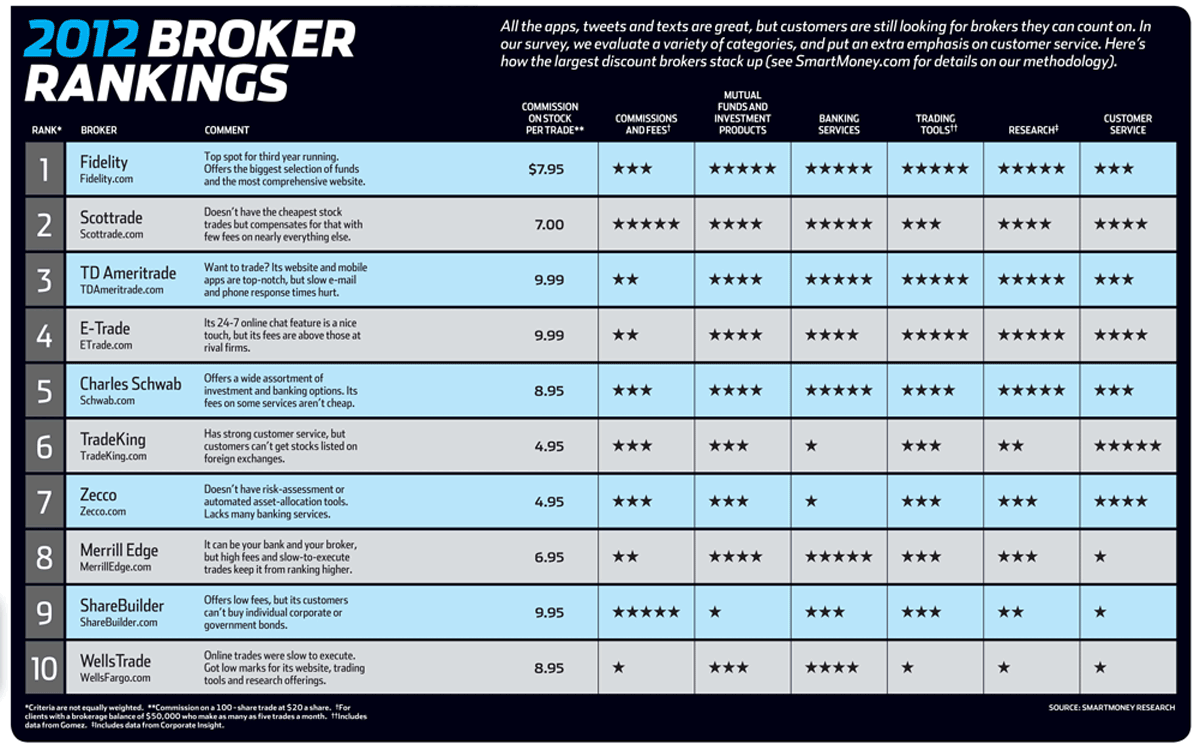
Best and Worst Brokers of 2012
Brokers are luring investors with high-tech tools and more. Our annual survey ranks the good and the bad.
SmartMoney's Annual Broker Survey 2012 - SmartMoney.com
Re: I Am In The $$$MONEY$$$
Goldman-Bred Neuroscientist Tracks Testosterone Trading
Goldman-Bred Neuroscientist Tracks Testosterone Trading - Bloomberg
Goldman-Bred Neuroscientist Tracks Testosterone Trading
Goldman-Bred Neuroscientist Tracks Testosterone Trading - Bloomberg
Re: I Am In The $$$MONEY$$$
Dalio's World
Ray Dalio, fabled hedge fund manager, says the U.S. has done a "beautiful" job delevering, but sees a 30% chance Europe will stumble badly.
http://online.barrons.com/article/SB50001424053111904571704577413130470068106.html
SATURDAY, MAY 19, 2012
By SANDRA WARD
It's hard to imagine anyone navigating the rough seas of the past decade more ably than Ray Dalio, master and commander of money-management firm Bridgewater Associates, which oversees $120 billion for a roster of global clients that include foreign governments, pension funds and endowments.
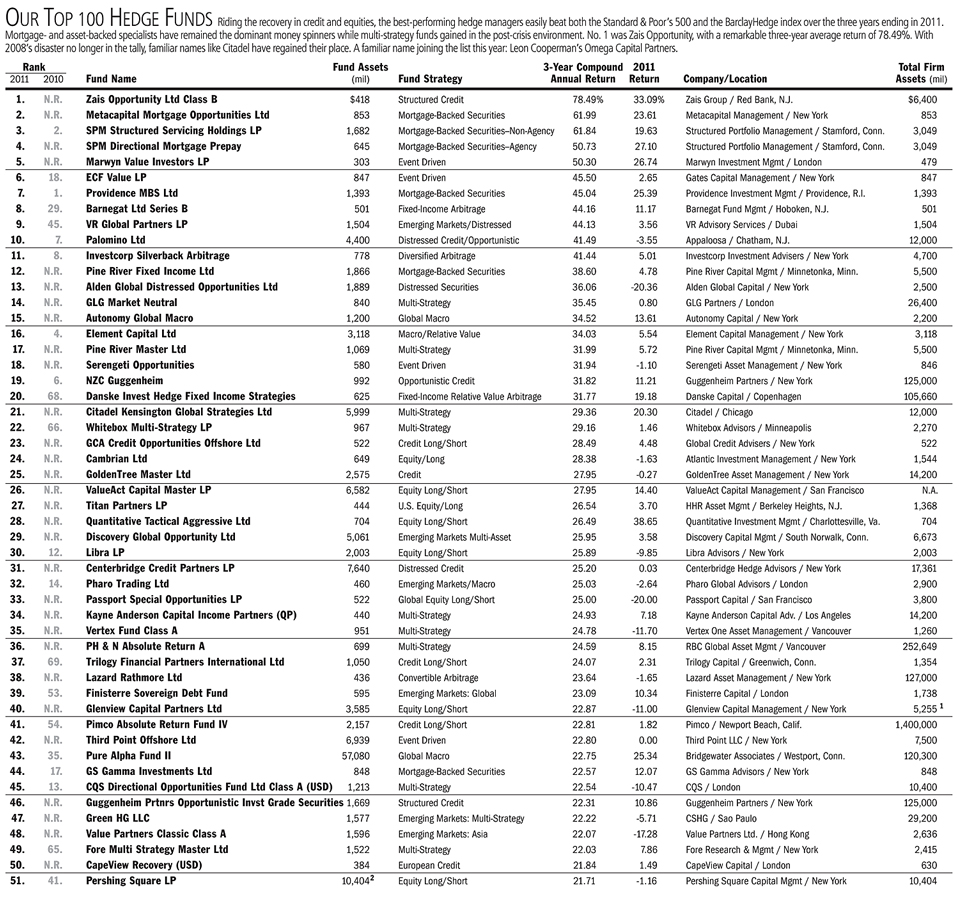
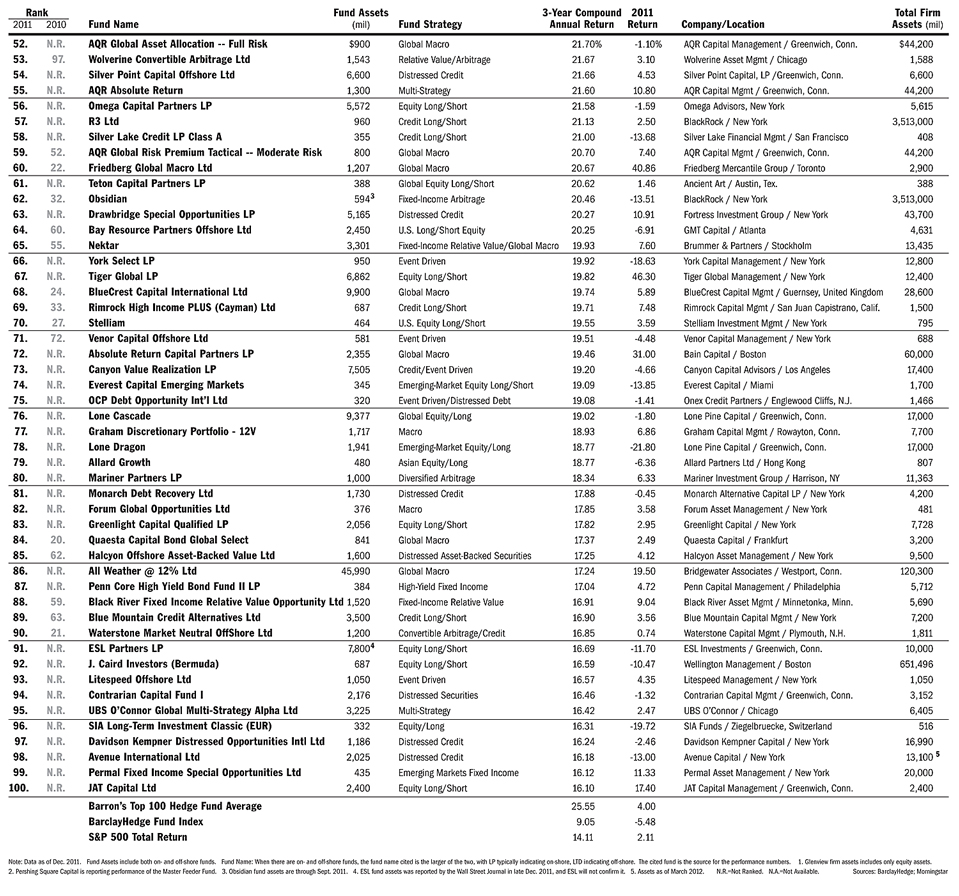
The Westport, Conn.-based company is the world's largest hedge-fund firm and one of just a handful of players to place more than one fund on Barron's annual Top 100 Hedge Funds ranking. This year Bridgewater's flagship Pure Alpha II and its All Weather @12% global macro funds both make the list. Pure Alpha has tallied a three-year average return of 22.75% while All Weather gained 17.24% on that basis. BarclayHedge's index of hedge funds returned 9.05% a year in that time; the Standard & Poor's 500 gained 14.11% annually.
The Bridgewater funds make strategic bets on commodities, currencies, bonds, and equities around the world based on analysis of valuations and macroeconomic trends..Dalio, who brings an unusually broad and deep perspective to investing, recently shared his latest views with us.
Barron's: You've called the current phase of the U.S. deleveraging experience "beautiful." Explain that, please.
Dalio: Deleveragings occur in a mechanical way that is important to understand. There are three ways to deleverage. We hear a lot about austerity. In other words, pull in your belt, spend less, and reduce debt. But austerity causes less spending and, because when you spend less, somebody earns less, it causes the contraction to feed on itself. Austerity causes more problems. It is deflationary and it is negative for growth.
Restructuring the debt means creditors get paid less or get paid over a longer time frame or at a lower interest rate; somehow a contract is broken in a way that reduces debt. But debt restructurings also are deflationary and negative for growth. One man's debts are another man's assets, and when debts are written down to relieve the debtor of the burden, it has a negative effect on wealth. That causes credit to decline.
Printing money typically happens when interest rates are close to zero, because you can't lower interest rates any more. Central banks create money, essentially, and buy the assets that put money in the system for a quantitative easing or debt monetization. Unlike the first two options, this is an inflationary action and stimulative to the economy.
How is any of this "beautiful?"
A beautiful deleveraging balances the three options. In other words, there is a certain amount of austerity, there is a certain amount of debt restructuring, and there is a certain amount of printing of money. When done in the right mix, it isn't dramatic. It doesn't produce too much deflation or too much depression. There is slow growth, but it is positive slow growth. At the same time, ratios of debt-to-incomes go down. That's a beautiful deleveraging.
We're in a phase now in the U.S. which is very much like the 1933-37 period, in which there is positive growth around a slow-growth trend. The Federal Reserve will do another quantitative easing if the economy turns down again, for the purpose of alleviating debt and putting money into the hands of people.
We will also need fiscal stimulation by the government, which of course, is very classic. Governments have to spend more when sales and tax revenue go down and as unemployment and other social benefits kick in and there is a redistribution of wealth. That's why there is going to be more taxation on the wealthy and more social tension. A deleveraging is not an easy time. But when you are approaching balance again, that's a good thing.
What makes all the difference between the ugly and the beautiful?
The key is to keep nominal interest rates below the nominal growth rate in the economy, without printing so much money that they cause an inflationary spiral. The way to do that is to be printing money at the same time there is austerity and debt restructurings going on.
How do you expect Europe to fare?
Europe is probably the most interesting case of a deleveraging in recorded history. Normally, a country will find out what's best for itself. In other words, a central bank will make monetary decisions for the country and a treasury will set fiscal policy for the country. They might make mistakes along the way, but they can be adjusted, and eventually there is a policy for the country. There is a very big problem in Europe because there isn't a good agreement about who should bear what kind of risks, and there isn't a decision-making process to produce that kind of an agreement.
We were very close to a debt collapse in Europe, and then the European Central Bank began the LTROs [long-term refinancing operations]. The ECB said it would lend euro-zone banks as much money as they wanted at a 1% interest rate for three years. The banks then could buy government bonds with significantly higher yields, which would also produce a lot more demand for those assets and ease the pressure in countries like Spain and Italy. Essentially, the ECB and the individual banks took on a whole lot of credit exposure. The banks have something like 20 trillion euros ($25.38 trillion) worth of assets and less than one trillion euros of capital. They are very leveraged.
Also, the countries themselves have debt problems and they need to roll over existing debts and borrow more. The banks are now overleveraged and can't expand their balance sheets. And the governments don't have enough buyers of their debt. Demand has fallen not just because of bad expectations, although everybody should have bad expectations, but because the buyers themselves have less money to spend on that debt. So the ECB action created a temporary surge in buying of those bonds and it relieved the crisis for the moment, but that's still not good enough. They can keep doing that, but each central bank in each country wants to know what happens if the debtors can't pay, who is going to bear what part of the burden?
Have the French and Greek elections changed the outlook?
They are the latest steps in a long drama that is not in and of itself much more important than most of the other steps. It's normal that the pendulum swings to produce these sorts of changes, and it is to be expected that tensions will increase and agreements will be harder to come by. This will add to the risks over the next year.
So what is the solution to this? How will the European debt crisis be resolved?
What is happening in Europe now is essentially the same, almost totally analogous, to what happened in the U.S. in 1789. It is an interesting comparison.
Post-American Revolution?
Yes. In 1776, the colonies declared independence from Great Britain. We didn't have a country. We had independent states that had a treaty with each other, called the Articles of Confederation, and it was similar to the Maastricht Treaty that created the European Union and the euro currency. The independent states had debt problems and they had tariffs with each other. It wasn't until 13 years later, 1789, that those states started to form a central government, largely because of their debt problems. There was a constitutional convention, and we formed a country and we chose a president. We formed a treasury and imposed central taxation. That gave us the ability to produce revenue for the country and restructure our debts. There was the ability to have taxation and to issue bonds and to borrow. Europe does not have an ability to borrow. It doesn't have central taxation, that's material, and it doesn't have a treasury. It is a collection of countries operating for their own individual needs.
Europe is approaching a decision point. It will have to decide whether it wants to create a sufficient central government that has more than a treaty, that has the ability to collect taxes from the whole and the ability to issue debt that obligates the whole, or whether it does not. That is the crux of this issue. The question is how much pain is it going to cause in Europe, and does the pain cause a collapse before it causes the choices? When a debtor can't print money and depreciate its currency, it will go into a self-reinforcing terrible economic situation. The deleveraging in Spain is just beginning, and they already have nearly 25% unemployment. They need relief.
What does it mean for the world economy if Europe continues to struggle like this?
The ECB has increased the pool of assets that are eligible as collateral that it will lend against, and it could spread out these refinancing operations. The European banks must deleverage at an orderly pace. Wherever they are lending, they are going to be lending less. Countries and those that are depending on borrowing money from European banks will experience a tightening of credit.
Spain and Italy in the periphery and, to some extent, France and even Germany will be hurt by this. Europe will be in a depressed state. Certainly, the peripheral countries in Europe will be in depressions, and there will be high unemployment. But if it happens in an orderly way, which I think is most likely, the repercussions for the world economy won't be intolerable. While the deleveraging of European banks and reduced European imports will be a depressant on the world economy, global markets and economic conditions won't collapse, because countries outside of Europe will be able to replace retrenching European bank lending with other sources of lending. They will borrow from American banks, and you will see the emergence of banks in large emerging countries such as China and Brazil.
Ireland was early to go down this path. What have we learned from their restructuring?
Well, for the most part, the Irish government has taken on the responsibility for most of the debt. Now the government doesn't have enough euros to service the debt. It has a problem. Portugal is going down the same route. And so, the EFSF -- the European Financial Stability Facility -- will loan to those countries as they go through an adjustment process. But the debt will have to keep being rolled and it will be difficult.
It will be a very long, difficult period for Ireland, and it will be a very long, difficult period for Portugal, and it will eat away money from the EFSF. It will be spread out over a long period of time. But in those cases, it is governments dealing with governments. In the case of Italy and Spain, most of the debt is still in the hands of the debtors and the banks and hasn't been put on to the government, because the resources, the sizes of the problem in Spain and Italy, are much bigger and more difficult for them to be handled in the same way as Ireland and Portugal.
And so?
So the main picture I'm trying to create is there could be a shock. I would say that there is maybe a 30% chance in the next six-month to two-year period of a really bad shock from Europe. And that shock is made worse because there is no clarity of who has got authority or control. When you have a centralized government and you have the ability to enforce laws, you can resolve problems. There might be a lot of arguments, but ultimately decisions can be made.
There are no provisions in the Maastricht Treaty for the breakup of the monetary union. There are no rules, there are no means. If a country is exiting the monetary union and then says I'm going to pay off the debt in my local currency, how does that work? The Maastricht Treaty doesn't have any provision for any country leaving the monetary union. It doesn't say if this happens, then that happens. There is a question of enforceability.
Every society has to have the ability to enforce laws. How does Germany actually force Italy to pay? It isn't clear. Supposing Spain decides they want to exit the union. The unemployment rate is terrible. That's a very scary thought. Maybe they say, "We're going to pay you back in Spanish pesetas even though the contract is for euros." That's the history, by the way: Argentina and Brazil and Mexico did that.
Yes, but local currencies no longer exist.
That's the whole other complication. There are good incentives not to take that course, and yet there are also big problems if you don't take it. In any event, there isn't a good decision-making process. There isn't a single means of achieving resolution in Europe, and that's the big problem here.
Again, how do you see world markets behaving as a result?
At the moment, there is a tipping toward slowing growth and a question of whether there will be a negative European shock, and that will favor low-risk assets. But to whatever extent we have negative conditions, central banks will respond by printing more money. There will be a big spurt of printing of money, and that will cause a rally and an improvement in the stock markets around the world. It's like a shot of adrenaline: The heart starts pumping again and then it fades. Then there is another shot of adrenaline.
Everybody is asking, "Are we going to have a bull market or a bear market?" I expect we will have both with no big trend. Typically, in these up and down cycles, the upswing will last about twice as long as a down swing. We are now in the higher range of the up-cycle.
What will this mean for U.S. Treasuries?
The printing of money has the effect of negating deflation. It doesn't produce high inflation and it makes it difficult for the economy to have a sustained upward move. If you have too much printing of money, then you'll begin a bear market in bonds.
We are now neutral on bonds. Over the next couple of years, long-term bonds will be a poor investment because the government will print money to leave real interest rates low. It doesn't mean that bonds will go through a big price selloff anytime soon. It's more likely the yields provided will be too low relative to inflation and growth to provide an adequate return.
What's your outlook for the U.S.?
The economy will be slowing into the end of the year, and then it will become more risky in 2013. Then, in 2013, we have the so-called fiscal cliff and the prospect of significantly higher taxes, as well as worsening conditions in Europe to contend with. This is coming immediately after the U.S. presidential election, which makes it more difficult. This can be successfully dealt with, but it won't necessarily be successfully dealt with. We have the equipment and the policy makers, and as long as policy is well managed, we'll be okay.
What of China and the emerging economies at this point?
They are doing much better in the following way: They were in a bubble, and when I say a bubble, I mean a debt explosion. Their debts were growing at a fast rate. Their debts were rising relative to income and they were growing at rates that were too fast. Those growth rates have slowed up significantly and probably will remain at a moderate pace. They are in pretty good shape but will be subject to the deleveraging of European banks.
What about commodities?
I'm not very bearish or very bullish on commodities in general. There is now a moderation of demand.
Are you still a fan of gold?
Longer term, yes. It could temporarily be a bumpy ride because Europeans will have to sell gold in order to raise funds because they are squeezed. Most people should have in the vicinity of 10% of their assets in gold, not only because I think it will be a good investment longer term, but because I think it is a very effective diversifier against the other 90%.
And are you treating it as a proxy for eventual inflation?
I'm treating it as an alternative currency. The big issue is debtor-developed countries, the U.S., Europe, and Japan, all have a lot of debt and will have to print money or they will have credit problems. I don't want to have all of my money in those currencies.
What is the asset class you expect to perform best in the next year?
It very much depends on the European monetary system. I believe the ECB will print money, and that will most likely alleviate concerns and produce another rally in stock and credit markets. But this is a tougher time to be very confident about that scenario.
It's amazing to think that four years into it, the world is still deleveraging.
Deleveragings go on for about 15 years. The process of raising debt relative to incomes goes on for 30 or 40 years, typically. There's a last big surge, which we had in the two years from 2005 to 2007 and from 1927 to 1929, and in Japan from 1988 to 1990, when the pace becomes manic. That's the classic bubble.
And then it takes about 15 years to adjust.
Thanks so much, Ray.
Dalio's World
Ray Dalio, fabled hedge fund manager, says the U.S. has done a "beautiful" job delevering, but sees a 30% chance Europe will stumble badly.
http://online.barrons.com/article/SB50001424053111904571704577413130470068106.html
SATURDAY, MAY 19, 2012
By SANDRA WARD
It's hard to imagine anyone navigating the rough seas of the past decade more ably than Ray Dalio, master and commander of money-management firm Bridgewater Associates, which oversees $120 billion for a roster of global clients that include foreign governments, pension funds and endowments.
The Westport, Conn.-based company is the world's largest hedge-fund firm and one of just a handful of players to place more than one fund on Barron's annual Top 100 Hedge Funds ranking. This year Bridgewater's flagship Pure Alpha II and its All Weather @12% global macro funds both make the list. Pure Alpha has tallied a three-year average return of 22.75% while All Weather gained 17.24% on that basis. BarclayHedge's index of hedge funds returned 9.05% a year in that time; the Standard & Poor's 500 gained 14.11% annually.
The Bridgewater funds make strategic bets on commodities, currencies, bonds, and equities around the world based on analysis of valuations and macroeconomic trends..Dalio, who brings an unusually broad and deep perspective to investing, recently shared his latest views with us.
Barron's: You've called the current phase of the U.S. deleveraging experience "beautiful." Explain that, please.
Dalio: Deleveragings occur in a mechanical way that is important to understand. There are three ways to deleverage. We hear a lot about austerity. In other words, pull in your belt, spend less, and reduce debt. But austerity causes less spending and, because when you spend less, somebody earns less, it causes the contraction to feed on itself. Austerity causes more problems. It is deflationary and it is negative for growth.
Restructuring the debt means creditors get paid less or get paid over a longer time frame or at a lower interest rate; somehow a contract is broken in a way that reduces debt. But debt restructurings also are deflationary and negative for growth. One man's debts are another man's assets, and when debts are written down to relieve the debtor of the burden, it has a negative effect on wealth. That causes credit to decline.
Printing money typically happens when interest rates are close to zero, because you can't lower interest rates any more. Central banks create money, essentially, and buy the assets that put money in the system for a quantitative easing or debt monetization. Unlike the first two options, this is an inflationary action and stimulative to the economy.
How is any of this "beautiful?"
A beautiful deleveraging balances the three options. In other words, there is a certain amount of austerity, there is a certain amount of debt restructuring, and there is a certain amount of printing of money. When done in the right mix, it isn't dramatic. It doesn't produce too much deflation or too much depression. There is slow growth, but it is positive slow growth. At the same time, ratios of debt-to-incomes go down. That's a beautiful deleveraging.
We're in a phase now in the U.S. which is very much like the 1933-37 period, in which there is positive growth around a slow-growth trend. The Federal Reserve will do another quantitative easing if the economy turns down again, for the purpose of alleviating debt and putting money into the hands of people.
We will also need fiscal stimulation by the government, which of course, is very classic. Governments have to spend more when sales and tax revenue go down and as unemployment and other social benefits kick in and there is a redistribution of wealth. That's why there is going to be more taxation on the wealthy and more social tension. A deleveraging is not an easy time. But when you are approaching balance again, that's a good thing.
What makes all the difference between the ugly and the beautiful?
The key is to keep nominal interest rates below the nominal growth rate in the economy, without printing so much money that they cause an inflationary spiral. The way to do that is to be printing money at the same time there is austerity and debt restructurings going on.
How do you expect Europe to fare?
Europe is probably the most interesting case of a deleveraging in recorded history. Normally, a country will find out what's best for itself. In other words, a central bank will make monetary decisions for the country and a treasury will set fiscal policy for the country. They might make mistakes along the way, but they can be adjusted, and eventually there is a policy for the country. There is a very big problem in Europe because there isn't a good agreement about who should bear what kind of risks, and there isn't a decision-making process to produce that kind of an agreement.
We were very close to a debt collapse in Europe, and then the European Central Bank began the LTROs [long-term refinancing operations]. The ECB said it would lend euro-zone banks as much money as they wanted at a 1% interest rate for three years. The banks then could buy government bonds with significantly higher yields, which would also produce a lot more demand for those assets and ease the pressure in countries like Spain and Italy. Essentially, the ECB and the individual banks took on a whole lot of credit exposure. The banks have something like 20 trillion euros ($25.38 trillion) worth of assets and less than one trillion euros of capital. They are very leveraged.
Also, the countries themselves have debt problems and they need to roll over existing debts and borrow more. The banks are now overleveraged and can't expand their balance sheets. And the governments don't have enough buyers of their debt. Demand has fallen not just because of bad expectations, although everybody should have bad expectations, but because the buyers themselves have less money to spend on that debt. So the ECB action created a temporary surge in buying of those bonds and it relieved the crisis for the moment, but that's still not good enough. They can keep doing that, but each central bank in each country wants to know what happens if the debtors can't pay, who is going to bear what part of the burden?
Have the French and Greek elections changed the outlook?
They are the latest steps in a long drama that is not in and of itself much more important than most of the other steps. It's normal that the pendulum swings to produce these sorts of changes, and it is to be expected that tensions will increase and agreements will be harder to come by. This will add to the risks over the next year.
So what is the solution to this? How will the European debt crisis be resolved?
What is happening in Europe now is essentially the same, almost totally analogous, to what happened in the U.S. in 1789. It is an interesting comparison.
Post-American Revolution?
Yes. In 1776, the colonies declared independence from Great Britain. We didn't have a country. We had independent states that had a treaty with each other, called the Articles of Confederation, and it was similar to the Maastricht Treaty that created the European Union and the euro currency. The independent states had debt problems and they had tariffs with each other. It wasn't until 13 years later, 1789, that those states started to form a central government, largely because of their debt problems. There was a constitutional convention, and we formed a country and we chose a president. We formed a treasury and imposed central taxation. That gave us the ability to produce revenue for the country and restructure our debts. There was the ability to have taxation and to issue bonds and to borrow. Europe does not have an ability to borrow. It doesn't have central taxation, that's material, and it doesn't have a treasury. It is a collection of countries operating for their own individual needs.
Europe is approaching a decision point. It will have to decide whether it wants to create a sufficient central government that has more than a treaty, that has the ability to collect taxes from the whole and the ability to issue debt that obligates the whole, or whether it does not. That is the crux of this issue. The question is how much pain is it going to cause in Europe, and does the pain cause a collapse before it causes the choices? When a debtor can't print money and depreciate its currency, it will go into a self-reinforcing terrible economic situation. The deleveraging in Spain is just beginning, and they already have nearly 25% unemployment. They need relief.
What does it mean for the world economy if Europe continues to struggle like this?
The ECB has increased the pool of assets that are eligible as collateral that it will lend against, and it could spread out these refinancing operations. The European banks must deleverage at an orderly pace. Wherever they are lending, they are going to be lending less. Countries and those that are depending on borrowing money from European banks will experience a tightening of credit.
Spain and Italy in the periphery and, to some extent, France and even Germany will be hurt by this. Europe will be in a depressed state. Certainly, the peripheral countries in Europe will be in depressions, and there will be high unemployment. But if it happens in an orderly way, which I think is most likely, the repercussions for the world economy won't be intolerable. While the deleveraging of European banks and reduced European imports will be a depressant on the world economy, global markets and economic conditions won't collapse, because countries outside of Europe will be able to replace retrenching European bank lending with other sources of lending. They will borrow from American banks, and you will see the emergence of banks in large emerging countries such as China and Brazil.
Ireland was early to go down this path. What have we learned from their restructuring?
Well, for the most part, the Irish government has taken on the responsibility for most of the debt. Now the government doesn't have enough euros to service the debt. It has a problem. Portugal is going down the same route. And so, the EFSF -- the European Financial Stability Facility -- will loan to those countries as they go through an adjustment process. But the debt will have to keep being rolled and it will be difficult.
It will be a very long, difficult period for Ireland, and it will be a very long, difficult period for Portugal, and it will eat away money from the EFSF. It will be spread out over a long period of time. But in those cases, it is governments dealing with governments. In the case of Italy and Spain, most of the debt is still in the hands of the debtors and the banks and hasn't been put on to the government, because the resources, the sizes of the problem in Spain and Italy, are much bigger and more difficult for them to be handled in the same way as Ireland and Portugal.
And so?
So the main picture I'm trying to create is there could be a shock. I would say that there is maybe a 30% chance in the next six-month to two-year period of a really bad shock from Europe. And that shock is made worse because there is no clarity of who has got authority or control. When you have a centralized government and you have the ability to enforce laws, you can resolve problems. There might be a lot of arguments, but ultimately decisions can be made.
There are no provisions in the Maastricht Treaty for the breakup of the monetary union. There are no rules, there are no means. If a country is exiting the monetary union and then says I'm going to pay off the debt in my local currency, how does that work? The Maastricht Treaty doesn't have any provision for any country leaving the monetary union. It doesn't say if this happens, then that happens. There is a question of enforceability.
Every society has to have the ability to enforce laws. How does Germany actually force Italy to pay? It isn't clear. Supposing Spain decides they want to exit the union. The unemployment rate is terrible. That's a very scary thought. Maybe they say, "We're going to pay you back in Spanish pesetas even though the contract is for euros." That's the history, by the way: Argentina and Brazil and Mexico did that.
Yes, but local currencies no longer exist.
That's the whole other complication. There are good incentives not to take that course, and yet there are also big problems if you don't take it. In any event, there isn't a good decision-making process. There isn't a single means of achieving resolution in Europe, and that's the big problem here.
Again, how do you see world markets behaving as a result?
At the moment, there is a tipping toward slowing growth and a question of whether there will be a negative European shock, and that will favor low-risk assets. But to whatever extent we have negative conditions, central banks will respond by printing more money. There will be a big spurt of printing of money, and that will cause a rally and an improvement in the stock markets around the world. It's like a shot of adrenaline: The heart starts pumping again and then it fades. Then there is another shot of adrenaline.
Everybody is asking, "Are we going to have a bull market or a bear market?" I expect we will have both with no big trend. Typically, in these up and down cycles, the upswing will last about twice as long as a down swing. We are now in the higher range of the up-cycle.
What will this mean for U.S. Treasuries?
The printing of money has the effect of negating deflation. It doesn't produce high inflation and it makes it difficult for the economy to have a sustained upward move. If you have too much printing of money, then you'll begin a bear market in bonds.
We are now neutral on bonds. Over the next couple of years, long-term bonds will be a poor investment because the government will print money to leave real interest rates low. It doesn't mean that bonds will go through a big price selloff anytime soon. It's more likely the yields provided will be too low relative to inflation and growth to provide an adequate return.
What's your outlook for the U.S.?
The economy will be slowing into the end of the year, and then it will become more risky in 2013. Then, in 2013, we have the so-called fiscal cliff and the prospect of significantly higher taxes, as well as worsening conditions in Europe to contend with. This is coming immediately after the U.S. presidential election, which makes it more difficult. This can be successfully dealt with, but it won't necessarily be successfully dealt with. We have the equipment and the policy makers, and as long as policy is well managed, we'll be okay.
What of China and the emerging economies at this point?
They are doing much better in the following way: They were in a bubble, and when I say a bubble, I mean a debt explosion. Their debts were growing at a fast rate. Their debts were rising relative to income and they were growing at rates that were too fast. Those growth rates have slowed up significantly and probably will remain at a moderate pace. They are in pretty good shape but will be subject to the deleveraging of European banks.
What about commodities?
I'm not very bearish or very bullish on commodities in general. There is now a moderation of demand.
Are you still a fan of gold?
Longer term, yes. It could temporarily be a bumpy ride because Europeans will have to sell gold in order to raise funds because they are squeezed. Most people should have in the vicinity of 10% of their assets in gold, not only because I think it will be a good investment longer term, but because I think it is a very effective diversifier against the other 90%.
And are you treating it as a proxy for eventual inflation?
I'm treating it as an alternative currency. The big issue is debtor-developed countries, the U.S., Europe, and Japan, all have a lot of debt and will have to print money or they will have credit problems. I don't want to have all of my money in those currencies.
What is the asset class you expect to perform best in the next year?
It very much depends on the European monetary system. I believe the ECB will print money, and that will most likely alleviate concerns and produce another rally in stock and credit markets. But this is a tougher time to be very confident about that scenario.
It's amazing to think that four years into it, the world is still deleveraging.
Deleveragings go on for about 15 years. The process of raising debt relative to incomes goes on for 30 or 40 years, typically. There's a last big surge, which we had in the two years from 2005 to 2007 and from 1927 to 1929, and in Japan from 1988 to 1990, when the pace becomes manic. That's the classic bubble.
And then it takes about 15 years to adjust.
Thanks so much, Ray.
Re: I Am In The $$$MONEY$$$
Dichev, Ilia D., Graham, John R., Harvey, Campbell R. and Rajgopal, Shivaram, Earnings Quality: Evidence from the Field (July 1, 2012). Available at SSRN: Earnings Quality: Evidence from the Field by Ilia Dichev, John Graham, Campbell Harvey, Shivaram Rajgopal :: SSRN
We provide new insights into earnings quality from a survey of 169 CFOs of public companies and in-depth interviews of 12 CFOs and two standard setters. Our key findings include (i) high-quality earnings are sustainable and are backed by actual cash flows; they also reflect consistent reporting choices over time and avoid long-term estimates; (ii) about 50% of earnings quality is driven by innate factors; (iii) about 20% of firms manage earnings to misrepresent economic performance, and for such firms 10% of EPS is typically managed; (iv) CFOs believe that earnings manipulation is hard to unravel from the outside but suggest a number of red flags to identify managed earnings; and (v) CFOs disagree with the direction the FASB is headed on a number of issues including the sheer number of promulgated rules, the top-down approach to rule making, the curtailed reporting discretion, the de-emphasis of the matching principle, and the over-emphasis on fair value accounting.
Dichev, Ilia D., Graham, John R., Harvey, Campbell R. and Rajgopal, Shivaram, Earnings Quality: Evidence from the Field (July 1, 2012). Available at SSRN: Earnings Quality: Evidence from the Field by Ilia Dichev, John Graham, Campbell Harvey, Shivaram Rajgopal :: SSRN
We provide new insights into earnings quality from a survey of 169 CFOs of public companies and in-depth interviews of 12 CFOs and two standard setters. Our key findings include (i) high-quality earnings are sustainable and are backed by actual cash flows; they also reflect consistent reporting choices over time and avoid long-term estimates; (ii) about 50% of earnings quality is driven by innate factors; (iii) about 20% of firms manage earnings to misrepresent economic performance, and for such firms 10% of EPS is typically managed; (iv) CFOs believe that earnings manipulation is hard to unravel from the outside but suggest a number of red flags to identify managed earnings; and (v) CFOs disagree with the direction the FASB is headed on a number of issues including the sheer number of promulgated rules, the top-down approach to rule making, the curtailed reporting discretion, the de-emphasis of the matching principle, and the over-emphasis on fair value accounting.
Re: I Am In The $$$MONEY$$$
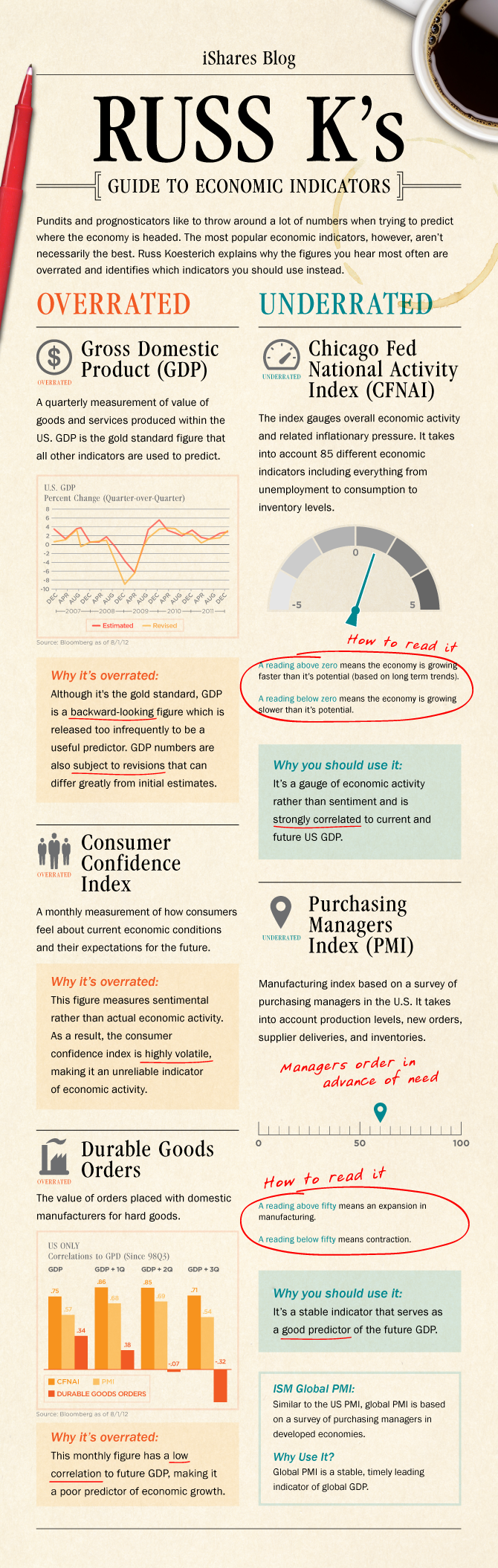
Re: I Am In The $$$MONEY$$$
Biogen Idec Inc. (NASDAQ:BIIB) Biogen Idec: Home
Biogen Idec Inc.: NASDAQ:BIIB quotes & news - Google Finance
Their drug - BG-12 - has a FDA Approval date for Dec. 2012.
IMO, it will be approved. And, worthwhile for a small position.
12/28/2012 PDUFA - PDUFADate.com
Biogen Idec Inc. (NASDAQ:BIIB) Biogen Idec: Home
Biogen Idec Inc.: NASDAQ:BIIB quotes & news - Google Finance
Their drug - BG-12 - has a FDA Approval date for Dec. 2012.
IMO, it will be approved. And, worthwhile for a small position.
12/28/2012 PDUFA - PDUFADate.com
Similar threads

- Replies
- 24
- Views
- 972
- Replies
- 8
- Views
- 156
- Replies
- 23
- Views
- 731

