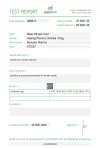
Healing Pharma Cilnidipine 10/20mg multi batch test MesoRX Fund - Janoshik

Thanks for coordinating.

KTC557(10mgx3)
KTC595A(10mgx2)
KTC294 (20mgx2)

@AllGoodThings
@Sera
I had almost forgotten about this, thank you for the tag.
@Sampei I'd like to donate to this after the fact. I had promised $100 towards the testing, is the BTC address posted a few pages back still good?

EDIT: My mistake, this is a separate thread, I was talking about the posts in the Healing Pharma thread in the Underground. Anyhow, let me know
 
Last edited:
Nice to see a reassuring result, consistent across multiple batches and very precise, even.

I wonder if this is the first cilnidipine Jano or not?
 
I had almost forgotten about this, thank you for the tag.
@Sampei I'd like to donate to this after the fact. I had promised $100 towards the testing, is the BTC address posted a few pages back still good?

EDIT: My mistake, this is a separate thread, I was talking about the posts in the Healing Pharma thread in the Underground. Anyhow, let me know
bc1qw8cyk6w6xejuk4gmvev7s9xcpntrnjpwuruxnv

Thank you for your donation, it will go of course into the MesoRX fund.
 
View attachment 361510
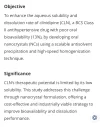
(https://www.tandfonline.com/doi/ful...rticles Next article-,Introduction,CLN [9,10].)

It is possible for tablets to have different absorption profiles despite the same API content. Just food for thought.

This is why bio-equivalence studies are needed for generics (Prove drug makes it into the bloodstream) and not just proving the mg content.

Hah that’s funny I was reading that the other day. To be clear, all cilnidipine is low bioavailability, and this is one of several novel methods proposed for next generation tabs that would improve it. But the original drug was formulated, clinically tested and prescribed based on 13-15% bioavailability. I wonder how the $600/10mg tab will be formulated (my guess is same way lol).

If anyone wants to ensure the best possible absorption. “With fats” boosts it by 30%. With or without fat, the most important thing is consistency. I segregate my meds into with and without fat. “With fat” are had with morning coffee using .5oz coconut milk, and tablespoon of peanut butter, 5 mins before taking the pills. You can always submit a list to AI, (enable whatever the “enhanced think mode” is) and ask which should be taken with fats.

If you’re not getting the effects you expect, keep in mind it can take 2 weeks for max benefits.

The current formulation is very simple, on a scale of 1-10, it’s a 2. Getting uniform doses is more difficult than putting together the formulation for proper dissolution so shouldn't be too much worry there.

Finally, while we all have some justified skepticism of India pharma, companies are required to have COA’s for every batch showing results that pass ‘IP’, India Pharmacopeia requirements for every drug. Companies that have meds made on contract by others have to keep COA’s on file.

I contacted Healing Pharma for the COA for a batch I have. I’m told I they have them for all batches, in house or contract. By law, you can contact the original manufacturer and give them the COA number to verify authenticity. You can request the COA for the active ingredient used by the original manufacturer using the “Material Code” on the finished product COA.

Healing told me they also have their own in house lab check to make sure what they receive matches what they contracted for.

Yes, none of this guarantees anything if both companies are faking paperwork and everyone’s conspiring together to perpetrate a fraud, but for things like dissolution we have no alternative to the COA:

IMG_3117.webp
 
Last edited:
Yes, none of this guarantees anything if both companies are faking paperwork and everyone’s conspiring together to perpetrate a fraud, but for things like dissolution we have no alternative to the COA:

View attachment 361522
Just to add to this, a few years ago Cipla, one of the major players in the Indian pharma industry, was found to have falsified inhouse QA/QC records relating to several of their products, which caused a big scandal in India.

So yes, pharma companies, particularly those in the developing world do occasionally knowingly release out of spec products, BUT there is also a regulatory framework in place that can & does detect this & the fines that can be imposed on them for this can massively outweigh any financial cost from scrapping affected batches.
 
Just to add to this, a few years ago Cipla, one of the major players in the Indian pharma industry, was found to have falsified inhouse QA/QC records relating to several of their products, which caused a big scandal in India.

So yes, pharma companies, particularly those in the developing world do occasionally knowingly release out of spec products, BUT there is also a regulatory framework in place that can & does detect this & the fines that can be imposed on them for this can massively outweigh any financial cost from scrapping affected batches.
very good to know
 
Just to add to this, a few years ago Cipla, one of the major players in the Indian pharma industry, was found to have falsified inhouse QA/QC records relating to several of their products, which caused a big scandal in India.

So yes, pharma companies, particularly those in the developing world do occasionally knowingly release out of spec products, BUT there is also a regulatory framework in place that can & does detect this & the fines that can be imposed on them for this can massively outweigh any financial cost from scrapping affected batches.
Certainly reasonable to say there’s more pharma fraud in India, more shortcuts, etc. However, India has a huge and successful pharma industry, and the vast majority of the time everything is fine, products are what they claim to be.

Indians don’t want to be ripped off or poisoned either, and they do have enforcement.

Most of the big risk is around expensive, brand name meds being faked. Other issues tend to be shortcuts around cleanliness, etc. The inexpensive generic meds made by 100 companies, using active ingredients that cost $30 for 10,000 pills worth have no incentive for fakery.

The “subcontract to another manufacturer” model a lot of companies like Healing, which uses it for about half their meds, may offer another layer of safety.

Even if the company doesn’t care about the consumer, they probably want to ensure they’re not getting ripped off, or accused of fraud, so they’ll test everything that comes in from another company to protect themselves.

If you see “Marketed by” on packaging it’s subcontracted, and there will be another spot with “Manufactured by” on it.
 
Most of the big risk is around expensive, brand name meds being faked.
There’s an exception to this & that’s ED meds, or at least there has been in the recent past. But the global market for these is absolutely massive & they can be sold to uninformed end users for a much higher price than the typical Meso member would ever pay.

That said, I honestly think the chances of any of the India based vendors here selling these either intentionally or inadvertently is literally zero.
 
Back
Top