
MESO-Rx
Anabolic Steroids

Navigation
Install the app
How to install the app on iOS
Follow along with the video below to see how to install our site as a web app on your home screen.
Note: This feature may not be available in some browsers.
More options
Style variation
Guest viewing limit reached
- You have reached the maximum number of guest views allowed
- Please register below to remove this limitation
- Already a member? Click here to login
You are using an out of date browser. It may not display this or other websites correctly.
You should upgrade or use an alternative browser.
You should upgrade or use an alternative browser.
Giant Semaglutide Thread (and other GLP-1 / GIP agonists)
- Thread starter Doodle
- Start date
Earthworm Jim
Member
I know ghoul has answered some of these questions before. I think 2mL is what pharma uses to dilute in the trialsthanks. would more dilution be better or is 0.5ml per dose ideal? I'm talking about prevending degradation, not absorption in the body. like if I was to dilute 100mg with 10ml would it make it less likely to degrade? (again, filtered and kept in an amber vial)

Ghoul
Member
Speaking of which.
@Ghoul I was wondering, how long can reconstituted peptide last before bacteria starts growing in it and can no longer be used?
The FDA/Pharma standard is that BAC protects for 30 days. But this is undoubtedly conservative. They have to account for repeated punctures in worst case scenario environments introducing more
bacteria with multiple punctures daily, like a multi-dose vaccine vial,
I think if you're using Hospira, and practicing basic aseptic technique, there's no realistic chance of bacterial growth taking hold for a very long time. Like a year or more. It's not as if the Benzyl Alcohol inactivates allowing bacterial growth.
What will cause degradation long before then is basic peptide instability or aggregation, due to less than ideal conditions (ph), exposure to light, agitation, exposure to room temp, reactions with oxygen in the vial, etc.
Ghoul
Member
thanks. would more dilution be better or is 0.5ml per dose ideal? I'm talking about prevending degradation, not absorption in the body. like if I was to dilute 100mg with 10ml would it make it less likely to degrade? (again, filtered and kept in an amber vial)
More dilution correlates with better peptide stability. One of the few "rules" that applies to all peptides, The less peptides "bump into each other" in a crowded solution the better for stability.
This wouldn't apply if there are PH controlling buffers, because a certain dilution ratio would be needed to achieve a specific PH. But as far as I've seen, that's not something many, or any UGLs do in lyophilized vials, only in the pre-reconstituted pens and cartridges. If they did, they'd have to specify how much to dilute with, which I've never seen.
thank you again. Last thing, if I was to reconstitute and immediatly prefill the syringes and leave them in a close and disinfected container, would that reduce the risk of degradation? since the peptide would not be exposed to air, bacteria and light as much.The FDA/Pharma standard is that BAC protects for 30 days. But this is undoubtedly conservative. They have to account for repeated punctures in worst case scenario environments introducing more
bacteria with multiple punctures daily, like a multi-dose vaccine vial,
I think if you're using Hospira, and practicing basic aseptic technique, there's no realistic chance of bacterial growth taking hold for a very long time. Like a year or more. It's not as if the Benzyl Alcohol inactivates allowing bacterial growth.
What will cause degradation long before then is basic peptide instability or aggregation, due to less than ideal conditions (ph), exposure to light, agitation, exposure to room temp, reactions with oxygen in the vial, etc.
Ghoul
Member
thank you again. Last thing, if I was to reconstitute and immediatly prefill the syringes and leave them in a close and disinfected container, would that reduce the risk of degradation? since the peptide would not be exposed to air, bacteria and light as much.
The "rule" is no more than an hour in a syringe prior to injection.
It's bad to pre-fill because peptides will adhere to the plastic barrel, especially when coated with silicon as many are. Benzyl Alcohol will extract compounds from the plunger and barrel over time. But if we're going to be honest here, home visiting nurses will fill up to a week's worth of insulin (a peptide) syringes despite the practice being frowned upon.
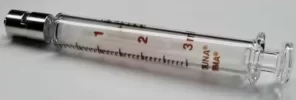
I use special inert lab grade 3ml syringes entirely made out of German Schott branded Durobax glass, including the plunger. to store reconstituted peptide, instead of the vial (cheap shit glass with a garbage runner stopper), or transferring to an Ultra spec vial. With a filter on the end, I (yes I know "controversial") then backfill insulin syringes with peptide that's been filtered immediately prior to use.
Last edited:
Earthworm Jim
Member
Have you ever met a question you couldn't answer? LolThe "rule" is no more than an hour in a syringe prior to injection.
It's bad to pre-fill because peptides will adhere to the plastic barrel, especially when coated with silicon as many are. Benzyl Alcohol will extract compounds from the plunger and barrel over time. But if we're going to be honest here, home visiting nurses will fill up to a week's worth of insulin (a peptide) syringes despite the practice being frowned upon.
I use special inert lab grade 3ml syringes entirely made from Durobax glass, including the plunger. to store reconstituted peptide, instead of the vial (cheap shit glass with a garbage stopper). With a filter on the end, I (yes I know "controversial") then backfill insulin syringes with peptide that's been filtered immediately prior to use.
View attachment 350864
Ghoul
Member
Have you ever met a question you couldn't answer? Lol
Keep trying.

I was asked one yesterday that I said I didn't know (about heat intolerance), and remembered this morning, as I was looking at my blood labs that just arrived, I do (it's often a hyperthyroid issue). Thanks for reminding me so I can get back to that guy... lol
At this point I belive he's got the neuralink chip implantedHave you ever met a question you couldn't answer? Lol
Ghoul
Member
At this point I belive he's got the neuralink chip implanted
It's not too hard to hit my limits. If I don't have an interest in something, I usually don't knew shit about it. I couldn't tell you the first thing about a tren cycle, AAS orals, or "healing peptides".
But if I do have an interest, there's no end to how deeply I'll dig into the subject.
Someone here or Reddit recently posted lab tests that showed reconstituted Tirz was good for 150 days unrefrigerated and at least 300 days refrigerated..Speaking of which.
@Ghoul I was wondering, how long can reconstituted peptide last before bacteria starts growing in it and can no longer be used?
Ghoul
Member
Someone here or Reddit recently posted lab tests that showed reconstituted Tirz was good for 150 days unrefrigerated and at least 300 days refrigerated..
I keep hammering this point not because I think testing like this is meaningless, but to put it in context of its limitations.
HPLC "Purity" testing checks one aspect of peptides. Proper chemistry. In other words, if a peptide is made of a chain of 39 amino acids. it verifies they're all there. Within a certain limited range, it detects other chemically similar things, usually degraded forms of the same peptide, and the percentage of chemically correct peptide molecules makes up the "purity".
The problem with this is that not all degradation is captured using this method.
Two common types of degradation are damaged peptides that clump together forming aggregates and others that stick ("adsorb") to vial walls.
Since the sample is filtered with a .22um filter prior to analysis aggregates can be removed from the sample prior to analysis. Adsorbed peptides are also missing from the sample for obvious reasons.
Pharma and the scientists who study this check for degradation using multiple methods. "Orthogonal techniques" is the technical term.
But here's a very simple way one group of researchers did it when all they had was HPLC like us, and found they were getting an improbable "89% purity" when they knew they were severely damaging a peptide sample.
They had the advantage of knowing precisely how much peptide was in the vial to start with.
By starting with exactly 1mg in the vial, after subjecting the peptide (in this case rHGH*) to degradation levels of stress (heat and oxygen), they checked purity, but also measured the total amount of peptide by taking samples until all the liquid had been extracted, When the amount of peptide "missing" from the original 1mg was accounted for, actual "purity" was down to 63%.
Unfortunately, unlike a controlled environment like a research lab, knowing precisely how much peptide is in the vial to begin with is not something we can do, and UGL vials vary significantly from one to another.
(incidentally, they later figured out how to "wash" the vial walls to recover the adsorbed peptide, and found the rHGH that was stuck had become damaged by oxidation, making it prone to "merging" with minerals in the glass. This type of degradation is not measured and therefore invisible to the methods available to us.)
* yes I know rHGH is a protein not technically a peptide, only because of its size exceeding 40 amino acids, otherwise there's no difference
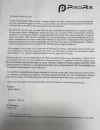
This wasn't just a before and after purity test. This was a letter from a compounding pharmacy who specifically tested for stability over time. I'll try to find itI keep hammering this point not because I think testing like this is meaningless, but to put it in context of its limitations.
HPLC "Purity" testing checks one aspect of peptides. Proper chemistry. In other words, if a peptide is made of a chain of 39 amino acids. it verifies they're all there. Within a certain limited range, it detects other chemically similar things, usually degraded forms of the same peptide, and the percentage of chemically correct peptide molecules makes up the "purity".
The problem with this is that not all degradation is captured using this method.
Two common types of degradation are damaged peptides that clump together forming aggregates and others that stick ("adsorb") to vial walls.
Since the sample is filtered with a .22um filter prior to analysis aggregates can be removed from the sample prior to analysis. Adsorbed peptides are also missing from the sample for obvious reasons.
Pharma and the scientists who study this check for degradation using multiple methods. "Orthogonal techniques" is the technical term.
But here's a very simple way one group of researchers did it when all they had was HPLC like us, and found they were getting an improbable "89% purity" when they knew they were severely damaging a peptide sample.
They had the advantage of knowing precisely how much peptide was in the vial to start with.
By starting with exactly 1mg in the vial, after subjecting the peptide (in this case rHGH*) to degradation levels of stress (heat and oxygen), they checked purity, but also measured the total amount of peptide by taking samples until all the liquid had been extracted, When the amount of peptide "missing" from the original 1mg was accounted for, actual "purity" was down to 63%.
Unfortunately, unlike a controlled environment like a research lab, knowing precisely how much peptide is in the vial to begin with is not something we can do, and UGL vials vary significantly from one to another.
(incidentally, they later figured out how to "wash" the vial walls to recover the adsorbed peptide, and found the rHGH that was stuck had become damaged by oxidation, making it prone to "merging" with minerals in the glass. This type of degradation is not measured and therefore invisible to the methods available to us.)
* yes I know rHGH is a protein not technically a peptide, only because of its size exceeding 40 amino acids, otherwise there's no difference
Edit- found it
Attachments
Last edited:

Liter O' Test
Member
if someone was on the max dose of semaglutide (2.7mg) or whatever, then took a month off, can they jump right to 10mg tirz ? or should they kind of do a fast titration, like 2.5mg then next week 5mg etc
Also, how tf does a morbidly obese person only lose 50lbs on max dose of ozempic for a year (pharma)
Also, how tf does a morbidly obese person only lose 50lbs on max dose of ozempic for a year (pharma)
Last edited:

Jesintn
Member
AI says glp with t3 reduces t3 s negative effects, like going to bone, and acts as a shuttle to the liver and fat
I know Im repeating but sema works best for appetite which is really what assists during competition prep . I’d more than likely only recommend sema for this purpose
I did use sema during a mini cut phase , during off-season, and if anything gained fat, and wouldn’t do it again, prep only
Using tirz now 1 mgs every few then days, may up the dose to 2.5 and add 1 sema, will see how much is left. I understand why more guys aren’t competing due to the cost, and not having sponsors or even supplements companies to work with like previous days
Used t3 , 50 mcg, with micro and low dosed tirz last year during prep. (Paid 189$ for 10 mgs tirz last year) (this year 40$) Only took t3 about one month and changes seemed quite fast. Of course many factors for the changes , and still truly competitive conditioning lacked last year
I know Im repeating but sema works best for appetite which is really what assists during competition prep . I’d more than likely only recommend sema for this purpose
I did use sema during a mini cut phase , during off-season, and if anything gained fat, and wouldn’t do it again, prep only
Using tirz now 1 mgs every few then days, may up the dose to 2.5 and add 1 sema, will see how much is left. I understand why more guys aren’t competing due to the cost, and not having sponsors or even supplements companies to work with like previous days
Used t3 , 50 mcg, with micro and low dosed tirz last year during prep. (Paid 189$ for 10 mgs tirz last year) (this year 40$) Only took t3 about one month and changes seemed quite fast. Of course many factors for the changes , and still truly competitive conditioning lacked last year
dontyellmepls
New Member
Tirzepatide worked for me very well for controlling my insulin resistance, lipid and borderline prediabetic glucose. Semaglutide, not so much.

Photon
Member
This wasn't just a before and after purity test. This was a letter from a compounding pharmacy who specifically tested for stability over time. I'll try to find it
Edit- found it
It's a large compounding pharmacy in the US.
503(B)

Saw this today on reddit.
It's a fed regulated compounded pharmacy (not the small ones who can only operate in 1 state and can do wtf they want) I believe.
It's regarding Sema and Tirz that have been reconstituted.
Good to use, room temperature 150d, fridge 300d.
@Sampei

It's a fed regulated compounded pharmacy (not the small ones who can only operate in 1 state and can do wtf they want) I believe.
It's regarding Sema and Tirz that have been reconstituted.
Good to use, room temperature 150d, fridge 300d.
@Sampei


Photon
Member
The "rule" is no more than an hour in a syringe prior to injection.
It's bad to pre-fill because peptides will adhere to the plastic barrel, especially when coated with silicon as many are. Benzyl Alcohol will extract compounds from the plunger and barrel over time. But if we're going to be honest here, home visiting nurses will fill up to a week's worth of insulin (a peptide) syringes despite the practice being frowned upon.
I use special inert lab grade 3ml syringes entirely made out of German Schott branded Durobax glass, including the plunger. to store reconstituted peptide, instead of the vial (cheap shit glass with a garbage runner stopper), or transferring to an Ultra spec vial. With a filter on the end, I (yes I know "controversial") then backfill insulin syringes with peptide that's been filtered immediately prior to use.
View attachment 350864
How are you sterilizing the syringe?
Ghoul
Member
How are you sterilizing the syringe?
When I have 10 of them ready, I wash in detergent and water using a little brush (just a quick swipe), rinse with distilled water, put them in self sealing autoclave pouches:

And throw them in my Innova IA-T benchtop pre-vacuum steam autoclave (~$500 from alibaba):

Touch Screen Vacuum Autoclave (T Series) for Efficient Sterilization | INNOVA Biomed
Discover the Touch Screen Vacuum Autoclave (T series), designed for efficient sterilization in medical and laboratory settings. Enhance sterilization processes with advanced features.
www.innovabiomed.com
The syringes are rated for 50 sterilization cycles.
Anonymous35
Member
Yes or at a stronger doseI'm already on Tirz and it did work, so rather than completely switching glps I'd rather look for a add-on.
I had tried Sema before Tirzepatide (ozempic pen) and it did not work for me at all. First time I did 2 weeks on 0.25mg, I would be humgry as usual so I'd overeat, but 6-8hours later I'd get the most brutal stomach pain and nausea of my life making me bed bound for a day. so I stopped. a few months later I tried again doing 0.1mg twice a week and same thing happened. 2 weeks in I was hungry as usual but 6-8hours after overeating I'd get these terrible stomach pains.
I felt no appetite suppresion but all the side effects. Maybe if I had given it more time it would have worked but don't really feel like taking the chance again
They take time to fully kicked 2/3 weeks
Would jumping from 10mg Tirz straight to 15mg be an issue. I wanna skip 12.5 because I think it wouldn't make much difference and the hunger is a bitch now.
I did the same going from 5 to 10 and it was alright. (I technically did 1 week on 7.5mg but felt no difference compared to 5mg so I then went straight to 10mg).
My eating has been complete shit recently so I wanna put a stop to it ASAP
I did the same going from 5 to 10 and it was alright. (I technically did 1 week on 7.5mg but felt no difference compared to 5mg so I then went straight to 10mg).
My eating has been complete shit recently so I wanna put a stop to it ASAP
Last edited:
Similar threads


- Replies
- 8
- Views
- 410
- Replies
- 7
- Views
- 196

- Replies
- 10
- Views
- 117
- Question
- Replies
- 7
- Views
- 545


