Mate it’s basic common sense what do you mean study I’ve given you that steroids impair healing and DONT help tendons var included if you understand repair you know you repair and produce scar tissue if you speed this up even with tb500 bpc steroids it won’t be as elastic again do you understand ?
I’m not here claiming to be some guru but your reply to above shows you only reply to information you know and can’t reply to information you’ve not seen.
Like glp1 myostatin etc.
Reddit it’s of professional muscle and obviously like all study’s you’ve read online and then put on here from what you’ve read ffs lol
Steroids favoured more type 3 from what I’ve read am I wrong do they produce type 1 collagen more ??
There's absolutely nothing "common sense" about AAS effects on tendon.
To illustrate the conflictory findings on AAS effects on tendon, see the following Table from Jones, I. A., Togashi, R., Rick Hatch, G. F., Weber, A. E., & Vangsness JR, C. T. (2018). Anabolic Steroids and Tendons: A Review of their Mechanical, Structural and Biologic Effects. Journal of Orthopaedic Research®. doi:10.1002/jor.24116:
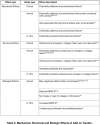
Across mechanical, structural, and biologic effects, the clinical, animal, and
in vitro data gives us... a muddled picture of effects ranging from none, to potentially beneficial, to potentially harmful.
Repair processes and deposition of collagen ("scar tissue") in
skeletal muscle results from injury (myogenesis; muscle repair).
That is to say, if on the one hand, as you posit, AAS deposit type III collagen in skeletal muscle; then, it follows that AAS
enhance healing (because collagen deposition in muscle is the result of muscle repair/myogenesis).
One of us misunderstands muscle repair indeed.
Look --
AAS enhance
soft tissue interstitial fibril biosynthesis (not specifically in skeletal muscle [where collagen deposition would be consistent with muscle repair processes], but in tendon & ligament, and it's an open question whether AAS deposits your type III collagen into skeletal muscle at all, because of measurement methodology [looking at serum and urinary markers like PIINP & HP:LP]. These serum and urinary markers, rather than direct measurement, are necessary because nobody is willing to have their muscles biopsied - or excised - for this.
If BPC157 accelerates musculoskeletal soft tissue healing, it may well do so by similar mechanisms as AAS (we don't yet know how BPC157 achieves this; and we are only in recent years gaining an appreciation for AAS effects on tendon and ligament).
The Hatch Trial [
clinicaltrials.gov, link], currently underway, is a registered Clinical Trial, to investigate the efficacy of oxandrolone to benefit rotator cuff repair.
Thomas, et al. [1] found that testosterone supplementation benefits ACL reconstruction. This finding was bolstered by the replication by Wu, et al. [2] using testosterone peri-operatively.
The genesis of these works was the pioneering works of Gerber, et al. ([3] & [4]), showing that nandrolone prevented fatty infiltration & lowered functional muscle impairment in rotator cuff repair, effectively - read closely - reducing muscle damage and degeneration (i.e., enhancing muscle repair).
AAS don't "favor" the "bad" type III collagen. They do increase hydroxylysylpyridinoline (HP; a urinary marker), that reflects turnover of collagens type I (bone), II, III & IX; present in tendon, cartilage, bone, vessel walls & dentine. They further augment
procollagen Type III N-terminal propeptide (PIIINP), a marker of interstitial fibril biosynthesis in soft tissues, that is highly relevant to sport. Type III collagen is that which is stimulated by fast movement/velocity training in tendon, where stiffness benefits velocity. However, this effect on tendon stiffness necessitates that muscular strength adaptations must compensate for the heightened risk of muscular strain due to excessive tendon stiffness.
It is my view that increased tendon stiffness in conjunction with increased muscular strength is adaptive. Increasing both tendon stiffness & muscular strength in conjunction leads to less risk of excessive strain and gives us great performance/strength outcomes.
Intelligent training and programming is the solution to any heightened risks with AAS on tendon rupture.
P.S. Reddit is unreadable due to its idiocy, and I'm always happy to converse in depth about Mst (MSTN, gene) & GLP-1 agonists/incretins generally.
__________
References:
[1] Thomas AC, Villwock M, Wojtys EM, Palmieri-Smith RM. Lower extremity muscle strength after anterior cruciate ligament injury and reconstruction. J Athl Train. 2013 Sep-Oct;48(5):610-20. doi: 10.4085/1062-6050-48.3.23.
[2] Wu B, Lorezanza D, Badash I, Berger M, Lane C, Sum JC, Hatch GF 3rd, Schroeder ET. Perioperative Testosterone Supplementation Increases Lean Mass in Healthy Men Undergoing Anterior Cruciate Ligament Reconstruction: A Randomized Controlled Trial. Orthop J Sports Med. 2017 Aug 9;5(8):2325967117722794. doi: 10.1177/2325967117722794.
[3] Gerber C, Meyer DC, Nuss KM, Farshad M. Anabolic steroids reduce muscle damage caused by rotator cuff tendon release in an experimental study in rabbits. J Bone Joint Surg Am. 2011 Dec 7;93(23):2189-95. doi: 10.2106/JBJS.J.01589.
[4] Gerber C, Meyer DC, Flück M, Benn MC, von Rechenberg B, Wieser K. Anabolic Steroids Reduce Muscle Degeneration Associated With Rotator Cuff Tendon Release in Sheep. Am J Sports Med. 2015 Oct;43(10):2393-400. doi: 10.1177/0363546515596411.