Scientific
New Member
I just order 2 kits i think its hit or miss but you cant beat the price anyways buying a filter is like 10 $Damn I’ve just ordered 4 x 36 HGH kits from SSA…

MESO-Rx
Anabolic Steroids

Follow along with the video below to see how to install our site as a web app on your home screen.
Note: This feature may not be available in some browsers.
I just order 2 kits i think its hit or miss but you cant beat the price anyways buying a filter is like 10 $Damn I’ve just ordered 4 x 36 HGH kits from SSA…


Im going to assume its fine to use ptfe 0.22mm on hgh recon????
Ordered a few kits. Might as well filter it and be on the safe side
os 0.25 mm or 13 mm better ?Sorry, no. You'll lose a ton of the rHGH since it'll adsorb to the PTFE membrane.
Just buy a few sterile 13mm PES .22um filters from Amazon. They're cheap. (you can get much better deals at Cobetter for 50 and 100 packs of you plan to do it regularly).
13mm should handle 20ml easily. If it clogs up well before that at least you'll know you're dealing with some shit in your vials.
os 0.25 mm or 13 mm better ?

 shop.cobetter.com
I’ve recently had a deep conversation with a close friend of mine who manufactures rHGH from raw materials in his own custom peptide lab. He’s highly experienced in peptide synthesis and purification, and I trust his guidance completely on this topic.Sorry, no. You'll lose a ton of the rHGH since it'll adsorb to the PTFE membrane.
Just buy a few sterile 13mm PES .22um filters from Amazon. They're cheap. (you can get much better deals at Cobetter for 50 and 100 packs of you plan to do it regularly).
13mm should handle 20ml easily. If it clogs up well before that at least you'll know you're dealing with some shit in your vials.

According to him, when HGH appears cloudy after reconstitution, it usually means the protein is denatured... in other words, it has lost its proper structure and functionality. Once that happens, it's partially or completely inactive, even if it’s technically still injectable. He mentioned that while filtering through a 0.22 µm filter can make it look clearer, it doesn’t restore function. The damage is already done.
He mentioned that while filtering through a 0.22 µm filter can make it look clearer, it doesn’t restore function.
Okay I see is there any difference other then dosing when injecting more Bac water or is it more solutable I might filter with 1-2 ml of Bac so 13 mm is best?I assume you're using one filter per vial.
13mm has a 10ml capacity so it's fine in theory, but if your peptide is "dirty", and many are even if they look clear, 13mm will clog up fast and you may need 2 or 3 of them for one vial!
25mm won't clog on a single vial. but the max potential fluid loss (holdup volume) for 25mm is .1ml. (vs .025ml for 13mm).
As long as you reconstitute everything with 2 to 3.5ml the .1ml is inconsequential.
If for some reason you reconstitute with 1ml or less, you want 13mm.
Cobetter has a decent deal on good quality filters.
Sterile 0.2 μm PES Syringe Filters
Hydrophilic PES syringe filters with single or double-layer membrane. Pore sizes of 0.2μm. Diameter of 13mm/25mm/33mm with Luer lock. Sterile individually packed.
Choose the .22um, not the .65um/.2um pre filtered.
Honestly, I'm gonna clarify and ask him okay. I'll get back to you. I'm not here to spread my misinformation. I'm just parroting. I really need to study up on this. Rhgh is the only thing I haven't put a lot of time into for some reason. I've been very focused on steroids.I'm absolutely not trying to stir the pot here:
According to your guy, newly reconstituted cloudy GH means it's bad GH
Filtering makes it clear, but the GH that is still there is still bad
What does filtering do to make it clear, if it's still bad GH?
So this based on actual function or just theoretical function
Okay, so I was just told that filtering through 0.22 micron will not capture the denatured rhghI'm absolutely not trying to stir the pot here:
According to your guy, newly reconstituted cloudy GH means it's bad GH
Filtering makes it clear, but the GH that is still there is still bad
What does filtering do to make it clear, if it's still bad GH?
So this based on actual function or just theoretical function
Honestly, I'm gonna clarify and ask him okay. I'll get back to you. I'm not here to spread my misinformation. I'm just parroting. I really need to study up on this. Rhgh is the only thing I haven't put a lot of time into for some reason. I've been very focused on steroids.
I’ve recently had a deep conversation with a close friend of mine who manufactures rHGH from raw materials in his own custom peptide lab. He’s highly experienced in peptide synthesis and purification, and I trust his guidance completely on this topic.
According to him, when HGH appears cloudy after reconstitution, it usually means the protein is denatured... in other words, it has lost its proper structure and functionality. Once that happens, it's partially or completely inactive, even if it’s technically still injectable. He mentioned that while filtering through a 0.22 µm filter can make it look clearer, it doesn’t restore function. The damage is already done.
In his own lab, when this happens, he uses a 50 kDa ultrafiltration system to recover what he can... not something most people have access to.
The takeaway for me: cloudy HGH is not good. While the occasional cloudy vial might slip through quality control, if most or all of your vials are cloudy, you’re likely dealing with subpar or mishandled product. Filtering may help with particulates, but it won’t fix the loss of biological activity.
This is still a new area for me, and I’m continuing to learn, but I thought this info might be useful for others trying to assess their hgh I’ll keep asking questions and sharing what I find
Sounds like SSA promo=Buy our bad vials please
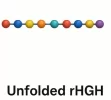
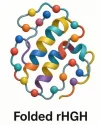

So when are you going to pay for a bioassay? Or any test for that matter? Or are you just going to continue using UGL GH that hasn’t been tested properly?He's not wrong that it's a sign that it's denatured. In other words, it's unfolded from its 3d structure, exposing "sticky" parts of the amino chain that are usually protected within rHGH's folds. This causes other monomers (single molecules of rHGH), denatured or not, to adhere, and after a few hundred thousand or millions of these "aggregate" together they'll exceed the 100um visibility threshold as one tiny visible speck in the cloudyness.
We don't remove them with a filter to restore functionality, we remove them because they present a potential health risk, and, aggregates continue to grow, drawing more and more rHGH to themselves.
You've heard of "dimer". This is the smallest aggregate. Two rHGH monomers attached. Trimer is three, etc.
We do know that the largest aggregates, still well below the visible threshold, which resemble bacteria to the immune system, are removed with filtration. These are the ones we're most concerned with because studies have shown this is the going to cause the strongest immune response.
Filtering can also break up soluble aggregates restoring some rHGH to active monomer form. So in this way it can make it more effective than it would be otherwise,
Worth noting here that there's nothing magic about aggregates crossing the visible threshold. Perfectly clear rHGH can also be packed with sub visibile aggregates, just as problematic. When your filter clogs on "clean" rHGH, just remember the filter pores will allow molecules to pass that are 4000 times the width of an rHGH monomer,
No one seems to notice Jano's testing never has "reconstituted cloudy" in the results. Known cloudy aggregate filled rHGH still often comes back with 98% purity, and the proper amount for the vial (24, 36 iu or whatever).
This is because it has to be .22um filtered before testing. Every peptide does. The test result "purity" always represents filtered rHGH.
This is very important. 98% purity doesn't mean that what's in the vial only contains 2% impurities. It means that it's got 2% impurities PLUS the crap the filter removed. The vial could contain 5 or 10 times as many impurities as the test indicates , large aggregates, glass particulates, bacteria, all caught by the filter and therefore unanalyzed.
That's why the anti-filtering Spaceclowns who pretend they really care about harm reduction, and insist testing is critical to ensure you know what you're injecting are full of shit. If you don't filter, the test results don't represent the purity of what you're injecting into your body.
As if this wasn't enough to digest, let's get back to your friend's comment about denatured rHGH.
View attachment 330678
View attachment 330679
HPLC Testing cannot distinguish between these two. Only the properly folded one is active. They'll both count as "pure" since they're both chemically correct, despite one not being structurally correct.
Again, there's are a small handful of members here who'll use all sorts of twisted logic to insist UGL rHGH is properly folded like pharma, and that questioning whether this is the case is some kind of anti-Jano heresy. We see VISBLE evidence of denatured rHGH all the time, in the form of cloudy (aggregated) vials, and you can be certain there's far, far more denatured monomers and aggregates below the visible size limit.
Even pharma deals with some very small amount of denatured rHGH.
Thats why they have to perform a bioassay, to see if 1mg of their rHGH properly binds to receptors to generate the required 2.69-3.1 IU of activity in vitro. Thats how you know how much rHGH is properly folded and functional.
Okay, so I was just told that filtering through 0.22 micron will not capture the denatured rhgh
"Native hGH is a small protein (22 kDa), with
a hydrodynamic diameter of about 4-5 nm--
much smaller than the pore size of a 0.22
um (220 nm) filter. It passes through easily"
Direct quote..... So yeah. We need smaller filter's???????????
Edit
Scratch that denatured HGH is misfolded protein. And filtering it would not suddenly filter that out versus normal hgh
So basically it's fucked.
If you keep injecting it, you're going to develop antibodies that make you resistant to HGH in the future. and the duration of it lasting your body really depends on your immune system.
In some cases, it can last up to a year.... Or more
So yeah, I'm pretty sure this is a really fucked up situation to be in.
Pretty sure iv seen bodybuilders talk about how they had to take more and more hgh over time to keep feeling it and some straight up go to pharma claiming its miles better. Likely due to less autoimmune reactions. I personally believe ugl to be just as good by some sources like lobster. But sigma HGH seems bottom of the barrel.Just to throw this out there, maybe for context: bodybuilders have been using non-filtered GH for decades.
GH has always been more expensive than it is now and bodybuilders were typically much poorer than they are now. They wouldn't have been doing it if it didn't work.
The pet theories aren't really adding up.
Where did you see that? youtube or something?Pretty sure iv seen bodybuilders talk about how they had to take more and more hgh over time to keep feeling it and some straight up go to pharma claiming its miles better.
Likely due to less autoimmune reactions.

Where did you see that? youtube or something?
Let's see the original claims (& sources) from the bodybuilders you mentioned, maybe it's something real.
 pmc.ncbi.nlm.nih.gov
pmc.ncbi.nlm.nih.gov
pmc.ncbi.nlm.nih.gov

 pubmed.ncbi.nlm.nih.gov
It’s fine. I promise.Damn I’ve just ordered 4 x 36 HGH kits from SSA…
You and Ghoul should just give up on UGL GH completely and switch to Pharma grade only. Problem solved. Everyone else here is going to continue buying UG and using it without a thought about your crawlers and AI responses.
"Aggregation of rhGH could elevate
the immunogenicity of its
pharmaceutical product". The
consequences of such aggregation are
not trivial, as "The presence of protein
aggregates may result in the reduction
of activity, induce immunologic
responses and failure of therapeutic
efficiency"
DO NOT DROP: MECHANICAL SHOCK IN VIALS CAUSES CAVITATION, PROTEIN AGGREGATION AND PARTICLE FORMATION - PMC
Industry experience suggests that g-forces sustained when vials containing protein formulations are accidentally dropped can cause aggregation and particle formation. To study this phenomenon, a shock tower was used to apply controlled g-forces to ...
"
A specific mechanism for aggregate
formation is mechanical shock, such as
when a vial is accidentally dropped.
Studies utilizing controlled mechanical
shock on vials containing rhGH have
shown that such events can lead to
cavitation. This process results in the
appearance of "gelatinous particles...on
the vial walls," and "subvisible particle
counts determined by microflow image
analysis increased". Crucially, it Was
T
concluded that "the mechanical shock
caused subvisible particles to form, and
such particles have the potential to
affect immunogenicity of the
formulation"? This is highly pertinent as
UGL HGH products are frequently
subjected to uncontrolled shipping and
handling, making mechanical shock and
subsequent particle formation a likely
occurrence"
Immunogenicity of therapeutic proteins: Influence of aggregation - PMC
The elicitation of anti-drug antibodies (ADA) against biotherapeutics can have detrimental effects on drug safety, efficacy, and pharmacokinetics. The immunogenicity of biotherapeutics is, therefore, an important issue. There is evidence that ...
"persistent antibodies
have been noted in patients with growth
hormone deficiency treated with
heavily-aggregated hGH, whereas
transient antibodies were seen in
patients given less aggregated forms".,
This directly links a higher burden of
aggregated HGH to a more sustained
antibody response. The underlying
reason aggregates are immunogenic
relates to their structure; "Aggregates
contain repetitive epitopes that might
mimic viruses or bacteria. By binding
and cross linking the B-cell receptors,
such stuctures can induce antibody
formation in a T-independent manne"
"Immunogenicity can be
induced by the active-drug substance
product, but more commonly results
from manufacturing impurities
originating from the producing cell line
or media components"." Furthermore,
"The presence of impurities in biological
products, structural modifications as a
result of the manufacturing process
and/or suboptimal storage conditions
can increase the risk of
immunogenicity"
"high levels of
host cell protein in a batch used for
Phase Ill studies were associated with
up to 60% of patients developing
antigrowth hormone antibodies (vs 2%
of patients treated with the reference
biologic)". This increased
immunogenicity was linked to E.
coli-derived protein impurities. The
issue was mitigated when "An additional
filtration step introduced in the
manufacturing process reduced the
immunogenicity of the product to levels
comparable to the innovator product".
This case clearly illustrates that host
cell protein (HCP) impurities, which are
almost certainly present in higher and
more variable quantities in UGL HGH
produced without GMP, can
significantly enhance the
immunogenicity of rhGH"
Assessment of innate immune response modulating impurities (IIRMI) in synthetic peptide drugs (liraglutide) - PubMed
Liraglutide for Injection is a GLP-1 analog that stimulates insulin secretion from pancreatic β-cells in a Glucose dependent manner for the treatment of diabetic patients, especially adult patients with type 2 diabetes, to control blood glucose levels. A generic drug of Liraglutide for injection...
Even trace levels of impurities in
synthetically produced peptides can be
problematic. A study on liraglutide, a
synthetic peptide, found that "even
trace levels of innate immune response
modulating impurities (IIRMI) in
synthetic peptide drugs...can activate
innate immunity...leading
to...enhancement of product
immunogenicity". This suggests that if
UGL HGH is produced via chemical
synthesis rather than recombinant
technology, impurities from the
synthetic process itself could contribute
to an immune response.
"
The development of anti-drug
antibodies (ADAs) against rhGH, often
triggered by the product quality issues
discussed previously, can have clinically
significant consequences, most notably
a reduction in the hormone's
therapeutic efficacy.
Official regulatory documents for
pharmaceutical-grade somatropin
acknowledge this risk. The FDA label for
Norditropin states: "In the case of
growth hormone, antibodies with
binding capacities lower than 2 mg/mL
have not been associated with growth
attenuation. In a very small number of
patients treated with somatropin, when
binding capacity was greater than 2 mg/
mL, interference with the growth
response was observed". This
establishes a direct link between a
certain threshold of ADA formation and
a discernible loss of rhGH efficacy"
I sat up all night researching all this. Probably wasted what? Six hours? Yeah, hope this is sufficient
@Ghoul
Seems like your info is indeed backed by scientific grounding. I was almost convinced that it could totally be placebo but then piles and piles of research papers all points to the following conclusions......maybe immune system strength equally prevents or causes an "your milage my very" response.
I'm very glad web crawlers exist. Makes it trivial to pull from vast amounts of academic research.


