Blood Pressure

re: nebivolol

Because it mainly works by slowing the heart and reducing output, not by relaxing or healing blood vessels — so it lowers numbers, but not the root cause of essential hypertension.


Simplified:


  • Hypertension = mostly a vascular resistance issue (stiff arteries, overactive RAAS).
  • ARB/CCB fix that directly (they relax arteries and block angiotensin).
  • Nebivolol just makes the heart pump slower/weaker → BP drops artificially, but arteries stay tight.


So while it looks effective on paper, long-term studies show less organ protection and higher stroke/metabolic risk vs ARB + CCB + thiazide.


That’s why it’s the “wrong pathway” for most people unless there’s a cardiac reason to need it.


  1. ARB / ACE inhibitor
  2. Calcium channel blocker
  3. Thiazide diuretic
  4. Beta-blocker
  5. Alpha-blocker
  6. Central agent
 
Last edited:
Were beta blockers ever recommended as first line agents?

In the US Beta Blockers weren't downgraded in widespread treatment standards until 2017. In the UK 2006. It's mixed in EU standards, some very early, back to the 1990's, while as late as 2024 the Euro Society of Cardiology still allow them to be first line treatment in certain circumstances where other conditions exist like angina. It seems to me this is more of a recognition some poorer parts of Europe (or, more likely Africa, where the ESC guidelines have been adopted), don't have access to higher priced, more appropriate meds in their medical systems.
 
FYI for everyone:

Since I last posted various charts etc from previous guidelines, two weeks ago the American Heart Association released their massive 2025 Blood Pressure Guidelines book. This is the uber guideline that consolidates the most solid recommendations from all other guidelines issued by major health organizations worldwide. They spent several years looking at all the latest research as well, and using an evidence based approach, updated various aspects of BP treatment. The guide itself is very interesting if you really dive into it, the "lifestyle" section alone has a lot of great info on what you can expect in terms of BP improvement from various types of exercise , changes to diet, etc. (it's not as much as you think though).


Most relevant to us is that for Stage 2 hypertension, >140 Systolic or >90 Diastolic, they now advise immediately starting with medication to reduce blood pressure.

View attachment 352823

The first line treatment should a a low dose combo of 2 classes from ACE / ARB / Diuretic / CCB. Do not combine ACE/ARB.

Beta Blockers look worse and worse for outcomes as the years go by, and they advise avoiding them except for patients with chronic heart disease or heart failure.

View attachment 352822

They point out it's now clear very few people can reach healthy blood pressure on a single class of med.

For most of us without medical complications, a combo of Telm + CCB (amlodipine is most common addition in the US), is the best choice. ACE/ARB and CCB address the two most common mechanisms of hypertension, so combined they have a very high rate of effectiveness and Telm/Amlo has a low rate of sides at low doses (40/5).

Cilnidipine is the best CCB of all, but unavailable in the US and has to be bought via India Pharma, a hassle but it is cheap. For most people Amlodipine is fine, but if you start with Telm/Amlo and find it works, for the long term consider ordering some Cilnidipine or a Telm/Ciln combo. Just double the Amlodipine dose for the equivalent Cilnidipine dose.

If low dose 2x med combo still leaves you a little high, doses of one or both can be increased. If it's way off, adding third class, a diuretic, is the next step. If that's not enough it's considered "resistant hypertension" and needs a specialist to evaluate for root cause.

View attachment 352822


Seriously. if you have any questions about dealing with BP, this is the bible. Some parts are heavily technical, but a lot of its 120 pages are clear enough for a layman to understand.

It rarely gets updated, and they only do so when the American Heart Association believes there are significant changes warranted by new research. The last update was 8 years ago, and the one before that was 15 years.


PS: You'll see color coded columns labeled COR and LOE. COR is "Strength" of the recommendation (risk to benefit) and LOE "quality of evidence" for it. Per this chart:

View attachment 352828

TLDR flowchart lol
1759776750786.webp

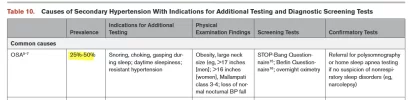
Also check for sleep apnea
1759776930305.webp
 
20mg Telmisartan (I cannot go higher or my potassium levels get out of range). And 20mg Cilnidipine.
Thanks. I'm currently on Telmisartan 40mg & Nebivolol 10mg (Nebi doc prescribed). However, this thread is making me rethink. Gonna have to place an order with PCT India soon.

Domestically available Amlodipine's edema side effects don't sound like something anyone wants to deal with.
 
Last edited:
Thanks. I'm currently on Telmisartan 40mg & Nebivolol 10mg (Nebi doc prescribed). However, this thread is making me rethink. Gonna have to place an order with PCT India soon.

Domestically available Amlodipine's edema side effects don't sound like something anyone wants to deal with.
That’s why I’m taking Cilnidipine. I was once taking Amlodipine. One night I got edema in my hands so bad it scared me. It took 2-3 days for that medication to clear my system.
 
Thanks. I'm currently on Telmisartan 40mg & Nebivolol 10mg (Nebi doc prescribed). However, this thread is making me rethink. Gonna have to place an order with PCT India soon.

Domestically available Amlodipine's edema side effects don't sound like something anyone wants to deal with.

Keep in mind Amlodipine is the 6th most prescribed med in the US with 17 million users. So terrible short term sides aren't that common. It has the lowest side effect risk of CCBs available in the US, and most people do fine on them. Edema (water retention) can occur at first but often resolves quickly. That's not the problem however....

While ARBs excel at relaxing large blood vessels like major arteries, CCBs like Amlodipine are more effective at relaxing smaller arteries. When used in combination, BP is lowered by more "evenly" relaxing the vascular system. So far so good right?

Long-term use of amlodipine makes you more vulnerable to future (age related) leg, ankle, and foot swelling because the drug chronically relaxes small arteries but not the corresponding veins. This constant imbalance raises pressure in the capillary beds and causes slow, persistent leakage of fluid into surrounding tissues. Over months or years, that repeated fluid pooling, even if no swelling is detected, leads to adaptive changes. Capillaries and the surrounding tissue weaken, the extracellular space expands. Even after stopping the drug, these tissues remain “conditioned” to hold fluid more easily, so edema can more easily occur from lesser triggers like heat, standing, or aging (think compression sock wearing grandpa). In contrast, cilnidipine widens both arterioles and venules by also blocking N-type calcium channels on sympathetic nerves, which reduces the pressure mismatch across the capillary wall. Because it maintains a better balance between inflow and outflow, cilnidipine is far less likely to cause those permanent adaptive changes that makes long term amlodipine users prone to recurrent edema even after stopping.

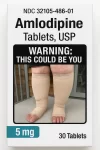
If I was in charge of FDA Black Box warnings on drug packaging:

E4B0DD75-F18A-47D6-A985-37C19FB5E894.webp.
 
Keep in mind Amlodipine is the 6th most prescribed med in the US with 17 million users. So terrible short term sides aren't that common. It has the lowest side effect risk of CCBs available in the US, and most people do fine on them. Edema (water retention) can occur at first but often resolves quickly. That's not the problem however....

While ARBs excel at relaxing large blood vessels like major arteries, CCBs like Amlodipine are more effective at relaxing smaller arteries. When used in combination, BP is lowered by more "evenly" relaxing the vascular system. So far so good right?

Long-term use of amlodipine makes you more vulnerable to future (age related) leg, ankle, and foot swelling because the drug chronically relaxes small arteries but not the corresponding veins. This constant imbalance raises pressure in the capillary beds and causes slow, persistent leakage of fluid into surrounding tissues. Over months or years, that repeated fluid pooling, even if no swelling is detected, leads to adaptive changes. Capillaries and the surrounding tissue weaken, the extracellular space expands. Even after stopping the drug, these tissues remain “conditioned” to hold fluid more easily, so edema can more easily occur from lesser triggers like heat, standing, or aging (think compression sock wearing grandpa). In contrast, cilnidipine widens both arterioles and venules by also blocking N-type calcium channels on sympathetic nerves, which reduces the pressure mismatch across the capillary wall. Because it maintains a better balance between inflow and outflow, cilnidipine is far less likely to cause those permanent adaptive changes that makes long term amlodipine users prone to recurrent edema even after stopping.

If I was in charge of FDA Black Box warnings on drug packaging:

View attachment 352882.

Dam just looks at those calf gainz.
 
Keep in mind Amlodipine is the 6th most prescribed med in the US with 17 million users. So terrible short term sides aren't that common. It has the lowest side effect risk of CCBs available in the US, and most people do fine on them. Edema (water retention) can occur at first but often resolves quickly. That's not the problem however....

While ARBs excel at relaxing large blood vessels like major arteries, CCBs like Amlodipine are more effective at relaxing smaller arteries. When used in combination, BP is lowered by more "evenly" relaxing the vascular system. So far so good right?

Long-term use of amlodipine makes you more vulnerable to future (age related) leg, ankle, and foot swelling because the drug chronically relaxes small arteries but not the corresponding veins. This constant imbalance raises pressure in the capillary beds and causes slow, persistent leakage of fluid into surrounding tissues. Over months or years, that repeated fluid pooling, even if no swelling is detected, leads to adaptive changes. Capillaries and the surrounding tissue weaken, the extracellular space expands. Even after stopping the drug, these tissues remain “conditioned” to hold fluid more easily, so edema can more easily occur from lesser triggers like heat, standing, or aging (think compression sock wearing grandpa). In contrast, cilnidipine widens both arterioles and venules by also blocking N-type calcium channels on sympathetic nerves, which reduces the pressure mismatch across the capillary wall. Because it maintains a better balance between inflow and outflow, cilnidipine is far less likely to cause those permanent adaptive changes that makes long term amlodipine users prone to recurrent edema even after stopping.

If I was in charge of FDA Black Box warnings on drug packaging:

View attachment 352882.
Lercanidipine has a lot lower side effect risk compared to Amlodipine and it should be available in the USA. No reason to use Amlodipine
 
I'm trying to follow but not familiar with all the acronyms and drug types. I've been on 40mg of Telmisartan for about two weeks. BP still high. 144/79, 137/75 this morning.

What would be my next step trying to get it down.

Right when I noticed the BP was high I had started low dose Deca. Literally i did a 50mg shot and the next day it was up. Probably hadn't checked it for a week. Seems like with the long ester it is pretty unlikely that it could be the cause so soon?
 
I'm trying to follow but not familiar with all the acronyms and drug types. I've been on 40mg of Telmisartan for about two weeks. BP still high. 144/79, 137/75 this morning.

What would be my next step trying to get it down.

Right when I noticed the BP was high I had started low dose Deca. Literally i did a 50mg shot and the next day it was up. Probably hadn't checked it for a week. Seems like with the long ester it is pretty unlikely that it could be the cause so soon?
CCB or diuretic next. CCB better, lercanidipine or cilnidipine if you can get the latter from India.
 
Unfortunately not available in US, and since you have to order from India anyway, Cilnidipine is still better than Lercanidipidine so may as well get that.
Really??? But it's available everywhere in Europe how is that possible?

Well yeah if one has to order to India Cilnidipine is the clear winner.

Got 1000 pills of it just in case xD
 
I'm trying to follow but not familiar with all the acronyms and drug types. I've been on 40mg of Telmisartan for about two weeks. BP still high. 144/79, 137/75 this morning.

What would be my next step trying to get it down.

Right when I noticed the BP was high I had started low dose Deca. Literally i did a 50mg shot and the next day it was up. Probably hadn't checked it for a week. Seems like with the long ester it is pretty unlikely that it could be the cause so soon?

At 2 weeks you have most of Telm's effects. From starting 150/80, 40mg Telm is expected to get you to approx 136/74.

The next step, most commonly, would be adding a low dose CCB. 10mg Cilnidipine would get you to 125/68. You can get it separately or single pill combo with 40mg Telm from The India vendors.

If your off cycle BP is elevated too, you can likely stay on it if you want. because the effect is proportionate to baseline BP, and not likely to cause hypotension at those small doses.
 
Keep in mind Amlodipine is the 6th most prescribed med in the US with 17 million users. So terrible short term sides aren't that common. It has the lowest side effect risk of CCBs available in the US, and most people do fine on them. Edema (water retention) can occur at first but often resolves quickly. That's not the problem however....

While ARBs excel at relaxing large blood vessels like major arteries, CCBs like Amlodipine are more effective at relaxing smaller arteries. When used in combination, BP is lowered by more "evenly" relaxing the vascular system. So far so good right?

Long-term use of amlodipine makes you more vulnerable to future (age related) leg, ankle, and foot swelling because the drug chronically relaxes small arteries but not the corresponding veins. This constant imbalance raises pressure in the capillary beds and causes slow, persistent leakage of fluid into surrounding tissues. Over months or years, that repeated fluid pooling, even if no swelling is detected, leads to adaptive changes. Capillaries and the surrounding tissue weaken, the extracellular space expands. Even after stopping the drug, these tissues remain “conditioned” to hold fluid more easily, so edema can more easily occur from lesser triggers like heat, standing, or aging (think compression sock wearing grandpa). In contrast, cilnidipine widens both arterioles and venules by also blocking N-type calcium channels on sympathetic nerves, which reduces the pressure mismatch across the capillary wall. Because it maintains a better balance between inflow and outflow, cilnidipine is far less likely to cause those permanent adaptive changes that makes long term amlodipine users prone to recurrent edema even after stopping.

If I was in charge of FDA Black Box warnings on drug packaging:

View attachment 352882.
Those cankles are hot
 
To ask the other way around:

Where is the BP threshold for a 100kg male, where it would become too low for optimal gym performance?

Where is are longevity and performance well balanced?
 
CCB or diuretic next. CCB better, lercanidipine or cilnidipine if you can get the latter from India.

At 2 weeks you have most of Telm's effects. From starting 150/80, 40mg Telm is expected to get you to approx 136/74.

The next step, most commonly, would be adding a low dose CCB. 10mg Cilnidipine would get you to 125/68. You can get it separately or single pill combo with 40mg Telm from The India vendors.

If your off cycle BP is elevated too, you can likely stay on it if you want. because the effect is proportionate to baseline BP, and not likely to cause hypotension at those small doses.
Thank you both I appreciate it. I am hoping my BP drops post cycle. We'll see. But sounds like I need to get another order in with PCT24x7
 
Back
Top