
Ghoul
Member
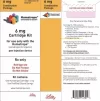
The 10mg vials of reta I received in a recent order do not have a vacuum. They are otherwise sealed and appear to reconstitute normally. The rep insisted this is not an issue. Has anyone else encountered this and would you use these? I know a vacuum doesn't itself ensure sterility, but I'm concerned that a lack of one indicates a QC issue. The other two kits I ordered have the expected vacuum seal.
Yes it’s a QC issue, don’t let them gaslight you.
“Oh we’ve been vacuum sealing vials for years for fun, it doesn’t actually mean anything, you know how much Chinese businesses enjoy spending money they don’t have to with useless extra work like this.”
Most of the cheaper vendors won’t do shit about it, but we need to keep calling it out.
Filter it to ensure sterility which of course is compromised, and to remove most of the aggregates that oxidative damage makes more likely to form, (you should be filtering regardless of vacuum).
Ensure the kit is refrigerated. I know most do anyway but some don’t, and without going too far down the rabbit hole, when peptides are damaged by oxidation, they can still function (attach to the receptor), but they become less stable to temperature degradation. So a peptide that might’ve been ok for a month at room temp (in dry form), let’s say losing 1%, may degrade 10% after being oxidized.
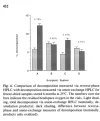
Here are 4 vials of different formulations of lyophiiized rHGH. The percentages at the top of the bars is the amount of oxygen left in the headspace (the empty area in the vial). Only the dark bars matter. You can see .75% oxygen makes the rHGH degrade nearly twice as fast at room temp as .45% oxygen.
Pharma doesn’’t use vacuum, it can fail because the continuous vacuum force on the stopper can suck in air, moisture, and bacteria if the seal isn’t perfect, movement in transport etc, causing degradation and loss of sterility, a major problem as far as they and the FDA are concerned.
Instead they vacuum and backfill with an inert gas like nitrogen. The funny thing is even the cheap lyophilization machines UGLs use can do this if someone hooks up a nitrogen canister. It would cost nearly nothing, and keep peptide quality up much longer, especially because unlike pharma, UGL peptides are exposed to uncontrolled temps in storage, an often very high heat in shipping container la (150°f+ in summer).
Nitrogen flush is standard for commercial manufacturers of peptides.
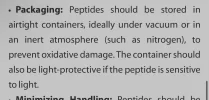
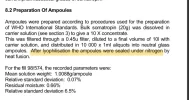
The World Health Organization minimum standard for lyophilized rHGH includes nitrogen flush.
Last edited: