First time using hgh. Titrated up to 10iu. The next time I went in and did blood work. Igf levels were 150. Does this sound right? I have tightness in my hands. And thought it was legit but figured my igf levels wld have been higher. Heard it takes 6 to 8 months to see results so any input would be appreciated.

MESO-Rx
Anabolic Steroids

Navigation
Install the app
How to install the app on iOS
Follow along with the video below to see how to install our site as a web app on your home screen.
Note: This feature may not be available in some browsers.
More options
Style variation
Guest viewing limit reached
- You have reached the maximum number of guest views allowed
- Please register below to remove this limitation
- Already a member? Click here to login
You are using an out of date browser. It may not display this or other websites correctly.
You should upgrade or use an alternative browser.
You should upgrade or use an alternative browser.
Hgh and IGF levels
- Thread starter Luther
- Start date
Proud Pangolin
Member
Basiacally the systemic igf-1 level doenst tell you much. For anabolism the autocrine igf-1 is relevant. Thats why you have such huge difference in anabolic responses with similar igf-1 levels. Thats also the reason why even though systemic igf-1 didnt continue to increase in studys with more than 6IU rHGH bodybuilders report more anabolic effect with higher dosage.
In lower rHGH dosages systemic igf-1 has even a negative effect on autocrine igf-1 which seems to be overwritten at higher dosages and of course while rHGH increases systemic igf-1 which may surpress autocrine igf-1 it also increases autocrine igf-1 at the same time.
Its complicated and i havent understood it completely yet but i tried to break it down.
In lower rHGH dosages systemic igf-1 has even a negative effect on autocrine igf-1 which seems to be overwritten at higher dosages and of course while rHGH increases systemic igf-1 which may surpress autocrine igf-1 it also increases autocrine igf-1 at the same time.
Its complicated and i havent understood it completely yet but i tried to break it down.
Proud Pangolin
Member
Was your source trustworth? Yes? Then see my other commentMy friend had the same issue pulled bloods on 10iu new vendor natty IGF can anyone be of assistance and call me a retard ? Appreciated

Ghoul
Member
Below are the major factors that crush IGF-1. They create “GH resistance”, lowering the amount of IGF-1 the liver creates per unit of GH. AIDS patients need 15-18iu of rHGH to get normal IGF levels and regain some lost muscle because they have several of these factors:
Calorie (especially protein) deficit. 20% or more = huge reduction in IGF-1
Oral AAS.
High HS-CRP >3. (Systemic inflammation)
Low Thyroid hormone levels.
Fatty Liver
Alcohol use.
Very high E2, 100+
Calorie (especially protein) deficit. 20% or more = huge reduction in IGF-1
Oral AAS.
High HS-CRP >3. (Systemic inflammation)
Low Thyroid hormone levels.
Fatty Liver
Alcohol use.
Very high E2, 100+
Last edited:

nxckf
New Member
Makes me wonder why some people make such a huge deal about getting baseline IGF1 before starting GH. If it’s such an arbitrary number, then what is really told by knowing the number? I guess you could use them as reference points to each other (baseline, vs after exogenous GH introduction).There's zero rhyme or reason to IGF-1 levels.
One of the more famous examples is Chase Irons being at something like 200 from 18iu of Serostim a day LOL.

crispybacon!
Member
I wouldn’t say it’s arbitrary, but rather has a lot of other factors that can influence it. For example in my case, I’ve found it quite useful.Makes me wonder why some people make such a huge deal about getting baseline IGF1 before starting GH. If it’s such an arbitrary number, then what is really told by knowing the number? I guess you could use them as reference points to each other (baseline, vs after exogenous GH introduction).
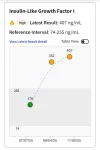
Got baseline before starting (176), and since have used two different reputable sources GH at 4iu/day and seeing clear and fairly consistent results of 382 & 407.
Ghoul
Member
Makes me wonder why some people make such a huge deal about getting baseline IGF1 before starting GH. If it’s such an arbitrary number, then what is really told by knowing the number? I guess you could use them as reference points to each other (baseline, vs after exogenous GH introduction).
Let’s say your baseline is 300, Z score 2.2, which puts you in the top 1% for your age.
You take 4iu, shutting down natural growth hormone production. and your IGF is now 290 (great if you started at 150), except now you also get side effects.
The starting point shows you how much rHGH is improving your level vs natural.
been reading this thread as im trying to learn more about gh never taken it yet personally, so when taking growth hormone exogenous these things can stop the growth hormone from telling the liver and other tissues to maybe not make as much igf 1 as someone without these conditions ?Below are the major factors that crush IGF-1. They create “GH resistance”, lowering the amount of IGF-1 the liver creates per unit of GH. AIDS patients need 15-18iu of rHGH to get normal IGF levels and regain some lost muscle because they have several of these factors:
Calorie (especially protein) deficit. 20% or more = huge reduction in IGF-1
Oral AAS.
High HS-CRP >3. (Systemic inflammation)
Low Thyroid hormone levels.
Fatty Liver
Alcohol use.
Very high E2, 100+
Ghoul
Member
been reading this thread as im trying to learn more about gh never taken it yet personally, so when taking growth hormone exogenous these things can stop the growth hormone from telling the liver and other tissues to maybe not make as much igf 1 as someone without these conditions ?
Correct.
I find it easier to understand these factors by thinking of them in evolutionary terms (where it’s possible).
IGF-1 is “growth”.
Higher systemic IGF-1 levels create an anabolic “pro growth” environment.
For the most part, the things that inhibit the rate of IGF-1 per unit of GH are conditions when you wouldn’t want to spend resources growing, and conserve them for survival.
Calorie deficit is a starvation signal. Prioritize resource use for going out and getting calories (hunting, gathering).
High inflammation is a sickness or injury signal. Prioritize resources to fight off infection or illness.
Low thyroid is a seasonal / hibernation signal. Food is going to be scarce for the foreseeable future. Prioritize energy conservation to survive the winter. (Tropical environments have the lowest rates of hypothyroidism, northern environments have the highest, btw).
Conversely, the opposite of the above, calorie surplus / abundant food, low inflammation / great health, rising thyroid levels / longer warmer days more food available, are good conditions to grow.
(Alcohol, Oral AAS, Liver fat all directly harm proper liver function)
(High estradiol signals the liver to change from male to female phenotype. Women produce more GH than men, promotes attractiveness via good skin and hair, improves fertility, but lower IGF-1 production, less muscle and coarse masculine features, smaller size).
Last edited:
90 percent of IGF-1 that causes hypertrophy comes from muscle itself, not the liver. Serum igf-1 means fuck all. IGF-1 in muscle stimulates mtor and protein synthesis. It does not show up in blood tests. Real igf-1 is inside the muscle and is 10x more important for hypertrophy. Serum IGF-1 down = muscle igf-1 UP. Your serum igf-1 can be in the gutter but you can be growing like crazy. Why? Because GH is working inside the muscle not in the bloodstream. More mass = more igf-1 uptake = low serum igf-1.Correct.
I find it easier to understand these factors by thinking of them in evolutionary terms (where it’s possible).
IGF-1 is “growth”.
Higher systemic IGF-1 levels create an anabolic “pro growth” environment.
For the most part, the things that inhibit the rate of IGF-1 per unit of GH are conditions when you wouldn’t want to spend resources growing, and conserve them for survival.
Calorie deficit is a starvation signal. Prioritize resource use for going out and getting calories (hunting, gathering).
High inflammation is a sickness or injury signal. Prioritize resources to fight off infection or illness.
Low thyroid is a seasonal / hibernation signal. Food is going to be scarce for the foreseeable future. Prioritize energy stores to survive the winter.
Conversely, the opposite of the above, calorie surplus / abundant food, low inflammation / great health, rising thyroid levels / longer warmer days more food available, are good conditions to grow.
thanks for the reply bro iv gone down a right rabbit hole here, so is it similar to say mtor and ampk ?Correct.
I find it easier to understand these factors by thinking of them in evolutionary terms (where it’s possible).
IGF-1 is “growth”.
Higher systemic IGF-1 levels create an anabolic “pro growth” environment.
For the most part, the things that inhibit the rate of IGF-1 per unit of GH are conditions when you wouldn’t want to spend resources growing, and conserve them for survival.
Calorie deficit is a starvation signal. Prioritize resource use for going out and getting calories (hunting, gathering).
High inflammation is a sickness or injury signal. Prioritize resources to fight off infection or illness.
Low thyroid is a seasonal / hibernation signal. Food is going to be scarce for the foreseeable future. Prioritize energy conservation to survive the winter. (Tropical environments have the lowest rates of hypothyroidism, northern environments have the highest, btw).
Conversely, the opposite of the above, calorie surplus / abundant food, low inflammation / great health, rising thyroid levels / longer warmer days more food available, are good conditions to grow.
(Alcohol, Oral AAS, Liver fat all directly harm proper liver function)
(High estradiol signals the liver to change from male to female phenotype. Women produce more GH than men, promotes attractiveness via good skin and hair, improves fertility, but lower IGF-1 production, less muscle and coarse masculine features, smaller size).
Ghoul
Member
90 percent of IGF-1 that causes hypertrophy comes from muscle itself, not the liver. Serum igf-1 means fuck all. IGF-1 in muscle stimulates mtor and protein synthesis. It does not show up in blood tests. Real igf-1 is inside the muscle and is 10x more important for hypertrophy. Serum IGF-1 down = muscle igf-1 UP. Your serum igf-1 can be in the gutter but you can be growing like crazy. Why? Because GH is working inside the muscle not in the bloodstream. More mass = more igf-1 uptake = low serum igf-1.
Yes, systemic IGF-1 has very little impact on muscle growth. Locally produced muscle IGF-1 is responsible for almost all hypertrophy. It’s mostly stimulated by resistance, but how much that’s possible is dependent on the same conditions that increase liver produced IGF-1.
We can’t measure IGF-1 levels in muscle.
That’s the reason systemic serum IGF-1 is used. It’s a proxy that tells us if conditions are good for IGF-1 production in muscle.
The same factors that inhibit IGF-1 production in the liver, inflammation, low thyroid, calorie deficit, etc inhibit IGF-1 production in muscle too.
If it’s all good in the liver and systemic IGF-1 is high, those conditions are “permissive” for muscle growth. It means the “brakes” are off muscle IGF-1 production. It’s not blunted.
When systemic IGF-1 is low, it’s not as reliable of an indicator. If it’s low because of the things that directly injure the liver, alcohol, oral AAS, liver fat, that doesn’t mean muscle IGF-1 is inhibited.
But if it’s the normal feedback signals causing low systemic IGF-1, inflammation etc, it’s going to be blunted in muscles too, limiting growth.
Last edited:

Wrangel7
Member
@Proud Pangolin, @Ghoul, do you have a recommended reading list on this topic?
Ghoul
Member
@Proud Pangolin, @Ghoul, do you have a recommended reading list on this topic?
The concerns and best practices related to long term, “anti aging” or “hormone optimization” use are different from short term supraphysiologic “contest prep” use. So different I think they’re almost two different subjects, even though there’s some crossover.
Long term, physiological range use has a lot more scientific data behind it, even if we’re talking about “off label” use since, like TRT, is supposed to be reserved for people with a formally defined “deficiency”, and not used to push levels of the respective hormone to “optimum levels”. (Or slightly above).
Unfortunately this isn’t a topic with a lot of “light reading” available. Not exactly something non endocrinologists have an interest in. Type IIx “Bolus” is the only non-physician target book I’m aware of.
This guideline document is a little dense, but there are lots of gems in it a scientifically literate layman can understand, so it’s worth browsing.
Just a few notes that might make it easier to navigate.
There’s a chart for all the acronyms used, so note the page it’s on so you can go back and check. For example, “SDS”, is “standard deviation score”, or how far above or below average, in this context, IGF is. (-2 to +2 is physiological). This is equivalent to IGF Z score, by the way.
You’ll see “evidence grades” for each recommendation. This is a common way guidelines tell you how strong the evidence is that backs up a particular piece of information or recommended practice. Everything in guidelines like this has to be backed by evidence. They provide references so you can dig into the studies that established that evidence, and go down whatever rabbit hole that catches your interest.
Here’s an example of info that most people can understand if you dig deeper into this, just so you don’t get discouraged if the first part of the document seems incomprehensible:
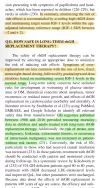
Enjoy, and consider sharing anything you find interesting. It’s unlikely any one of us will catch everything useful in the guideline:
Proud Pangolin
Member
@Proud Pangolin, @Ghoul, do you have a recommended reading list on this topic?
The Most Effective Growth Hormone Protocol for Hypertrophy «
 stackingplates.com
This is a very good summary with sources linked at the end
Wrangel7
Member
The concerns and best practices related to long term, “anti aging” or “hormone optimization” use are different from short term supraphysiologic “contest prep” use. So different I think they’re almost two different subjects, even though there’s some crossover.
Long term, physiological range use has a lot more scientific data behind it, even if we’re talking about “off label” use since, like TRT, is supposed to be reserved for people with a formally defined “deficiency”, and not used to push levels of the respective hormone to “optimum levels”. (Or slightly above).
Unfortunately this isn’t a topic with a lot of “light reading” available. Not exactly something non endocrinologists have an interest in. Type IIx “Bolus” is the only non-physician target book I’m aware of.
This guideline document is a little dense, but there are lots of gems in it a scientifically literate layman can understand, so it’s worth browsing.
Just a few notes that might make it easier to navigate.
There’s a chart for all the acronyms used, so note the page it’s on so you can go back and check. For example, “SDS”, is “standard deviation score”, or how far above or below average, in this context, IGF is. (-2 to +2 is physiological). This is equivalent to IGF Z score, by the way.
You’ll see “evidence grades” for each recommendation. This is a common way guidelines tell you how strong the evidence is that backs up a particular piece of information or recommended practice. Everything in guidelines like this has to be backed by evidence. They provide references so you can dig into the studies that established that evidence, and go down whatever rabbit hole that catches your interest.
Here’s an example of info that most people can understand if you dig deeper into this, just so you don’t get discouraged if the first part of the document seems incomprehensible:
View attachment 362153
Enjoy, and consider sharing anything you find interesting. It’s unlikely any one of us will catch everything useful in the guideline:
Thank you both. I already have a print copy of Bolus.The Most Effective Growth Hormone Protocol for Hypertrophy «
This is a very good summary with sources linked at the end
 .
. There is virtually always more to learn, though!
initialize
Member
Was just about to make a thread on this.
In September I got my baseline IGF levels before starting HGH and it came back at 269
I've been on HGH since then. Started at 2IU and bumped it up to 3IU for the last month or so. IGF levels just came back today at 187. WTF.
Should I continue at this dose or bump it up?
In September I got my baseline IGF levels before starting HGH and it came back at 269
I've been on HGH since then. Started at 2IU and bumped it up to 3IU for the last month or so. IGF levels just came back today at 187. WTF.
Should I continue at this dose or bump it up?
Ghoul
Member
Was just about to make a thread on this.
In September I got my baseline IGF levels before starting HGH and it came back at 269
I've been on HGH since then. Started at 2IU and bumped it up to 3IU for the last month or so. IGF levels just came back today at 187. WTF.
Should I continue at this dose or bump it up?
You’re taking enough to shut down endogenous production but not enough to replace what you were already producing.
That’s why everyone needs a clean baseline IGF. I’ll bet there are lots of people with lower IGF than they already had without rHGH.
Yes, increase the dose. Aim for a Z score 2-3 if you can get there with tolerable sides.
While you’re at it anyway, get A1C, HS-CRP, CMP, GGT, and if on gear and using an AI, e2.
These can impact IGF levels significantly.
Similar threads
- Replies
- 28
- Views
- 804
- Replies
- 5
- Views
- 107


- Replies
- 7
- Views
- 1K


