
dinfar1337
Member
terms:
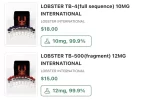
synthetic tb = TB-500 Frag(Ac-LKKTETQ) 889da(g/mol) frag also known as TB-500 Fragment LKKTETQ (17-23)
tb = FULL Protein TB-500 43 4921 g/mol
also written by Bill Roberts TB-500 Peptide Profile
i think with our new info on the tb500 series, we should refer to bill's write up as best usage with unknown inflammation sites and skin health. Refer to my comparing of dynamics of tb and synthetic tb down below.
TB-500 Frag (Ac-LKKTETQ) Peptide Profile
Synthetic tb is a synthetic peptide fragment derived from the naturally occurring protein thymosin beta-4 (TB-4). It is the short active sequence of TB-4 that is directly responsible for wound healing, tissue repair, and angiogenesis. Unlike tb, which is too large and unstable for therapeutic use, the frag is small, stable, and bioavailable making it the real “injury healing version” gymbros are after when they talk about "TB-500".
When to Use TB-500 Frag(make tis big):
Consider TB-500 frag in cases of:
Acute injuries where healing would extremely be slow (muscle tears, tendon strains).
Chronic injuries that aren’t healing naturally (tendinitis, joint irritation).
Limited range of motion caused by scar tissue or adhesions.
Animal and in-vitro studies suggest that this synthetic tb enhances cell migration, angiogenesis, and wound repair. Compared to tb, it has by far better systemic availability and directly targets the actin-binding domain responsible for these effects.
Possible Synergies
HGH and GHRP'S is similar to tb and synthetic tb and may stack well with GH or GHRPs (GHRP-2, GHRP-6, ipamorelin). These can achieve syngery and increase recovery rate and tissue remodeling.
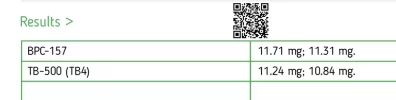
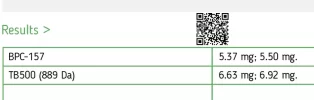
BPC-157 is widely stacked in bodybuilding witb tb(wish it were with synthetic tb more often), though its likely that BPC carries most of the burden in these combos both with tb and synthetic tb. Using frag alone allows for clearer results and could accelerte healing even further than we have seen by stacked with tb
Dosing:
i think 3x a week is simply wrong and we should dose it eod from my overview here.
With the sucky effects of tb lasting longer than synthetic tb, but more of it is gone to waste. i suggest somewhere around 2-10mg eod depending on injury.
Comparing known dosages of tb. we can look at pharmocokinetics of both tb and synthetic tb and compare.
structure;
tb is larger in than synthetic tb.
half-life;
tb has a longer half life than synthetic tb
tb = 2-12 hours depending on injection route,
and synthetic tb is <2 hours
Detectability;
tb is detected up to 2-3 days in metabolites
synthetic tb detected up to <=72 hours in plasma and urine.
Stability;
tb's large size make its unsuitable for therapeutic use. theres a lot of unnecessary action going on with tb which we simply are not after when it comes to healing, from injures. Usually abused in a bodybuilding context.
synthetic tb is a smaller size peptide and have a way better stability but it degrades quickly after its injected.
Tissue penetration;
tb is limited, the big size of almost 5000 g/mol peptide restricts its diffusion.
synthetic tb is vastly superior and its 900 g/mol size is perfect for penetrating tissues more efficiently.
Bioavailability;
The bioavailability of tb is poor from its big size and its rapidly degraded from injection>circulation, which affects tissue penetration and affects consistent delivery.
synthetic tb has better systemic bioavailability. Which shows in its detected in plasma and urine.
dynamics;
tb has broad but unfocused effects (angiogenesis, cell migration, stem cell activation, anti-inflammatory)
synthetic tb has very specific action on actin-binding and wound healing pathways
activity;
tb is incosistent, unstable and will require higher dosages to have any healing effects in hope of enough of it breaks down into synthetic tb
synthetic tb has "stronger reproducible wound-healing activity" (Rahaman et al., 2024)
Thoughts and keypoints
Researchers made the tb500 frag before the knowledge of its actually the broken down tb500 fragment which provides all the healing properties of tb500. The bioavailability of synthetic tb is made specifically to address this issue we had with tb and make a peptide more focused on stability, before the rat study we had no idea about the thats its the culprit for healing! And made so successfully. With its smaller size its more stable, and its more likely to reach systemic circulation.
synthetic tb can be detected in plasma and urine when tb cannot be tracked in plasma and urine. Which suggests better systemic bioavailability.
studies showed that tb is broken down when injected into the bodies as fragments and the synthetic tb is the main culprit of healing wounds which shows the healing action is tied to specific tb fragments and not the full protein itself.
synthetic therapeutic activity itself is linked to the actin binding domain. And by focusing on the synthetic tb the studies have been able to find that we can reduce metabolic waste and skip out on unnecessary amino acids and directly target the key healing mechanism
Looking at the Rahaman vivo rat study, we saw the metabolite was the only metabolite which showed significant healing compared to the control group which showed the healing effects of tb are not from the full protein but from a specific fragment Ac-LKKTE. even though Ac-LKK was present in higher concentrations it didnt contribute "significantly to wound healing". Only "Ac-LKKTE had measurable therapeutic activity" proving that the key healing mechanism is tied to this specific fragment and not the full tb protein.
“Ac-LKK was the primary metabolite with the highest concentration in rats at 0-6 h intervals. Also, the metabolite Ac-LKKTE only showed a significant wound healing activity compared to the control” (Rahaman et al., 2024).
all of tb therapeutic potential comes from its actin-binding domain (LKKTETQ aka synthetic tb), which regulates cell migration, angiogenesis, and tissue repair. By focusing on the 889 da fragment that contains this sequence researchers can bypass unnecessary amino acids, reduce metabolic waste, improve reproducibility in results.
“TB-500 is based on a single one of the ‘active sites’ of TB4 — the peptide segment responsible for the compound’s actin-binding and cell migration abilities” (Innerbody Research, 2025).
bonus for resellers & manufacturers.
making tb is more expensive than synthetic tb.
which means we can get a better product on the market which actually have healing effects.
shoutout to the bpc-157 which made everyone think the tb was working, while they could have gotten so much more out of their healing stack with synthetic tb.
bonus for the peptide nerds:
you get a higher bang for your buck since less tb500 will be degraded with a more full peptide.
your peptide can deliver consistent and good results
you get less immunogenicity risk from antigens and aggregates
synthetic tb shows the same angiogenic, anti inflammatorry, cytoprotective properties and possibly with better delivery than tb
what we're missing still:
direct comparing studies of tb vs synthetic tb
a characterization of the full pharmacokinetics of both synthetic tb and tb
a better slow release formula added to the synthetic tb for better half life. fatty acid conjugation is probably the best way to go for this one since we want it as stable as possible.
References with quotes
Esposito, S., et al. (2012). Synthesis and characterization of the N-terminal acetylated 17-23 fragment of human thymosin beta-4 identified in TB-500. Drug Testing and Analysis.

 pubmed.ncbi.nlm.nih.gov
“This work describes the detection and the identification of the N-terminal acetylated 17–23 fragment of human thymosin beta 4 (Ac-LKKTETQ) in TB-500…”
“Ac-LKKTETQ was also synthesized by solid-phase peptide synthesis, and an analytical strategy for detection in plasma and urine … was suggested.”
Rahaman, K.A., et al. (2024). Simultaneous quantification of TB-500 and its metabolites in in-vitro experiments and rats by UHPLC-Q-Exactive orbitrap MS/MS. Journal of Chromatography B.
pubmed.ncbi.nlm.nih.gov
“Ac-LKK was the primary metabolite with the highest concentration in rats at 0-6 h intervals.”
“The metabolite Ac-LKKTE only showed a significant wound healing activity compared to the control.”
Innerbody Research. (2025). TB-4 and TB-500 Peptide Therapy: What the Science Says.

 www.innerbody.com
“TB-500 is based on a single one of the ‘active sites’ of TB4 — the peptide segment responsible for the compound’s actin-binding and cell migration abilities.”
www.innerbody.com
“TB-500 is based on a single one of the ‘active sites’ of TB4 — the peptide segment responsible for the compound’s actin-binding and cell migration abilities.”
Biological activities of thymosin beta(4) defined by active sites in short peptide sequences
pubmed.ncbi.nlm.nih.gov
“A short sequence containing LKKTETQ, the central actin-binding domain (aa 17-23) plus 1 additional amino acid (Q), promotes angiogenesis, wound healing, and cell migration.”
Thymosin beta-4 and a synthetic peptide containing its actin-binding domain promote dermal wound repair in db/db diabetic mice and in aged mice
pubmed.ncbi.nlm.nih.gov
“The actin-binding domain of thymosin beta 4 duplicated in a seven-amino acid synthetic peptide, LKKTETQ, was able to promote repair in the aged animals comparable to that observed with the parent molecule.”
The actin binding site on thymosin beta4 promotes angiogenesis
pubmed.ncbi.nlm.nih.gov
“Thymosin beta4 and the actin-binding motif of the peptide display near-identical activity at ~50 nM, whereas peptides lacking any portion of the actin motif were inactive.”
In vitro and in vivo pro-angiogenic effects of thymosin-β4-derived peptides
pubmed.ncbi.nlm.nih.gov
“Tβ4-derived peptides exert both in vitro and in vivo pro-angiogenic effects; their in vitro effect seems to be related to the activation of several signaling pathways and is positively modulated by the N-terminus of Tβ4.”
TB500/TB1000 and SGF1000: a scientific approach for a better understanding of misbranded and adulterated drugs
“We confirm that the content of TB500/TB1000 products is not systematically consistent with its former descriptions …”
Identification and quantification of thymosin beta4 in human saliva and tears
“Thymosin beta(4) (Tbeta(4)) is a ubiquitous, naturally occurring, 43-amino acid peptide … that takes part in several biological activities including angiogenesis, inhibition of inflammation, wound healing …”
pubmed.ncbi.nlm.nih.gov
synthetic tb = TB-500 Frag(Ac-LKKTETQ) 889da(g/mol) frag also known as TB-500 Fragment LKKTETQ (17-23)
tb = FULL Protein TB-500 43 4921 g/mol
also written by Bill Roberts TB-500 Peptide Profile
i think with our new info on the tb500 series, we should refer to bill's write up as best usage with unknown inflammation sites and skin health. Refer to my comparing of dynamics of tb and synthetic tb down below.
TB-500 Frag (Ac-LKKTETQ) Peptide Profile
Synthetic tb is a synthetic peptide fragment derived from the naturally occurring protein thymosin beta-4 (TB-4). It is the short active sequence of TB-4 that is directly responsible for wound healing, tissue repair, and angiogenesis. Unlike tb, which is too large and unstable for therapeutic use, the frag is small, stable, and bioavailable making it the real “injury healing version” gymbros are after when they talk about "TB-500".
When to Use TB-500 Frag(make tis big):
Consider TB-500 frag in cases of:
Acute injuries where healing would extremely be slow (muscle tears, tendon strains).
Chronic injuries that aren’t healing naturally (tendinitis, joint irritation).
Limited range of motion caused by scar tissue or adhesions.
Animal and in-vitro studies suggest that this synthetic tb enhances cell migration, angiogenesis, and wound repair. Compared to tb, it has by far better systemic availability and directly targets the actin-binding domain responsible for these effects.
Possible Synergies
HGH and GHRP'S is similar to tb and synthetic tb and may stack well with GH or GHRPs (GHRP-2, GHRP-6, ipamorelin). These can achieve syngery and increase recovery rate and tissue remodeling.
BPC-157 is widely stacked in bodybuilding witb tb(wish it were with synthetic tb more often), though its likely that BPC carries most of the burden in these combos both with tb and synthetic tb. Using frag alone allows for clearer results and could accelerte healing even further than we have seen by stacked with tb
Dosing:
i think 3x a week is simply wrong and we should dose it eod from my overview here.
With the sucky effects of tb lasting longer than synthetic tb, but more of it is gone to waste. i suggest somewhere around 2-10mg eod depending on injury.
Comparing known dosages of tb. we can look at pharmocokinetics of both tb and synthetic tb and compare.
structure;
tb is larger in than synthetic tb.
half-life;
tb has a longer half life than synthetic tb
tb = 2-12 hours depending on injection route,
and synthetic tb is <2 hours
Detectability;
tb is detected up to 2-3 days in metabolites
synthetic tb detected up to <=72 hours in plasma and urine.
Stability;
tb's large size make its unsuitable for therapeutic use. theres a lot of unnecessary action going on with tb which we simply are not after when it comes to healing, from injures. Usually abused in a bodybuilding context.
synthetic tb is a smaller size peptide and have a way better stability but it degrades quickly after its injected.
Tissue penetration;
tb is limited, the big size of almost 5000 g/mol peptide restricts its diffusion.
synthetic tb is vastly superior and its 900 g/mol size is perfect for penetrating tissues more efficiently.
Bioavailability;
The bioavailability of tb is poor from its big size and its rapidly degraded from injection>circulation, which affects tissue penetration and affects consistent delivery.
synthetic tb has better systemic bioavailability. Which shows in its detected in plasma and urine.
dynamics;
tb has broad but unfocused effects (angiogenesis, cell migration, stem cell activation, anti-inflammatory)
synthetic tb has very specific action on actin-binding and wound healing pathways
activity;
tb is incosistent, unstable and will require higher dosages to have any healing effects in hope of enough of it breaks down into synthetic tb
synthetic tb has "stronger reproducible wound-healing activity" (Rahaman et al., 2024)
Thoughts and keypoints
Researchers made the tb500 frag before the knowledge of its actually the broken down tb500 fragment which provides all the healing properties of tb500. The bioavailability of synthetic tb is made specifically to address this issue we had with tb and make a peptide more focused on stability, before the rat study we had no idea about the thats its the culprit for healing! And made so successfully. With its smaller size its more stable, and its more likely to reach systemic circulation.
synthetic tb can be detected in plasma and urine when tb cannot be tracked in plasma and urine. Which suggests better systemic bioavailability.
studies showed that tb is broken down when injected into the bodies as fragments and the synthetic tb is the main culprit of healing wounds which shows the healing action is tied to specific tb fragments and not the full protein itself.
synthetic therapeutic activity itself is linked to the actin binding domain. And by focusing on the synthetic tb the studies have been able to find that we can reduce metabolic waste and skip out on unnecessary amino acids and directly target the key healing mechanism
Looking at the Rahaman vivo rat study, we saw the metabolite was the only metabolite which showed significant healing compared to the control group which showed the healing effects of tb are not from the full protein but from a specific fragment Ac-LKKTE. even though Ac-LKK was present in higher concentrations it didnt contribute "significantly to wound healing". Only "Ac-LKKTE had measurable therapeutic activity" proving that the key healing mechanism is tied to this specific fragment and not the full tb protein.
“Ac-LKK was the primary metabolite with the highest concentration in rats at 0-6 h intervals. Also, the metabolite Ac-LKKTE only showed a significant wound healing activity compared to the control” (Rahaman et al., 2024).
all of tb therapeutic potential comes from its actin-binding domain (LKKTETQ aka synthetic tb), which regulates cell migration, angiogenesis, and tissue repair. By focusing on the 889 da fragment that contains this sequence researchers can bypass unnecessary amino acids, reduce metabolic waste, improve reproducibility in results.
“TB-500 is based on a single one of the ‘active sites’ of TB4 — the peptide segment responsible for the compound’s actin-binding and cell migration abilities” (Innerbody Research, 2025).
bonus for resellers & manufacturers.
making tb is more expensive than synthetic tb.
which means we can get a better product on the market which actually have healing effects.
shoutout to the bpc-157 which made everyone think the tb was working, while they could have gotten so much more out of their healing stack with synthetic tb.
bonus for the peptide nerds:
you get a higher bang for your buck since less tb500 will be degraded with a more full peptide.
your peptide can deliver consistent and good results
you get less immunogenicity risk from antigens and aggregates
synthetic tb shows the same angiogenic, anti inflammatorry, cytoprotective properties and possibly with better delivery than tb
what we're missing still:
direct comparing studies of tb vs synthetic tb
a characterization of the full pharmacokinetics of both synthetic tb and tb
a better slow release formula added to the synthetic tb for better half life. fatty acid conjugation is probably the best way to go for this one since we want it as stable as possible.
References with quotes
Esposito, S., et al. (2012). Synthesis and characterization of the N-terminal acetylated 17-23 fragment of human thymosin beta-4 identified in TB-500. Drug Testing and Analysis.
Synthesis and characterization of the N-terminal acetylated 17-23 fragment of thymosin beta 4 identified in TB-500, a product suspected to possess doping potential - PubMed
The formulation TB-500 is suspected to be used as doping agent in sport. This work describes the detection and the identification of the N-terminal acetylated 17-23 fragment of human thymosin beta 4 (Ac-LKKTETQ) in TB-500 by means of high-performance liquid chromatography/high resolution mass...
pubmed.ncbi.nlm.nih.gov
“This work describes the detection and the identification of the N-terminal acetylated 17–23 fragment of human thymosin beta 4 (Ac-LKKTETQ) in TB-500…”
“Ac-LKKTETQ was also synthesized by solid-phase peptide synthesis, and an analytical strategy for detection in plasma and urine … was suggested.”
Rahaman, K.A., et al. (2024). Simultaneous quantification of TB-500 and its metabolites in in-vitro experiments and rats by UHPLC-Q-Exactive orbitrap MS/MS. Journal of Chromatography B.
Simultaneous quantification of TB-500 and its metabolites in in-vitro experiments and rats by UHPLC-Q-Exactive orbitrap MS/MS and their screening by wound healing activities in-vitro - PubMed
The study provides a valuable tool for quantifying TB-500 and its metabolites, contributing to the understanding of metabolism and potential therapeutic applications. Our results also suggest that the previously reported wound-healing activity of TB-500 in literature may be due to its metabolite...
pubmed.ncbi.nlm.nih.gov
“Ac-LKK was the primary metabolite with the highest concentration in rats at 0-6 h intervals.”
“The metabolite Ac-LKKTE only showed a significant wound healing activity compared to the control.”
Innerbody Research. (2025). TB-4 and TB-500 Peptide Therapy: What the Science Says.
TB4 and TB-500 Peptide Therapy | What to Know in 2026
Our guide to peptides TB4 and TB-500 explores safety, benefits, and what it’s like to use them.
www.innerbody.com
Biological activities of thymosin beta(4) defined by active sites in short peptide sequences
Biological activities of thymosin beta4 defined by active sites in short peptide sequences - PubMed
Thymosin beta(4), a small ubiquitous protein containing 43 aa, has structure/function activity via its actin-binding domain and numerous biological affects on cells. Since it is the major actin-sequestering molecule in eukaryotic cells and is found essentially in all cells and body fluids...
pubmed.ncbi.nlm.nih.gov
Thymosin beta-4 and a synthetic peptide containing its actin-binding domain promote dermal wound repair in db/db diabetic mice and in aged mice
Thymosin beta 4 and a synthetic peptide containing its actin-binding domain promote dermal wound repair in db/db diabetic mice and in aged mice - PubMed
Impaired wound healing is a problem for immobilized patients, diabetics, and the elderly. Thymosin beta 4 has previously been found to promote dermal and corneal repair in normal rats. Here we report that thymosin beta 4 was also active in accelerating wound repair in full-thickness dermal...
pubmed.ncbi.nlm.nih.gov
The actin binding site on thymosin beta4 promotes angiogenesis
The actin binding site on thymosin beta4 promotes angiogenesis - PubMed
Thymosin beta4 is a ubiquitous 43 amino acid, 5 kDa polypeptide that is an important mediator of cell proliferation, migration, and differentiation. It is the most abundant member of the beta-thymosin family in mammalian tissue and is regarded as the main G-actin sequestering peptide. Thymosin...
pubmed.ncbi.nlm.nih.gov
In vitro and in vivo pro-angiogenic effects of thymosin-β4-derived peptides
In vitro and in vivo pro-angiogenic effects of thymosin-β4-derived peptides - PubMed
Thymosin-β4 (Tβ4) is a G-actin sequestering peptide involved in regeneration and remodeling of injured tissues. In this work, we have designed and synthesized three peptide sequences containing the N-terminus (TYB4-n), the central part (TYB4-i) or the C-terminus (TYB4-c) of Tβ4. All fragments...
pubmed.ncbi.nlm.nih.gov
TB500/TB1000 and SGF1000: a scientific approach for a better understanding of misbranded and adulterated drugs
“We confirm that the content of TB500/TB1000 products is not systematically consistent with its former descriptions …”
Identification and quantification of thymosin beta4 in human saliva and tears
“Thymosin beta(4) (Tbeta(4)) is a ubiquitous, naturally occurring, 43-amino acid peptide … that takes part in several biological activities including angiogenesis, inhibition of inflammation, wound healing …”
Identification and quantification of thymosin beta4 in human saliva and tears - PubMed
Thymosin beta(4) (Tbeta(4)) is a ubiquitous, naturally occurring, 43-amino acid peptide that takes part in several biological activities including angiogenesis, inhibition of inflammation, wound healing, chemotaxis, and endothelial cell migration. Recent studies also indicate that Tbeta(4)...
pubmed.ncbi.nlm.nih.gov
Last edited by a moderator: