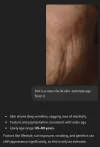
The much thicker dermal layer is responsible for elasticity, "youthful plumpness" etc, and that layer undoubtedly thickens and improves significantly in quality after isotretinoin:
Bravo et al., 2015 – Oral isotretinoin in photoaging (PMC4560536)
“We observed a statistically significant increase in collagen density from 51.2% at baseline to 57.4% after treatment (p = 0.004).”
“At the 12-week follow-up, collagen density remained elevated (54.7%) compared with baseline, even after discontinuation of isotretinoin.”
“Our results suggest that oral isotretinoin may induce remodeling of the dermal extracellular matrix without evidence of dermal atrophy.”
⸻
Turk et al., 2023 – Effects of Oral Isotretinoin on Atrophic Acne Scars (JCAD Online)
“SWE values demonstrated significant increases in dermal thickness and elasticity following isotretinoin therapy.”
“Histopathological analysis revealed increased collagen density and dermal remodeling after treatment.”
⸻
Review – Oral Isotretinoin: Review and Update on Clinical Use (2020) (ScienceDirect)
“Histological studies have shown increased collagen fibers and improved dermal architecture after oral isotretinoin.”
-------------------------------------
There are literally thousands of studies published over the last 40 years on isotretinoin, and I haven't found anything that suggests a permanent thinning of the epidermis, only a few anecdotes on social media. If such a serious lasting side effect were a thing, you'd expect it would be mentioned by someone in all the research that's included hundreds of thousands of patient follow ups.
I'm speaking as someone who had serious concerns about isotretinoin too, just from what I heard casually, until I looked into it in detail.
The gap between the high level of safety that's been clearly proven and the contagion of fear induced by social media has even led to "Isotretinoin Phobia" becoming a recent topic of study, like this 2025 project covered:
View attachment 348025