Cholesterol numbers on no med, then on statin then on statin + Repatha

Great price since it comes with prescription.
Do the bottles themselves come with the prescription label?

Might be easier to get refilled vs a new prescription.
They do come with a prescription label. It looks exactly like what you’d get on a Walgreens prescription bottle. Plus one refill. I have had telemedicine providers ask to see my current bottle before filling a new script. I’m sure the TelyRX medication bottle would work.
 
They do come with a prescription label. It looks exactly like what you’d get on a Walgreens prescription bottle. Plus one refill. I have had telemedicine providers ask to see my current bottle before filling a new script. I’m sure the TelyRX medication bottle would work.
love when a plan comes together lol
 
5 mg ezetimibe and 10 mg of rosuvstatin work better

Insurance and treatment guidelines expect a statin to already be used, and Vascepa is an add on. It's proven to protect cardiovascular health to a very high degree, with no sides in almost every case. Vascepa + Rosu blow away Ezetimebe + Rosu if someone's a medicine minimalist and doesn't want all 3.

I know plenty of guys are using fish oil / omega 3 supplements already anyway, and this is just a cleaner, more effective type of that.
 
Looks like 24x7 cant get it.
Checking with Zone now.

Was your alternate source able to get it?

Yes..

$4 per 10 tab strip.

PTVS Duo 4mg / 10mg

Said it's a bit difficult to get hence the price.

He usually lowers pricing at 500 and 1000 tablet increments, I haven't asked him about quantity pricing yet.


Thanks again for finding that @Photon
 
Last edited:
Yes..

$4 per 10 tab strip.

PTVS Duo 4mg / 10mg

Said it's a bit difficult to get hence the price.

He usually lowers pricing at 500 and 1000 tablet increments, I haven't asked him about quantity pricing yet.


Thanks again for finding that @Photon

I have credit with 24x due to missing items in my prev shipment. Trying to figure out how to use it lol

Will see what zone says before deciding. It's still cheaper for me to get it prescribed but it's definitely more convenient buying bulk than getting a teledoc refill every 3 months.
 
Last edited:
I have of credit with 24x due to missing items in my prev shipment. Trying to figure out how to use it lol

Will see what zone says before deciding. It's still cheaper for me to get it prescribed but it's definitely more convenient buying bulk than getting a teledoc refill every 3 months.

I mean, it's only $12 for a month's worth even before bulk discounts. $4/strip for anything sounds worse than it is because everything else is typically so much less from India by comparison.

$36 for 3 months, the deductible for the ezetimebe would be $10 (pita would be free), but dealing with the prescription, having to pick it up, and most importantly, the psychological benefits of two meds in one tab makes it worth $9 a month premium lol.

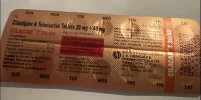
I decided to sacrifice the PPAR benefits of 80mg Telm, dropping to 40mg, so I could up Ciln to 20, despite my BP being identical on Telm 80/Ciln 10 something about Ciln 20mg makes it feel relaxing, taking the edge off without sedation, like a low dose of propranolol. Must be the inhibition of adrenaline release from sympathetic nerves.

Lucky me India pharma had this oddball combo of low dose Telm and max dose Cilnidipine, lowering pill count by one more....

IMG_1715.webp
 
Last edited:
I mean, it's only $12 for a month's worth even before bulk discounts. $4/strip for anything sounds worse than it is because everything else is typically so much less from India by comparison.

$36 for 3 months, the deductible for the ezetimebe would be $10 (pita would be free), but dealing with the prescription, having to pick it up, and most importantly, the psychological benefits of two meds in one tab makes it worth $9 a month premium lol.

I decided to sacrifice the PPAR benefits of 80mg Telm, dropping to 40mg, so I could up Ciln to 20, despite my BP being identical on Telm 80/Ciln 10 something about Ciln 20mg makes it feel relaxing, taking the edge off without sedation, like a low dose of propranolol. Must be the inhibition of adrenaline release from sympathetic nerves.

Lucky me India pharma had this oddball combo of low dose Telm and max dose Cilnidipine, lowering pill count by one more....

View attachment 334038

I'm paying 6$ a month for both combined..so only 72$/year.
Switching to India pharma doubles that without factoring in shipping.

Not a big difference but still lol

Printing the days of the week on that foil is just ingenius.
 
> Icosapent ethyl may stabilize atherosclerotic plaques in the arteries, reducing the risk of rupture that can lead to heart attacks or strokes

Isn't this saying that it may calcify plaque in the arteries? Wouldn't this be undesirable for those of us not at current risk for plaque being thrown and causing issues under basically the same rosuvastatin vs. pitavastatin arguments?
 
> Icosapent ethyl may stabilize atherosclerotic plaques in the arteries, reducing the risk of rupture that can lead to heart attacks or strokes

Isn't this saying that it may calcify plaque in the arteries? Wouldn't this be undesirable for those of us not at current risk for plaque being thrown and causing issues under basically the same rosuvastatin vs. pitavastatin arguments?

Different mechanism of action.

Icosapent stabilizes plaques through inflammation resolution and lipid core shrinkage, not through calcification.

CT angiography in EVAPORATE showed ico induces regression of plaque volume without progression to calcification, a unique feature not seen with conventional statins which accelerate calcification by turning the plaque cap to "cement". It stays soft and pliable with icosapent.

This keeps the “regression window” open longer, making it ideal in a protocol aimed at active, ongoing plaque reversal.
 
By the way, the numbers from the EVAPORATE study, after 18 months were:

–9 % total plaque (this includes everything including calcified)

–19 % total non-calcified plaque (HDL removed)

-20 % fibrous plaque (Only isocapent removes)

–34 % fibrofatty plaque (Both remove, but overwhelmingly Isocapent, HDL induces minor regression)

The fibrous plaque regression is exclusively a feature of isocapent ethyl. Non-calcified soft plaque regression is achieved by HDL "sucking" fat out of plaque and taking it away. Fibrous plaque, afaik, is only removable to any significant degree with isocapent.
 
By the way, the numbers from the EVAPORATE study, after 18 months were:

–9 % total plaque (this includes everything including calcified)

–19 % total non-calcified plaque (HDL removed)

-20 % fibrous plaque (Only isocapent removes)

–34 % fibrofatty plaque (Both remove, but overwhelmingly Isocapent, HDL induces minor regression)

The fibrous plaque regression is exclusively a feature of isocapent ethyl. Non-calcified soft plaque regression is achieved by HDL "sucking" fat out of plaque and taking it away. Fibrous plaque, afaik, is only removable to any significant degree with isocapent.

EVAPORATE: Icosapent Ethyl on Progression of Coronary Atherosclerosis in Patients With Elevated Triglycerides on Statin

1.Age ≥45 years with atherosclerosis with at least one stenosis of 20%.
2.Fasting TG levels ≥150 mg/dL and <500 mg/dL.
3.LDL-C >40 mg/dLand ≤100 mg/dL and on stable statin therapy (±ezetimibe)

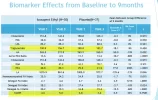
1750637256935.webp

It's hard to say if there's any benefits for someone with low fasting triglycerides or not on a Statin. Statin does cause regression and has more pronounced effects at lower LDL levels. Until we get monotherapy results, we cannot confidently say that these effects can be achieved, without statin use.

I wonder if the same effect can be achieved by simply bumping up the EPA using otc supplements. Thats a 4x increase in 9 months. 20->89

Either way, i got it ordered and it'll be covered by my insurance if i manage to get it renewed lol
 
EVAPORATE: Icosapent Ethyl on Progression of Coronary Atherosclerosis in Patients With Elevated Triglycerides on Statin

1.Age ≥45 years with atherosclerosis with at least one stenosis of 20%.
2.Fasting TG levels ≥150 mg/dL and <500 mg/dL.
3.LDL-C >40 mg/dLand ≤100 mg/dL and on stable statin therapy (±ezetimibe)

View attachment 334120

It's hard to say if there's any benefits for someone with low fasting triglycerides or not on a Statin. Statin does cause regression and has more pronounced effects at lower LDL levels. Until we get monotherapy results, we cannot confidently say that these effects can be achieved, without statin use.

I wonder if the same effect can be achieved by simply bumping up the EPA using otc supplements. Thats a 4x increase in 9 months. 20->89

Either way, i got it ordered and it'll be covered by my insurance if i manage to get it renewed lol

I'm not sure who it was with, but I covered the statin / regression issue regarding the Repatha regression trials, Those subjects were all on statins too.

You can't identify patients with plaque, and take them off their existing statin treatment and pass an ethics review, nor can you find subjects with existing plaque, and not put them on the guideline therapy of a statin to see the results of an experiment. It's considered reckless.

However, it's well established that regression is first and foremost a function of LDL reduction, regardless of the source of that reduction. In EVAPORATE, every type of statin was used, with and without ezetimebe, and the amount of regression, like every other study primarily tracked LDL levels.

What we do know is that statins on their own don't show any fibrous plaque removal. It's essentially immobile without isocapent.

That's huge for maximizing regression.

The other thing we know is calcification slows and essentially stops further regression. So avoiding anything that speeds that process (statins except Pitavastatin, which counters it) should allow it to continue longer for deeper regression.

K2 may help by redirecting calcium away from arteries to bones.

Isocapent lowers inflammation significantly, so I think it can reasonably expected to slow calcification as well, given inflammation speeds it up.

Finally since it's HDL that actually transports the fats being removed from plaque, maximizing HDL quantity AND function (how powerful the "fat vacuums" are, measured by a metric called efflux) will contribute to the speed of regression. Pita preserves and increases HDL numbers, but also improves its function (efflux) considerably.

Below 40 LDL, HDL and efflux become the primary drivers of increased regression.

--------

A funny note:

I removed coconut milk from my diet, because it spiked my LDL. It's also the most potent dietary booster of high quality HDL(it increases efflux not just quantity), vs low quality HDL like niacin. But on balance, it does more harm than good because of the huge LDL boost.

Repatha, Eze, Pita, suppress the LDL increase of 200ml / day of coconut milk, with the net effect being an increase in HDL and efflux that should boost potential regression by ~1.5-2.5% / year, far outweighing any negative impact of the suppressed LDL increase expected to be 0-10 points, clinically insignificant when we're talking about LDL below 40.

On just Pita, Eze 100ml of coconut milk maximizes HDL benefit before LDL outweighs it. Add Isocapent and that rises to 150ml..

I'm going to get a new lipid baseline this week and reintroduce coconut milk to see how this plays out in real life.

 
Last edited:
I'm not sure who it was with, but I covered the statin / regression issue regarding the Repatha regression trials, Those subjects were all on statins too.

You can't identify patients with plaque, and take them off their existing statin treatment and pass an ethics review, nor can you find subjects with existing plaque, and not put them on the guideline therapy of a statin to see the results of an experiment. It's considered reckless.

Probably me lmao.
There are repatha monotherapy trials.
Very small sized tho and sadly the focus was not on plaque but on something else so no results on plaque reduction or regression.

The monotherapy trials all seem to be focused on other stuff, not plaque:rolleyes:.
 
Probably me lmao.
There are repatha monotherapy trials.
Very small sized tho and sadly the focus was not on plaque but on something else so no results on plaque reduction or regression.

The monotherapy trials all seem to be focused on other stuff, not plaque:rolleyes:.

The Repatha monotherapy trials enrolled adults with elevated cholesterol but no diagnosed cardiovascular disease. Any arteriosclerosis, prior heart attack, etc disqualified them. So all "low risk" non statin users. Even past statin use disqualified subjects.

Seems illogical I know, since Repatha is perfect for statin intolerant patients. What happens to patients with arteriosclerosis and statin intolerance?

On the other hand, perhaps "statin intolerant" isn't much of a thing any more once cardiovascular disease is diagnosed, the threat of a heart attack looms, and pitavastatin, even though prohibitively expensive (until now) was a last resort option insurance would finally reluctantly cover rather than risk paying out hundreds of thousands for a coronary or stroke,
 
I removed coconut milk from my diet, because it spiked my LDL. It's also the most potent dietary booster of high quality HDL(it increases efflux not just quantity), vs low quality HDL like niacin. But on balance, it does more harm than good because of the huge LDL boost.

Repatha, Eze, Pita, suppress the LDL increase of 200ml / day of coconut milk, with the net effect being an increase in HDL and efflux that should boost potential regression by ~1.5-2.5% / year, far outweighing any negative impact of the suppressed LDL increase expected to be 0-10 points, clinically insignificant when we're talking about LDL below 40.

On just Pita, Eze 100ml of coconut milk maximizes HDL benefit before LDL outweighs it. Add Isocapent and that rises to 150ml..

I'm going to get a new lipid baseline this week and reintroduce coconut milk to see how this plays out in real life.


Coconut oil consumption increased HDL-cholesterol concentrations as compared with nontropical vegetable oils in our meta-analysis. This result is consistent with the finding that intake of saturated fat, particularly lauric acid which is the major fatty acid in coconut oil, increases HDL-cholesterol more than polyunsaturated fat, monounsaturated fat, and carbohydrate.

Higher HDL-cholesterol concentrations have consistently been associated with a lower CHD risk in epidemiological studies.However, recent research findings have cast doubt upon the causality of this association.

In Mendelian randomization analyses, higher circulating HDL-cholesterol as a result of single nucleotide polymorphism in the endothelial lipase gene or a genetic score combining single nucleotide polymorphisms at different HDL-cholesterol–raising alleles was not associated with risk of myocardial infarction. Additionally, pharmacological treatments that increase HDL-cholesterol, such as niacin or fibrates, did not lower the risk of CHD mortality, myocardial infarction, or stroke.

These results challenge the notion that increasing HDL-cholesterol will necessarily translate to a risk reduction in cardiovascular events. In contrast to HDL, the role of LDL in promoting atherosclerotic CVD has been consistently demonstrated based on findings from Mendelian randomization studies and different LDL-cholesterol–lowering treatments.

Our results raise concerns about high consumption of coconut oil because it significantly increased LDL-cholesterol as compared with nontropical vegetable oils. While coconut oil intake also increased HDL-cholesterol concentrations, efforts to reduce CVD risk by increasing HDL-cholesterol have been unsuccessful. There was also no evidence of benefits of coconut oil over nontropical vegetable oils for adiposity or glycemic and inflammatory markers. Therefore, coconut oil should not be viewed as healthy oil for CVD risk reduction and limiting coconut oil consumption because of its high saturated fat content is warranted.


It's pretty much saying what most people here have been, that HDL doesn't really cause a reduction to cardiovascular events. I might try out of curiosity but maybe after i see what isocapent does to my labs.

 
Different mechanism of action.

Icosapent stabilizes plaques through inflammation resolution and lipid core shrinkage, not through calcification.

CT angiography in EVAPORATE showed ico induces regression of plaque volume without progression to calcification, a unique feature not seen with conventional statins which accelerate calcification by turning the plaque cap to "cement". It stays soft and pliable with icosapent.

This keeps the “regression window” open longer, making it ideal in a protocol aimed at active, ongoing plaque reversal.
Thanks. Grabbed some from TelyRX.
 
EVAPORATE: Icosapent Ethyl on Progression of Coronary Atherosclerosis in Patients With Elevated Triglycerides on Statin

1.Age ≥45 years with atherosclerosis with at least one stenosis of 20%.
2.Fasting TG levels ≥150 mg/dL and <500 mg/dL.
3.LDL-C >40 mg/dLand ≤100 mg/dL and on stable statin therapy (±ezetimibe)

View attachment 334120

It's hard to say if there's any benefits for someone with low fasting triglycerides or not on a Statin. Statin does cause regression and has more pronounced effects at lower LDL levels. Until we get monotherapy results, we cannot confidently say that these effects can be achieved, without statin use.

I wonder if the same effect can be achieved by simply bumping up the EPA using otc supplements. Thats a 4x increase in 9 months. 20->89

Either way, i got it ordered and it'll be covered by my insurance if i manage to get it renewed lol
Hopefully I will be able to see some improvements despite not having high triglycerides and not being on a statin. Ill check bloods and hoping for some scans at 3/6/9/1year. N=1 but worth something at least.
 
Trig / hdl-c ratio still gives you what you need to know on the cheap. Mine was incredible on a shit load of coconut oil.

Tell me I'm wrong.


Throw in fasting insulin as well.
 
Back
Top