Blood Pressure

but will Amlodipine make my face bloated?

Your question sent me down an interesting rabbit hole.

Amlodipine is a 3rd generation calcium channel blocker(CCB). It works very well. Edema (swelling) is a common, usually minor and temporary side effect, but the longer you use it, the more likely you are to experience it again.

Cilnidipine is a 4th generation CCB that's more selective. It appears to be just as effective, with much less of a potential edema effect, and protective of the kidneys, liver, and nerves too.

In other words, it's superior to Amlodipine. In fact it seems to be significantly superior, and like Telm, reduces the dangerous morning BP surge.

But for some reason, it was only patented and approved in Japan, Korea, India, and other parts of Asia. Since the original patent has expired, no one's going to spend the money to conduct all the trials to get it approved in the US as a BP med!

Cilnidipine 10mg is equivalent to Amlodipine 5mg.

Anyway, it's available via India pharma and has me thinking I may want to switch from Amlodipine to Cilnidipine.

IMG_0479.webp
 
Last edited:
This morning woke up and checked my BP

107/61

I'm so fucking happy about it.
Let's see when I start my next blast how it's gonna be.

Great results man! ( dont want to go much lower though, below 90/60 starts to increase certain risks)

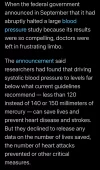
I was reminded of this from a decade ago. Not a free article for everyone, so I'll post the relevant part.

TLDR: A massive study on BP in 2015 conducted by the federal government made it so clear lowering BP well below what was considered "good" at the time would reduce health risks so significantly there was no point in continuing.

IMG_0480.webp


They did release the additional data and study after study has only confirmed this since, resulting in the lower guidelines. with anything over 120/70 now considered "elevated", and 130/80 hypertension stage 1.
 
Great results man! ( dont want to go much lower though, below 90/60 starts to increase certain risks)

I was reminded of this from a decade ago. Not a free article for everyone, so I'll post the relevant part.

TLDR: A massive study on BP in 2015 conducted by the federal government made it so clear lowering BP well below what was considered "good" at the time would reduce health risks so significantly there was no point in continuing.

View attachment 315610


They did release the additional data and study after study has only confirmed this since, resulting in the lower guidelines. with anything over 120/70 now considered "elevated", and 130/80 hypertension stage 1.
I'm on a cruise so I'll probably have an higher BP while blasting. I'm not increasing my BP meds as the BP I have now it's perfect.

I'll monitor it, once I saw 105/58

Issue is my systolic don't go down too much but my diastolic does. I hope I never find myself in the position where I need to further bring down the systolic but my diastolic is already low.... That's a pain in the ass
 
I'm on a cruise so I'll probably have an higher BP while blasting. I'm not increasing my BP meds as the BP I have now it's perfect.

I'll monitor it, once I saw 105/58

Issue is my systolic don't go down too much but my diastolic does. I hope I never find myself in the position where I need to further bring down the systolic but my diastolic is already low.... That's a pain in the ass

Dig into the causes of "Isolated systolic hypertension" to see if any of the factors apply to you. You're not high enough to be considered to have ISH, but the imbalance has the same set of causes.
 
Your question sent me down an interesting rabbit hole.

Amlodipine is a 3rd generation calcium channel blocker(CCB). It works very well. Edema (swelling) is a common, usually minor and temporary side effect, but the longer you use it, the more likely you are to experience it again.

Cilnidipine is a 4th generation CCB that's more selective. It appears to be just as effective, with much less of a potential edema effect, and protective of the kidneys, liver, and nerves too.

In other words, it's superior to Amlodipine. In fact it seems to be significantly superior, and like Telm, reduces the dangerous morning BP surge.

But for some reason, it was only patented and approved in Japan, Korea, India, and other parts of Asia. Since the original patent has expired, no one's going to spend the money to conduct all the trials to get it approved in the US as a BP med!

Cilnidipine 10mg is equivalent to Amlodipine 5mg.

Anyway, it's available via India pharma and has me thinking I may want to switch from Amlodipine to Cilnidipine.

View attachment 315608
Amlodipine swelled up my ankles and feet. It was gross.
 
Great results man! ( dont want to go much lower though, below 90/60 starts to increase certain risks)

I was reminded of this from a decade ago. Not a free article for everyone, so I'll post the relevant part.

TLDR: A massive study on BP in 2015 conducted by the federal government made it so clear lowering BP well below what was considered "good" at the time would reduce health risks so significantly there was no point in continuing.

View attachment 315610


They did release the additional data and study after study has only confirmed this since, resulting in the lower guidelines. with anything over 120/70 now considered "elevated", and 130/80 hypertension stage 1.
Any chance you have something not behind a paywall (NYT)
 
Amlodipine swelled up my ankles and feet. It was gross.

Luckily I don't have that, however, with aging being a factor in pedal edema, long term use of Amlodipine can make it more likely if already prone to it. To be clear it's rare, but I'm thinking long term.

Patients with pedal edema who switched to Clinidipine saw their edema resolve, and still benefitted from the same reduction in BP as Amlodipine.
 
To clarify, PPARg activation is in no way "slimming."

It increases the synthesis of subq adipocytes. This draws fat out of ectopic sites like visceral fat and into "safer" (but less aesthetically appealing) new subq fat cells.

You will see statistically significant reductions in visceral fat because it's a small depot compared to subq fat. In other words, take a little fat out of the viscera and statisticians can detect it; but put that little fat into a much larger depot (subq) and it's nearly undetectable (ref).

Tl;dr: PPARg is not slimming. You end up with more subq fat cells that are hungry to store fat (also a function of adiponectin). The effect is small and way less than with full agonists like rosiglitazone. But you should be aware.
 
Any chance you have something not behind a paywall (NYT)

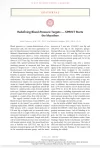
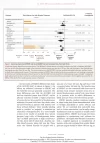
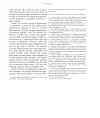
I don't subscribe to the NYT, that was in my now chewed up free article views, but I stole a copy of relevant article from my New England Journal of Medicine sub. (shhh)

The "hard work" they refer to in the 2015 editorial below having to be done based on the revolutionary findings is just now finally complete.

150 systolic is no longer "normal" anywhere, ,and all the major US and EU cardiology associations now define anything above 120 as elevated, and 130+ as Hypertension stage 1.

They all recommend initiating pharmaceutical treatment with a 2 class, single pill BP med now.

Digging deeper, the future path they're going down is determining just how far below 120 is most beneficial for different types of patients. and moving toward 3 and 4 class. single pill BP meds.

IMG_0483.webp
IMG_0484.webpIMG_0485.webp
 
I don't subscribe to the NYT, that was in my now chewed up free article views, but I stole a copy of relevant article from my New England Journal of Medicine sub. (shhh)

The "hard work" they refer to in the 2015 editorial below having to be done based on the revolutionary findings is just now finally complete.

150 systolic is no longer "normal" anywhere, ,and all the major US and EU cardiology associations now define anything above 120 as elevated, and 130+ as Hypertension stage 1.

They all recommend initiating pharmaceutical treatment with a 2 class, single pill BP med now.

Digging deeper, the future path they're going down is determining just how far below 120 is most beneficial for different types of patients. and moving toward 3 and 4 class. single pill BP meds.

View attachment 315685
View attachment 315686View attachment 315687

Interesting read, thanks for sharing!
 
I don't subscribe to the NYT, that was in my now chewed up free article views, but I stole a copy of relevant article from my New England Journal of Medicine sub. (shhh)

The "hard work" they refer to in the 2015 editorial below having to be done based on the revolutionary findings is just now finally complete.

150 systolic is no longer "normal" anywhere, ,and all the major US and EU cardiology associations now define anything above 120 as elevated, and 130+ as Hypertension stage 1.

They all recommend initiating pharmaceutical treatment with a 2 class, single pill BP med now.

Digging deeper, the future path they're going down is determining just how far below 120 is most beneficial for different types of patients. and moving toward 3 and 4 class. single pill BP meds.

View attachment 315685
View attachment 315686View attachment 315687
Good stuff. Never knew 150 was considered to be normal back then
 
I don't subscribe to the NYT, that was in my now chewed up free article views, but I stole a copy of relevant article from my New England Journal of Medicine sub. (shhh)

The "hard work" they refer to in the 2015 editorial below having to be done based on the revolutionary findings is just now finally complete.

150 systolic is no longer "normal" anywhere, ,and all the major US and EU cardiology associations now define anything above 120 as elevated, and 130+ as Hypertension stage 1.

They all recommend initiating pharmaceutical treatment with a 2 class, single pill BP med now.

Digging deeper, the future path they're going down is determining just how far below 120 is most beneficial for different types of patients. and moving toward 3 and 4 class. single pill BP meds.

View attachment 315685
View attachment 315686View attachment 315687

Why the higher risk of kidney injury in the intensive therapy group? I would have thought lowering blood pressure would have the opposite effect.
 
Why the higher risk of kidney injury in the intensive therapy group? I would have thought lowering blood pressure would have the opposite effect.
I believe some of these meds can harm the kidney at high dosages especially if you have already some mind of kidney disease but I haven't read the study right now so I could be wrong
 
Why the higher risk of kidney injury in the intensive therapy group? I would have thought lowering blood pressure would have the opposite effect.

It's a complex issue, many things in medicine and health in general are neither purely good or purely bad, it's almost always a mixed bag and a choice of what's better overall. I'll start with the same disclaimer almost all research gives when addressing this. No evidence whatsoever exists that use of BP lowering meds induces kidney failure in those without end stage kidney disease.

TLDR: High blood pressure is the #1 cause of kidney damage. Kidney damage increases blood pressure. A vicious cycle.

Lowering BP slows or stops the progression of kidney damage.

However, the same highly effective BP lowering mechanism, angiotensin inhibition, that relaxes blood vessels, can cause tissue in severely damaged kidneys to revert to an embryonic state and grow in ways that can reduce filtration, already on the cusp of failure, until it finally goes over the cliff and the patient requires dialysis.

The debate has been whether intensive, high dose treatment to reduce BP in patients with kidney disease does more harm than good. So far, the answer has been very clearly that the benefits of lowering BP slows kidney failure in those patients far more than it induces. It becomes a choice of "Fail fast with high BP or fail slowly, but inevitably, with intensively treated BP."

As you can imagine, for such a widely prescribed class of BP medication the medical establishment has been on high alert for any indications BP meds could be bad for those without kidney disease, and so far, the overwhelming amount of large scale, high quality research demonstrates that any kidney harm that may be caused by BP meds in those without kidney disease is essentially unmeasurable, while the reduction in the risk of getting chronic kidney disease by using BP meds to normalize blood pressure is huge and unmistakeable.
 
I see alot off people take nebivolol at 5 mg for bloodpressure

I took it 1 time before bedtime and i need to go out of bed at night and almost passt out dizzy as hell and feel bad for 2 days ....its very powderfull

I took 2.5 for a few days before i took 5 with no problems


Well Ghoul everything is correct except the statement beta blocker are better avoided. I would agree with that except for nebivolol.
It's a fantastic substitute of amlodipine (if BP stays in range) and has great benefits all around if kept at 5mg and no noticeable side effect.
 
I see alot off people take nebivolol at 5 mg for bloodpressure

I took it 1 time before bedtime and i need to go out of bed at night and almost passt out dizzy as hell and feel bad for 2 days ....its very powderfull

I took 2.5 for a few days before i took 5 with no problems
They both work fairly well at lowering blood pressure. There's effects beyond hypertension control that could guide your choice, though. Some people don't want the reduced heart rate from Nebivolol, and so on and so forth.

Anecdotally, 80/10 Telmi/Amlod wouldn't budge my sys pressure below 130; I switched to 80/5/5 Telmi/Amlod/Nebi and it was 102/60 this morning. In my opinion, the more classes of medications you can include without going hypotensive, the better. The diminishing returns is exponential so raising the dosage may not be the best option.
 
They both work fairly well at lowering blood pressure. There's effects beyond hypertension control that could guide your choice, though. Some people don't want the reduced heart rate from Nebivolol, and so on and so forth.

Anecdotally, 80/10 Telmi/Amlod wouldn't budge my sys pressure below 130; I switched to 80/5/5 Telmi/Amlod/Nebi and it was 102/60 this morning. In my opinion, the more classes of medications you can include without going hypotensive, the better. The diminishing returns is exponential so raising the dosage may not be the best option.

We're about to see ultra-low dose quad pills. The most impressive thing with the trials so far, no subjects have experienced any side effects typically associated with bp meds, and 100% get significant reductions in blood pressure.

It looks like these may become first line therapy for hypertension.

 
Back
Top