Zero PIP Test E recipe

I havent tried it in my method. After dissolving and hot filtering i just concetrate the solution and let it cool down. If i dont see crystals i use layering with WFI,then cold filter with whatman and buchner funnel before i dry. Last time i used a mixture of 50/50 WFI/Ethanol for a final wash after mother liquor went down and i got a better result. Checked this post right now and i was curious if it will be decent to add AC to remove extra color impurities. Whats your take?
You should bleaching clay next time! It actually contains a good ratio of the activated carbon alongside a little bit of extra that will help really strip out the color

It's not really bleach I know the name seems scary but it's literally just clay and activated carbon that's been acid washed


Very very effective over normal activated carbon

I believe it does work.
e,g. @Walter Hype mentioned BVV above, one of their specialties seems to be in purifying oil.

If you see this link for e.g
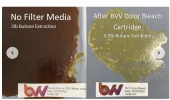
1769619012090.webp

Test E linked above
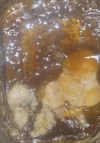
1769619024222.webp

Looks very similar doesn't it? lol

Now they call it "color bleach" but if you see the technical specs, it's just bentonite clay and activated carbon We also know that these compounds, absorb alot of junk, however they also absorb.. API, so you lose some yield.

I'd play close attention to solubility tho, you really want to make sure none of these dissolve in your solvents. Ideally you want to be able to filter them out.
 
I believe it does work.
e,g. @Walter Hype mentioned BVV above, one of their specialties seems to be in purifying oil.

If you see this link for e.g
View attachment 376250

Test E linked above
View attachment 376251

Looks very similar doesn't it? lol

Now they call it "color bleach" but if you see the technical specs, it's just bentonite clay and activated carbon We also know that these compounds, absorb alot of junk, however they also absorb.. API, so you lose some yield.

I'd play close attention to solubility tho, you really want to make sure none of these dissolve in your solvents. Ideally you want to be able to filter them out.
I see the point but I want to have a definitive answer to when is the best time to use it,I'll share my thoughts and when you have some spare time and you want ,you can answer me:

From a mechanistic standpoint, is it generally preferable for the adsorbent to be introduced while the target compound is fully dissolved (hot solution), in order to avoid trapping microcrystals or losing product that could occur if the adsorbent is added once the system becomes supersaturated or partially crystallized?
In hot ethanol specifically, is there a known risk that such adsorbent materials exhibit partial solubility or form colloidal/fine particulate dispersions that may pass through during hot filtration?
If colloidal carryover does occur, could this negatively impact the purity or crystal morphology of the final recrystallized product upon cooling?
At a general level, how is the balance typically approached between improved purity via adsorption and potential yield loss due to non-selective adsorption of the desired compound?
Any theoretical insight or literature-based discussion on the behavior of adsorbents during recrystallization would be greatly appreciated.
I know these questions maybe hard to answer without experimentation but I suppose you have used it some times and you have experience in this subject.
Thanks for your time and sorry for the long text.
 
Back
Top