@Photon My friend, I just wanted to reach out to assure you that we do not share any relationship with Hepius at all, not even the same factory.
With that said, I have emailed Janoshik today to provide a bit of background about the findings you guys mention on the previous post.
My understanding is that Palmitoleic acid is a naturally occurring monounsaturated fatty acid,
cis-9-hexadecenoic acid
Found naturally in:
MCT blends
Coconut oil
Palm oil
Cottonseed oil
Human fat tissue
Dairy fat
It’s literally part of normal human biology.
Now, this is where the confusion may rise, and this is why I asked
@janoshik via email for some insight, it may be helpful.
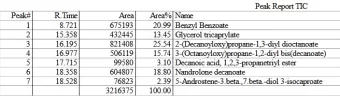
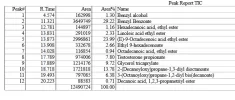
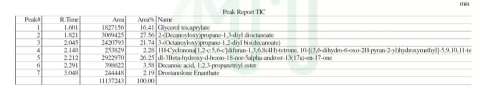
There is another fatty acid named 9-hexadecenoic acid on the reports, this is same molecule but different ID library hit, meaning that they are different.
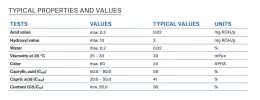
Combined they produce about 3% of fatty acid profile from the MCT oil itself, which for what I have been explained by the Manufacturer manager, up to 6% is acceptable in high grade pharmaceutical MCT oil.
Now he also made the difference to me about highly refined MCT oil, which would normally contain no more than 1% of these fatty acids.
He said that 3% is well withing the pharmaceutical grade standards and if we were to test any medicine from Pharma-grade like Pfizer, Bayer, Organon injectables we would find them in similar concentrations.
I did some research myself as well, and I came up with the following standards, this may be helpful to understand for all of us (remember I am also learning about all this as I go)
Why MCT-style oils show more fatty-acid background
Fractionated coconut carriers are made by:
Hydrolyzing natural oils
Rebuilding triglycerides from selected chains
Distilling fractions
This process leaves:
Slightly more mono- and diglycerides
Slightly more free fatty acids
So instead of 0.3–0.8% background (sesame oil), you see:
2–4% total lipid background in MCT systems
This is completely normal for:
Miglyol-type oils
Caprylic/capric triglycerides
Medium-chain ester carriers
Pharma-grade Miglyol 812 itself contains:
~96–98% triglycerides
~2–4% partial glycerides + fatty acids
Exactly what your report is showing.
if someone here is more knowledgeable i would appreciate their input, it help us all to become better
Thanks