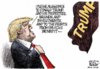
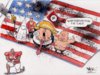
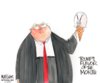
On Wednesday, Baby Donald threw a one-two punch at the press that sent it on a quick trip to the mat, stunned and bleeding. In a tweet, responding to an NBC News story he insisted was inaccurate, the president called for the revocation of the network’s broadcast licenses. A few hours later while speaking in the Oval Office, Trump expanded on that theme. “It is frankly disgusting the way the press is able to write whatever they want to write, and people should look into it,” he said.
Indignation fell on Trump like sheets of spring rain. The First Amendment lobby called the threat “troubling.” Senators accused the president of overreach, saying he doesn’t enjoy that sort of authority over licenses. Broadcast journalists especially—Andrew Kaczynski, Kaitlan Collins, Jake Tapper, Andrea Mitchell, Shepard Smith and Brian Stelter—railed against his comments. “Direct threat to free and independent media,” tweeted CNN’s Chris Cillizza. “If this doesn’t scare you, you aren’t paying attention.”
Sorry, Chris, but after paying close of attention to President Trump’s bombastic tweets and speeches for almost nine months, none of the gases escaping from his ripe id scare me anymore. This is not to say that Trump’s tweets present zero threat. The NFL, for example, has good reason to fear Trump. But that’s only because they’re too cowardly to stand up to his bullying and explain to fans that open political expression is the highest form of patriotism in a free society. With few exceptions, though, I treat his incendiary tweets the way I do my morning alarm: I open one eye, glance at the thing and go back to sleep. His tweets aren’t just paper tigers; they’re virtual kittens.
As cognitive linguist George Lakoff
explained to
On the Media’s Brook Gladstone in January, Trump primarily uses his tweets to divert and deflect attention from news that threatens him, or to launch a trial balloon for one of his proposals. He also tweets to pre-emptively frame a topic before his opponents get a chance to comment, the best example being his categorization of news he doesn’t like as “fake news.”