Transferring oils for long term storage

Like many of you, I'm doing my best to prepare for future scarcity, and have stocked up on oils from a few quality domestic sources in order to prepare for the times ahead. I've bought most everything in MCT due to it being fully saturated and thus less likely to oxidize. I store everything upright in a temperature controlled environment, totally protected from all light. One unfortunate issue I faced was that one of the best sources here is very generous in how he fills his vials, and this means that even when stored perfectly vertical, the oil makes contact with the stopper. Over time, the benzyl benzoate will cause a breakdown of the butyl rubber, eventually compromising the seal and ruining the contents of the vial. Ideally, you want as little dead space/air in the vial as possible, but you don't want the oil making contact with the stopper, even when using PTFE, Flurotec or other Teflon type coated stoppers. While these stopper are far, far superior to plain butyl and silicon stoppers, it's still not ideal for them to be in contact with the oil.

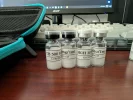
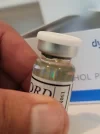
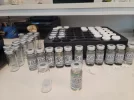
Here is an example of one of the generously filled vials;
(note that I am not criticizing the source, and I am not saying this would be an issue for normal, shorter term storage, I'm just trying to get every last bit of longevity I can out of my stash)
20250811_132313.webp

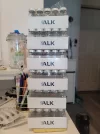
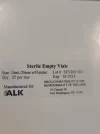
I purchased 150 sealed, sterile vials with Flurotec stoppers. These are usually quite expensive, but I found a good deal on some that had expired last year. For me, this is not an issue. You may have higher standards and want to purchase in date vials.
20250811_132429.webp
20250811_133133.webp

These particular vials ended up being perfect, as while they were advertised as 10ml, they easily held the full contents of the other vials, with just enough room to spare to allow for space between the oil and stoppers. They were slightly taller than the old vials. I used 10cc syringes from Exel, which hold right around 12cc and ended up being perfect. I sterilized all surfaces with alcohol, used a 23g needle to vent, a 16g to withdraw from the old vial, and a 20g to fill the new vials, also with a 23g to vent. I replaced the needles whenever they started to struggle to penetrate the stoppers, which was about every 7 or 8 vials I'd guess. I penetrated the stoppers of the new vials at about a 45° angle, and after injecting all the oil, I removed the vent needle, raised the needle with the syringe to the top area of the vial, and sucked 12cc of air out, creating a vacuum within the vial to help minimize oxidation. If I was going this with Chinese or questionable oils, I'd have used a 0.22um PTFE filter, but I didn't feel it necessary with clean, domestic oil. After the contents were all transferred, I was able to carefully salvage the original labels. I also used vial seals to ensure that the stoppers don't allow any gasses in. Stoppers do well with self healing, especially after just a couple of punctures from relatively narrow needles, but it's an extra measure of insurance.
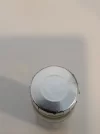
20250811_143440.webp20250811_134440.webp

This was definitely a tedious and time consuming process, but it's valuable insurance for the future, in my opinion. I did Primo and Mast E today, and sadly (happily?) have a long way to go before I get through the bulk of what I need to get done. In addition to all my vials from this source, I'm also going to be doing this with any vials using silicon stoppers, as they're fairly poor at preventing outgassing when compared to butyl rubber.

Just figured I'd share my little OCD project. I'm totally open to advice, criticism, tips, info, etc... So feel free to let me know anything that could be useful.
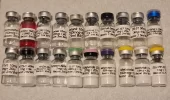
 
Good stuff man thanks for sharing. Are you making your own labels?
I do have the ability to make basic labels, and had prepped/designed replacement labels prior to undertaking this project, however I was very pleased to find the original labels were able to be removed and reapplied to the new vials with relative ease. I'm waiting on some supplies before I keep working my way through all the vials I need to replace.

One thing I would have liked to be able to do, which I'm not sure is even something that is done, is a nitrogen purge of the vials to help further prevent oxidation.

This will likely turn into an experiment of sorts in the long term, and I'm curious to see the differences between these vials and others with PTFE stoppers instead of the Flurotec, and also the differences between shelf life of similarly stored GSO vs MCT vials.

Here are some very basic, small labels I make for my peptides that come totally unmarked. I can make larger, more elaborate labels with a bit more effort, but since they're only for the purpose of ID'ing vial contents and not to look pretty, I usually stick with just information, not commercial-like designs. 20250812_125457.webp
 
One thing I would have liked to be able to do, which I'm not sure is even something that is done, is a nitrogen purge of the vials to help further prevent oxidation.

This will likely turn into an experiment of sorts in the long term, and I'm curious to see the differences between these vials and others with PTFE stoppers instead of the Flurotec, and also the differences between shelf life of similarly stored GSO vs MCT vials.

I don't think there will be a significant difference (personally) if you can ensure that there is zero contact between the stoppers and the oils, during storage. I'm thinking temperature and humidity might matter more for rubber stoppers. I've seen rubber degrade pretty quick (especially shoes etc even when unused). The seal on the rubber, does look pretty good tho.

For wine bottles, i know that argon is used to extend the life. Basically any inert gas. If you ever go down the rabbit hole of doing a nitrogen purge, please do share your experience and all equipment used...

There's argon/nitrogen pumps for wine bottles on Amazon, just need to figure out how to use them for vials..
 
Last edited:
I do have the ability to make basic labels, and had prepped/designed replacement labels prior to undertaking this project, however I was very pleased to find the original labels were able to be removed and reapplied to the new vials with relative ease. I'm waiting on some supplies before I keep working my way through all the vials I need to replace.

One thing I would have liked to be able to do, which I'm not sure is even something that is done, is a nitrogen purge of the vials to help further prevent oxidation.

This will likely turn into an experiment of sorts in the long term, and I'm curious to see the differences between these vials and others with PTFE stoppers instead of the Flurotec, and also the differences between shelf life of similarly stored GSO vs MCT vials.

Here are some very basic, small labels I make for my peptides that come totally unmarked. I can make larger, more elaborate labels with a bit more effort, but since they're only for the purpose of ID'ing vial contents and not to look pretty, I usually stick with just information, not commercial-like designs. View attachment 340881
Oh wow I never thought the stickers could be used again. I too do basic labels for peptides just to identify them. Using a cheap niimbot thermal printer from Amazon.
 

Attachments

  • PXL_20250810_023540593.webp
    PXL_20250810_023540593.webp
    864.9 KB · Views: 163
I don't think there will be a significant difference (personally) if you can ensure that there is zero contact between the stoppers and the oils, during storage. I'm thinking temperature and humidity might matter more for rubber stoppers. I've seen rubber degrade pretty quick (especially shoes etc even when unused). The seal on the rubber, does look pretty good tho.

For wine bottles, i know that argon is used to extend the life. Basically any inert gas. If you ever go down the rabbit hole of doing a nitrogen purge, please do share your experience and all equipment used...
That makes sense. I do wonder what, if any, difference the coatings have in the prevention of general breakdown of the rubber over time. I'm hoping the foil vial seals will help prolong the rubbers life a bit. I don't know that I yet have enough of a stockpile to warrant investing in some sort of inert gas purging equipment, but eventually, maybe.

I would love to know the absolute maximum limit of time an oil could be stored, and under what conditions that maximum storage time could be reached before getting into prohibitively expensive measures.
 
Oh wow I never thought the stickers could be used again. I too do basic labels for peptides just to identify them. Using a cheap niimbot thermal printer from Amazon.
Those look good! I think I have the same one, a Niimbot B1 off of Amazon. I also have an even cheaper one that was like 17 bucks. Both work well, the cheap one just does smaller labels only.
 
Speechless.

were not worthy waynes world GIF
 
Speechless.

were not worthy waynes world GIF
It's far from perfect, but I knew I had to do something with Stan's vials as the rubber wasn't going to last in long term storage like that. It motivated me to get what I needed, and now I'm down the rabbit hole looking at argon purge kits made for wine storage to see if I can somehow adapt them for use with vials.
 
It's far from perfect, but I knew I had to do something with Stan's vials as the rubber wasn't going to last in long term storage like that. It motivated me to get what I needed, and now I'm down the rabbit hole looking at argon purge kits made for wine storage to see if I can somehow adapt them for use with vials.
Amazing project and I will definitely try my best to set up something similar soon thank you!
 
Like many of you, I'm doing my best to prepare for future scarcity, and have stocked up on oils from a few quality domestic sources in order to prepare for the times ahead. I've bought most everything in MCT due to it being fully saturated and thus less likely to oxidize. I store everything upright in a temperature controlled environment, totally protected from all light. One unfortunate issue I faced was that one of the best sources here is very generous in how he fills his vials, and this means that even when stored perfectly vertical, the oil makes contact with the stopper. Over time, the benzyl benzoate will cause a breakdown of the butyl rubber, eventually compromising the seal and ruining the contents of the vial. Ideally, you want as little dead space/air in the vial as possible, but you don't want the oil making contact with the stopper, even when using PTFE, Flurotec or other Teflon type coated stoppers. While these stopper are far, far superior to plain butyl and silicon stoppers, it's still not ideal for them to be in contact with the oil.

Here is an example of one of the generously filled vials;
(note that I am not criticizing the source, and I am not saying this would be an issue for normal, shorter term storage, I'm just trying to get every last bit of longevity I can out of my stash)
View attachment 340565

I purchased 150 sealed, sterile vials with Flurotec stoppers. These are usually quite expensive, but I found a good deal on some that had expired last year. For me, this is not an issue. You may have higher standards and want to purchase in date vials.

View attachment 340566
View attachment 340567

These particular vials ended up being perfect, as while they were advertised as 10ml, they easily held the full contents of the other vials, with just enough room to spare to allow for space between the oil and stoppers. They were slightly taller than the old vials. I used 10cc syringes from Exel, which hold right around 12cc and ended up being perfect. I sterilized all surfaces with alcohol, used a 23g needle to vent, a 16g to withdraw from the old vial, and a 20g to fill the new vials, also with a 23g to vent. I replaced the needles whenever they started to struggle to penetrate the stoppers, which was about every 7 or 8 vials I'd guess. I penetrated the stoppers of the new vials at about a 45° angle, and after injecting all the oil, I removed the vent needle, raised the needle with the syringe to the top area of the vial, and sucked 12cc of air out, creating a vacuum within the vial to help minimize oxidation. If I was going this with Chinese or questionable oils, I'd have used a 0.22um PTFE filter, but I didn't feel it necessary with clean, domestic oil. After the contents were all transferred, I was able to carefully salvage the original labels. I also used vial seals to ensure that the stoppers don't allow any gasses in. Stoppers do well with self healing, especially after just a couple of punctures from relatively narrow needles, but it's an extra measure of insurance.

View attachment 340568View attachment 340569

This was definitely a tedious and time consuming process, but it's valuable insurance for the future, in my opinion. I did Primo and Mast E today, and sadly (happily?) have a long way to go before I get through the bulk of what I need to get done. In addition to all my vials from this source, I'm also going to be doing this with any vials using silicon stoppers, as they're fairly poor at preventing outgassing when compared to butyl rubber.

Just figured I'd share my little OCD project. I'm totally open to advice, criticism, tips, info, etc... So feel free to let me know anything that could be useful.
What are you using there to protect the stoppers? Was that provided with the vials or where can I get it?
 
a nitrogen purge of the vials to help further prevent oxidation
A quick google search said nitrogen gas is not inherently sterile. Whatever gas you used would have a bit of kit to run though as well. A flow valve and possibly a regulator. It might create more risk of contamination than it would do good in preservation.
 
A quick google search said nitrogen gas is not inherently sterile. Whatever gas you used would have a bit of kit to run though as well. A flow valve and possibly a regulator. It might create more risk of contamination than it would do good in preservation.
I'll look into it, thank you for the information
 
Back
Top