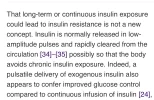
It's been pretty well established at this point that longer time of exposure to insulin, endogenous or exogenous, causes resistance to develop to a much greater degree than the same amount of insulin delivered over a shorter period via "pulses".
View attachment 347408
Insulin resistance, the diminished response of target tissues to insulin, is associated with the metabolic syndrome and a predisposition towards diabetes in a growing proportion of the worldwide population. Under insulin resistant states, the cellular response of the insulin signaling pathway is...

journals.plos.org
View attachment 347410
View attachment 347409
There are other causes of resistance as well, but GLPs reduce insulin resistance in large part, by increasing insulin secretin and "extinguishing the glucose fire" quickly, allowing cells the rest period they need for receptors to resensitize. .
This mechanism of shortening the time of insulin exposure is also the main way GLPs improve lipids. It's a long story, but essentially it's by reducing insulin resistance in the liver, which allows it to do a better job
of clearing cholesterol from blood.
There's a ton on this you can find by searching "Insulin resistance pulsatile". A couple of early papers questioned this concept, but I don't think that's happened in at least a last decade, with the overwhelming amount of research and evidence supporting it.