Save your unusable raws Guaranteed.

These 2 parts from the patent stood out:

- The water content is critical—too little water results in low bulk density crystals; optimal water content yields dense, well-formed crystals.

- The critical feature is that crystallization must be performed in a mixed solvent containing 10–50% by weight (preferably 20–30% by weight) of water relative to the alcohol, at a temperature of 0°C or lower.
 
It is all about controlling supersaturation. That is the point of a poor solvent. The poor solvent lowers the solubility which creates the supersaturation. The temp control does the same. Too much of either to quickly and will oil out which skips right over crystals forming and turns to oil droplets.The balance is getting the saturation to a balance that is controlled. Which will allow a controlled dense crystal to slowly form. If you don't go to full oil out but the saturation goes wild tons of micro crystals rapidly form . When they rapidly form the impurities and solvent get trapped in the lattice. When they can grow controlled and slowly you get the best purity. But the fine balance is getting the most yield from solution and good crystal formation. Both can happen but there is no magic formula. Every batch reacts differently. Might have purity or polarity differences in impurities from one batch that is different in the next batch. If you scale up or down will change process, moisture in solvent, stirring speed, exact addition rate and timing of poor solvent, cooling ramp, all shift the zone where good growth happens and where you crash or oil out.
 
Any ideas if there is a positive effect for longer esters like cypionate to use IPA instead of EtOH ? The idea is that it will provide slower crystallization than EtOh with an ester like cypionate so we get a better end crystal? Also after cold filtering the mother liquor what will be the best to use for cleaning the crystal's surface assuming we use IPA? Straight IPA or a mix of IPA/WFi 80/20? I am wondering if the water even in so small amount can interfere with the crystals in some way.I am very hyped,reading all this thread from the beginning and try to understand as much as I possibly can with my current knowledge. Congratulations to everyone for the effort and the huge knowledge you provide.
 
Any ideas if there is a positive effect for longer esters like cypionate to use IPA instead of EtOH ? The idea is that it will provide slower crystallization than EtOh with an ester like cypionate so we get a better end crystal? Also after cold filtering the mother liquor what will be the best to use for cleaning the crystal's surface assuming we use IPA? Straight IPA or a mix of IPA/WFi 80/20? I am wondering if the water even in so small amount can interfere with the crystals in some way.I am very hyped,reading all this thread from the beginning and try to understand as much as I possibly can with my current knowledge. Congratulations to everyone for the effort and the huge knowledge you provide.
IPA is going to have less of a window as the solubility is lower especially as it cools. So will force supersaturation quicker. I wouldn't use IPA as main solvent unless dealing with less common lower polar impurities fatty byproducts, hydrocarbons etc. Most of the impurities are going to be more polar which methanol/ethanol will keep in mother liquor better. If you did use IPA to target less polar impurities, I would just use it as a single solvent with no poor solvent(water) or very very slow addition, seed and cool very slow and controlled and let it build off seeding. For the wash just use ice cold IPA if it was used as solvent.
 
IPA is going to have less of a window as the solubility is lower especially as it cools. So will force supersaturation quicker. I wouldn't use IPA as main solvent unless dealing with less common lower polar impurities fatty byproducts, hydrocarbons etc. Most of the impurities are going to be more polar which methanol/ethanol will keep in mother liquor better. If you did use IPA to target less polar impurities, I would just use it as a single solvent with no poor solvent(water) or very very slow addition, seed and cool very slow and controlled and let it build off seeding. For the wash just use ice cold IPA if it was used as solvent.
Thanks for the answer. So cypionate is much more soluble in EtOh than IPA and that's going to delay the crystallization further when we cooldown. I think I got it Right thanks a lot.
 
Thanks for the answer. So cypionate is much more soluble in EtOh than IPA and that's going to delay the crystallization further when we cooldown. I think I got it Right thanks a lot.
Essentially yes. It gives you a bigger window to control the supersaturation in. Fine tune that window with poor solvent(water) and cool ramp.

Always work in a controlled environment as etOh is very volatile and can be very dangerous.
 
1770651217478.webp

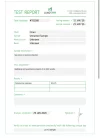
Do you guys think it's worth trying to save these raws?

Have several hundred grams of it. Pure white powder, kind of chalky smell. It's over 5 years old and I think the low purity is mostly due to degradation.

What purity do you think I could realistically achieve with a recrystallization?

I already have a thread for it, but wanted to see what you guys in this thread thought about it.


Thanks in advance
 
Do you guys think it's worth trying to save these raws?

Have several hundred grams of it. Pure white powder, kind of chalky smell. It's over 5 years old and I think the low purity is mostly due to degradation.

What purity do you think I could realistically achieve with a recrystallization?

I wouldn't risk it. The absolute best case scenario would be to get the purity high enough and then filter out bacteria etc., but that still wouldn't get rid of endotoxins, which will stick to the crystals and pass through filters. If it's been open air for 5 years, that asking for too much without using professional equipment.

One of the issues with endoxins is that they're only part of a bacteria's membrane, meaning they are not alive. So even the solvents won't kill them because there's nothing there to kill.
 
View attachment 378297

Do you guys think it's worth trying to save these raws?

Have several hundred grams of it. Pure white powder, kind of chalky smell. It's over 5 years old and I think the low purity is mostly due to degradation.

What purity do you think I could realistically achieve with a recrystallization?

I already have a thread for it, but wanted to see what you guys in this thread thought about it.


Thanks in advance

You said the powder was dry? No clumping, free flowing, still fluffy? If it is truly dry, that suggests the water activity (aw) is low. Microbial growth becomes extremely unlikely as aw drops below 0.75 and is effectively impossible below 0.6 in dry powders. Endotoxin buildup from new bacteria is therefore very unlikely without moisture for them to multiply. Endotoxin doesn’t spontaneously appear. Without moisture and bacterial growth, new endotoxin generation is extremely unlikely, and someone rambling off adult breath studies is pretty irrelevant (unless you’re having fuck orgies in your closet over the open bag).
That said, I would still test it for endo it’s cheap insurance if you plan on using it. In hindsight it should have been included with the Jano test above. You might still be able to do it, wouldn’t hurt to ask.
I’d suggest using it as a learning tool if you want to try/practice recryst. You could bring it up to 95%+ purity with a couple of recrysts, but realistically expect a final yield around 50%(especially if new to recryst), sometimes higher depending on the nature of the degradants (if they’re more polar/soluble, yield could be higher). If you’re just looking for a cheap route, it’s probably better to bin it, since you’ll spend time, solvents, and equipment getting there.
 
You said the powder was dry? No clumping, free flowing, still fluffy? If it is truly dry, that suggests the water activity (aw) is low. Microbial growth becomes extremely unlikely as aw drops below 0.75 and is effectively impossible below 0.6 in dry powders. Endotoxin buildup from new bacteria is therefore very unlikely without moisture for them to multiply. Endotoxin doesn’t spontaneously appear. Without moisture and bacterial growth, new endotoxin generation is extremely unlikely, and someone rambling off adult breath studies is pretty irrelevant (unless you’re having fuck orgies in your closet over the open bag).
That said, I would still test it for endo it’s cheap insurance if you plan on using it. In hindsight it should have been included with the Jano test above. You might still be able to do it, wouldn’t hurt to ask.
I’d suggest using it as a learning tool if you want to try/practice recryst. You could bring it up to 95%+ purity with a couple of recrysts, but realistically expect a final yield around 50%(especially if new to recryst), sometimes higher depending on the nature of the degradants (if they’re more polar/soluble, yield could be higher). If you’re just looking for a cheap route, it’s probably better to bin it, since you’ll spend time, solvents, and equipment getting there.

At this point he might as well just buy new raws lol. It's a few hundred g of Test, his testing cost plus the cost to purify (to get unknown purity which he needs to test again) will cost way more than buying new ones which are at least 90%.
 
Another question. When you use the anti solvent, do you use layering technique or just normal drops with a pipette/syringe and stirring? Can someone explain me the best technique to do it? Thanks
 
Another question. When you use the anti solvent, do you use layering technique or just normal drops with a pipette/syringe and stirring? Can someone explain me the best technique to do it? Thanks
Fuck standing there with a pipette. I use a drop funnel set at a very slow drip. 30-60 min depending on batch size and desired outcome. depends on what compound it is but most I add during reflux at 400ish RPM. Stop drip at first sign of cloud or depending on compound and solvents 20% cap . Then slow controlled cool down ramp. .25c/min
 
Fuck standing there with a pipette. I use a drop funnel set at a very slow drip. 30-60 min depending on batch size and desired outcome. depends on what compound it is but most I add during reflux at 400ish RPM. Stop drip at first sign of cloud or depending on compound and solvents 20% cap . Then slow controlled cool down ramp. .25c/min
Thanks for the answer Moto. Yeah your technique sounds better but I just started my journey on recrystallization so I have much to learn.
 
Thanks for the answer Moto. Yeah your technique sounds better but I just started my journey on recrystallization so I have much to learn.
Learning is something I do every time I do it. There has never been one that is the exact same. Too many variables to set hard numbers/time to the process. It is defiantly not an add B and C and get D as an outcome game. Patience gets the reward most of the time. Log your moves and review later to see what worked and what didn't. Build from what you learn. Just remember failure is a learning tool as well.
 
Learning is something I do every time I do it. There has never been one that is the exact same. Too many variables to set hard numbers/time to the process. It is defiantly not an add B and C and get D as an outcome game. Patience gets the reward most of the time. Log your moves and review later to see what worked and what didn't. Build from what you learn. Just remember failure is a learning tool as well.
I have burned my brain the latest days,reading every comment and every word on this particular thread, it's a treasure. Simultaneously I also do my own research to confirm everything I read but for a self educated guy like me without any chemistry background is far more difficult than the average commenter on this thread that really has a real dive in. Application of recrystallization seems simple with a fast glimpse but if you want to do it right,remove the most shit you can and recover the most yield,then it becomes a little bit overwhelming.
 
Back
Top