
MESO-Rx
Anabolic Steroids

Navigation
Install the app
How to install the app on iOS
Follow along with the video below to see how to install our site as a web app on your home screen.
Note: This feature may not be available in some browsers.
More options
Style variation
Guest viewing limit reached
- You have reached the maximum number of guest views allowed
- Please register below to remove this limitation
- Already a member? Click here to login
You are using an out of date browser. It may not display this or other websites correctly.
You should upgrade or use an alternative browser.
You should upgrade or use an alternative browser.
Republicans 2016
- Thread starter Michael Scally MD
- Start date

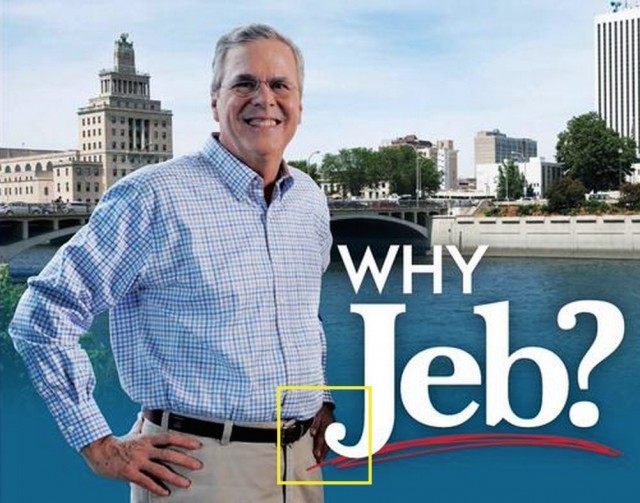
A Super PAC with over $ 100 million and this is the best they can do:


America Is So in Play
Donald Trump’s staying power in the polls reflects a change in the electorate only now coming into focus.
http://www.wsj.com/articles/america-is-so-in-play-1440715262
By
Peggy Noonan
Aug. 27, 2015 6:41 p.m. ET
So, more thoughts on Donald Trump’s candidacy, because I can’t stop being fascinated.
You know the latest numbers. Quinnipiac University’s poll this week has Mr. Trump at a hefty 28% nationally, up from 20% in July. Public Policy Polling has Mr. Trump leading all Republicans in New Hampshire with 35%. A Monmouth University poll has him at 30% in South Carolina, followed 15 points later by Ben Carson.
Here are some things I think are happening.
One is the deepening estrangement between the elites and the non-elites in America. This is the area in which Trumpism flourishes. We’ll talk about that deeper in.
Second, Mr. Trump’s support is not limited to Republicans, not by any means.
Third, the traditional mediating or guiding institutions within the Republican universe—its establishment, respected voices in conservative media, sober-minded state party officials—have little to no impact on Mr. Trump’s rise. Some say voices of authority should stand up to oppose him, which will lower his standing. But Republican powers don’t have that kind of juice anymore. Mr. Trump’s supporters aren’t just bucking a party, they’re bucking everything around, within and connected to it.
Since Mr. Trump announced, I’ve worked or traveled in, among other places, Southern California, Connecticut, Georgia, Virginia, New Jersey and New York’s Long Island. In all places I just talked to people. My biggest sense is that political professionals are going to have to rethink “the base,” reimagine it when they see it in their minds.
I’ve written before about an acquaintance—late 60s, northern Georgia, lives on Social Security, voted Obama in ’08, not partisan, watches Fox News, hates Wall Street and “the GOP establishment.” She continues to be so ardent for Mr. Trump that she not only watched his speech in Mobile, Ala., on live TV, she watched while excitedly texting with family members—middle-class, white, independent-minded—who were in the audience cheering. Is that “the Republican base”? I guess maybe it is, because she texted me Wednesday, saying: “I registered to vote today! I am a Republican now!!!” I asked if she’d ever been one before. Reply: “No, never!!!”
Something is going on, some tectonic plates are moving in interesting ways. My friend Cesar works the deli counter at my neighborhood grocery store. He is Dominican, an immigrant, early 50s, and listens most mornings to a local Hispanic radio station, La Mega, on 97.9 FM. Their morning show is the popular “El Vacilón de la Mañana,” and after the first GOP debate, Cesar told me, they opened the lines to call-ins, asking listeners (mostly Puerto Rican, Dominican, Mexican) for their impressions. More than half called in to say they were for Mr. Trump. Their praise, Cesar told me a few weeks ago, dumbfounded the hosts. I later spoke to one of them, who identified himself as D.J. New Era. He backed Cesar’s story. “We were very surprised,” at the Trump support, he said. Why? “It’s a Latin-based market!”
“He’s the man,” Cesar said of Mr. Trump. This week I went by and Cesar told me that after Mr. Trump threw Univision’s well-known anchor and immigration activist, Jorge Ramos, out of an Iowa news conference on Tuesday evening, the “El Vacilón” hosts again threw open the phone lines the following morning and were again surprised that the majority of callers backed not Mr. Ramos but Mr. Trump. Cesar, who I should probably note sees me, I sense, as a very nice establishment person who needs to get with the new reality, was delighted.
I said: Cesar, you’re supposed to be offended by Trump, he said Mexico is sending over criminals, he has been unfriendly, you’re an immigrant. Cesar shook his head: No, you have it wrong. Immigrants, he said, don’t like illegal immigration, and they’re with Mr. Trump on anchor babies. “They are coming in from other countries to give birth to take advantage of the system. We are saying that! When you come to this country, you pledge loyalty to the country that opened the doors to help you.”
He added, “We don’t bloc vote anymore.” The idea of a “Latin vote” is “disparate,” which he said generally translates as nonsense, but which he means as “bull----.”
He finished, on the subject of Jorge Ramos: “The elite have different notions from the grass-roots working people.”
OK. Old style: Jorge Ramos speaks for Hispanic America. New style: Jorge Ramos speaks for Jorge Ramos. Old style: If I’ve lost Walter Cronkite, I’ve lost middle America. New style: How touching that an American president once thought if you lost a newsman you’d lost a country.
It is noted that a poll this week said Hispanics are very much not for Donald Trump. Gallup had 65% with an unfavorable view of him, and only 14% favorable. Mr. Trump and Mr. Ramos actually got into that, when Mr. Ramos finally questioned him after being allowed back into the news conference. Mr. Trump countered with a recent Nevada poll that has him with a state lead of 28%—and he scored even higher with Nevada’s Hispanics, who gave him 31% support.
I will throw in here that almost wherever I’ve been this summer, I kept meeting immigrants who are or have grown conservative—more men than women, but women too.
America is so in play.
And: “the base” isn’t the limited, clichéd thing it once was, it’s becoming a big, broad jumble that few understand.
***
On the subject of elites, I spoke to Scott Miller, co-founder of the Sawyer Miller political-consulting firm, who is now a corporate consultant. He worked on the Ross Perot campaign in 1992 and knows something about outside challenges. He views the key political fact of our time as this: “Over 80% of the American people, across the board, believe an elite group of political incumbents, plus big business, big media, big banks, big unions and big special interests—the whole Washington political class—have rigged the system for the wealthy and connected.” It is “a remarkable moment,” he said. More than half of the American people believe “something has changed, our democracy is not like it used to be, people feel they no longer have a voice.”
Mr. Miller added: “People who work for a living are thinking this thing is broken, and that economic inequality is the result of the elite rigging the system for themselves. We’re seeing something big.”
Support for Mr. Trump is not, he said, limited to the GOP base: “The molecules are in motion.” I asked what he meant. He said bars of support are not solid, things are in motion as molecules are “before combustion, or before a branch breaks.”
I end with this. An odd thing, in my observation, is that deep down the elite themselves also think the game is rigged. They don’t disagree, and they don’t like what they see—corruption, shallowness and selfishness in the systems all around them. Their odd anguish is that they have no faith the American people can—or will—do anything to turn it around. They see the American voter as distracted, poorly educated, subject to emotional and personality-driven political adventures. They sometimes refer to “Jaywalking,” the old Jay Leno “Tonight Show” staple in which he walked outside the studio and asked the man on the street about history. What caused the American Civil War? Um, Hitler? When did it take place, roughly? Uh, 1958?
Both sides, the elites and the non-elites, sense that things are stuck.
The people hate the elites, which is not new, and very American. The elites have no faith in the people, which, actually, is new. Everything is stasis. Then Donald Trump comes, like a rock thrown through a showroom window, and the molecules start to move.
Donald Trump’s staying power in the polls reflects a change in the electorate only now coming into focus.
http://www.wsj.com/articles/america-is-so-in-play-1440715262
By
Peggy Noonan
Aug. 27, 2015 6:41 p.m. ET
So, more thoughts on Donald Trump’s candidacy, because I can’t stop being fascinated.
You know the latest numbers. Quinnipiac University’s poll this week has Mr. Trump at a hefty 28% nationally, up from 20% in July. Public Policy Polling has Mr. Trump leading all Republicans in New Hampshire with 35%. A Monmouth University poll has him at 30% in South Carolina, followed 15 points later by Ben Carson.
Here are some things I think are happening.
One is the deepening estrangement between the elites and the non-elites in America. This is the area in which Trumpism flourishes. We’ll talk about that deeper in.
Second, Mr. Trump’s support is not limited to Republicans, not by any means.
Third, the traditional mediating or guiding institutions within the Republican universe—its establishment, respected voices in conservative media, sober-minded state party officials—have little to no impact on Mr. Trump’s rise. Some say voices of authority should stand up to oppose him, which will lower his standing. But Republican powers don’t have that kind of juice anymore. Mr. Trump’s supporters aren’t just bucking a party, they’re bucking everything around, within and connected to it.
Since Mr. Trump announced, I’ve worked or traveled in, among other places, Southern California, Connecticut, Georgia, Virginia, New Jersey and New York’s Long Island. In all places I just talked to people. My biggest sense is that political professionals are going to have to rethink “the base,” reimagine it when they see it in their minds.
I’ve written before about an acquaintance—late 60s, northern Georgia, lives on Social Security, voted Obama in ’08, not partisan, watches Fox News, hates Wall Street and “the GOP establishment.” She continues to be so ardent for Mr. Trump that she not only watched his speech in Mobile, Ala., on live TV, she watched while excitedly texting with family members—middle-class, white, independent-minded—who were in the audience cheering. Is that “the Republican base”? I guess maybe it is, because she texted me Wednesday, saying: “I registered to vote today! I am a Republican now!!!” I asked if she’d ever been one before. Reply: “No, never!!!”
Something is going on, some tectonic plates are moving in interesting ways. My friend Cesar works the deli counter at my neighborhood grocery store. He is Dominican, an immigrant, early 50s, and listens most mornings to a local Hispanic radio station, La Mega, on 97.9 FM. Their morning show is the popular “El Vacilón de la Mañana,” and after the first GOP debate, Cesar told me, they opened the lines to call-ins, asking listeners (mostly Puerto Rican, Dominican, Mexican) for their impressions. More than half called in to say they were for Mr. Trump. Their praise, Cesar told me a few weeks ago, dumbfounded the hosts. I later spoke to one of them, who identified himself as D.J. New Era. He backed Cesar’s story. “We were very surprised,” at the Trump support, he said. Why? “It’s a Latin-based market!”
“He’s the man,” Cesar said of Mr. Trump. This week I went by and Cesar told me that after Mr. Trump threw Univision’s well-known anchor and immigration activist, Jorge Ramos, out of an Iowa news conference on Tuesday evening, the “El Vacilón” hosts again threw open the phone lines the following morning and were again surprised that the majority of callers backed not Mr. Ramos but Mr. Trump. Cesar, who I should probably note sees me, I sense, as a very nice establishment person who needs to get with the new reality, was delighted.
I said: Cesar, you’re supposed to be offended by Trump, he said Mexico is sending over criminals, he has been unfriendly, you’re an immigrant. Cesar shook his head: No, you have it wrong. Immigrants, he said, don’t like illegal immigration, and they’re with Mr. Trump on anchor babies. “They are coming in from other countries to give birth to take advantage of the system. We are saying that! When you come to this country, you pledge loyalty to the country that opened the doors to help you.”
He added, “We don’t bloc vote anymore.” The idea of a “Latin vote” is “disparate,” which he said generally translates as nonsense, but which he means as “bull----.”
He finished, on the subject of Jorge Ramos: “The elite have different notions from the grass-roots working people.”
OK. Old style: Jorge Ramos speaks for Hispanic America. New style: Jorge Ramos speaks for Jorge Ramos. Old style: If I’ve lost Walter Cronkite, I’ve lost middle America. New style: How touching that an American president once thought if you lost a newsman you’d lost a country.
It is noted that a poll this week said Hispanics are very much not for Donald Trump. Gallup had 65% with an unfavorable view of him, and only 14% favorable. Mr. Trump and Mr. Ramos actually got into that, when Mr. Ramos finally questioned him after being allowed back into the news conference. Mr. Trump countered with a recent Nevada poll that has him with a state lead of 28%—and he scored even higher with Nevada’s Hispanics, who gave him 31% support.
I will throw in here that almost wherever I’ve been this summer, I kept meeting immigrants who are or have grown conservative—more men than women, but women too.
America is so in play.
And: “the base” isn’t the limited, clichéd thing it once was, it’s becoming a big, broad jumble that few understand.
***
On the subject of elites, I spoke to Scott Miller, co-founder of the Sawyer Miller political-consulting firm, who is now a corporate consultant. He worked on the Ross Perot campaign in 1992 and knows something about outside challenges. He views the key political fact of our time as this: “Over 80% of the American people, across the board, believe an elite group of political incumbents, plus big business, big media, big banks, big unions and big special interests—the whole Washington political class—have rigged the system for the wealthy and connected.” It is “a remarkable moment,” he said. More than half of the American people believe “something has changed, our democracy is not like it used to be, people feel they no longer have a voice.”
Mr. Miller added: “People who work for a living are thinking this thing is broken, and that economic inequality is the result of the elite rigging the system for themselves. We’re seeing something big.”
Support for Mr. Trump is not, he said, limited to the GOP base: “The molecules are in motion.” I asked what he meant. He said bars of support are not solid, things are in motion as molecules are “before combustion, or before a branch breaks.”
I end with this. An odd thing, in my observation, is that deep down the elite themselves also think the game is rigged. They don’t disagree, and they don’t like what they see—corruption, shallowness and selfishness in the systems all around them. Their odd anguish is that they have no faith the American people can—or will—do anything to turn it around. They see the American voter as distracted, poorly educated, subject to emotional and personality-driven political adventures. They sometimes refer to “Jaywalking,” the old Jay Leno “Tonight Show” staple in which he walked outside the studio and asked the man on the street about history. What caused the American Civil War? Um, Hitler? When did it take place, roughly? Uh, 1958?
Both sides, the elites and the non-elites, sense that things are stuck.
The people hate the elites, which is not new, and very American. The elites have no faith in the people, which, actually, is new. Everything is stasis. Then Donald Trump comes, like a rock thrown through a showroom window, and the molecules start to move.

How Trump Invented Trump
http://www.bloomberg.com/politics/graphics/2015-how-trump-invented-trump/
http://www.bloomberg.com/politics/graphics/2015-how-trump-invented-trump/
My Tax Overhaul to Unleash 4% Growth
http://www.wsj.com/articles/my-tax-overhaul-to-unleash-4-growth-1441754195
Jeb Bush Promises to Govern Just Like His Brother, But Even More So
http://nymag.com/daily/intelligencer/2015/09/jeb-promises-to-govern-like-w-but-even-more-so.html
http://www.wsj.com/articles/my-tax-overhaul-to-unleash-4-growth-1441754195
Jeb Bush Promises to Govern Just Like His Brother, But Even More So
http://nymag.com/daily/intelligencer/2015/09/jeb-promises-to-govern-like-w-but-even-more-so.html
Sheldon Adelson Is Ready to Buy the Presidency
http://nymag.com/daily/intelligencer/2015/09/sheldon-adelson-is-ready-to-buy-the-presidency.html
http://nymag.com/daily/intelligencer/2015/09/sheldon-adelson-is-ready-to-buy-the-presidency.html
Jeb Bush’s Tax Plan Is Pretty Weird
http://fivethirtyeight.com/datalab/jeb-bushs-tax-plan-is-pretty-weird/
http://fivethirtyeight.com/datalab/jeb-bushs-tax-plan-is-pretty-weird/
Jeb Bush and the Return of Voodoo Economics
http://www.newyorker.com/news/john-cassidy/jeb-bush-and-the-return-of-voodoo-economics
With the economic recovery continuing, the budget deficit falling, and 2016 approaching, it has been clear for some time where the Republican Party is heading on economic policy: back to the old-time religion of tax cuts. About the only question left to be answered was whether the Party would endorse measures narrowly targeted toward middle-income families, which is what Marco Rubio and some others are recommending, or whether it would revert to the old Reaganite model of broad cuts in tax rates, which reduce tax payments for virtually everyone, but especially the rich—and to heck with the deficit.
Now we know part of the answer. On Wednesday, Jeb Bush, the G.O.P. establishment’s standard-bearer, announced, as the centerpiece of his 2016 campaign,https://www.newyorker.com/wp-admin/ers.com/article/2015/09/09/us-usa-election-bush-idUSKCN0R92IT20150909. The top rate would be reduced from its current level of forty per cent (or nearly forty-four per cent, if you include a surcharge introduced as a part of Obamacare) to twenty-eight per cent. At the bottom of the income distribution, roughly fifteen million households would have their effective rates cut to zero. Bush’s tax-cutting zeal doesn’t stop there. He also pledged to cut the top tax rate on capital gains and dividends, reduce the rate that corporations pay (or, in many cases, don’t pay) from thirty-five per cent to twenty per cent, and abolish the estate tax. All told, these tax cuts would cost about $3.4 trillion over ten years. (By any standard, that’s a big tax cut. On an annual basis, it’s equivalent to about two per cent of current G.D.P.)
But wouldn’t this plan inflate the deficit, which President Obama and Congress have just spent five years trying to reduce, and also amount to another enormous handout to the one per cent? Not in the make-believe world of “voodoo economics”—the term that Jeb’s father, George H. W. Bush, used in criticizing Ronald Reagan’s tax-cutting plans during their G.O.P. primary tussle, in 1980.
To help pay for his giveaways, Jeb Bush said that he would cut spending, cap the itemized deductions that wealthy taxpayers take, and introduce a series of other steps designed to stimulate economic growth, such as scaling back federal regulations and reforming the education and immigration systems. “Taken together, these policies will unleash increased investment, higher wages and sustained four per cent economic growth, while reducing the deficit,” he said in a statement.
Any one whose memory extends back to the seventies and eighties will find this language depressingly familiar. The original iteration of voodoo economics didn’t merely involve cutting taxes and directing the bulk of the gains to the ultra-wealthy. (The phrase “the one per cent” hadn’t been coined back then.) The “voodoo” accusation arose from the claim that, because the policies would encourage people to work harder and businesses to invest more, a lot more taxable income would be produced, and the reductions in tax rates wouldn’t lead to a commensurate reduction in the amount of tax revenues that the government collected. Indeed, some early voodoo economists, such as Arthur Laffer, claimed that there wouldn’t be any drop in revenues.
By 1988, when Poppy Bush was running for President again, more than half a decade of gaping budget deficits had discredited the most extreme and foolhardy version of voodoo economics. However, some Republicans, such as Jack Kemp, the congressman from New York, were still promoting a slightly modified version of the creed. If pressed, Kemp and his supporters conceded that all of that pent-up energy and enterprise might not fully offset the fall in tax revenues consequent to a big tax cut. But, they insisted, if tax cuts were combined with other “pro-enterprise policies,” such as making a bonfire of government regulations, the deficit problem would go away.
In unveiling his tax plan, Jeb Bush made it clear that he is Kemp’s political heir. He didn’t claim that cutting income-tax rates, by itself, would unleash a supply-side miracle. However, he did claim that the trick could be accomplished by combining the tax cuts with other measures, such as allowing major corporations to repatriate, at a minimal tax rate, the hundreds of billions of dollars in profits that they currently have stashed overseas.
It turns out, however, that even the four conservative luminaries whom the Bush campaign rounded up to advise him on this program weren’t prepared to fully endorse this argument. (They are Glenn Hubbard, of Columbia University; Martin Feldstein, of Harvard; John Cogan, of Stanford; and Kevin Warsh, of the Hoover Institution.) In a http://thecge.net/wp-content/uploads/2015/09/Fundamental-Tax-Reform-An-Essential-Pillar-of-Economic-Growth.pdf, these conservative academics, all of whom have worked for previous Republican Administrations, said that Bush’s tax plan would raise the growth rate of the economy by 0.5 per cent a year, and that the regulatory changes he is proposing would add another 0.3 per cent to the annual growth rate. But because the annual growth rate over the past five years has been 2.2 per cent, that gets us to three per cent growth, not the four per cent that Bush is promising to deliver.
As for Bush’s claim that his plan will reduce the deficit, there isn’t any real support for it in the economists’ paper, either. To be sure, it makes the familiar argument that tax cuts, by stimulating growth, will lead to “revenue feedbacks.” On this basis, which is known on Capitol Hill as “dynamic scoring,” the economists reduce the estimated fiscal cost of the Bush tax cuts by two-thirds. But even a third of $3.6 trillion is a lot of red ink. “We estimate the tax plan, with conservative assumptions for revenue feedbacks from the Governor’s tax and regulatory policies, will reduce revenues from the current CBO baseline by $1,200 billion over the next decade; about a 3 percent reduction from projected federal revenues over that period,” the paper states.
So are the economists actually contradicting Bush and saying that his plan would expand the deficit? Not quite. After citing the $1.2 trillion figure, they write, “The remaining revenue loss would be offset by reasonable, incremental feedback effects from the tax and regulatory reforms, meaningful spending restraint across the federal budget, and growth and feedback effects from Governor Bush’s forthcoming proposals to restrain federal spending and reform health care policy, the nation’s education system, energy policy, trade, and immigration policy.” Translating that mouthful into plain English isn’t easy, but here is one possible version: if Bush really does cut spending by more than he cuts taxes, the deficit won’t go up.
Of course, Bush hasn’t said yet where he would cut spending, nor has he specified the income thresholds at which the new tax rates would kick in. That makes it difficult to pin down exactly who would win and who would lose under his proposals. Some things are clear, however. By raising standard deductions and expanding the earned-income tax credit, the Bush plan would boost the post-tax incomes of many low-income households. These measures, combined with a promise to eliminate the “carried interest” deduction enjoyed by hedge-fund and private-equity fund managers, are where the G.O.P. candidate doffs his hat to concerns about wage stagnation and rising inequality. (He also claims that faster growth in productivity and G.D.P. will lead to higher wages.)
But that’s only part of the story. Because Bush is intending to slash the top rate of income tax, eliminate the estate tax, and reduce the tax rate on capital gains and dividends, the impact of his progressive measures would be small compared to the gains that would be enjoyed by the ultra-wealthy. Take households that earn at least ten million dollars a year, placing them in the top 0.01 per cent of earners. Such folks tend to have a great deal of property and financial wealth, which generates a lot of dividends, capital gains, and other forms of capital income. On the basis of some reasonable-sounding assumptions, Josh Barro, of the Times, calculates that, under the Bush plan, the effective federal tax rate these households pay would be reduced from twenty-six per cent to twenty-one per cent, and they would each save about one and a half million dollars a year, on average.
You won’t see that figure, or anything like it, on Bush’s Web site, of course. Just like Reagan, Jeb’s brother George, and Mitt Romney in 2012, Jeb talks about simplifying the tax code, boosting American competitiveness, stimulating growth, and restoring “the opportunity for every American to rise and achieve earned success.” That’s how voodoo economics is always marketed. But, despite the welcome addition of a few populist touches, such as pledging to euthanize the carried-interest deduction, Bush is writing the same old tired script.
http://www.newyorker.com/news/john-cassidy/jeb-bush-and-the-return-of-voodoo-economics
With the economic recovery continuing, the budget deficit falling, and 2016 approaching, it has been clear for some time where the Republican Party is heading on economic policy: back to the old-time religion of tax cuts. About the only question left to be answered was whether the Party would endorse measures narrowly targeted toward middle-income families, which is what Marco Rubio and some others are recommending, or whether it would revert to the old Reaganite model of broad cuts in tax rates, which reduce tax payments for virtually everyone, but especially the rich—and to heck with the deficit.
Now we know part of the answer. On Wednesday, Jeb Bush, the G.O.P. establishment’s standard-bearer, announced, as the centerpiece of his 2016 campaign,https://www.newyorker.com/wp-admin/ers.com/article/2015/09/09/us-usa-election-bush-idUSKCN0R92IT20150909. The top rate would be reduced from its current level of forty per cent (or nearly forty-four per cent, if you include a surcharge introduced as a part of Obamacare) to twenty-eight per cent. At the bottom of the income distribution, roughly fifteen million households would have their effective rates cut to zero. Bush’s tax-cutting zeal doesn’t stop there. He also pledged to cut the top tax rate on capital gains and dividends, reduce the rate that corporations pay (or, in many cases, don’t pay) from thirty-five per cent to twenty per cent, and abolish the estate tax. All told, these tax cuts would cost about $3.4 trillion over ten years. (By any standard, that’s a big tax cut. On an annual basis, it’s equivalent to about two per cent of current G.D.P.)
But wouldn’t this plan inflate the deficit, which President Obama and Congress have just spent five years trying to reduce, and also amount to another enormous handout to the one per cent? Not in the make-believe world of “voodoo economics”—the term that Jeb’s father, George H. W. Bush, used in criticizing Ronald Reagan’s tax-cutting plans during their G.O.P. primary tussle, in 1980.
To help pay for his giveaways, Jeb Bush said that he would cut spending, cap the itemized deductions that wealthy taxpayers take, and introduce a series of other steps designed to stimulate economic growth, such as scaling back federal regulations and reforming the education and immigration systems. “Taken together, these policies will unleash increased investment, higher wages and sustained four per cent economic growth, while reducing the deficit,” he said in a statement.
Any one whose memory extends back to the seventies and eighties will find this language depressingly familiar. The original iteration of voodoo economics didn’t merely involve cutting taxes and directing the bulk of the gains to the ultra-wealthy. (The phrase “the one per cent” hadn’t been coined back then.) The “voodoo” accusation arose from the claim that, because the policies would encourage people to work harder and businesses to invest more, a lot more taxable income would be produced, and the reductions in tax rates wouldn’t lead to a commensurate reduction in the amount of tax revenues that the government collected. Indeed, some early voodoo economists, such as Arthur Laffer, claimed that there wouldn’t be any drop in revenues.
By 1988, when Poppy Bush was running for President again, more than half a decade of gaping budget deficits had discredited the most extreme and foolhardy version of voodoo economics. However, some Republicans, such as Jack Kemp, the congressman from New York, were still promoting a slightly modified version of the creed. If pressed, Kemp and his supporters conceded that all of that pent-up energy and enterprise might not fully offset the fall in tax revenues consequent to a big tax cut. But, they insisted, if tax cuts were combined with other “pro-enterprise policies,” such as making a bonfire of government regulations, the deficit problem would go away.
In unveiling his tax plan, Jeb Bush made it clear that he is Kemp’s political heir. He didn’t claim that cutting income-tax rates, by itself, would unleash a supply-side miracle. However, he did claim that the trick could be accomplished by combining the tax cuts with other measures, such as allowing major corporations to repatriate, at a minimal tax rate, the hundreds of billions of dollars in profits that they currently have stashed overseas.
It turns out, however, that even the four conservative luminaries whom the Bush campaign rounded up to advise him on this program weren’t prepared to fully endorse this argument. (They are Glenn Hubbard, of Columbia University; Martin Feldstein, of Harvard; John Cogan, of Stanford; and Kevin Warsh, of the Hoover Institution.) In a http://thecge.net/wp-content/uploads/2015/09/Fundamental-Tax-Reform-An-Essential-Pillar-of-Economic-Growth.pdf, these conservative academics, all of whom have worked for previous Republican Administrations, said that Bush’s tax plan would raise the growth rate of the economy by 0.5 per cent a year, and that the regulatory changes he is proposing would add another 0.3 per cent to the annual growth rate. But because the annual growth rate over the past five years has been 2.2 per cent, that gets us to three per cent growth, not the four per cent that Bush is promising to deliver.
As for Bush’s claim that his plan will reduce the deficit, there isn’t any real support for it in the economists’ paper, either. To be sure, it makes the familiar argument that tax cuts, by stimulating growth, will lead to “revenue feedbacks.” On this basis, which is known on Capitol Hill as “dynamic scoring,” the economists reduce the estimated fiscal cost of the Bush tax cuts by two-thirds. But even a third of $3.6 trillion is a lot of red ink. “We estimate the tax plan, with conservative assumptions for revenue feedbacks from the Governor’s tax and regulatory policies, will reduce revenues from the current CBO baseline by $1,200 billion over the next decade; about a 3 percent reduction from projected federal revenues over that period,” the paper states.
So are the economists actually contradicting Bush and saying that his plan would expand the deficit? Not quite. After citing the $1.2 trillion figure, they write, “The remaining revenue loss would be offset by reasonable, incremental feedback effects from the tax and regulatory reforms, meaningful spending restraint across the federal budget, and growth and feedback effects from Governor Bush’s forthcoming proposals to restrain federal spending and reform health care policy, the nation’s education system, energy policy, trade, and immigration policy.” Translating that mouthful into plain English isn’t easy, but here is one possible version: if Bush really does cut spending by more than he cuts taxes, the deficit won’t go up.
Of course, Bush hasn’t said yet where he would cut spending, nor has he specified the income thresholds at which the new tax rates would kick in. That makes it difficult to pin down exactly who would win and who would lose under his proposals. Some things are clear, however. By raising standard deductions and expanding the earned-income tax credit, the Bush plan would boost the post-tax incomes of many low-income households. These measures, combined with a promise to eliminate the “carried interest” deduction enjoyed by hedge-fund and private-equity fund managers, are where the G.O.P. candidate doffs his hat to concerns about wage stagnation and rising inequality. (He also claims that faster growth in productivity and G.D.P. will lead to higher wages.)
But that’s only part of the story. Because Bush is intending to slash the top rate of income tax, eliminate the estate tax, and reduce the tax rate on capital gains and dividends, the impact of his progressive measures would be small compared to the gains that would be enjoyed by the ultra-wealthy. Take households that earn at least ten million dollars a year, placing them in the top 0.01 per cent of earners. Such folks tend to have a great deal of property and financial wealth, which generates a lot of dividends, capital gains, and other forms of capital income. On the basis of some reasonable-sounding assumptions, Josh Barro, of the Times, calculates that, under the Bush plan, the effective federal tax rate these households pay would be reduced from twenty-six per cent to twenty-one per cent, and they would each save about one and a half million dollars a year, on average.
You won’t see that figure, or anything like it, on Bush’s Web site, of course. Just like Reagan, Jeb’s brother George, and Mitt Romney in 2012, Jeb talks about simplifying the tax code, boosting American competitiveness, stimulating growth, and restoring “the opportunity for every American to rise and achieve earned success.” That’s how voodoo economics is always marketed. But, despite the welcome addition of a few populist touches, such as pledging to euthanize the carried-interest deduction, Bush is writing the same old tired script.
Seriously!!! This guy has less brains than his brother. The worst attack on American soil since Pearl Harbor!!! Jeb, You might want to look up who was POTUS.
He kept us safe. https://twitter.com/JebBush/status/644542458735525888

He kept us safe. https://twitter.com/JebBush/status/644542458735525888

ironwill1951
New Member
I think trump is dumb like a fox. I also think he is dangerous . but I think he could get elected,, but then im from Minnesota and we elected jesse ventura as our governor..
Crazy Talk at the Republican Debate
http://www.nytimes.com/2015/09/18/opinion/crazy-talk-at-the-republican-debate.html
Eleven presidential candidates had three prime-time hours on the national stage on Wednesday to tell the American people why they should lead the country.
Nobody forced them to be there. They were there freely, armed with the best arguments they and their policy advisers had come up with, to make their cases as seasoned politicians, business leaders and medical professionals — the Republican Party’s “A-Team,” as one of them, Mike Huckabee, said at the outset.
And that, America, is frightening. Peel back the boasting and insults, the lies and exaggerations common to any presidential campaign. What remains is a collection of assertions so untrue, so bizarre, that they form a vision as surreal as the Ronald Reagan jet looming behind the candidates’ lecterns.
It felt at times as if the speakers were no longer living in a fact-based world where actions have consequences, programs take money and money has to come from somewhere. Where basic laws — like physics and the Constitution — constrain wishes. Where Congress and the public, allies and enemies, markets and militaries don’t just do what you want them to, just because you say they will.
Start with immigration, and the idea that any president could or should engineer the mass expulsion of 11 million unauthorized immigrants. Not one candidate said that a 21st-century trail of tears, deploying railroad cars, federal troops and police dogs on a continental scale, cannot happen and would be morally obscene. Ben Carson said, “If anybody knows how to do that, that I would be willing to listen.” They accepted the need to “control our borders” with a 2,000-mile fence. Even Senator Marco Rubio of Florida, once an immigration moderate, endorsed the fence. Mr. Carson actually suggested two fences, for double security, with a road in between. Do these people have to be sent to the Rio Grande Valley to see how ludicrous a border fence — over mountains, vast deserts, remote valleys and private property — would be? And it won’t solve the problem they are railing against, which doesn’t exist anyway. Illegal immigration has fallen essentially to zero.
On foreign affairs, there was a lot of talk about not talking with bad people. Senator Ted Cruz of Texas said his first act would be to tear up the Iran deal, throwing the nuclear race back to the ayatollahs and rupturing global alliances — but making a point! Carly Fiorina said: “What I would do, immediately, is begin rebuilding the Sixth Fleet, I would begin rebuilding the missile defense program in Poland, I would conduct regular, aggressive military exercises in the Baltic States. I’d probably send a few thousand more troops into Germany. Vladimir Putin would get the message.”
We get the message, and it’s scary.
Jeb Bush spun a particularly repellent fantasy. Speaking reverently of his brother the president, he said, “He kept us safe,” and invoked the carnage of 9/11. Wait, what? Did he mean George W. Bush, who was warned about the threat that Al Qaeda would attack? Who then invaded a non sequitur country, Iraq, over a nonexistent threat?
When the A-Team got around to science and health, many of them promised to help Americans by killing the program that gives millions of them medical insurance. One candidate said he felt sure that vaccines had caused an autism “epidemic.” The two doctors on the dais did not seriously challenge that persistent, dangerous myth.
Let loose by the CNN moderators, the candidates spun their visions freely. Despite an abundance of serious issues to talk about, nobody offered solutions to problems like child poverty, police and gun violence, racial segregation, educational gaps, competition in a global economy and crumbling infrastructure. On looming disasters (the changing climate) and more immediate ones (a possible government shutdown over, of all things, Planned Parenthood), the debate offered no reassurance that grown-ups were at the table, or even in the neighborhood.
But we did hear an idea to put Mother Teresa — Mother Teresa, a penniless nun — on our money. Think about that.
“We were discussing disease, we were discussing all sorts of things tonight, many of which will just be words. It will just pass on,” one candidate said, wrapping up. “I don’t want to say politicians, all talk, no action. But a lot of what we talked about is words and it will be forgotten very quickly.”
Which was the smartest thing Donald Trump has said all year, and an outcome America should dearly hope for.
http://www.nytimes.com/2015/09/18/opinion/crazy-talk-at-the-republican-debate.html
Eleven presidential candidates had three prime-time hours on the national stage on Wednesday to tell the American people why they should lead the country.
Nobody forced them to be there. They were there freely, armed with the best arguments they and their policy advisers had come up with, to make their cases as seasoned politicians, business leaders and medical professionals — the Republican Party’s “A-Team,” as one of them, Mike Huckabee, said at the outset.
And that, America, is frightening. Peel back the boasting and insults, the lies and exaggerations common to any presidential campaign. What remains is a collection of assertions so untrue, so bizarre, that they form a vision as surreal as the Ronald Reagan jet looming behind the candidates’ lecterns.
It felt at times as if the speakers were no longer living in a fact-based world where actions have consequences, programs take money and money has to come from somewhere. Where basic laws — like physics and the Constitution — constrain wishes. Where Congress and the public, allies and enemies, markets and militaries don’t just do what you want them to, just because you say they will.
Start with immigration, and the idea that any president could or should engineer the mass expulsion of 11 million unauthorized immigrants. Not one candidate said that a 21st-century trail of tears, deploying railroad cars, federal troops and police dogs on a continental scale, cannot happen and would be morally obscene. Ben Carson said, “If anybody knows how to do that, that I would be willing to listen.” They accepted the need to “control our borders” with a 2,000-mile fence. Even Senator Marco Rubio of Florida, once an immigration moderate, endorsed the fence. Mr. Carson actually suggested two fences, for double security, with a road in between. Do these people have to be sent to the Rio Grande Valley to see how ludicrous a border fence — over mountains, vast deserts, remote valleys and private property — would be? And it won’t solve the problem they are railing against, which doesn’t exist anyway. Illegal immigration has fallen essentially to zero.
On foreign affairs, there was a lot of talk about not talking with bad people. Senator Ted Cruz of Texas said his first act would be to tear up the Iran deal, throwing the nuclear race back to the ayatollahs and rupturing global alliances — but making a point! Carly Fiorina said: “What I would do, immediately, is begin rebuilding the Sixth Fleet, I would begin rebuilding the missile defense program in Poland, I would conduct regular, aggressive military exercises in the Baltic States. I’d probably send a few thousand more troops into Germany. Vladimir Putin would get the message.”
We get the message, and it’s scary.
Jeb Bush spun a particularly repellent fantasy. Speaking reverently of his brother the president, he said, “He kept us safe,” and invoked the carnage of 9/11. Wait, what? Did he mean George W. Bush, who was warned about the threat that Al Qaeda would attack? Who then invaded a non sequitur country, Iraq, over a nonexistent threat?
When the A-Team got around to science and health, many of them promised to help Americans by killing the program that gives millions of them medical insurance. One candidate said he felt sure that vaccines had caused an autism “epidemic.” The two doctors on the dais did not seriously challenge that persistent, dangerous myth.
Let loose by the CNN moderators, the candidates spun their visions freely. Despite an abundance of serious issues to talk about, nobody offered solutions to problems like child poverty, police and gun violence, racial segregation, educational gaps, competition in a global economy and crumbling infrastructure. On looming disasters (the changing climate) and more immediate ones (a possible government shutdown over, of all things, Planned Parenthood), the debate offered no reassurance that grown-ups were at the table, or even in the neighborhood.
But we did hear an idea to put Mother Teresa — Mother Teresa, a penniless nun — on our money. Think about that.
“We were discussing disease, we were discussing all sorts of things tonight, many of which will just be words. It will just pass on,” one candidate said, wrapping up. “I don’t want to say politicians, all talk, no action. But a lot of what we talked about is words and it will be forgotten very quickly.”
Which was the smartest thing Donald Trump has said all year, and an outcome America should dearly hope for.
A warning from the past: The politics of Trump and Corbyn – it is time for classical liberals to wake up
http://marketmonetarist.com/2015/09...it-is-time-for-classical-liberals-to-wake-up/
What we are seeing is 1930s style politics. It is the politics of fascists and communists. It might be much less extreme, but remember these things don’t happen overnight. It is a gradual process where men in nazi uniforms put on suits – as they are doing in Sweden in the form of the Swedish Democrats. Or keep on the uniforms as Jobbik in Hungary.
http://marketmonetarist.com/2015/09...it-is-time-for-classical-liberals-to-wake-up/
What we are seeing is 1930s style politics. It is the politics of fascists and communists. It might be much less extreme, but remember these things don’t happen overnight. It is a gradual process where men in nazi uniforms put on suits – as they are doing in Sweden in the form of the Swedish Democrats. Or keep on the uniforms as Jobbik in Hungary.
Scott Walker's plan to crush American labor unions, explained
http://www.vox.com/2015/9/18/9345805/scott-walkers-union-plan
http://www.vox.com/2015/9/18/9345805/scott-walkers-union-plan
Similar threads
- Replies
- 5
- Views
- 425


- Replies
- 32
- Views
- 2K


- Replies
- 7
- Views
- 230

