
Bitto A, Kaeberlein M. Rejuvenation: It’s in Our Blood. Cell Metabolism 2014;20(1):2-4. http://www.cell.com/cell-metabolism/abstract/S1550-4131(14)00272-1
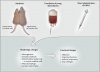
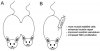
It has been known for some time that blood from young mice can positively impact aged animals, while blood from old mice has the opposite effect. Recent studies report that rejuvenating effects of young blood extend to multiple tissues and have identified GDF11 and CCL11 as factors mediating these effects.
GDF11, a member of the TGF-beta superfamily, declines in blood with age and restoration of youthful levels of GDF11 are sufficient to enhance stem cell and tissue function in heart.
In contrast, blood levels of CCL11 increase with age, and this increase appears to contribute to the decline in neurogenesis and function of neural stem cells in the hippocampus.
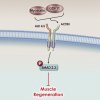
Now, two new studies have found that GDF11 also has beneficial effects on skeletal muscle, the subventricular nuclei, and the hippocampus. Supplementation with GDF11 alone restored skeletal muscle strength, physical endurance, and regeneration following injury in aged mice. Similarly, old mice treated with GDF11 had improved olfactory perception, brain vascularization, and neural stem cell function, which could translate into increased protection of the nervous system against age-related challenges.
Conversely, injecting CCL11 impaired learning and memory in young mice, likely by reducing neurogenesis in the hippocampus. A CCL11-neutralizing antibody abrogated the negative effects of CCL11 treatment in young mice, although it was not reported whether the CCL11-neutralizing antibody alone could improve function in aged mice.
These discoveries set the stage for interesting times, as many remaining questions begin to be answered and the translational potential is explored. It seems likely that GDF11 and CCL11 are only the first two in a series of circulating molecules that will be found to influence aging of different tissues. Whether these are the most important or most potent molecules remains to be seen. Future studies in this area will likely bring forth new and exciting knowledge about the dynamics of aging and novel approaches to regenerative medicine.
It has been known for some time that blood from young mice can positively impact aged animals, while blood from old mice has the opposite effect. Recent studies report that rejuvenating effects of young blood extend to multiple tissues and have identified GDF11 and CCL11 as factors mediating these effects.
GDF11, a member of the TGF-beta superfamily, declines in blood with age and restoration of youthful levels of GDF11 are sufficient to enhance stem cell and tissue function in heart.
In contrast, blood levels of CCL11 increase with age, and this increase appears to contribute to the decline in neurogenesis and function of neural stem cells in the hippocampus.
Now, two new studies have found that GDF11 also has beneficial effects on skeletal muscle, the subventricular nuclei, and the hippocampus. Supplementation with GDF11 alone restored skeletal muscle strength, physical endurance, and regeneration following injury in aged mice. Similarly, old mice treated with GDF11 had improved olfactory perception, brain vascularization, and neural stem cell function, which could translate into increased protection of the nervous system against age-related challenges.
Conversely, injecting CCL11 impaired learning and memory in young mice, likely by reducing neurogenesis in the hippocampus. A CCL11-neutralizing antibody abrogated the negative effects of CCL11 treatment in young mice, although it was not reported whether the CCL11-neutralizing antibody alone could improve function in aged mice.
These discoveries set the stage for interesting times, as many remaining questions begin to be answered and the translational potential is explored. It seems likely that GDF11 and CCL11 are only the first two in a series of circulating molecules that will be found to influence aging of different tissues. Whether these are the most important or most potent molecules remains to be seen. Future studies in this area will likely bring forth new and exciting knowledge about the dynamics of aging and novel approaches to regenerative medicine.