

RockyP
Member
First and foremost, a massive thank you to @Ghoul for brining lots of information about Pitavastatin to the community. The references I will share here are from him, nothing is original thought on my part, just sharing my experience. If you search Pitavastatin you will find many of his other posts linking very important data such as Pita's uniquely minimal impact on insulin sensitivity over time compared to other statins, as well as potential for increasing the efficacy of the existing HDL particles.
The point of this post however is uniquely related to Pita's impact on Lp(a), which carries independent risk for heart disease.
On 5 mg rosuvastatin, my Lp(a) was mid 30's, still well below the cutoff low-risk range of 75 and under.
After switching to Pitavastatin 2 mg (and while simultaneously increasing total androgen load from 300 to 520 mg per week to include 285 mg Primo), my Lp(a) dropped 65% down to 12. This is noteworthy because most statins tend to increase this value, while Pita is noted to uniquely be neutral or even lowering it slightly. My results seem to be atypical, though this is nevertheless important for anyone out there with elevated levels of Lp(a).
Thank you again to @Ghoul for these most recent references:

 www.archivesofmedicalscience.com
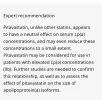
The point of this post however is uniquely related to Pita's impact on Lp(a), which carries independent risk for heart disease.
On 5 mg rosuvastatin, my Lp(a) was mid 30's, still well below the cutoff low-risk range of 75 and under.
After switching to Pitavastatin 2 mg (and while simultaneously increasing total androgen load from 300 to 520 mg per week to include 285 mg Primo), my Lp(a) dropped 65% down to 12. This is noteworthy because most statins tend to increase this value, while Pita is noted to uniquely be neutral or even lowering it slightly. My results seem to be atypical, though this is nevertheless important for anyone out there with elevated levels of Lp(a).
Thank you again to @Ghoul for these most recent references:
Position paper of the Polish Expert Group on the use of pitavastatin in the treatment of lipid disorders in Poland endorsed by the Polish Lipid Association
Lipid disorders, primarily hypercholesterolemia, are the most common cardiovascular (CV) risk factor in Poland (this applies even 3/4 of people). The low-density lipoprotein cholesterol (LDL-C) serum level is the basic lipid parameter that should be measured to determine CV risk and determines...