


De Toni L, Di Nisio A, Rocca MS, De Rocco Ponce M, Ferlin A, Foresta C. Osteocalcin, a bone-derived hormone with important andrological implications. Andrology. http://onlinelibrary.wiley.com/doi/10.1111/andr.12359/abstract
Increasing evidence disclosed the existence of a novel multi-organ endocrine pathway, involving bone, pancreas and testis, of high penetrance in energy metabolism and male fertility.
The main mediator of this axis is undercarboxylated osteocalcin (ucOC), a bone-derived protein-exerting systemic effects on tissues expressing the metabotropic receptor GPRC6A.
The recognized effects of ucOC are the improvement of insulin secretion from the pancreas, the amelioration of systemic insulin sensitivity, in particular in skeletal muscle, and the stimulation of the global endocrine activity of the Leydig cell, including vitamin D 25-hydroxylation and testosterone production.
The supporting evidence of this circuit in both animal and human models is here reviewed, with particular emphasis on the role of ucOC on testis function. The possible pharmacological modulation of this hormonal circuit for therapeutic aims is also discussed.
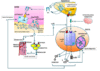
The multi-organ hormonal circuit, involving bone, testis and pancreas, suggested to regulate energy metabolism and male fertility.
According to this model, carboxylated osteocalcin (OC) in the bone extracellular matrix is decarboxylated into undercarboxylated OC (ucOC) and released in the bloodstream where it exerts systemic effects on tissues-expressing GPRC6A, the recognized receptor of ucOC.
On pancreas, ucOC stimulates Langerhans b-cells (b-Cells) proliferation and improves insulin (Ins) secretion. In turn Ins, acting through the insulin receptor (InsR), promotes the decarboxylation of OC in the bone, by enhancing the acidification of extracellular matrix in resorption lacunae operated by osteoblasts.
This effect is ascribed to the InsR-dependent inhibition of osteoprotegerin (Opg) release by osteoblasts. The consequent reduction in the Opg/Receptor activator of nuclear factor kappa-B ligand (RANKL) ratio triggers the bone-remodelling activity of osteoblasts.
On adipose tissue, ucOC stimulates the production of adiponectin that ameliorates systemic insulin sensitivity, in particular, in skeletal muscle. Skeletal muscle itself is a target tissue of ucOC, being stimulated for mass maintenance and metabolic proficiency.
Together with the luteinizing hormone (LH)/LH-receptor (LHR) axis, ucOC stimulates the global endocrine activity of the Leydig cell, including Vit D 25-hydroxylation (25OHVitD) and testosterone (T) production.
The possible role of ucOC on INSL3 production by Leydig cells has not been investigated yet. In turn T, and likely INSL3, stimulates spermatogenesis within the seminiferous tubule, whereas 25OHVitD, T and INSL3 display a recognized positive effect on bone formation.
The known effects of Leydig cell hormones on adipocytes and skeletal muscle metabolism have not been indicated.
Discontinuous arrows indicate the hormone release. Continuous arrows indicate an overall effect on the whole tissue.
Increasing evidence disclosed the existence of a novel multi-organ endocrine pathway, involving bone, pancreas and testis, of high penetrance in energy metabolism and male fertility.
The main mediator of this axis is undercarboxylated osteocalcin (ucOC), a bone-derived protein-exerting systemic effects on tissues expressing the metabotropic receptor GPRC6A.
The recognized effects of ucOC are the improvement of insulin secretion from the pancreas, the amelioration of systemic insulin sensitivity, in particular in skeletal muscle, and the stimulation of the global endocrine activity of the Leydig cell, including vitamin D 25-hydroxylation and testosterone production.
The supporting evidence of this circuit in both animal and human models is here reviewed, with particular emphasis on the role of ucOC on testis function. The possible pharmacological modulation of this hormonal circuit for therapeutic aims is also discussed.
The multi-organ hormonal circuit, involving bone, testis and pancreas, suggested to regulate energy metabolism and male fertility.
According to this model, carboxylated osteocalcin (OC) in the bone extracellular matrix is decarboxylated into undercarboxylated OC (ucOC) and released in the bloodstream where it exerts systemic effects on tissues-expressing GPRC6A, the recognized receptor of ucOC.
On pancreas, ucOC stimulates Langerhans b-cells (b-Cells) proliferation and improves insulin (Ins) secretion. In turn Ins, acting through the insulin receptor (InsR), promotes the decarboxylation of OC in the bone, by enhancing the acidification of extracellular matrix in resorption lacunae operated by osteoblasts.
This effect is ascribed to the InsR-dependent inhibition of osteoprotegerin (Opg) release by osteoblasts. The consequent reduction in the Opg/Receptor activator of nuclear factor kappa-B ligand (RANKL) ratio triggers the bone-remodelling activity of osteoblasts.
On adipose tissue, ucOC stimulates the production of adiponectin that ameliorates systemic insulin sensitivity, in particular, in skeletal muscle. Skeletal muscle itself is a target tissue of ucOC, being stimulated for mass maintenance and metabolic proficiency.
Together with the luteinizing hormone (LH)/LH-receptor (LHR) axis, ucOC stimulates the global endocrine activity of the Leydig cell, including Vit D 25-hydroxylation (25OHVitD) and testosterone (T) production.
The possible role of ucOC on INSL3 production by Leydig cells has not been investigated yet. In turn T, and likely INSL3, stimulates spermatogenesis within the seminiferous tubule, whereas 25OHVitD, T and INSL3 display a recognized positive effect on bone formation.
The known effects of Leydig cell hormones on adipocytes and skeletal muscle metabolism have not been indicated.
Discontinuous arrows indicate the hormone release. Continuous arrows indicate an overall effect on the whole tissue.


