
General Research - Ancillaries

Hey folks -

In keeping with me using this almost like a cycle log but purely on the health side, I'm going to be getting some fun testing done and will share all my results/reports here. Let me know if you guys want to see any other tests (random blood markers you guys are curious about? Maybe that you don't feel worthwhile to get yourself, happy to get some random tests for the community if anyone gets a kick out of them.

Will be getting a full body Prenuvo MRI in the next 2 weeks along with a Galleri liquid biopsy blood test.

Quick notes on both of these, I'm going into the Prenuvo already knowing that I have a long standing knee blown out from the Marines (meniscus/ACL/PCL) that I have put off getting surgery on for 8 years so that I could go on a deployment, as well as a mostly asymptomatic hernia that I've been dealing with for a few years, a torn UCL from years of baseball back in the day, and tons of tissue damage from a traumatic arm wound.

I'm not going to mention any of these going into the Prenuvo scan, and will frankly be using it as a gauge of how accurate the test is.

Full body MRI's are known for finding something a lot of the time and causing unnecessary worry, so I'll also have my eye out for that considering my younger age and the statistical unlikelihood of any cancer.

On the flip side, Galleri I was surprised to see in the studies has a very low false positive rate, only .5%. That said, given my statistical unlikelihood of cancer, it may still be near even with the likelihood of a true positive, so I'll have to be careful in interpreting a positive case as a certainty.

I was a bit disappointed to see that in the clinical literature Galleri was pretty poor at detecting cancers early, only detecting Stage I for some of the cancers something like 18% of the time for example. To me, seems like the idea of a liquid biopsy is to detect it early, not tell me I have Stage IV colon cancer I should've detected from a colonoscopy much earlier.

Anyway, I have the disposable income and it seemed like a fun thing to do. Will sanitize the Prenuvo report and post here.
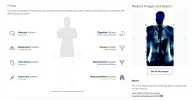
 
Prenuvo report arrived way quicker than expected. I'll do a full write up on it a bit later (nothing groundbreaking/I am not about to die it would appear) but a terribly interesting report I must say. Given it's relative cost compared to half the other things I do, I could easily see this becoming part of my yearly routine just for a bit of peace of mind especially since I now have a baseline scan to compare to.

General thoughts on the process. Booked on a Monday, got in first thing Wednesday. Clinic was nice and clean/everyone was very friendly. If you've ever been to an Equinox in NYC, it feels like the MRI version of that.

Watched Seinfeld throughout the MRI which took around 45 minutes or so, everyone kept chatting up how loud it was but frankly didn't find it loud at all and really was quite a breeze. The only interesting thing is because they are taking so many photos and doing DWI which takes them very fast, you can literally feel yourself being essentially microwaved as the water molecules excite from the magnets. They warned me about this and I didn't think anything of it until about halfway through when they were doing my abdomen and I started sweating fairly profusely, definitely glad they gave me a heads up.

There's only one steroid related finding as far as I can tell, which as I said I'll post more about later today. If anyone has any specific questions about it that feel free to let me know and I'll be sure to respond!
 
For reference, I'm currently on about half a gram of gear and 4IU's of GH daily along with my aggressively long ancillary stack.

Spent a couple hours going through the raw DICOM dump which are a ton of fun and you can look at your body in 3D using scans that remove fat or water or bone etc, focus on arteries, lymph nodes, etc. Totaled well over 15,000 slices across 38 different series. Frankly an astonishing amount of data that I won't bore anyone with, bit wild to see every mm of your insides though!

They ended up only being able to do a Head & Torso scan which was fine by me, didn't really expect anything I didn't know about my arms or legs and saved $1K.

I've included a couple of random screenshots of my Circle of Willis looking for brain aneurysms as well as some photos of the generalized report they give just so you can get an idea.

They look for hundreds of different things like fatty liver disease/gall stones/heart enlargement/multiple sclerosis/brain ischemia evidence, you name it. I was happy to generally just have very few findings. Heart looks good, liver is pristine, kidneys look unharmed, no evidence of visceral fat anywhere, prostate is an easy breezy 24.1ml (thanks dutasteride!), etc.

The main findings is that I have a deviated septum which explains one of my nostrils having been basically nonfunctional, I was apparently constipated (put under the urinary findings oddly), and that I have what they pointed out to be a "inflammatory muscle signal" which they thought may be a small muscle tear. It's 100% just where I dump a half gram of gear into my VG's every week and represents the only steroid related finding as far as I can tell.

All in all, I can't say I really learned much beyond the fact that I have a deviated septum, but it backs up all the findings from my bloodwork and does give me a bit of peace of mind to know I will always have a scan to look back at to compare any finding in the future to. Also makes me feel better about the GH.

I could post another 1,000 cooler screenshots but I realized when I went to grab some it's just an overwhelming amount of data especially given most of them will just be a detailed picture of my heart or liver or spleen saying "hey look it looks good!" Going to be chatting with a radiologist next week to go over everything but can't imagine they'll have much more commentary.
 

Attachments

  • Screenshot 2025-08-15 at 5.44.32 PM.webp
    Screenshot 2025-08-15 at 5.44.32 PM.webp
    152.9 KB · Views: 15
  • Screenshot 2025-08-15 at 5.39.49 PM.webp
    Screenshot 2025-08-15 at 5.39.49 PM.webp
    117.7 KB · Views: 16
  • Screenshot 2025-08-15 at 5.34.38 PM.webp
    Screenshot 2025-08-15 at 5.34.38 PM.webp
    42.7 KB · Views: 15
  • Screenshot 2025-08-15 at 5.54.31 PM.webp
    Screenshot 2025-08-15 at 5.54.31 PM.webp
    108.6 KB · Views: 14
  • Screenshot 2025-08-15 at 5.54.24 PM.webp
    Screenshot 2025-08-15 at 5.54.24 PM.webp
    107.9 KB · Views: 14
  • MRI.mov
    MRI.mov
    1 MB
For reference, I'm currently on about half a gram of gear and 4IU's of GH daily along with my aggressively long ancillary stack.

Spent a couple hours going through the raw DICOM dump which are a ton of fun and you can look at your body in 3D using scans that remove fat or water or bone etc, focus on arteries, lymph nodes, etc. Totaled well over 15,000 slices across 38 different series. Frankly an astonishing amount of data that I won't bore anyone with, bit wild to see every mm of your insides though!

They ended up only being able to do a Head & Torso scan which was fine by me, didn't really expect anything I didn't know about my arms or legs and saved $1K.

I've included a couple of random screenshots of my Circle of Willis looking for brain aneurysms as well as some photos of the generalized report they give just so you can get an idea.

They look for hundreds of different things like fatty liver disease/gall stones/heart enlargement/multiple sclerosis/brain ischemia evidence, you name it. I was happy to generally just have very few findings. Heart looks good, liver is pristine, kidneys look unharmed, no evidence of visceral fat anywhere, prostate is an easy breezy 24.1ml (thanks dutasteride!), etc.

The main findings is that I have a deviated septum which explains one of my nostrils having been basically nonfunctional, I was apparently constipated (put under the urinary findings oddly), and that I have what they pointed out to be a "inflammatory muscle signal" which they thought may be a small muscle tear. It's 100% just where I dump a half gram of gear into my VG's every week and represents the only steroid related finding as far as I can tell.

All in all, I can't say I really learned much beyond the fact that I have a deviated septum, but it backs up all the findings from my bloodwork and does give me a bit of peace of mind to know I will always have a scan to look back at to compare any finding in the future to. Also makes me feel better about the GH.

I could post another 1,000 cooler screenshots but I realized when I went to grab some it's just an overwhelming amount of data especially given most of them will just be a detailed picture of my heart or liver or spleen saying "hey look it looks good!" Going to be chatting with a radiologist next week to go over everything but can't imagine they'll have much more commentary.
This is awesome, thanks for sharing!
 
As a follow up on my cholesterol numbers discussed a few weeks ago, got more thorough labs back today. Again for reference on about half a gram of AAS/wk, 4IU’s daily.

WBC - 3.5
Hematocrit - 47.7
IGF-1 - 499

Total Cholesterol - 115
Trigs - 56
HDL - 55
VLDL - 13
LDL - 47


APO-A1 - 127
ApoB - 45

hsCRP - 0.58
A1C - 5.0

Bunch of other random items as well but nothing unsurprising or interesting.
 
As a follow up on my cholesterol numbers discussed a few weeks ago, got more thorough labs back today. Again for reference on about half a gram of AAS/wk, 4IU’s daily.

WBC - 3.5
Hematocrit - 47.7
IGF-1 - 499

Total Cholesterol - 115
Trigs - 56
HDL - 55
VLDL - 13
LDL - 47


APO-A1 - 127
ApoB - 45

hsCRP - 0.58
A1C - 5.0

Bunch of other random items as well but nothing unsurprising or interesting.

Pretty damn good.
 
I’m really not sure what to make of my LDL/ApoB, as I’ve mentioned I am someone who had genetically frozen LDL levels in the 170-200 range regardless of extreme diet interventions. Ezetimibe brought me to ~100, and now with BA it’s continued to plummet lower and lower, the 40s seeming to be the stopping point.

Bizarrely aggressive response to traditionally mild effect drugs.
 
I’m really not sure what to make of my LDL/ApoB, as I’ve mentioned I am someone who had genetically frozen LDL levels in the 170-200 range regardless of extreme diet interventions. Ezetimibe brought me to ~100, and now with BA it’s continued to plummet lower and lower, the 40s seeming to be the stopping point.

Bizarrely aggressive response to traditionally mild effect drugs.

Although we're told dietary cholesterol
doesn't increase LDL that's not exactly true.

Ezetimebe works because it blocks the absorption of cholesterol in the intestines.

But that's not to block dietary cholesterol. it's to block the cholesterol the liver generates, which is dumped into the intestines, then absorbed into the blood, raising LDL. Dietary cholesterol is only a tiny proportion of what's absorbed into the blood....for most.

A small percentage of people have a genetic mutation that causes them to absorb far more cholesterol from food, So for this group, over time, ezetimebe has a major effect on reducing LDL.

That may explain why you're getting unusually strong LDL lowering results from the usually weak Eze/Ba combo.
 
A small percentage of people have a genetic mutation that causes them to absorb far more cholesterol from food, So for this group, over time, ezetimebe has a major effect on reducing LDL.
That was my best guess, I imagine I’d also be one of those very few people that can have ASCVD burden from some absorbed plant sterols for which ezetimibe is the only real treatment.
 
That was my best guess, I imagine I’d also be one of those very few people that can have ASCVD burden from some absorbed plant sterols for which ezetimibe is the only real treatment.

Take k2 to keep plaque hardening calcium out of your arteries and enjoy the regression of soft plaque that occurs below LDL 55....
 
I have spent a lot of time reading through these kinds of threads–thank you very much to those of you willing to share your knowledge, experience, and thoughts.

For someone who is in the "normal" range for all of the various tests (I'm 52, by the way), should I go ahead anyway and get on some combination of Pitavastatin, Rosuvastatin, ezetimibe, bempedoic acid, and Repatha?
 
I have spent a lot of time reading through these kinds of threads–thank you very much to those of you willing to share your knowledge, experience, and thoughts.

For someone who is in the "normal" range for all of the various tests (I'm 52, by the way), should I go ahead anyway and get on some combination of Pitavastatin, Rosuvastatin, ezetimibe, bempedoic acid, and Repatha?

You'll get the best advice if you can post specific numbers.

However, in general, guidelines lag solid evidence by a decade or more, since dozens of organizations have to come to a consensus before official treatment guidelines are changed.

In addition, there's a cost / benefit ratio payers (ie, insurance and government) need to sign off on as well.

So what's "normal" today in treatment guidelines is likely far off the "ideal" that evidence points to, especially if you take cost out of the equation and look at it purely from what's best for your long term health.
 
I have spent a lot of time reading through these kinds of threads–thank you very much to those of you willing to share your knowledge, experience, and thoughts.

For someone who is in the "normal" range for all of the various tests (I'm 52, by the way), should I go ahead anyway and get on some combination of Pitavastatin, Rosuvastatin, ezetimibe, bempedoic acid, and Repatha?
if your in "normal" range , why would you want to add unnecessary stuff , your a healthy 52 year old,, not broke, why fix it?. unless you just want to spend money,, lol
 
Yeah feel free to post your numbers. Normal can be great, like 4.8 on A1C for example, but normal can also be worrying (like 5.6 on A1C).

May be as @Ateam2023 mentioned where why fix something that's not broken, or may warrant some discussion.

Something like a CAC score or CT-Angiogram can be quite helpful in stratifying risk beyond just what your labs say.
 
I don't have any recent numbers. I'll be getting labs done at some point in the near future.

Let me rephrase–what are the long-term chances of serious issues occurring with "normal" labs (assume middle of the range) compared to reducing those values using medication?

I'm asking because it seems like the goal of many of those who are using meds is to not just get their levels down to mid-range, but to bottom some of those out as much as possible.
 
I don't have any recent numbers. I'll be getting labs done at some point in the near future.

Let me rephrase–what are the long-term chances of serious issues occurring with "normal" labs (assume middle of the range) compared to reducing those values using medication?

I'm asking because it seems like the goal of many of those who are using meds is to not just get their levels down to mid-range, but to bottom some of those out as much as possible.
It depends frankly. If you have high lp(a) for example, or high blood pressure, or high AAS use, high inflammation, family history, etc, it's still incredibly "normal" to still get ASCVD at "normal" lab values.

If none of those things were true and you are in the mid range of normal levels, then you're probably more likely to die of something else eventually than ASCVD.

For the majority of people, there's certain incredibly low risk/low-medium reward things like ezetimibe for example that could slightly lower your overall risk while having basically zero impact on you negatively. From there it would just depend on your actual numbers and ancillary factors like I mentioned below.

In my case, given a family history of heart disease, high AAS use, personally high cholesterol when I was young (but luckily caught early), I have decided to just bottom mine out which luckily seems to only take ezetimibe and bempedoic acid for me. I will likely work to keep my LDL/ApoB below mid range for the rest of my life based on those factors, including layering in something like Repatha if necessary.
 
I don't have any recent numbers. I'll be getting labs done at some point in the near future.

Let me rephrase–what are the long-term chances of serious issues occurring with "normal" labs (assume middle of the range) compared to reducing those values using medication?

I'm asking because it seems like the goal of many of those who are using meds is to not just get their levels down to mid-range, but to bottom some of those out as much as possible.

To be blunt, for the best long term health outcomes:

BP: A quote from a leading preventative cardiologist - "As low as you can get it without falling over."

Lipids: The lowest rates of cardiovascular disease, heart attacks and strokes (essentially none), are found in isolated tribes and those with similar rare genetics that have ZERO LDL, with no apparent ill effects on other aspects of health. (Repatha, BTW, essentially simulates you having the genetic characteristics of these groups by recruiting your immune system to eliminate PCSK9, an enzyme that prevents your liver from cleaning LDL from your blood, which those people lack naturally and their livers clear LDL out very effectively.)

Now there is nuance. below certain BP the data shows rising risks of other types. There can be increased risks from driving lipids to near zero depending on the meds used to get there, with very little additional benefit going below 30.

So you have to let common sense prevail. But today, unlike 20, or even 10 years ago, we have highly specific medications with few or no "off target" effects like older meds, that allow 99% of people to get to these ideal levels (from a longevity and healthspan perspective) without harming other aspects of your health.

"Medication minimalism" is an outdated philosophy, provided intelligent choices are made. It's no longer a world where "more pills" necessarily means "sicker" or shorter life. Quite the opposite can be achieved,

For BP Telmisartan and Cilnidipine fall into this category of "highly targeted".

For lipids it's Pitavastatin, Ezetimebe, and Repatha.

Even "normal" people, as defined by current, resource conscious treatment standards, would clearly benefit from going beyond what the medical/ insurance/ government establishment has decided is "cost effective" for the population, and pursuing what the science demonstrates is best for you as an individual.
 
Last edited:
Thank you for the responses.

I'm interested in the long-term. Both health span and life span.

I'm already on semaglutide (1mg/week) purely for the non-weightloss benefits that I've learned about from this great forum (again–much appreciation to those of you doing the time-consuming research and sharing your findings in an objective manner!).

Anyway, assume mid-range for the values that matter in the context of this thread thus far, what's the first thing I should try adding (and then measure)? The one with the least potential for negative side effects, I'm assuming. Ezetimibe? And, what dose?
 

Sponsors

Latest posts

Back
Top