FinCEN Proposed Law for Tracking “Unhosted” Crypto Wallets

sinewave3

Member
Anyone see this yet?


Under the (this proposed law) banks and money services businesses (MSBs) would be required to submit reports, keep records, and verify the identity of customers in relation to transactions above certain thresholds involving CVC/LTDA wallets not hosted by a financial institution (“unhosted wallets”) or CVC/LTDA wallets hosted by a financial institution in certain jurisdictions identified by FinCEN.


Am I reading this right? They want banks and exchanges to not only track transactions between each other but to also track transactions to private “unhosted” wallets over a certain amount? I realize this is proposed, but it seems like it might pass with every distracted.
 
Unhosted as in wallets that are held by private individuals and not hosted thru an exchange? Sounds like blockchain wallets may fall under this and that is a big concern.
 
Above $10,000 whether single transaction or aggregate involved with that wallet.

That’s a lot.

A lot of sources use a separate wallet for each transaction. So it’s not really going to effect that.

I’m sure they are looking for people sending money to possibly fund global terrorism. Jack Ryan type stuff.
 
Depends upon what "aggregated" means.

Also, this could harm the source's ability to receive funds, not just the buyer's ability to send.
 
Depends upon what "aggregated" means.

Also, this could harm the source's ability to receive funds, not just the buyer's ability to send.

Aggregate is the total so 10 $1,000 transactions too.

But like I said, most sources open a new wallet for each transaction. Guys ordering could do the same. New intermediate wallet each transaction.

So probably wouldn’t effect stuff here.

It possibly could effect how sources procure the raws.
 
Yes this means private wallets.

Good point on the limit. 10k sounds like a lot, but making a new wallet is pretty easy.

But I can’t help but wonder: is $10k just the beginning? Will they expand it to $1000 once the process is implemented? Then to $100? Maybe I am reading between the lines...
 
Yes this means private wallets.

Good point on the limit. 10k sounds like a lot, but making a new wallet is pretty easy.

But I can’t help but wonder: is $10k just the beginning? Will they expand it to $1000 once the process is implemented? Then to $100? Maybe I am reading between the lines...
Who knows as the IRS may eventually require ALL and ANY transactions whether buy or sell to be reported. If that were to be the case, that may spell the end for Bitcoin itself as there will be hopefully even more private and secure crypto algorithms developed that may make use of even stronger encryption. However getting the wallets funded will still be the fly in the ointment as the only way to get cash into or out of the wallet would be financial institutions...which are regulated.

$10K is indeed a lot as most gym rats using crypto to purchase gear would not be putting that much into their wallets but they can easily hit the aggregate with say 20 $500 transactions. Food for thought.
 

View: https://twitter.com/rollcall/status/1354081779557289986


FinCEN described the proposed rule as a “targeted expansion” of the record-keeping obligations of a law known as the Bank Secrecy Act. Cryptocurrency exchanges would have to store name and address information for customers transferring more than $3,000 in digital assets per day to private “wallets” and file reports for customers transacting more than $10,000 per day.

Cryptocurrency wallets are software applications that allow users to store and access their digital assets. Private wallets, also known as self-hosted wallets, aren’t provided by a financial institution or cryptocurrency service and instead reside on users’ computers or offline. Law enforcement agencies consider such wallets potential conduits for illicit activities like money laundering.

More than 1,000 commenters have weighed in so far, many in opposition, according to CQ Roll Call’s review of the comments. Fintech interests are especially critical of the rule.

Jack Dorsey, CEO of payments company Square and social media company Twitter Inc., said tracking of both parties in a cryptocurrency transaction would require Square to keep records “far beyond what is required for cash transactions today.” That includes information on a customer’s “counterparties,” meaning the people opposite of every buyer or seller of cryptocurrency.

The Blockchain Association, whose members include early-stage investors, exchange platforms and virtual currency infrastructure providers, called it an “unprecedented and untested expansion of the Bank Secrecy Act.”

“It is one thing to know your customer, and quite another to know your customer’s customer or counterparty,” it said. “That is not just a difference in degree, but a difference of kind.” Demanding this kind of information turns a cryptocurrency business into a regulator of downstream transactions, it said.

Source: Fintechs use rule-making pause to fight cryptocurrency proposal - Roll Call
 
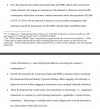
I have attached PDF of FinCEN's 72-page notice of proposed rulemaking, “Requirements for Certain Transactions Involving Convertible Virtual Currency or Digital Assets"

Also, here is the summary of actual text of the proposed rulemaking from the document:

fincen-new-proposed-reporting-rule.jpg
 

Attachments

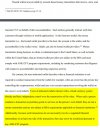
FinCEN is going after owners of "unhosted wallets" - those who solely and independently control the private keys to their cryptocurrency.

rule-targets-owners-unhosted-wallets.jpg

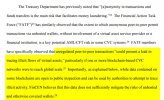
If the government doesn't know the identity of the owner of the "unhosted wallet", the possibility that the owner is engaged in illicit activity is considered an unacceptable risk:


unhosted-wallets-anonymity-money-laundering.jpg

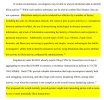
The rulemaking targets anonymity in cryptocurrency transactions. It believes "unhosted wallets" represent a "nexus to one or more potentially illicit transactions":

unhosted-wallets-nexus-illicit-activity.jpg
 

Attachments

Wow that’s a lot of info! 72 pages of legislation seems excessive...

When Coinbase and Cash app/Twitter are both fighting it, that’s a clue to the rest of us how bad this proposal is.

I had a feeling $10k was just the beginning and after seeing the $3k limit my concerns about expansion seem justified.
 
Wow that’s a lot of info! 72 pages of legislation seems excessive...

When Coinbase and Cash app/Twitter are both fighting it, that’s a clue to the rest of us how bad this proposal is.

I had a feeling $10k was just the beginning and after seeing the $3k limit my concerns about expansion seem justified.
I'm sure at some point as I mentioned earlier what will keep the government from requesting info on ALL wallets including ALL transactions regardless of amount later on? This will make everyone consider giving up on crypto or drive the crypto market underground as all the tax-related recordkeeping required will drive both the exchanges as well as the people nuts.
 
I bet it will be easy to ascertain what addresses are external private wallets as the exchanges will have a record of the addresses that coin was sent to after a user purchases it, and that external address might then become tied to the account owner on an exchange such as coinbase or coinmama for example.
 
I bet it will be easy to ascertain what addresses are external private wallets as the exchanges will have a record of the addresses that coin was sent to after a user purchases it, and that external address might then become tied to the account owner on an exchange such as coinbase or coinmama for example.
Coinbase already monitors and records external bitcoin addresses up to four hops. They have been doing this for years as noted in the ''sticky" in this subforum. This is why I've always advised of the stupidity of the common practice of sending one hop from Coinbase before paying a source.

But now the government wants to deputized Coinbase to do law enforcement's job. It should be the government's job to identify the owners of ''unhosted wallets" if they suspect they are involved in illicit activities. They want Coinbase, et al. to do this. This is NOT coinbase's job.

The feds tried to deputize Fedex to monitor and identify senders and receivers with suspected involvement in illicit activity. It didn't work out as intended.

We'll see what happens with Coinbase, et al.
 
Back
Top