

MuscularMD
Member
HLPC testing is a great screening tool to make sure that the product has the right compound in the right quantity. However, some products may contain other compounds -- contaminants -- that may not be detectable by HLPC. Per @janoshik, the compound has to be >5% to register on HLPC (please correct me if I'm wrong). If the quantity is less than that, then GCMS is needed to detect it. In addition to picking up these trace contaminants, GCMS can help determine the composition of the oils used and whether solvents like ethyl oleate or guaicol are present.
The cost of standard AAS testing is $120. GCMS is an additional $170. I think this is a small ask for vendors to perform BOTH tests on their products for transparency and safety for the community (typo in title).
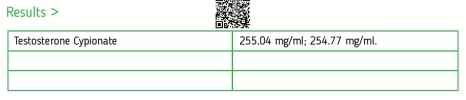
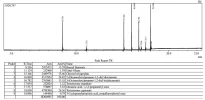
Here's an example of a vial sold as Cypionate 250. HLPC confirms this. However, GCMS shows that there's some Ethanate too. Although not a big deal to most, it could be problematic if it were a different contaminant, like tren. In addition, there's some Ethyl Oleate used as a solvent, which some people have negative reactions to.
Thoughts?
HLPC
GCMS
The cost of standard AAS testing is $120. GCMS is an additional $170. I think this is a small ask for vendors to perform BOTH tests on their products for transparency and safety for the community (typo in title).
Here's an example of a vial sold as Cypionate 250. HLPC confirms this. However, GCMS shows that there's some Ethanate too. Although not a big deal to most, it could be problematic if it were a different contaminant, like tren. In addition, there's some Ethyl Oleate used as a solvent, which some people have negative reactions to.
Thoughts?
HLPC
GCMS
Last edited:


