Is Hope Near?
By the third quarter, scientists may have a better idea of whether two drugs can help any of the world's 26 million Alzheimer's victims.
http://online.barrons.com/article/SB50001424052748703754104577237652227653404.html?
FEBRUARY 25, 2012
By ANDREW BARY
Big pharmaceutical companies have struggled for years to develop a drug that will halt the progression of Alzheimer's disease, a terrible neurological ailment that begins with memory loss and steadily robs patients of brain function, leading to dementia and death. Success would have an enormous societal impact and help to contain the cost of an ever-increasing population of Alzheimer's patients, which number an estimated five million in the U.S. -- and 26 million worldwide.
It would also have an enormous impact on the health of the pharmaceutical industry, which has struggled to replace revenue lost from patent expirations on some of its biggest drugs and fallen from investor favor. Two compounds, now in late-stage clinical trials, have the potential to do just that. Some think a successful treatment or treatments for Alzheimer's could generate $10 billion to $20 billion in annual revenue.
Results from these pivotal trials on solanezumab, developed by Eli Lilly (ticker: LLY), and bapineuzumab, developed by Pfizer (PFE), Elan (ELN) and Johnson & Johnson (JNJ) -- are expected in the third quarter of this year. If either drug works and clears the Food and Drug Administration, it could be on the market as early as next year. "If these Alzheimer's drugs hit it big, they could become the next Lipitor,"observes Tim Anderson, who covers the pharmaceutical industry for Bernstein Research. But the odds of success aren't high. Anderson pegs the chance of success for the Lilly drug at no more than 20%, calling solanezumab a "lottery ticket" with a huge potential payoff. Bapineuzumab has a better shot, though most analysts view its odds at less than 50%.
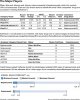
LILLY AND ELAN SHARES offer the biggest payoffs if the drugs work, followed by Pfizer and J&J. Bapineuzumab is 50%-owned by Pfizer, 25% by Elan and 25% by J&J.
Another promising drug is Baxter International's (BAX) Gammagard, which showed encouraging results in a Phase II trial and is in two separate Phase III trials, the first of which is due for completion next year. And there are many other drugs in Phase II trials. But bapineuzumab and solanezumab are the farthest along in the process.
The key determinant of the stock-market impact is the drug's potential sales, relative to the owner's stock-market value and yearly revenue. Lilly is leveraged to solanezumab because its market value -- $45 billion -- is the smallest among the Big Pharma outfits, and it owns 100% of its anti-Alzheimer's product.
Analysts estimate that Lilly and Elan may have 10% downside if the drugs fail and upside of 50% or more if they score. Success for bapineuzumab could prompt an attempt by J&J to buy out Elan's 25% stake in the drug, or purchase the entire company.
Catherine Arnold, the drug analyst at Credit Suisse, thinks Pfizer offers a good play on bapineuzumab because the stock currently reflects little chance of success. Lilly and Elan now discount some hope for their drugs. Pfizer, at $21, trades for a modest 9 times projected 2012 profits, carries a 4% dividend yield and has a number of promising drugs in late-stage clinical trials. Arnold has an Outperform rating on Pfizer, with a 12-month price target of $24, noting that, if successful, bapineuzumab could add a few dollars to that target.
Lilly doesn't have a lot going for it now besides solanezumab. Its shares, around $39, trade for 12 times projected 2012 profits, a premium to the group, despite a weaker profit outlook than many of its peers, thanks to patent expirations. Few Wall Street analysts have Buy recommendations on Lilly; Bernstein's Anderson rates the stock Market Perform. Success with solanezumab could quickly change the Street's view on the stock, which is supported by a 5% dividend yield that management has vowed to maintain.
Shares of Lilly and Elan could rise in the coming months as investors bet on favorable trial results. And just what those results will be is still anyone's guess. "A consensus view on the phase III results…has not been reached, by either the clinical community or investor base, implying high likelihood of material stock moves upon data release," wrote Arnold in a recent client note.
Both bapineuzumab and solanezumab are aimed at people with mild to moderate Alzheimer's, a group that accounts for the majority of those suffering from the disease. It's considered much tougher to treat patients in the ailment's late stage.
Bapineuzumab probably has a greater chance of success in its Phase III trial -- the final stage of testing before a drug is submitted for approval to the FDA -- because it had a more robust earlier-stage, Phase II trial. That study showed that the compound helped certain Alzheimer's patients, although the overall results were deemed disappointing when they were released in 2008 because not all patients showed improvement. In addition, there was no evidence of any link between higher doses and better results.Barron's published a favorable cover story on the drug's prospects four years ago ("Breakthrough?" Apr. 7, 2008).
It's important to note that neither drug is likely to be capable of curing or reversing the course of the disease. The producers are hoping that the treatments simply will slow the progression of Alzheimer's. That would mark progress, however, because Alzheimer's research is littered with drug failures. Existing treatments, including Aricept and Namenda, address some symptoms of the disease, but don't arrest its progression.
"What solanezumab is really intended to do is slow the rate of decline," said Eric Siemers, the senior medical director of the Alzheimer's disease team at Lilly, on a Bernstein-sponsored conference call with investors in December.
Still, an FDA-approved product that could slow the course of the disease could generate billions of dollars in annual revenues, given the desperation among Alzheimer's sufferers and their families. Most patients are older than 65. The total number of sufferers worldwide could hit 100 million by 2050. The current cost for treating Alzheimer's patients worldwide is estimated at $150 billion per year.
INVESTORS ARE CAUTIOUS on the two drugs because the disease, despite its global toll, still isn't well understood by scientists, complicating the formulation of any treatment.
Among the unknowns are what causes Alzheimer's and what prompts its spread in the brain, killing nerve cells. "It's very different than diabetes and hypertension," Arnold says. "There is a lot of debate among the clinical experts on how the disease evolves and produces the symptoms that it does. When you talk to opinion leaders and scholars, you may get five different hypotheses."
Drug companies usually want a Phase III trial to have a 50%-plus chance of success because a large clinical trial can cost several hundred million dollars. But because of the potentially enormous payoff, the industry is willing to take more chances on drugs for difficult and widespread diseases like Alzheimer's than it normally would.
Bapineuzumab and solanezumab both seek to clear the brain of a plaque caused by a protein called beta-amyloid, which accumulates in Alzheimer's patients. What isn't clear is whether clearing that plaque will have any meaningful benefit.
The drugs work in different ways. Bapineuzumab crosses the so-called blood/brain barrier and seeks to clear brain cells of amyloid plaque. Solanezumab binds with a precursor of the plaque in the blood, with the aim of prompting the body to pull amyloid plaque from the brain.
The optimism about bapineuzumab stems from Phase II trial results that showed the drug slowed the mental decline in patients who lacked a genetic marker that appears to speed the progression of Alzheimer's. People without the marker make up about 40% of sufferers.
The Pfizer group's Phase III clinical trial will study 4,100 people, so that the researchers can evaluate bapineuzumab's effects on a substantial number of patients with and without the genetic marker. Arnold sees a 55% chance that the drug will show "modest benefits" in patients without the marker and she sees only a 10% chance of any success with the "tougher-to-treat" carriers.
The Lilly Phase II trial of solanezumab involved about 50 people and didn't show a lot, other than the presence of certain "biomarkers" that suggested some success, including the presence of the destructive amyloid protein in spinal fluid, an indication that it had been cleared from the brain. Lilly didn't test cognitive function, preferring to conduct a small Phase II test and then jump to a large Phase III with 2,000 patients to gauge solanezumab's effectiveness.
Wall Street and drug companies figure the pricing of Alzheimer's drugs, which are delivered intravenously, will hinge on their clinical impact. The better they work, the more they will cost. Bernstein's Anderson has estimated that the cost could range from $5,000 to $20,000 annually per patient. Multiply that by several million patients and the yearly sales figures run into the billions.
Arnold has various 2020 sales scenarios for the two drugs. Her range is $2.3 billion to $21.6 billion for bapineuzumab, and $517 million to $17.5 billion for solanezumab, depending on how well they work and how large a patient population they can address. The very wide range reflects the uncertainty about the products. She's more upbeat about bapineuzumab.
ONE OF THE CHALLENGES to formulating a drug is that neurodegenerative diseases generally are hard to treat. For all the attention to Alzheimer's, it still isn't easy to identify sufferers early because there can be other reasons for initial symptoms like memory loss. There's concern that once people are diagnosed with Alzheimer's, the disease may be beyond effective treatment. Arnold says some studies suggest that newly diagnosed patients may already have lost more than half their neurons -- the cells that transmit information within the brain via electrical and chemical signaling.
"There's concern that amyloid-lowering agents are effective only if given very early or even before symptoms appear," says Dr. Samuel Gandy, director of the Alzheimer's research center at Mount Sinai hospital in New York. To have an effective treatment, patients may have to be identified in their 50s or early 60s via screening. He adds that another possible contributor to Alzheimer's, a protein called tau, has been tough to tackle.
To approve bapineuzumab or solanezumab, the FDA probably wants to see cognitive improvement in patients, or at least a lessoning in the decline of mental functions. The agency also will determine whether the drugs clear plaque from the brain and slow the shrinkage of the brain that afflicts Alzheimer's sufferers.
Alzheimer's patients often are evaluated based on two clinical tests, one for cognition, and one for day-to-day tasks. Alzheimer's sufferers lose, on average, about four points per year on the cognition test (the scale goes up to 70).
It's a measure of the difficulty of treating the disease that Lilly scientists said they would be happy if their drug could reduce the deterioration by a third, to four points from six, over the 18-month course of the Phase III clinical trial. One issue is whether the tests can be done uniformly and precisely, thus capturing relatively small differences in mental function. Lilly is optimistic. "The number that we think is clinically significant is about one-third, and that's what we're statistically powered to detect in our phase III studies," said Lilly's Siemers at the Bernstein forum.
Given the limited understanding of Alzheimer's, the optimistic scenario for bapineuzumab and solanezumab is that they can slow its fatal progression, not cure patients. But even that would be good news for the millions of victims of the disease, not to mention the shareholders of the companies behind the medications.