They offer a copay card: NEXLETOLâ„¢ (bempedoic acid) Co-Pay Card WebsiteAlso, any hacks for bemp acid cost? I see there is a $10 copay card on Good Rx...

MESO-Rx
Anabolic Steroids

Navigation
Install the app
How to install the app on iOS
Follow along with the video below to see how to install our site as a web app on your home screen.
Note: This feature may not be available in some browsers.
More options
Style variation
Guest viewing limit reached
- You have reached the maximum number of guest views allowed
- Please register below to remove this limitation
- Already a member? Click here to login
You are using an out of date browser. It may not display this or other websites correctly.
You should upgrade or use an alternative browser.
You should upgrade or use an alternative browser.
Pitavastatin+Bempedoic acid+Ezetimbe really works well.
- Thread starter Raww
- Start date

RockyP
Member
Yes sir - just used it earlier today!They offer a copay card: NEXLETOLâ„¢ (bempedoic acid) Co-Pay Card Website
I have a stupid question, maybe @Ghoul can chime in.
One of the criticisms I hear, but do not agree with, is that simply chasing LDL numbers is not helpful, and that outcomes data is where it's at. Now I think that's true and not true, and way too nuanced to dive into. But my question is this...
If we have 3 distinct classes of drugs (statins, zetia, Nexletol) that all lower LDL independently, and all have positive outcomes data associated with them, is there any way that using them altogether would not have a synergistic impact on outcomes? Meaning that is there any manner in which combining pitavastatin, Zetia, and Nexletol, which we know will lower LDL significantly in combination, somehow does not lead to better outcomes data than just using one, or two of them alone?
I'm also still hearing some ( a lot ) of pushback from docs of various specialties regarding the "don't drop your LDL too low" mantra of yesteryear. I know this paper is only 18 months old, but it is a potential paradigm shift in how lipids are managed, and not a single doc I've spoken with was 1) aware of it, and 2) thought it was compelling.

@Ghoul is there ANY reason to "not let your LDL go too low"?

Photon
Member
Yes sir - just used it earlier today!
Works for Nexlizet too.
Bemp + Eze combo.
$25/90d.
Quite easy to get a 1 year rx from a doc.
I think you have mentioned before but what's the persons reship policy?
Most IndiaMart vendors don't reship, but given how much you save vs the other vendors here, you can easily afford a few seizures. They use the same shipping routes.

Id send u a message but u never respond… like the last couple messages i sentchaFor anyone who needs it, and you’re more of a 500-1000 at a time stock up type, my Indian wholesaler has
Pivasta 4mg x 1000 $420 (Zydus Pita, same as US Zypitamag). That’s $38/90, better than costplusdrugs $50)
PTVS DUO 4/10 x 1000 $425 (Pita 4/Eze 10 combo)
Zetiheal 10mg x 1000 $96
Etc.
DM if you want his info. As long as you’re buying by the box (usually 100 tabs) no one is cheaper than him and he can get anything available (I mean normal pharma, including TRT, but not the sketchy controlled pain meds etc).

Ghoul
Member
I think you have mentioned before but what's the persons reship policy?
50%, but the prices are so low, as long as you aren’t extremely unlucky you should more than make up for any seizures.
(Knock on wood) 9 packs all got through no issue.
yeah, I just checked the prices. Got my answer.Have you enquired about the price?
It will answer your question lol
just some dude
Member
Pita 4 x 90 is $55 delivered from costplusdrugs , close to India prices, as another option.
Of course Repatha is the holy grail. If you can fake statin intolerance to get that (with the copay card from Repatha.com it’s only $25 / for 3 months), then you can add Pitavastatin + eze back in (they won’t take Repatha away once approved) for the ultimate lipid stack.
surprised repatha hasn’t “leaked” onto the supply chain yet -
Recent lab work:
View attachment 361982
The March 25 labs are pre-cycle. The Oct 25 labs are 5 week into a cycle of 400mg Test, 300mg Deca, 400mg Mast per week with a bit of Dbol thrown in for good measure.
The Nov 25 labs are 4 weeks later with 600mg Test, 450mg Deca, 400mg Mast per week with a bit of Anadrol tossed in. The difference is immediately after the Oct lab I started: Pitavastatin 2mg eod, Ezetimbe 5mg eod, Bempedoic Acid 90mg eod. Half pills and every other day dosing still dropped it this much.
After the Nov labs I've changed to daily dosing, but still half pills. Can't wait to see what happens for the Dec labs.
very high IQ lipid stack - congrats on the results!
just some dude
Member
yeah, I just checked the prices. Got my answer.
was it really that bad? i haven’t heard back
got all the oral stuff but i wanna have that for when i wanna run androgens again. powerful.

deuces_00
Member
good read. thanks for the article.I know this paper is only 18 months old, but it is a potential paradigm shift in how lipids are managed, and not a single doc I've spoken with was 1) aware of it, and 2) thought it was compelling.
@Ghoul is there ANY reason to "not let your LDL go too low"?
Ghoul
Member
Yes sir - just used it earlier today!
I have a stupid question, maybe @Ghoul can chime in.
One of the criticisms I hear, but do not agree with, is that simply chasing LDL numbers is not helpful, and that outcomes data is where it's at. Now I think that's true and not true, and way too nuanced to dive into. But my question is this...
If we have 3 distinct classes of drugs (statins, zetia, Nexletol) that all lower LDL independently, and all have positive outcomes data associated with them, is there any way that using them altogether would not have a synergistic impact on outcomes? Meaning that is there any manner in which combining pitavastatin, Zetia, and Nexletol, which we know will lower LDL significantly in combination, somehow does not lead to better outcomes data than just using one, or two of them alone?
I'm also still hearing some ( a lot ) of pushback from docs of various specialties regarding the "don't drop your LDL too low" mantra of yesteryear. I know this paper is only 18 months old, but it is a potential paradigm shift in how lipids are managed, and not a single doc I've spoken with was 1) aware of it, and 2) thought it was compelling.
@Ghoul is there ANY reason to "not let your LDL go too low"?
No. Thanks to the original Repatha trials being extended indefinitely, we know there aren’t any “signals” of negative effects years after achieving ultra low LDL (down to single digits). The only new evidence is increasingly reduced risk of cardiovascular events (ie heart attack or stroke) with each passing year, presumably because the old plaque keeps getting more stable as it’s deprived of fresh cholesterol for longer, keeps drying out, getting more and more calcified.
They all three work synergistically together.Meaning that is there any manner in which combining pitavastatin, Zetia, and Nexletol, which we know will lower LDL significantly in combination, somehow does not lead to better outcomes data than just using one, or two of them alone?
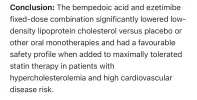
This clinical trial found the combination of Eze & BA to have the most favorable outcomes compared to any other oral monotherapy paired with a statin.
Ghoul
Member
They all three work synergistically together.
This clinical trial found the combination of Eze & BA to have the most favorable outcomes compared to any other oral monotherapy paired with a statin.
View attachment 367992
And to build on this, because I think one of the incredible impacts of the massive amount of research that’s gone into cardiovascular disease in recent decades, is that things have become SIMPLER and CLEARER, rather than more complex.
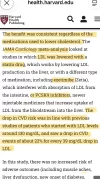
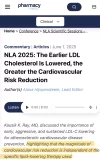
In this case, regardless of how LDL is lowered, CVD risk drops. Results have been very consistent across hundreds of studies.. When LDL is reduced by X, risk goes down by X.
So simply, if 1, 2, or 3, or 4 drugs are used, if each contributes to lowering LDL, risk is reduced.
No. Thanks to the original Repatha trials being extended indefinitely, we know there aren’t any “signals” of negative effects years after achieving ultra low LDL (down to single digits). The only new evidence is increasingly reduced risk of cardiovascular events (ie heart attack or stroke) with each passing year, presumably because the old plaque keeps getting more stable as it’s deprived of fresh cholesterol for longer, keeps drying out, getting more and more calcified.
Its so weird because why would repatha sign an agreement stating they would refund insurance if anyone has a heart attack or stroke while using it…
And to build on this, because I think one of the incredible impacts of the massive amount of research that’s gone into cardiovascular disease in recent decades, is that things have become SIMPLER and CLEARER, rather than more complex.
In this case, regardless of how LDL is lowered, CVD risk drops. Results have been very consistent across hundreds of studies.. When LDL is reduced by X, risk goes down by X.
View attachment 368006View attachment 368007
So simply, if 1, 2, or 3, or 4 drugs are used, if each contributes to lowering LDL, risk is reduced.
So it makes me wonder what numbers should look like if their numbers were over the 130 they surmised?
“patients who started with LDL levels around 130 mg/dL, and saw a drop in CVD events of about 22% for every 39 mg/dL drop in
LDL. In this study,”
They all three work synergistically together.
This clinical trial found the combination of Eze & BA to have the most favorable outcomes compared to any other oral monotherapy paired with a statin.
View attachment 367992
Im with u tho the tendon ruptureing thing scares me but also statins and i dont mix well… had a clot on 5 mlg of crestor…
Ghoul
Member
So it makes me wonder what numbers should look like if their numbers were over the 130 they surmised?
“patients who started with LDL levels around 130 mg/dL, and saw a drop in CVD events of about 22% for every 39 mg/dL drop in
LDL. In this study,”
That’s just a representative example of the typical subject in the large scale studies the data came from.
From 70 to 180 mg/dL the proportional reduction in major cardiovascular events is about 21–22% for each ~39 mg/dL decrease in LDL-C.
CTT Collaboration
Shit i may live forever then once i crush my 177 ldl and super high apo numbers…. Or i clot up and die instantly… shit im not readddyyy!! HahaThat’s just a representative example of the typical subject in the large scale studies the data came from.
From 70 to 180 mg/dL the proportional reduction in major cardiovascular events is about 21–22% for each ~39 mg/dL decrease in LDL-C.
CTT Collaboration
www.cttcollaboration.org
Fawk it ima just hit up this double stick of repatha i got and start downing these ezet’s and see what happens in a month… i guess… if i dont post after this its cause im dead… ill let my family know to come on here and tell everyone im a goner from my calcified clotted up vessels
Similar threads
- Replies
- 0
- Views
- 55
- Replies
- 4
- Views
- 192


Sponsors
Latest posts
-
-
-
-
MESO-Rx Sponsor PCT 24X7 "1 stop shop for all day healthcare"
- Latest: MuscularMD
-
