MESO-Rx Sponsor Axle Labs - US Domestic

If USP standard MCT isn’t quality, then it isn’t quality. Transparently, that’s what we use.

It contains byproducts of GSO oxidizing.

Like I said, I’d like to see another source’s DHB sent off too just to have the same compound to compare to. I’d cover all costs.
Happy Thanksgiving.

How do you explain the test results? Sabotage? What?

That sample is not consistent with MCT carrier. 100% not MCT.

You made the DHB with crispy GSO? What is the hypothesis?
 
My prescription gear isn’t MCT, it is GSO. I would expect it to have oleic acid. I would not expect MCT to have that. You want to start another harm reduction crusade? Great. I’m on board. Let us start another thread for it, I’ll donate an unopened pharma vial. Now back to the regularly scheduled program.

This is the list of items that don’t match expectations from a couple weeks back:

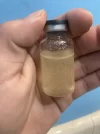
I have two vials of “MCT” Test and AI that are the same batch, same shipment, yet different colors. How are they the same batch yet they don’t match?

Now add in a Jano test where a third of the oil is not what it should be and none of this makes you want to say “maybe I have a sourcing problem” or maybe I should test my oil” or “ there may have been an issue I’m not aware of?”
The DHB is made in either GSO or MCT. There is no option on the site to pick I believe which is an error on my part.

I was referencing someone saying there’s vegetable oil in there which is insane and impossible. The DHB was tested by the same user. It came in at 98mg/ml.
 
Here is the standard.


It does not include carbon chains of 18 in length. You know what has chains of 18 in length? Oleic Acid. It also doesn’t have chains of 16 in length. You know what does? 7,11-Hexadecadienal. The Jano test showed half your oil used was those two items. Half.
The DHB contains a carrier oil - either GSO or MCT, BB, BA, and raws.

The testing shows byproducts of GSO oxidizing.
 
Happy Thanksgiving.

How do you explain the test results? Sabotage? What?

That sample is not consistent with MCT carrier. 100% not MCT.

You made the DHB with crispy GSO? What is the hypothesis?
See previous replies.

Medlab USP grade GSO or MCT, BB, BA, DHB. Oxidization to some degree can’t be avoided.
 
The DHB contains a carrier oil - either GSO or MCT, BB, BA, and raws.

The testing shows byproducts of GSO oxidizing.

It contains both, not either.
Refer back to the Jano report.

GSO is a vegetable oil.

Which other products do you sell that have both GSO and MCT in a single vial?
 
It contains both, not either.
Refer back to the Jano report.

GSO is a vegetable oil.

Which other products do you sell that have both GSO and MCT in a single vial?
Should only be GSO. Did sender use the same syringe to send off both products?
 

Note GSO sensitivity to heat and time. PV value.

One more time...


You can't heat the shit out of GSO. I mean you can, but then you get that mess in the GCMS test shared above.
 
Last edited:
Unlikely.
There is only DHB and no Tren or any other AAS.
True. Would have seen the other compound too.

So we use bottle top filters only per compound and DHB is only brewed in GSO. Just from a logical point of view it becomes impossible for MCT to be in there unless the manufacturer’s GSO has MCT. As I said though, it’s USP grade so I’d think the manufacturer’s oil is fine.
 
hate to be the " AI " guy, but this is after 2 hours of research on my end combined with " AI " on the lab results from a post before.

The independent GC-MS lab report showed that 7,11-Hexadecadienal alone accounted for about 24.91% of the entire sample, with additional aldehydes and oxidation products pushing the total oxidative breakdown well beyond anything acceptable for an injectable oil (pure GSO or MCT should have near 0% aldehydes). The test also showed an abnormal fatty-acid profile, including only 20.28% linoleic acid and 14.15% oleic acid, which does not match clean grapeseed oil or MCT and instead matches degraded, overheated, or rancid high-linoleic vegetable oil. These aldehydes are chemically reactive compounds formed when oil oxidizes, and when injected they can irritate or damage veins, trigger vein constriction or collapse, inflame muscle tissue, and lead to painful lumps, granulomas, or sterile abscesses. Because oxidation cannot be removed or reversed by filtering, the presence of nearly 25% oxidation byproducts alone is enough to classify this product as unsafe for human injection, regardless of anything else in the vial.

 
hate to be the " AI " guy, but this is after 2 hours of research on my end combined with " AI " on the lab results from a post before.

The independent GC-MS lab report showed that 7,11-Hexadecadienal alone accounted for about 24.91% of the entire sample, with additional aldehydes and oxidation products pushing the total oxidative breakdown well beyond anything acceptable for an injectable oil (pure GSO or MCT should have near 0% aldehydes). The test also showed an abnormal fatty-acid profile, including only 20.28% linoleic acid and 14.15% oleic acid, which does not match clean grapeseed oil or MCT and instead matches degraded, overheated, or rancid high-linoleic vegetable oil. These aldehydes are chemically reactive compounds formed when oil oxidizes, and when injected they can irritate or damage veins, trigger vein constriction or collapse, inflame muscle tissue, and lead to painful lumps, granulomas, or sterile abscesses. Because oxidation cannot be removed or reversed by filtering, the presence of nearly 25% oxidation byproducts alone is enough to classify this product as unsafe for human injection, regardless of anything else in the vial.


Again, I don’t want to demonize Axle here, I think it’s a widespread problem (that’ll hopefully be eliminated by this time next year as oxidative byproducts become a standard quality marker). We’re just lacking data from other labs.

When you think about it, it’s kind of nuts we’ve had vials of gear from different batches/sources, same AAS, same potency, same carrier oil and roughly same BA and BB.

Some cause pain and/or lumps.

Other’s are “smooth and pipless”.

And that’s accepted as normal.
 
Again, I don’t want to demonize Axle here, I think it’s a widespread problem (that’ll hopefully be eliminated by this time next year as oxidative byproducts become a standard quality marker). We’re just lacking data from other labs.

When you think about it, it’s kind of nuts we’ve had vials of gear from different batches/sources, same AAS, same potency, same carrier oil and roughly same BA and BB.

Some cause pain and/or lumps.

Other’s are “smooth and pipless”.

And that’s accepted as normal.
agreed , I've never had any medical issues from Axel or any concerns other wise. Just this last lab test has a lot of people worried. few of my friends warned me about this. Never had i had a product CRASH from Axel...... just somethings are worth Publishing and discussing since we're putting this into our body
 

Sponsors

Back
Top