Save your unusable raws Guaranteed.

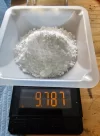
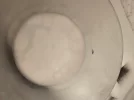
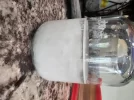
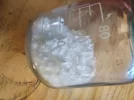
So this is the Test E /acetone batch. 10.1g to start and 8.7g recovered. There was some yellowing in the acetone crystals, probably oils . Once the acetone was dried off in the vacuum chamber, i redisolved the crystals in n-hexane. This seems to have reduced or eliminated the yellowing. Hexane was dobbed off after 24hrs in the freezer and redried. I plan to grind these down more and throw them back in the vacuum chamber

do you reckon you'd do anything different if lets say the melting point of the aas is much higher?

e.g t/e is ~32c but what if we're talking about t/c which is ~100c?
 
do you reckon you'd do anything different if lets say the melting point of the aas is much higher?

e.g t/e is ~32c but what if we're talking about t/c which is ~100c?
I've done the test c in earlier posts (started with 100g and it reduced to about 80g). Powder raws work excellent with ethanol, I would just go that route. Liquid raws are way more difficult. That's why I've been playing around with a few different methods. So far for liquid raws ethanol to start (then recystalize and dry) then redisolve in heptane to remove any polar contaminates such as oils. Always dobb off the excess solvents after recystalization with a pipette to remove the contamination. After recrystilization, melting point seems to be spot on
 
I've done the test c in earlier posts (started with 100g and it reduced to about 80g). Powder raws work excellent with ethanol, I would just go that route. Liquid raws are way more difficult. That's why I've been playing around with a few different methods. So far for liquid raws ethanol to start (then recystalize and dry) then redisolve in heptane to remove any polar contaminates such as oils. Always dobb off the excess solvents after recystalization with a pipette to remove the contamination. After recrystilization, melting point seems to be spot on
My test c raws had some nasty contamination..
 

Attachments

  • 20250822_075817.webp
    20250822_075817.webp
    293.7 KB · Views: 69
  • 20250822_075811.webp
    20250822_075811.webp
    281.2 KB · Views: 49
Ethyl Acetate/n-heptane batch with test e is done. Yield was great, only about a 2% loss. Started with 10g and ended with 9.8g. After hot filtering, solvents had to be reduced down quite a bit before it would drop out in freezer. Caution, ethyl acetate stinks to high heavens and lingers.... smells just like a nail salon. But at least it was all done using all class 3 solvents
 

Attachments

  • 20251030_071118.webp
    20251030_071118.webp
    239.3 KB · Views: 37
  • 20251030_110217.webp
    20251030_110217.webp
    2.2 MB · Views: 32
  • 20251030_112255.webp
    20251030_112255.webp
    472 KB · Views: 47
Hey folks, I just pulled off something cool: un-baking the cake and recovering raw testosterone enanthate from some old homebrew in GSO. With oxidation creeping in over time, I figured why not extract the goods? It was a bit of a pain at first, but once I dialed it in, the process was straightforward. Here’s the step-by-step in case anyone wants to salvage sketchy gear (this should work for MCT oil too).

Step 1: Initial Setup & BA Strip
Chill everything in an ice bath.
Add 30 mL n-heptane to the GSO/test mix—it emulsifies beautifully.
Add 10 mL water to pull out the benzyl alcohol (BA).
Chill again; the water + BA layer sinks, leaving heptane + GSO + test + BB on top.
Syringe out the bottom aqueous layer and discard. Repeat once more.

Step 2: Polar Extraction (Test + BB to Ethanol)
Still cold, transfer the heptane mix to a separatory funnel.
Add a 70/30 ethanol/water blend (start with ~40 mL).
Gently swish (no shaking!) ~20 times.
Pop it in the freezer for 10 min—layers separate like magic:
Bottom: ethanol/water + test + BB
Top: heptane + GSO
Drain the bottom ethanol layer into a beaker; save the oil layer in another.
Return the oil layer to the funnel, add fresh 40 mL ethanol/water, and repeat 3× total to grab every last bit of test. Separation is lightning-fast in the freezer.

Step 3: Dry the Ethanol Extracts
Combine all ethanol pulls.
Add anhydrous magnesium sulfate on a stir plate to soak up the water.
Filter out the MgSO₄.
Step 4: Strip the BB (the tricky part)
BB is stubborn—even under deep vacuum it needs heat.
I set a small electric hot plate under my vacuum chamber; ~1 hour did the trick.
Tip: You might be able to recrystallize with BB present, but I haven’t tested it.

Step 5: Crystallize the Goods
Add just enough ethanol to cover the remaining test gel in the dish.
Freeze overnight—BAM, crystals!

Clean, sparkly test enanthate ready for a fresh brew. Hope this helps anyone sitting on questionable vials!

 

Attachments

  • 20251104_125058.webp
    20251104_125058.webp
    156.7 KB · Views: 35
  • 20251105_073300.webp
    20251105_073300.webp
    101.5 KB · Views: 41
just you wait, I will be doing liquid raws sometime in the spring. Might need your advice then, but I will most likely document it in this thread as well.
exploring new frontiers truly is exciting.
 
just you wait, I will be doing liquid raws sometime in the spring. Might need your advice then, but I will most likely document it in this thread as well.
exploring new frontiers truly is exciting.
For sure man. Give it a whirl! Usa Lab has been the best place for chemical. Quality stuff. Pretty hard to find un-denatured ethanol. But always buy way more than you need
 
@readalot @dinfar1337 whats your guys thoughts about proactivly treating test e raws for Heptanoic acid (or however you spell it) contamination after recrystalization when they are still cold? I was thinking washing with a usp sodium bicarbonate or sodium hydroxide sterile water solution, mixed to a pH of 8-9. Then rewashing with cold sterile water to wash everything away. Let me know what you think. Maybe line the raws bowl with a 300mesh nylon fabric, that way I could just pick the bag right out of the bowl.
If HA is high or thought to be.Use Ethanol(room temp or slightly warmed <40c) Add 5% SB/water solution,wash/sep 3 times.Check PH each time,if still low repeat until neutral.Add mag sul, gravity filter through #1 paper in funnel, repeat if cloudy or water droplets present still. Evap to syrup. Add ethanol, mix at 60-70c.(Can add activated carbon here for extra step for color and/or stink removal, just filter again though #1 paper)Add 60-70c ethanol back if AC step was used and mix again. Cool to room temp. Add cold heptane slighty swirl until cloudy. Cool to crash.Vac filter rinse with cold heptane.Dry and enjoy new raw.

HA not a concern and no alkaline washing is needed. Ethyl acetate/heptane is solid combo. Or ethyl acetate first. Evap. Than ethanol/heptane
 
Those liquid Test E raws can be a real pain in the ass with only using ethanol. Recrystallizing with straight ethanol usually leaves you with a huge "snowball" that traps a ton of solvent. If you don’t drain most of it off first, everything just melts into soup once you pull vacuum.

This time I grabbed some 100-mesh nylon fabric, stretched it tight over a glass dish, and secured it with binder clips. I scooped the recrystallized Test E snowball onto the mesh and let it drain overnight in the freezer – that alone removed the majority of the ethanol.

Since testosterone doesn’t dissolve in cold water, I then sprayed the pile thoroughly with ice-cold water and let it drip through the fabric. This washed out the last traces of ethanol without melting anything.

Final drying in the vacuum chamber still took about 5 hours, but the results were awesome: super-fluffy, talc-like powder that literally pours out of the dish. Almost nothing stuck to the glass – no more 15-minute scraping sessions!

Thought I’d share the method in case anyone else is fighting the same sticky mess. Works like a charm.
 

Attachments

  • 20250918_130441.webp
    20250918_130441.webp
    670.9 KB · Views: 28
  • 20251106_151554.webp
    20251106_151554.webp
    331.6 KB · Views: 32
I think what you're doing is fantastic.

Has anyone sent a sample to Jano for analysis after the cleaning process?

I would be interested to know whether the active ingredient itself is affected by these methods.
 
I think what you're doing is fantastic.

Has anyone sent a sample to Jano for analysis after the cleaning process?

I would be interested to know whether the active ingredient itself is affected by these methods.
In most things we would do this with its not. You really just making a solution and them either crashing the substance back out of the solution or evaporating the solvent leaving the solute behind or a combination of both depending on method.
 
I think what you're doing is fantastic.

Has anyone sent a sample to Jano for analysis after the cleaning process?

I would be interested to know whether the active ingredient itself is affected by these methods.
Thanks man! I plan on sending stuff in here for testing after the holidays when money frees up. I dont think any contamination remains just by the appearance alone. Im mostly concerned about solvant carry over due to incomplete drying, which is why I've stayed away from anything outside of class 3 solvents. Once I dial everything in and am happy with the process, I'll make a more detailed post with temps, time frames and materials needed.

Personally I trust what im doing way more than the Chinese raw manufacturers. They also have to recrystalize in the manufacturing process, and God only know what chemicals they use...
 
Back
Top