From my 20's-60's my LDL-C had been in the low 80's typically. With other cholesterol markers being comparable Yet have a high calcium score. There is a large amount about the cardiac system and the rest of the body that modern medicine does not understand. They like to portray that they do to give patients hope but that is not always the case. When i ask cardiologists how much longer people tend to live on the average once they take a statin and their replies are they have seen no data to show people live longer. What studies i have seen do not point to statins adding much time to ones life. Lifestyle choices seem to make a bigger difference for most.

MESO-Rx
Anabolic Steroids

Navigation
Install the app
How to install the app on iOS
Follow along with the video below to see how to install our site as a web app on your home screen.
Note: This feature may not be available in some browsers.
More options
Style variation
Guest viewing limit reached
- You have reached the maximum number of guest views allowed
- Please register below to remove this limitation
- Already a member? Click here to login
You are using an out of date browser. It may not display this or other websites correctly.
You should upgrade or use an alternative browser.
You should upgrade or use an alternative browser.
Nuclear Stress Test Results
- Thread starter 220
- Start date
R
readalot
Guest
And genetics. My Lp(a) on or off oxandrolone is 0. Oxandrolone lowering Lp(a) isnt exactly a selling point though. Lol.Lifestyle choices seem to make a bigger difference for most.
yes genetics seem to play a big part. About 25% from much of the reading i have done with lifestyle being more like 75% for most diseases.And genetics. My Lp(a) on or off oxandrolone is 0. Oxandrolone lowering Lp(a) isnt exactly a selling point though. Lol.
Human longevity: Genetics or Lifestyle? It takes two to tango - PMC
Healthy aging and longevity in humans are modulated by a lucky combination of genetic and non-genetic factors. Family studies demonstrated that about 25 % of the variation in human longevity is due to genetic factors. The search for genetic and ...
 pmc.ncbi.nlm.nih.gov

Is longevity determined by genetics?: MedlinePlus Genetics
How long a person can live is affected by genetics, the environment, and lifestyle. Not much is known about how genes impact longevity.
Yeah. I wouldn't be thinking about maybe taking a statin if I was you. I'd be doing anything and everything I could to get my LDL down to a third of that level. Depending on the unit of measurement for Lp(a) I'd also be trying to get a PCSK9 inhibitor or be eyeing one of the in-development drugs specifically for Lp(a), too.LDL: 157
Lp(a) 121
80 is well understood to be high enough to be depositing plaque, though? Especially with other risk factors. Not as fast as someone with a higher quantity, but it seems odd to me to be talking about a LDL high enough to deposit plaque is surprising that it deposited plaque. Inflammation can increase deposition rates, too, and no mention of your Lp(a).From my 20's-60's my LDL-C had been in the low 80's typically. With other cholesterol markers being comparable Yet have a high calcium score. There is a large amount about the cardiac system and the rest of the body that modern medicine does not understand. They like to portray that they do to give patients hope but that is not always the case. When i ask cardiologists how much longer people tend to live on the average once they take a statin and their replies are they have seen no data to show people live longer. What studies i have seen do not point to statins adding much time to ones life. Lifestyle choices seem to make a bigger difference for most.
For lifespan, you would need to look at comparisons between people that should be on statins and aren't vs. people that should be on statins and are. You can't just look at the general population as the comparison.
What there is great data on is statins and reduction of ASCVD events and that they do reduce the occurrence rate of them vs. not using them.
Thanks for your input. I’ll check out the study you linked. Much appreciated.Yeah. I wouldn't be thinking about maybe taking a statin if I was you. I'd be doing anything and everything I could to get my LDL down to a third of that level. Depending on the unit of measurement for Lp(a) I'd also be trying to get a PCSK9 inhibitor or be eyeing one of the in-development drugs specifically for Lp(a), too.
80 is well understood to be high enough to be depositing plaque, though? Especially with other risk factors. Not as fast as someone with a higher quantity, but it seems odd to me to be talking about a LDL high enough to deposit plaque is surprising that it deposited plaque. Inflammation can increase deposition rates, too, and no mention of your Lp(a).
For lifespan, you would need to look at comparisons between people that should be on statins and aren't vs. people that should be on statins and are. You can't just look at the general population as the comparison.
What there is great data on is statins and reduction of ASCVD events and that they do reduce the occurrence rate of them vs. not using them.

Ghoul
Member
From my 20's-60's my LDL-C had been in the low 80's typically. With other cholesterol markers being comparable Yet have a high calcium score. There is a large amount about the cardiac system and the rest of the body that modern medicine does not understand. They like to portray that they do to give patients hope but that is not always the case. When i ask cardiologists how much longer people tend to live on the average once they take a statin and their replies are they have seen no data to show people live longer. What studies i have seen do not point to statins adding much time to ones life. Lifestyle choices seem to make a bigger difference for most.
Nothing personal in my critique, you have a lot of company in your opinion and the professional cardiology associations have done a piss poor job of communicating fundamental knowledge even to cardiologists, so confusion in the public is hardly a surprise.
As appealing as your statement sounds on a folksy level (“Personal responsibility! Cardiologist couldn’t tell me how many years longer I’ll live on a statin!”), especially to the anti-statin crowd, it’s deadly wrong. We’re talking about #1 cause of death and disability worldwide, and there’s zero doubt about what the primary cause is and what prevents it.
In the last 10 years, the critical mass of data has made the relationship between cumulative LDL exposure and cardiovascular lifespan one of the most firmly established cause-and-effect links in all of medicine. Right alongside smoking and lung cancer.
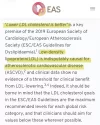
Medical science doesn’t talk like this very often. “Indisputable” isn’t thrown around lightly.
Yes, lifestyle matters; it modifies inflammation, insulin sensitivity, blood pressure, and weight. But LDL is the single most quantifiable driver of any disease, in this case atherosclerosis, that modern science has conclusively identified, and it’s primarily determined by genetics. Your liver makes the vast majority of LDL, 80%, and because the liver also removes LDL from blood it’s responsible for 95% of overall LDL levels. That’s all genetically determined by how many LDL receptors your liver has, how well they work, and how much PCSK9 you make (which interferes with liver LDL receptors removing LDL from blood). People who genetically don’t produce PCSK9 don’t have any plaque at all, near 0 LDL, and therefore no cardiovascular disease. They live long perfectly healthy lives until they die from something other than clogged arteries.
Lower LDL means fewer plaques, fewer ruptures, fewer heart attacks, and, on a population level longer life.
What you’ve unfortunately discovered is that LDL 80, long assumed “fine”, isn’t, and that decades of that level of cumulative cholesterol exposure lays down enough plaque that it becomes a problem later in life. All the other factors, from lifestyle, to inflammation and Lp(A) only mattter If LDL is high enough.

This somewhat childish illustration caught my eye because it makes to very good points:
1) CUMULATIVE LDL exposure over a lifetime determines risk, starting in childhood.
and
2) Even if you’re on the “Holy shit why didn’t they figure this out before I was in my 40s-50s!!” and stuffed full of plaque, is that by aggressively lowering LDL later in life, risk DROPS as time passes, because “old plaque” stabilizes and becomes less threatening.
If your LDL had been below 40 for a lifetime, regardless of anything else, you would not accumulate plaque, and therefore have a CAC score of zero, never have the risk of angina, peripheral artery disease, need a bypass or stent, of suffer an ischemic stroke or heart attack. We knew this for a fact. LDL is the building block of all plaque.
Only with recently developed meds, specifically Ezetimebe and PCSK9 inhibitors is getting LDL down below accumulation levels realistically possible for most people, and soon, in a few years, especially with “one time PCSK9 inhibiting vaccines”, “primordial” (instead of “primary”) prevention will become the standard, tackling >70 LDL in people starting at 18 or earlier, and atherosclerosis the #1 cause of death will start to go extinct.
The cold reality is the only reason <40 LDL isn’t a target for all right now is money. Period. Not enough expensive heart surgeries saved via early intervention, and of those who will die as a result of not lowering LDL well before 40, most fatalities will be at or near retirement age so therefore those deaths don’t “cost” much vs the expense of many years of expensive meds like Repatha, doctors visits, blood tests, etc.
TLDR: Get your LDL as low as possible, by whatever means necessary. With LDL below 40 none of the other factors will matter much. Your risk will be reduced almost as low as is possible with lipids. ~95% of total controllable risk. At that point, “residual risk”, ie, everything else, Lp(a), HDL, ApoB, can only shave a few more percentage points off.*
*except inflammation. which is a still major risk factor for a few years after stopping fresh plaque accumulation, until the plaque finally hardens and becomes “low risk historical accumulation”.
Last edited:
The recommendation for most is to have LDL-C under 100. And when they give most people a stain as a preventative measure they shoot for getting it down to 70. My LDL-C levels had been 75 for the previous few years before i talked to the cardiologist and he said the difference from 75 down to 70 would probably not make a difference as the amount of cholesterol is not the driving factor for me obviously it is something else. so spending time lowering cholesterol may not get the results i would hope for such as longer life.Yeah. I wouldn't be thinking about maybe taking a statin if I was you. I'd be doing anything and everything I could to get my LDL down to a third of that level. Depending on the unit of measurement for Lp(a) I'd also be trying to get a PCSK9 inhibitor or be eyeing one of the in-development drugs specifically for Lp(a), too.
80 is well understood to be high enough to be depositing plaque, though? Especially with other risk factors. Not as fast as someone with a higher quantity, but it seems odd to me to be talking about a LDL high enough to deposit plaque is surprising that it deposited plaque. Inflammation can increase deposition rates, too, and no mention of your Lp(a).
For lifespan, you would need to look at comparisons between people that should be on statins and aren't vs. people that should be on statins and are. You can't just look at the general population as the comparison.
What there is great data on is statins and reduction of ASCVD events and that they do reduce the occurrence rate of them vs. not using them.
And yes the number of events seem to be less for some on a statin yet the age they die at stays pretty much the same so statins may help with the smaller events but the big killer still seems to occur. Another post i made shows a couple studies to back that up with more out there if people care to look. and if not please feel free to pass over my posts. Mine are for informational purpose only not as a suggestion what others should do. I leave telling others to those that are far more omnipotent then me.
Last edited:
Sorry for my folksy manner.Nothing personal in my critique, you have a lot of company in your opinion and the professional cardiology associations have done a piss poor job of communicating fundamental knowledge even to cardiologists, so confusion in the public is hardly a surprise.
As appealing as your statement sounds on a folksy level (“Personal responsibility! Cardiologist couldn’t tell me how many years longer I’ll live on a statin!”), especially to the anti-statin crowd, it’s deadly wrong. We’re talking about #1 cause of death and disability worldwide, and there’s zero doubt about what the primary cause is and what prevents it.
In the last 10 years, the critical mass of data has made the relationship between cumulative LDL exposure and cardiovascular lifespan one of the most firmly established cause-and-effect links in all of medicine. Right alongside smoking and lung cancer.
View attachment 356898
Medical science doesn’t talk like this very often. “Indisputable” isn’t thrown around lightly.
Yes, lifestyle matters; it modifies inflammation, insulin sensitivity, blood pressure, and weight. But LDL is the single most quantifiable driver of any disease, in this case atherosclerosis, that modern science has conclusively identified, and it’s primarily determined by genetics. Your liver makes the vast majority of LDL, 80%, and because the liver also removes LDL from blood it’s responsible for 95% of overall LDL levels. That’s all genetically determined by how many LDL receptors your liver has, how well they work, and how much PCSK9 you make (which interferes with liver LDL receptors removing LDL from blood). People who genetically don’t produce PCSK9 don’t have any plaque at all, near 0 LDL, and therefore no cardiovascular disease. They live long perfectly healthy lives until they die from something other than clogged arteries.
Lower LDL means fewer plaques, fewer ruptures, fewer heart attacks, and, on a population level longer life.
What you’ve unfortunately discovered is that LDL 80, long assumed “fine”, isn’t, and that decades of that level of cumulative cholesterol exposure lays down enough plaque that it becomes a problem later in life. All the other factors, from lifestyle, to inflammation and Lp(A) only mattter If LDL is high enough.
View attachment 356899
This somewhat childish illustration caught my eye because it makes to very good points:
1) CUMULATIVE LDL exposure over a lifetime determines risk, starting in childhood.
and
2) Even if you’re on the “Holy shit why didn’t they figure this out before I was in my 40s-50s!!” and stuffed full of plaque, is that by aggressively lowering LDL later in life, risk DROPS as time passes, because “old plaque” stabilizes and becomes less threatening.
If your LDL had been below 40 for a lifetime, regardless of anything else, you would not accumulate plaque, and therefore have a CAC score of zero, never have the risk of angina, peripheral artery disease, need a bypass or stent, of suffer an ischemic stroke or heart attack. We knew this for a fact. LDL is the building block of all plaque.
Only with recently developed meds, specifically Ezetimebe and PCSK9 inhibitors is getting LDL down below accumulation levels realistically possible for most people, and soon, in a few years, especially with “one time PCSK9 inhibiting vaccines”, “primordial” (instead of “primary”) prevention will become the standard, tackling >70 LDL in people starting at 18 or earlier, and atherosclerosis the #1 cause of death will start to go extinct.
The cold reality is the only reason <40 LDL isn’t a target for all right now is money. Period. Not enough expensive heart surgeries saved via early intervention, and of those who will die as a result of not lowering LDL well before 40, most fatalities will be at or near retirement age so therefore those deaths don’t “cost” much vs the expense of many years of expensive meds like Repatha, doctors visits, blood tests, etc.
TLDR: Get your LDL as low as possible, by whatever means necessary. With LDL below 40 none of the other factors will matter much. Your risk will be reduced almost as low as is possible with lipids. ~95% of total controllable risk. At that point, “residual risk”, ie, everything else, Lp(a), HDL, ApoB, can only shave a few more percentage points off.*
*except inflammation. which is a still major risk factor for a few years after stopping fresh plaque accumulation, until the plaque finally hardens and becomes “low risk historical accumulation”.
Big pharma has the data for decades on reducing cardia events with stain use. But they never mention anything about mortality being better with statin use. And they have the data to know. Just one of several publications suggesting statins don't help life span to any real degree for most. So if living longer is the objective then some other therapies may be more useful. But i don't suggest how people should take care of their health Only that i think it is best to get opinions from all sides and not listening to any one person, before deciding for oneself. "
"These findings suggest that statin medications for the primary prevention of cardiovascular events may reduce cardiac events for some adults aged 50 to 75 years with a life expectancy of at least 2.5 years; no data suggest a mortality benefit."
Evaluation of Time to Benefit of Statins for the Primary Prevention of Cardiovascular Events in Adults Aged 50 to 75 Years: A Meta-analysis - PMC
This meta-analysis assesses randomized clinical trials of statins to determine the time to benefit for prevention of a first major adverse cardiovascular event in adults aged 50 to 75 years.
pmc.ncbi.nlm.nih.gov
"The model estimated that statin therapy increases average life expectancy in the study population by 0.3 years"
Personalized Prediction of Lifetime Benefits with Statin Therapy for Asymptomatic Individuals: A Modeling Study - PMC
In a modeling study conducted by Myriam Hunink and colleagues, a population-based cohort from Rotterdam is used to predict the possible lifetime benefits of statin therapy, on a personalized basis.
pmc.ncbi.nlm.nih.gov
The recommendations you mentioned are based on old understandings of the science - the leading organizations have revised them down significantly as we've studied this more and more.. Targets now go as low as <50 depending on risk factors.The recommendation for most is to have LDL-C under 100. And when they give most people a stain as a preventative measure they shoot for getting it down to 70. My LDL-C levels had been 75 for the previous few years before i talked to the cardiologist and he said the difference from 75 down to 70 would probably not make a difference as the amount of cholesterol is not the driving factor for me obviously it is something else. so spending time lowering cholesterol may not get the results i would hope for such as longer life.
And yes the number of events seem to be less for some on a statin yet the age they die at stays pretty much the same so statins may help with the smaller events but the big killer still seems to occur. Another post i made shows a couple studies to back that up with more out there if people care to look. and if not please feel free to pass over my posts. Mine are for informational purpose only not as a suggestion what others should do. I leave telling others to those that are far more omnipotent then me.
We've got a variety of studies showing that individuals will still have plaque progression in the 80s, e.g.
Relation between progression and regression of atherosclerotic left main coronary artery disease and serum cholesterol levels as assessed with serial long-term (> or =12 months) follow-up intravascular ultrasound - PubMed - the average cutoff point for halted progression was 75 LDL-C (which of course means some individuals still see progression below this point)
Clinical predictors of plaque progression despite very low levels of low-density lipoprotein cholesterol - PubMed - even going below 70 didn't halt progression for everyone.
And we're only talking about part of your atherogenic particle load when talking LDL-C, you have to couple it with Lp(a) and similar, with is why that number or ApoB would be more informative. Couple in the impact inflammation has, where the higher the inflammation the fewer atherogenic particles you need for buildup.
The links you have are discussions around a subset of papers that the authors reviewed. This is very different from a large-scale meta-analysis of 27 different studies nearly 200k participants.
R
readalot
Guest
hs-crp 0.1 mg/LThe recommendations you mentioned are based on old understandings of the science - the leading organizations have revised them down significantly as we've studied this more and more.. Targets now go as low as <50 depending on risk factors.
We've got a variety of studies showing that individuals will still have plaque progression in the 80s, e.g.
Relation between progression and regression of atherosclerotic left main coronary artery disease and serum cholesterol levels as assessed with serial long-term (> or =12 months) follow-up intravascular ultrasound - PubMed - the average cutoff point for halted progression was 75 LDL-C (which of course means some individuals still see progression below this point)
Clinical predictors of plaque progression despite very low levels of low-density lipoprotein cholesterol - PubMed - even going below 70 didn't halt progression for everyone.
And we're only talking about part of your atherogenic particle load when talking LDL-C, you have to couple it with Lp(a) and similar, with is why that number or ApoB would be more informative. Couple in the impact inflammation has, where the higher the inflammation the fewer atherogenic particles you need for buildup.
The links you have are discussions around a subset of papers that the authors reviewed. This is very different from a large-scale meta-analysis of 27 different studies nearly 200k participants.
Lp(a) 0.5 mg/dl
Trig/hdl-c 0.6
You guys would still run your LDL-c below 70 mg/dl?
I don't think you read my post close enough.The recommendations you mentioned are based on old understandings of the science - the leading organizations have revised them down significantly as we've studied this more and more.. Targets now go as low as <50 depending on risk factors.
We've got a variety of studies showing that individuals will still have plaque progression in the 80s, e.g.
Relation between progression and regression of atherosclerotic left main coronary artery disease and serum cholesterol levels as assessed with serial long-term (> or =12 months) follow-up intravascular ultrasound - PubMed - the average cutoff point for halted progression was 75 LDL-C (which of course means some individuals still see progression below this point)
Clinical predictors of plaque progression despite very low levels of low-density lipoprotein cholesterol - PubMed - even going below 70 didn't halt progression for everyone.
And we're only talking about part of your atherogenic particle load when talking LDL-C, you have to couple it with Lp(a) and similar, with is why that number or ApoB would be more informative. Couple in the impact inflammation has, where the higher the inflammation the fewer atherogenic particles you need for buildup.
The links you have are discussions around a subset of papers that the authors reviewed. This is very different from a large-scale meta-analysis of 27 different studies nearly 200k participants.
As i wrote in my post the 100 LDL-C was for most as a preventative measure and that is still the recommendation last i checked.. You are talking about someone with heart disease. That is 2 different things. If you read all my posts i was referencing having good/great cholesterol levels as per the medical standard for decades yet ended up with a fare higher CAC then average. So from the cholesterol side just the amount of cholesterol was not the issue for me. So just relying on that could be of no help to me or others like me as there are far more factors then just LDL-C
Plus my posts usually talk of longevity just not heart issues which can also be 2 different things. With this study showing cholesterol levels of around 220 can be one of the healthier levels with low levels leading to less longevity

Total cholesterol and all-cause mortality by sex and age: a prospective cohort study among 12.8 million adults - PubMed
It is unclear whether associations between total cholesterol (TC) levels and all-cause mortality and the optimal TC ranges for lowest mortality vary by sex and age. 12,815,006 Korean adults underwent routine health examinations during 2001-2004, and were followed until 2013. During follow-up...
 pubmed.ncbi.nlm.nih.gov
And factor in stress including traing can lead to high CAC levels.
Seems everyone if they live long enough get plaque for the most part. Things do not stay the same as when we were young. I wish they did.
I do not advocate what a persons levels should be. Only that they have as much info as they can get to make the best recommendation for themselves. I have no agenda seems some only want one side of the discussion talked about.

Photon
Member
Whatever this is, has anyone tried it?
It looks like some gout medication.
Low-dose colchicine reduces cardiovascular events among individuals with chronic stable atherosclerosis and is the first FDA approved anti-inflammatory agent for this purpose.
explodingHeart
Member
Why is this board so full of cholesterol deniers?
You'll see people slam tren and chinese sourced red yeast but they won't take a benign statin.
You'll see people slam tren and chinese sourced red yeast but they won't take a benign statin.
People with genetic mutations to give them low LDL basically have very little.Seems everyone if they live long enough get plaque for the most part.
- Reduced LDL cholesterol: Individuals with a PCSK9 loss-of-function (LOF) mutation had significantly lower levels of low-density lipoprotein (LDL) cholesterol, often referred to as "bad cholesterol".
- A 2006 paper by Cohen et al. in The New England Journal of Medicine linked lifelong reduced LDL cholesterol levels to a lower risk of coronary artery disease. The study found that a genetic mutation in the PCSK9 gene resulted in naturally lower LDL, significantly reducing the risk of plaque buildup and related heart disease.
Last edited:

Raww
Member
It also looks like it reduces plaque.Whatever this is, has anyone tried it?
It looks like some gout medication.
Low-dose colchicine reduces cardiovascular events among individuals with chronic stable atherosclerosis and is the first FDA approved anti-inflammatory agent for this purpose.
“Low-dose colchicine therapy modestly reduced total plaque volume in stable patients with coronary heart disease (CHD) compared with those taking placebo after 1 year.”
Ekström K, et al. Colchicine in patients with coronary artery disease: a randomized, double-blind, placebo-controlled trial. JACC Cardiovasc Imaging. 2023;16(4):483-494. doi:10.1016/j.jcmg.2022.10.016
Primary prevention study on it being conducted now.
CLEAR-SYNERGY Primary Prevention Substudy (part of larger platform) is testing colchicine + statin vs. statin alone in high-risk primary prevention (elevated hsCRP, no CVD). Results expected 2026–2027.
Never said that wasn't true.People with genetic mutations to give them low LDL basically have very little.
Photon
Member
It also looks like it reduces plaque.
“Low-dose colchicine therapy modestly reduced total plaque volume in stable patients with coronary heart disease (CHD) compared with those taking placebo after 1 year.”
Ekström K, et al. Colchicine in patients with coronary artery disease: a randomized, double-blind, placebo-controlled trial. JACC Cardiovasc Imaging. 2023;16(4):483-494. doi:10.1016/j.jcmg.2022.10.016
Primary prevention study on it being conducted now.
CLEAR-SYNERGY Primary Prevention Substudy (part of larger platform) is testing colchicine + statin vs. statin alone in high-risk primary prevention (elevated hsCRP, no CVD). Results expected 2026–2027.
I tried getting it prescribed via telehealth (FDA approved for gout) and the doctor asked for my feet pics to access gout swelling. Needless to say i did not get it lmao.
Insanely cheap from India too.

Tbaz192
Member
Always get a second opinion, now that’s my opinion.
But the cardiologist also was not concerned with me.
He asked my age and what I did, looked at my numbers and said “99% of people your age with your symptoms and issues are fine.”
No joke. Said that. He was in the room with me for less than 5 mins.
I’m just a number and a paycheck confirmed with that attitude and quickness.
So I requested another EKG, ultrasound of my heart, with a stress test with someone else to actually confirm if I was okay. And they asked why I wanted that.
Told them I don’t know my family history other than my grandma has a pace maker and I want to get a baseline of my heart & etc for if something truly happens, and my BP at the time being 140 isn’t great.
They said let’s do it and sure enough everything was normal. Good labs. Good numbers. And they changed me to telmisartan
But the cardiologist also was not concerned with me.
He asked my age and what I did, looked at my numbers and said “99% of people your age with your symptoms and issues are fine.”
No joke. Said that. He was in the room with me for less than 5 mins.
I’m just a number and a paycheck confirmed with that attitude and quickness.
So I requested another EKG, ultrasound of my heart, with a stress test with someone else to actually confirm if I was okay. And they asked why I wanted that.
Told them I don’t know my family history other than my grandma has a pace maker and I want to get a baseline of my heart & etc for if something truly happens, and my BP at the time being 140 isn’t great.
They said let’s do it and sure enough everything was normal. Good labs. Good numbers. And they changed me to telmisartan
Smart decision. I’m glad things are going well for you.Always get a second opinion, now that’s my opinion.
But the cardiologist also was not concerned with me.
He asked my age and what I did, looked at my numbers and said “99% of people your age with your symptoms and issues are fine.”
No joke. Said that. He was in the room with me for less than 5 mins.
I’m just a number and a paycheck confirmed with that attitude and quickness.
So I requested another EKG, ultrasound of my heart, with a stress test with someone else to actually confirm if I was okay. And they asked why I wanted that.
Told them I don’t know my family history other than my grandma has a pace maker and I want to get a baseline of my heart & etc for if something truly happens, and my BP at the time being 140 isn’t great.
They said let’s do it and sure enough everything was normal. Good labs. Good numbers. And they changed me to telmisartan
Ghoul
Member
Always get a second opinion, now that’s my opinion.
But the cardiologist also was not concerned with me.
He asked my age and what I did, looked at my numbers and said “99% of people your age with your symptoms and issues are fine.”
No joke. Said that. He was in the room with me for less than 5 mins.
I’m just a number and a paycheck confirmed with that attitude and quickness.
So I requested another EKG, ultrasound of my heart, with a stress test with someone else to actually confirm if I was okay. And they asked why I wanted that.
Told them I don’t know my family history other than my grandma has a pace maker and I want to get a baseline of my heart & etc for if something truly happens, and my BP at the time being 140 isn’t great.
They said let’s do it and sure enough everything was normal. Good labs. Good numbers. And they changed me to telmisartan
Keep advocating for yourself. Even a 1 in 100 chance, annually, of death or disability from a cause that’s preventable by being assertive and proactive is unacceptable to me, even if that’s statistically ok for the bean counters,
Similar threads
- Replies
- 28
- Views
- 339


- Replies
- 33
- Views
- 763
- Replies
- 3
- Views
- 195

- Replies
- 19
- Views
- 860


