MESO-Rx Sponsor Genuine Steroid Powder Manufacturer-AASraw

For those who have not received NPP, maybe see if you can get it cancelled and refunded?

@AASraw
Are raws from a new factory?

TNE
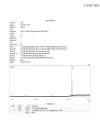
86.96%
30-Sep-25

NPP
71.42%
03-Oct-25
That’s insane I’m waiting for my npp to be shipped, it’s only a small amount so I might keep it and then send it off to jano also and see if I get the same results? They must be using a new factory.
That’s a embarrassing result and very poor from them
 
bond at 6 we know it will get reduced into 6a dht redutacse and other minor metabolic pathways.

so here after all the minor metabolic pathways get satured which they would with using normal testosterone. everything that is left of delta6 test will get excreted. so the compound is basically useless and weak and even women will probably not benefit from it.

now from my conclusion on c6 bond and it also has bond at 4 which makes it able to bind the ar. i concluded from studying delta 6 from small 10% of or total raws we would most likely get 20-100mg of it and that it will be either useless or basically able to convert at that small rate and be somewhat effective

janos thread where claiming its pippy and i was just like it gets converted through the p450 enzyme like testosterone just way weaker metabolized. theres no way its causing issues. and came to my previous conclusion with overlooking 6a dht and 5a dht conversion.

now i know its not basically just testosterone but its fucking useless.

im happy to get my insights on it corrected if im full of shit, please do it some more. i dont always question myself so i appreciate someone who can do that for me.

the new research ive done on delta6 should be accurate
Where did you find the following information. I wasn't able to find any real references for the effects of any d6 AAS, with the closest published being d5s.

As for P450, it converts testosterone into this d4,6 testosterone, but this is considered a minor pathway and not much is known about the complete metabolism. Apparently, some of this can get converted into androstenedione and later back into known active anabolics, but the rates of these seem to be unknown.

5-AR seems a bit more complicated. You can't really tell how such modifications affect it without (pre)clinical trials. Personally, I would imagine that the proximity of the 6 double bond to the targeted 4 carbon would impede it, similar to how boldenone cannot effectively be converted into DHB. Basically, it probably won't act as a substrate for 5-AR, although take this with a grain of salt.
 
Well this tells us a few things.

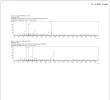
1. This source really does not like using columns to seperate out unreacted chemically similar AAS. This specifically is an estered version of androstenedione, a kind of prohormone of testosterone (information on extent of conversion is limited).

2. We do not actually know what the percentage. I would say that the 89% value is closer to the true purity than anything else, as GCMS is more accurate and better suited for more volatile compounds. Unlike last time, there doesn't appear to be a coelution issue, so assuming the peaks are clean, we can be fairly confident that the sample contains >85% nandrolone phenylpropionate.
 
Where did you find the following information. I wasn't able to find any real references for the effects of any d6 AAS, with the closest published being d5s.

As for P450, it converts testosterone into this d4,6 testosterone, but this is considered a minor pathway and not much is known about the complete metabolism. Apparently, some of this can get converted into androstenedione and later back into known active anabolics, but the rates of these seem to be unknown.

5-AR seems a bit more complicated. You can't really tell how such modifications affect it without (pre)clinical trials. Personally, I would imagine that the proximity of the 6 double bond to the targeted 4 carbon would impede it, similar to how boldenone cannot effectively be converted into DHB. Basically, it probably won't act as a substrate for 5-AR, although take this with a grain of salt.
heres my homework for; made sure to check it throughly to this time


"CYP3A4 enzyme formats incubated with anabolic steroids, testosterone, 17alpha-methyltestosterone, metandienone, boldenone and 4-chloro-1,2-dehydro-17alpha-methyltestosterone, produced 6beta-hydroxyl metabolites identified as trimethylsilyl (TMS)-ethers by a gas chromatography-mass spectrometry (GC-MS) method"

"
We suggest that the electronic effects of the 3-keto-4-ene structural moiety contribute to the selectivity within the active site of CYP3A4 enzyme resulting in selective 6beta-hydroxylation.
"


"6beta-hydroxylation obtained from the reconstituted systems with high and low OR/CYP3A4 ratios were 29.3 and 35.2 microM, respectively, which were similar to that of the corresponding human liver microsomal samples (23.2 and 40.0 microM, respectively). However, Vmax values obtained from the reconstituted systems (3.7 and 0.8 pmol/min/pmol CYP3A4) were much lower than those from the human liver microsomes (44.2 and 31.1 pmol/min/pmol CYP3A4). The results suggest that the interaction between substrate and CYP3A4 in the reconstituted systems appear to be similar to human liver microsomes but that the velocity of the substrate metabolism in the reconstituted systems is different from that in human liver microsomes"


everything from this study is relevant: Comparison of Steroid Hormone Hydroxylations by and Docking to Human Cytochromes P450 3A4 and 3A5 - PubMed


study i've linked before:


if you have any studies you think ill find relevant please link them so we can look at it together. im by no means a chemist you could probably help me learn or understand this even better

 
heres my homework for; made sure to check it throughly to this time


"CYP3A4 enzyme formats incubated with anabolic steroids, testosterone, 17alpha-methyltestosterone, metandienone, boldenone and 4-chloro-1,2-dehydro-17alpha-methyltestosterone, produced 6beta-hydroxyl metabolites identified as trimethylsilyl (TMS)-ethers by a gas chromatography-mass spectrometry (GC-MS) method"

"
We suggest that the electronic effects of the 3-keto-4-ene structural moiety contribute to the selectivity within the active site of CYP3A4 enzyme resulting in selective 6beta-hydroxylation.
"


"6beta-hydroxylation obtained from the reconstituted systems with high and low OR/CYP3A4 ratios were 29.3 and 35.2 microM, respectively, which were similar to that of the corresponding human liver microsomal samples (23.2 and 40.0 microM, respectively). However, Vmax values obtained from the reconstituted systems (3.7 and 0.8 pmol/min/pmol CYP3A4) were much lower than those from the human liver microsomes (44.2 and 31.1 pmol/min/pmol CYP3A4). The results suggest that the interaction between substrate and CYP3A4 in the reconstituted systems appear to be similar to human liver microsomes but that the velocity of the substrate metabolism in the reconstituted systems is different from that in human liver microsomes"


everything from this study is relevant: Comparison of Steroid Hormone Hydroxylations by and Docking to Human Cytochromes P450 3A4 and 3A5 - PubMed


study i've linked before:


if you have any studies you think ill find relevant please link them so we can look at it together. im by no means a chemist you could probably help me learn or understand this even better

Tldr; CYP3A4 will add a hydroxyl group to the 6 beta position (the easier to oxidize carbon) of various steroid molecules.

This is very likely irrelevant in our case as the 6 position is already oxidized, thereby blocking the action of the enzyme. As such, our d4,6 molecule would likey metabolize through a different pathway.

I cannot really link any studies because there are not any for this particular molecule, at least none that I am aware of. I was only able to find structures and reference standards. Your best bet is to try to find a similar study for P450 and see if they have done any research on the metabolization after the double bond has already been added.

Edit: that last study talks about the P450 enzyme and how our molecule is produced. I will read it more in depth tomorrow and see if they have done any further analysis.
 
This is very likely irrelevant in our case as the 6 position is already oxidized, thereby blocking the action of the enzyme. As such, our d4,6 molecule would likey metabolize through a different pathway.
yeah exactly.

i didnt highlight but i wanted to show how CYP3A4 is the normal action of C6 bond.

which is effectively blocked with our 4,6 molecule showing the other routes with the
Gene Ontology Annotations

which all basically are metabolic dead ends.
 
yeah exactly.

i didnt highlight but i wanted to show how CYP3A4 is the normal action of C6 bond.

which is effectively blocked with our 4,6 molecule showing the other routes with the
Gene Ontology Annotations

which all basically are metabolic dead ends.
I see what you mean now. While the main metabolic pathway of testosterone does produce a 6 beta hydroxy testosterone, and it is likely inert with regards to the AR receptor, there is a rather large difference between a hydroxyl group and a double bond.

The former is very polar and is generally expected to drastically change receptor binding profiles. Meanwhile, the latter is a much more nuanced change. While it is somewhat probable it reduces receptor affinity, the extent does not appear to be known.

Interestingly, testosterone does not bind covalently, and is therefore free to unbind and bind elsewhere. If this main metabolic pathway is basically removed and the AR binding profile remains the same, it is actually possible for this testosterone to be a longer lasting variant that produces more effects with a given dosage. Granted, the AR binding being unchanged is a pretty large optimism, and the liver would probably compensate for the reduced effectiveness of this enzyme with a different one.
 
Granted, the AR binding being unchanged is a pretty large optimism, and the liver would probably compensate for the reduced effectiveness of this enzyme with a different one.
we basically have 5a reductase so we'll get dht from it.

cyp19a1 is partially blocked and since ar binding is unaffected this will most likely lower estrogen a little although i cant say how much.

and we have UGT & SULTs which target c17 but its another dead end.

so even though the molecule has a longer lifespan, we have avoided one dead end, but ran into another.

and now the c4-c6 testosterone is in a dark alley way with its back against the wall with nowhere to run from being cleared/inactivated by the other dead end enzymes.

its a waste product and most likely called "impurity" by the EU exactly for this.
not dangerous, but dangerously useless, greatly weak compared to testosterone & probably only real annoying effect of it is we get less testosterone, hence the allowed limit is 0.3%

thats really what i've gotten out of it doing a deep dive into it 2-3 days ago
 
For those who have not received NPP, maybe see if you can get it cancelled and refunded?

@AASraw
Are raws from a new factory?

TNE
86.96%
30-Sep-25

NPP
71.42%
03-Oct-25
My NPP came in last week. It was my understanding that it scored around 87%, which was concerning.

Is the batch scoring 71% the same (but a new test) or a different batch? There is absolutely no way I am going to let something with that low of a score out, thus ruining my reputation. That is just garbage.
 
My NPP came in last week. It was my understanding that it scored around 87%, which was concerning.

Is the batch scoring 71% the same (but a new test) or a different batch? There is absolutely no way I am going to let something with that low of a score out, thus ruining my reputation. That is just garbage.

Is the same raw, but different test.
Ones HPLC which u paid for, ones GCMS.

I'm now worried about my Tren E
 
I wonder if they will make it right with the NPP. The tren hasnt landed for anyone yet so it could go either way. But tren raws were expensive, it would really suck if they turn out to be shit raws. I was considering getting some but didnt because the price was a little more than i wanted to spend. Hopefully everything is sorted out. A couple sources said they were expecting more raws by the end of the year, so hopefully quality will go up and prices will go down. Im just worried because i live in the US and im not sure what policies will be put in place for chinese imports.
 
I wonder if they will make it right with the NPP.

Perhaps wishful, but I believe they will. They seem professional to deal with. This situation seems the result of corner cutting, something which seems to happen during crackdowns. Not making excuses for them, just thinking out loud. They're sponsors here and surely get most of their orders from here, no? So they would be silly not to.
 
Back
Top