MESO "Specialized" Testing Group Fund

So Jano bought up a point that it might have degraded during GCMS process.

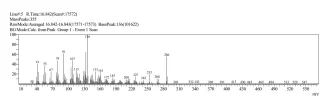
This is TNE GCMS in MIG840

I don't see much degradation in it, so I'm going to assume its the HPLC picking up the test degradation as TNE for raw purity %..Thoughts?

Jano said only TNE in oil, not Tren in oil, degrades in GCMS? Weird.

Does this TNE in MIG840 have an HPLC report? Cuz otherwise, bc there are no obvious degradation products, it just looks way underdosed.
 
it just looks way underdosed.
thats the whole point

the oil matrix is skewing the gcms report making it look unreliable.

im saying dont do gcms in oils but its best to do in raws for ids on a single component.

whether the hplc on that tne turned out good or bad we cant tell from the gcms. unless it turned up 100% rat oil
 
No Jano replied in his other thread that it may be degradation in GCMS for TNE. He nvr said anything about Tren.
oh you meant the 3% area is a degradation product of testosterone but it might have been picked up as testosterone instead?

some smaller products from already 3% only testosterone might have been autoid as test but idk honestly. cant tell with oil in the gcms
 
oh you meant the 3% area is a degradation product of testosterone but it might have been picked up as testosterone instead?

some smaller products from already 3% only testosterone might have been autoid as test but idk honestly. cant tell with oil in the gcms

I was kind of referring to the 86 gcms vs 98 hplc difference.
 
cant compare that to the tne gcms you sent.

Yes that's not what i was doing.

Jano's reply is that the degradation turning up between 86 v 98 MAY have been due to GCMS process (high heat).

I showed an example of TNE in oil, whereby we see no degradation. (Different raws)

WHICH leads me to believe the GCMS process is unlikely to cause degradation to the TNE in 86v98.

86(gcms)
98(hplc)

 
WHICH leads me to believe the GCMS process is unlikely to cause degradation to the TNE in 86v98.
i completely agree. i think you're misunderstanding jano or he is contradicting himself


refer to his post from the quote here. he himself stated 0.3% max acceptable limit. around same numbers as we do this time around drawing exact same conclusion as him, unacceptable.

gcms should have higher accucary in raws.
 
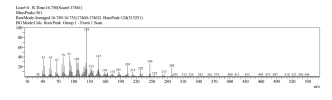
delta 6 testosterone:

1759340313273.webp

testosterone:

1759340335573.webp

peaks are close to each other but not different. no new large peaks happeend under gcms

almost no change in RT > gcms didnt isomerize the testosterone. the gcms is most likely accurate for testosterone and delta 6. no need to use 500 bucks
 
i completely agree. i think you're misunderstanding jano or he is contradicting himself


refer to his post from the quote here. he himself stated 0.3% max acceptable limit. around same numbers as we do this time around drawing exact same conclusion as him, unacceptable.

gcms should have higher accucary in raws.

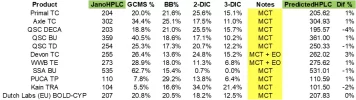
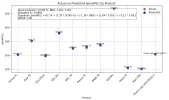
This conversation seems to be coming from the other thread where GCMS (area%) was shown to correlate with HPLC data, right?

And the purpose of GCMS is compound identification, not quantification, so we're right back where we started (that is, you can't accurately extrapolate mg/mL from GCMS data) ?
 
This conversation seems to be coming from the other thread where GCMS (area%) was shown to correlate with HPLC data, right?
no. that is from janoshiks thread about delta6 testosterone as possible culprit of test e raws causing pip, which isnt true.

photons thread something complete else.

i dont think he has calibrated it to mig840 on gcms to correlate with hplc yet
 
And the purpose of GCMS is compound identification, not quantification, so we're right back where we started (that is, you can't accurately extrapolate mg/mL from GCMS data) ?
you can, but its alot of work as photon has showed. good luck with it! dont know if its possible with every oil aswell
 
Janoshik is saying is that there are 2 main possibilities. One is that the temperature used during GCMS oxidized the 6 position carbon (a spot that is quite sensitive) of ~10% of the testosterone, causing a delta 4,6. See AASraw thread for specifics of this molecule. The other option is that while manufacturing, 10% already existed and that hplc failed to notice the minute difference (litteraly 1 H apart).

As a chemist, I would say that the latter is much more likely. First, I'd expect that the spectra of the 2 molecules to be very similar and might coelute on hplc -> meaning that it's basically impossible to distinguish on most hplc machines. On the other hand, the chance of oxidation at that one specific position, due to heat, is unlikely. Usually, you would expect polymerization or many different compounds when thermally oxidizing. A catalyst could make this more likely, but many such catalysts are either basics/acids or platinum group metals, which is unlikely to be in the hplc machine.

If you want to verify this, have @janoshik retest. Specifically, take the exact sample and heat it to 250C or whatever temp his gcms machine is. Leave it for an hour or so, and retest. If the amount of this specific analog increases, then it is likely your culprit. If nothing happens or other components increase, then it was likely an impurity - likely from over-oxidation while forming the double bond. Not sure how much this'd cost but that is an option.

 
Last edited:
Janoshik is saying is that there are 2 main possibilities. One is that the temperature used during GCMS oxidized the 6 position carbon (a spot that is quite sensitive) of ~10% of the testosterone, causing a delta 4,6. See AASraw thread for specifics of this molecule. The other option is that while manufacturing, 10% already existed and that hplc failed to notice the minute difference (litteraly 1 H apart).

As a chemist, I would say that the latter is much more likely. First, I'd expect that the spectra of the 2 molecules to be very similar and might coelute on hplc -> meaning that it's basically impossible to distinguish on most hplc machines. On the other hand, the chance of oxidation at that one specific position, due to heat, is unlikely. Usually, you would expect polymerization or many different compounds when thermally oxidizing. A catalyst could make this more likely, but many such catalysts are either basics/acids or platinum group metals, which is unlikely to be in the hplc machine.

If you want to verify this, have @janoshik retest. Specifically, take the exact sample and heat it to 250C or whatever temp his gcms machine is. Leave it for an hour or so, and retest. If the amount of this specific analog increases, then it is likely your culprit. If nothing happens or other components increase, then it was likely an impurity - likely from over-oxidation while forming the double bond. Not sure how much this'd cost but that is an option.


I'm also leaning towards the later being true but we can probably verify from the results of other gcms of test raws who have much lower melting points.

The testing you mentioned is probably 120x3 usd
Hplc
Gcms
Hplc
 
The testing you mentioned is probably 120x3 usd
Hplc
Gcms
Hplc
That also works, but I was thinking just put the sample in a hot plate or oil bath at the same temp as the machine, for longer. Then GC/MS again and see if it converts into delta4,6. The former would show that hplc cannot differentiate the 2. The latter would show whether this d4,6 is a thermal degredation product. Also, it is possible that both happen - it degrades into d4,6 AND hplc can't differentiate.
 

Sponsors

Back
Top