
MESO-Rx
Anabolic Steroids

Navigation
Install the app
How to install the app on iOS
Follow along with the video below to see how to install our site as a web app on your home screen.
Note: This feature may not be available in some browsers.
More options
Style variation
Guest viewing limit reached
- You have reached the maximum number of guest views allowed
- Please register below to remove this limitation
- Already a member? Click here to login
You are using an out of date browser. It may not display this or other websites correctly.
You should upgrade or use an alternative browser.
You should upgrade or use an alternative browser.
Pitavastatin
- Thread starter keengkong
- Start date

Photon
Member
Why do folks here prefer pitavastatin to atorvastatin and rosuvastatin?


Ateam2023
Member
Why do folks here prefer pitavastatin to atorvastatin and rosuvastatin?


Ghoul
Member
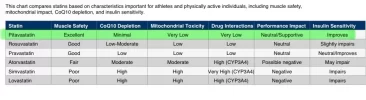
Thanks. The graphic provides a good explanation. I may have to switch from atorvastatin (which I already stopped taking) due to it possibly being the cause of a drug-induced liver injury. It's good that I know my options before talking to my cardiologist. It's also possible that due to my significant weight loss on GLP-1 drugs that I no longer need a statin at all. But if I do, I want one that won't cause problems.
Ghoul
Member
Thanks. The graphic provides a good explanation. I may have to switch from atorvastatin (which I already stopped taking) due to it possibly being the cause of a drug-induced liver injury. It's good that I know my options before talking to my cardiologist. It's also possible that due to my significant weight loss on GLP-1 drugs that I no longer need a statin at all. But if I do, I want one that won't cause problems.
Other than cases of serious chronic kidney disease, where atorvastatin is sometimes preferred because it's not cleared by the kidneys, or where absolute maximum LDL reduction is required regardless of side effect risk, where high dose Rosuvastatin is chosen, or cost is a primary consideration, Pitavastatin is hands down the best statin available.
I did look up pitavastatin and saw that it's quite effective at lowering cholesterol, although it's still behind rosuvastatin and atorvastatin.Other than cases of serious chronic kidney disease, where atorvastatin is sometimes preferred because it's not cleared by the kidneys, or where absolute maximum LDL reduction is required regardless of side effect risk, where high dose Rosuvastatin is chosen, or cost is a primary consideration, Pitavastatin is hands down the best statin available.
Babies got to learn to eat some way.
Ghoul
Member
I did look up pitavastatin and saw that it's quite effective at lowering cholesterol, although it's still behind rosuvastatin and atorvastatin.
Max dose Rosuvastatin. 40mg, lowers LDL roughly 63% (vs 47% with Pita 4mg). But the Rosu side effect rate more than doubles vs the standard 10mg Rosu dose, and the risk of new onset diabetes increases much more than that.
Pita 4mg, combined with 10mg Ezetimebe (available from India as a single pill combo), lowers LDL by 60%, with the same excellent long term safety profile, and a near zero risk of muscle sides for the vast majority. If you need even more add Bempedoic acid to get 70% LDL reduction and still have a far lower chance of sides.
Finally, adding a PCSK9 inhibitor to all this tops out at 90% LDL reduction, with the cumulative side effect risk of all 4 still lower than that of any other statin taken by itself.
Last edited:

OilCarrier
Member
which PCSK9I would you recommend?
Ghoul
Member
which PCSK9I would you recommend?
I prefer once every 2 week Repatha injections (vs once a month using large doses )
It's also superior to the cheaper Praluent and the 2x a year Leqvio.
Repatha reduces LDL more than the other two, has a pretty long record of safety and very low rate of side effects at this point for this fairly recent class of PCSK9 inhibiting LDL killers.
Leqvio is interesting, but it's not as effective and the main benefit seems to be for those who can't handle 26 self injections a year and need a doctor to give them 2 a year in order to stay compliant.
Repatha by itself lowers LDL 60%. With ezetimebe, 70%, so you could skip a statin altogether, but, pitavastain has a bunch of "pleiotropic" side effects that cumulatively are very beneficial to cardiovascular health.
Pitavastatin not only lowers LDL but also helps arteries relax (via enhanced NO2 release, also helping erectile function), calms systemic inflammation (reduces CRP), stabilizes plaques, supports better glucose handling, reduces oxidative damage, improves HDL function, and lowers clot risk.
OilCarrier
Member
I prefer once every 2 week Repatha injections (vs once a month using large doses )
It's also superior to the cheaper Praluent and the 2x a year Leqvio.
Repatha reduces LDL more than the other two, has a pretty long record of safety and very low rate of side effects at this point for this fairly recent class of PCSK9 inhibiting LDL killers.
Leqvio is interesting, but it's not as effective and the main benefit seems to be for those who can't handle 26 self injections a year and need a doctor to give them 2 a year in order to stay compliant.
Repatha by itself lowers LDL 60%. With ezetimebe, 70%, so you could skip a statin altogether, but, pitavastain has a bunch of "pleiotropic" side effects that cumulatively are very beneficial to cardiovascular health.
Pitavastatin not only lowers LDL but also helps arteries relax (via enhanced NO2 release, also helping erectile function), calms systemic inflammation (reduces CRP), stabilizes plaques, supports better glucose handling, reduces oxidative damage, improves HDL function, and lowers clot risk.
Amazing info, thank you. I assume the shortest route for anyone would be asking their doctor for repatha, or is it hard for people to get that prescribed as in that the condition needs to be at a stage of severity before this gets deployed?
OilCarrier
Member
also: you take these year round/preventative or only in phases when bloodwork shows LDL creeping up?
Ghoul
Member
For those who don't know, in simple terms, the liver has LDL receptors that pull APO-B molecules out of blood and breaks it down into simple components used for other functions. The cholesterol is used to build cell walls, make bile, and synthesize hormones. Triglycerides are released as FFAs for energy, and the remaining empty APO-B "shells" are broken down into amino acids used to build proteins.
PCSK9 is a protein that binds to and blocks the LDL receptors on the liver from doing all this. PCSK9 inhibitors reduce the amount of this protein allowing the liver's LDL receptors to function without interference.
Some people have a genetic mutation that means they don't produce much, or any, PCSK9 and have virtually no measurable LDL in their blood. Those groups have a near zero rate of heart attacks.
That was the "inspiration" to develop PCSK9 inhibitors.
PCSK9 is a protein that binds to and blocks the LDL receptors on the liver from doing all this. PCSK9 inhibitors reduce the amount of this protein allowing the liver's LDL receptors to function without interference.
Some people have a genetic mutation that means they don't produce much, or any, PCSK9 and have virtually no measurable LDL in their blood. Those groups have a near zero rate of heart attacks.
That was the "inspiration" to develop PCSK9 inhibitors.
Last edited:
OilCarrier
Member
so breaking down apob is not a good thing?For those who don't know, in simple terms, the liver has LDL receptors that pull APO-B molecules out of blood and breaks it down into simple components used for other functions. The cholesterol is used to build cell walls, make bile, and synthesize hormones. Triglycerides are released as FFAs for energy, and the remaining empty APO-B "shells" are broken down into amino acids used to build proteins.
PCSK9 is a protein that binds to and blocks the LDL receptors on the liver from doing all this. PCSK9 inhibitors reduce the amount of this protein allowing the liver's LDL receptors to function without interference.
Some people have a genetic mutation that means they don't produce much, or any, PCSK9 and have virtually no measurable LDL in their blood. Those groups have a near zero rate of heart attacks.
That was the "inspiration" to develop PCSK9 inhibitors.
Ghoul
Member
also: you take these year round/preventative or only in phases when bloodwork shows LDL creeping up?
LDL levels are 75%-90% genetic / 10-25% controllable lifestyle factors, so treatment is really intended to be for a lifetime. After all, it's cumulative exposure to LDL that is the best predictor of cardiovascular disease. Think of it like "pack years" of exposure for a smoker determining lung cancer risk.
Preventative cardiologists have reduced the philosophy of risk reduction, based on overwhelming evidence regarding LDL, to "Lower for longer is better".
Ghoul
Member
so breaking down apob is not a good thing?
Sorry if that's not clear. The liver LDL receptors "capture" LDL floating by. The outer"shell" of LDL particles is APO-b. Inside these containers is a "cargo" of LDL and triglycerides.
The liver breaks all this down as I described.
PCSK9, naturally produced by the body, blocks this from happening, which is not good for cholesterol levels. People produce more or less PCSK9 based on genetics. The more you produce the worse your LDL levels will be.
PCSK9 *inhibitor* drugs reduce the amount of PCSK9, leaving LDL receptors on the liver free to remove LDL from your blood and break it down, lowering LDL levels.
This is what you want. All of it being broken down, including the APO-b, instead of circulating freely until it builds up as plaque in your arteries.
Ghoul
Member
Amazing info, thank you. I assume the shortest route for anyone would be asking their doctor for repatha, or is it hard for people to get that prescribed as in that the condition needs to be at a stage of severity before this gets deployed?
If you don't think it's an opsec issue (it isn't), give me the name of a health insurer (they likely have millions of customers), and I'll tell you specifically what needs to be done to get it.
Otherwise I can only speak in very broad terms which may not work for you.
Ghoul
Member
Sorry too late to edit the post above saying LDL grabs APO-b.
To clarify: APO-b is the outer shell of the "container" holding a "cargo" of LDL cholesterol.
LDL receptors recognize the APO-b protein and grab it, then break down this container to process the LDL contents, and finally, break down the empty "shell" of this APO-b (protein) container into amino acids to build new proteins.
To clarify: APO-b is the outer shell of the "container" holding a "cargo" of LDL cholesterol.
LDL receptors recognize the APO-b protein and grab it, then break down this container to process the LDL contents, and finally, break down the empty "shell" of this APO-b (protein) container into amino acids to build new proteins.
OilCarrier
Member
I should have read it again but the next message was great to read anyway. golden info.Sorry if that's not clear.
I just DM'ed that, but I am interested in the broad terms as well if that is more suitable for this thread. You may well have added 20 years to my life multiple times alreadyIf you don't think it's an opsec issue (it isn't), give me the name of a health insurer (they likely have millions of customers), and I'll tell you specifically what needs to be done to get it.
Otherwise I can only speak in very broad terms which may not work for you.

Similar threads

- Replies
- 72
- Views
- 2K

- Replies
- 5
- Views
- 281


