Rekindling My Lust for Life: A Fairy's HRT Log

I know we have access to that. I will look into it this evening. As far as weekly dosing, I think that matters more at larger doses such as male trt doses. I won't directly speak for her, but I will say she is very pleasant to be around. So much so, that I can't wait to come home from work and see her everyday.
I love that. Thank you.

I only asked about the weekly injections (I guess more specifically for the T) because some I’ve seen had said that weekly doses were causing more acne, irritability, and insomnia, and switching to ED or EOD kept levels more stable to avoid those sides. But as I’m sure we all know, everyone is different. I’m sure many can handle weekly just fine. I suspect I will do better with more frequent injections since I am a delicate little flower lol.
 
some light reading on low e2 in women.

High stress, extreme dieting and too much exercise are contributing factors that correlate with competitive bodybuilding for women.


Eating disorders.


One may not think of it as an eating disorder but constant restrictive diets to maintain a lean physique can deprive the body of essential nourishment.


Aside from the protein needed for muscle, don't neglect the whole grains, fruits, vegetables, and healthy fats that can support hormonal health.


Obviously other psychological factors can be at play that need to be addressed.


"
Eating disorder symptoms, specifically binge eating and body dissatisfaction, show an inverse association with estradiol and positive association with progesterone.


Prenatal testosterone may play a protective role in the later development of an eating disorder.


Clinical research studies are needed to explore the impact of hormone augmentation, in conjunction with cognitive–behavioral therapy, in treatment outcomes for anorexia nervosa."


Genetic conditions:


Turner syndrome can have a range of symptoms, some of which may be noticeable at birth, such as short stature and physical features like a webbed neck. However, in many cases, symptoms can be subtle and may not become apparent until later in childhood or even adulthood.


rare...1 in 2500


Symptoms:


short stature (usually under 5' tall) is the most common feature of TS


narrow, high-arched palate (the roof of the mouth is higher and narrower than is typical)


retrognathia (the lower jaw is small)


ears protruding outward, and/or low set, and/ or rotated toward the neck


webbed neck (excess or stretched skin) which may include a lowered hairline in the back


droopy eyes


strabismus (lazy eye)


broad chest


cubitus valgus (arm turns slightly out at the elbow when the arm is extended)


scoliosis (curvature of spine)


flat feet


small and narrow fingernails, toenails that turn up


short fourth metacarpal (bone in hand between the knuckle of the fourth finger and the wrist)


edema (swelling or puffiness) or hands and feet, especially at birth


Fragile X Syndrome is caused by a mutation in the FMR1 gene on the X chromosome, leading to various physical and behavioral symptoms.


Fragile X syndrome can lead to conditions like Fragile X-associated primary ovarian insufficiency (FXPOI), which may result in low estradiol levels due to reduced ovarian function. This can cause irregular menstrual cycles and infertility in affected women.


symptoms:


intellectual disabilities


learning difficulties


anxiety and behavioral issues such as hyperactivity and social anxiety.


Physical features may include a long face, large ears, and flexible joints, which often become more noticeable with age.


oophoritis is the inflammation of one or both ovaries, often caused by a bacterial infection, and is commonly associated with pelvic inflammatory disease (PID). It can lead to symptoms such as abdominal pain and may affect fertility.


also rare...


Symptoms:


pain in the lower abdomen and pelvis


menstrual bleeding that’s heavier than usual


bleeding between menstrual cycles


pain or bleeding during intercourse


heavy vaginal discharge, which may have a foul odor


burning sensations or pain during urination


difficulty urinating


below is a study on autoimmune diseases causing POI (premature ovarian inefficiency)


"Clinical symptoms of POI are largely the result of estrogen deficiency and may include amenorrhea, oligomennorhea, vasomotor instability (hot flushes, night sweats), sleep disturbances, vulvovaginal atrophy, altered urinary frequency and recurrent infections, mood disorders including irritability and emotional lability."


" Women affected by POI are also at increased risk of cardiovascular disease, dementia, cognitive decline, Parkinsonism, and osteoporosis [2]. They very often require psychological counseling to address issues relating to the diagnosis, such as infertility, lower self-esteem, and increased rates of anxiety and depression"


(FHA) Functional Hypothalamic amenorrhea.


If your body is stressed and not getting enough nourishment, you can develop hypothalamic amenorrhea. With hypothalamic amenorrhea, your brain doesn’t release enough of the hormone that activates estrogen production in your ovaries. As a result, your periods stop entirely. Female athletes are particularly susceptible.


TL;DR


If you are a younger woman and have irregularities in your menstrual cycle get bloodwork done. If you have low estradiol don't ignore it because it can have serious long-term implications for your health.


possible treatment options:


- Alter diet


- Follow a more suitable training regimen


- hrt/birth control
(underlying condition not adressed)


- leptin replacement therapy
(if leptin deficiency is the cause)


-Cognitive behavioral therapy
(to reduce stress/cortisol)


- HMG
(to induce ovulation)


-kisspeptin
(initiating secretion of GnRH)


Hypopituitarism:


Probably not applicable ; Super rare (effecting about 0.05% of the population) the correlation perhaps with drug induced onset if one were say randomly jabbing themselves with chinese substances that act directly on the pituitary gland seems, for now unknown.


Low e2 can occur in women with hypopituitarism due to insufficient production of gonadotropins. (hormones that stimulate the ovaries to produce estradiol.)


some light reading on low e2 in women.

High stress, extreme dieting and too much exercise are contributing factors that correlate with competitive bodybuilding for women.


Eating disorders.


One may not think of it as an eating disorder but constant restrictive diets to maintain a lean physique can deprive the body of essential nourishment.


Aside from the protein needed for muscle, don't neglect the whole grains, fruits, vegetables, and healthy fats that can support hormonal health.


Obviously other psychological factors can be at play that need to be addressed.


"
Eating disorder symptoms, specifically binge eating and body dissatisfaction, show an inverse association with estradiol and positive association with progesterone.


Prenatal testosterone may play a protective role in the later development of an eating disorder.


Clinical research studies are needed to explore the impact of hormone augmentation, in conjunction with cognitive–behavioral therapy, in treatment outcomes for anorexia nervosa."


Genetic conditions:


Turner syndrome can have a range of symptoms, some of which may be noticeable at birth, such as short stature and physical features like a webbed neck. However, in many cases, symptoms can be subtle and may not become apparent until later in childhood or even adulthood.


rare...1 in 2500


Symptoms:


short stature (usually under 5' tall) is the most common feature of TS


narrow, high-arched palate (the roof of the mouth is higher and narrower than is typical)


retrognathia (the lower jaw is small)


ears protruding outward, and/or low set, and/ or rotated toward the neck


webbed neck (excess or stretched skin) which may include a lowered hairline in the back


droopy eyes


strabismus (lazy eye)


broad chest


cubitus valgus (arm turns slightly out at the elbow when the arm is extended)


scoliosis (curvature of spine)


flat feet


small and narrow fingernails, toenails that turn up


short fourth metacarpal (bone in hand between the knuckle of the fourth finger and the wrist)


edema (swelling or puffiness) or hands and feet, especially at birth


Fragile X Syndrome is caused by a mutation in the FMR1 gene on the X chromosome, leading to various physical and behavioral symptoms.


Fragile X syndrome can lead to conditions like Fragile X-associated primary ovarian insufficiency (FXPOI), which may result in low estradiol levels due to reduced ovarian function. This can cause irregular menstrual cycles and infertility in affected women.


symptoms:


intellectual disabilities


learning difficulties


anxiety and behavioral issues such as hyperactivity and social anxiety.


Physical features may include a long face, large ears, and flexible joints, which often become more noticeable with age.


oophoritis is the inflammation of one or both ovaries, often caused by a bacterial infection, and is commonly associated with pelvic inflammatory disease (PID). It can lead to symptoms such as abdominal pain and may affect fertility.


also rare...


Symptoms:


pain in the lower abdomen and pelvis


menstrual bleeding that’s heavier than usual


bleeding between menstrual cycles


pain or bleeding during intercourse


heavy vaginal discharge, which may have a foul odor


burning sensations or pain during urination


difficulty urinating


below is a study on autoimmune diseases causing POI (premature ovarian inefficiency)


"Clinical symptoms of POI are largely the result of estrogen deficiency and may include amenorrhea, oligomennorhea, vasomotor instability (hot flushes, night sweats), sleep disturbances, vulvovaginal atrophy, altered urinary frequency and recurrent infections, mood disorders including irritability and emotional lability."


" Women affected by POI are also at increased risk of cardiovascular disease, dementia, cognitive decline, Parkinsonism, and osteoporosis [2]. They very often require psychological counseling to address issues relating to the diagnosis, such as infertility, lower self-esteem, and increased rates of anxiety and depression"


(FHA) Functional Hypothalamic amenorrhea.


If your body is stressed and not getting enough nourishment, you can develop hypothalamic amenorrhea. With hypothalamic amenorrhea, your brain doesn’t release enough of the hormone that activates estrogen production in your ovaries. As a result, your periods stop entirely. Female athletes are particularly susceptible.


TL;DR


If you are a younger woman and have irregularities in your menstrual cycle get bloodwork done. If you have low estradiol don't ignore it because it can have serious long-term implications for your health.


possible treatment options:


- Alter diet


- Follow a more suitable training regimen


- hrt/birth control
(underlying condition not adressed)


- leptin replacement therapy
(if leptin deficiency is the cause)


-Cognitive behavioral therapy
(to reduce stress/cortisol)


- HMG
(to induce ovulation)


-kisspeptin
(initiating secretion of GnRH)


Hypopituitarism:


Probably not applicable ; Super rare (effecting about 0.05% of the population) the correlation perhaps with drug induced onset if one were say randomly jabbing themselves with chinese substances that act directly on the pituitary gland seems, for now unknown.


Low e2 can occur in women with hypopituitarism due to insufficient production of gonadotropins. (hormones that stimulate the ovaries to produce estradiol.)


I am not entirely sure how any of this applies to me. I am 38, and it is not a rare age to start experiencing perimenopause. My mom was about my age when she started, and she reached full menopause by 52. My cycles have gotten shorter and a little less predictable but the bleeding isn’t overly heavy and the blood color is ideal throughout (bright red vs pink or brown), I do not have an eating disorder, and my diet isn’t overly restrictive (I am mindful of calories, but I eat a variety of things and try to eat more whole foods than processed.) Way before I ever started going to the gym, nutrition was a passion of mine due to my upbringing (Dad was a boxer and is still a health nut in his old age.) I’m not overly hardcore with working out, either. I listen to my body and skip the gym when I feel it necessary. 3-5 days of lifting a week seems to be my sweet spot depending on where I am in my cycle. First two days of my period I am undoubtedly sitting at home, not pushing myself.

I have always had some sort of noticeable hormonal imbalance since puberty, which manifested as acne that lasted a while through adulthood and has subsided in my mid-late 30s. So maybe that’s why my estrogen declined harder than the P and T (with many in peri/menopause, E is the last one to decline). But peri is also known for wild E fluctuations (super high spikes, higher than a young ovulating woman) and then a crash to almost nothing. My blood work is just a snapshot of one moment in time. I just got blood drawn again yesterday, day 21, to get a good look at my E and P in mid-luteal phase compared to my first bloods done in the early follicular phase. The joint pain and brain fog and dryness do point to low E overall, though. Just wanted to have one more data point before I begin my journey with treating it.
 
Last edited:
I am not entirely sure how any of this applies to me. I am 38, and it is not a rare age to start experiencing perimenopause. My mom was about my age when she started, and she reached full menopause by 52. My cycles have gotten shorter and a little less predictable but the bleeding isn’t overly heavy and the blood color is ideal throughout (bright red vs pink or brown), I do not have an eating disorder, and my diet isn’t overly restrictive (I am mindful of calories, but I eat a variety of things and try to eat more whole foods than processed.) Way before I ever started going to the gym, nutrition was a passion of mine due to my upbringing (Dad was a boxer and is still a health nut in his old age.) I’m not overly hardcore with working out, either. I listen to my body and skip the gym when I feel it necessary. 3-5 days of lifting a week seems to be my sweet spot depending on where I am in my cycle. First two days of my period I am undoubtedly sitting at home, not pushing myself.

I have always had some sort of noticeable hormonal imbalance since puberty, which manifested as acne that lasted a while through adulthood and has subsided in my mid-late 30s. So maybe that’s why my estrogen declined harder than the P and T (with many in peri/menopause, E is the last one to decline). But peri is also known for wild E fluctuations (super high spikes, higher than a young ovulating woman) and then a crash to almost nothing. My blood work is just a snapshot of one moment in time. I just got blood drawn again yesterday, day 21, to get a good look at my E and P in mid-luteal phase compared to my first bloods done in the early follicular phase. The joint pain and brain fog and dryness do point to low E overall, though. Just wanted to have one more data point before I begin my journey with treating it.
i was just reading a heap on the subject because my wifes E2 was low.. Not as low as yours but below average. Her cycle is regular and nothing out of the ordinary.
 
i was just reading a heap on the subject because my wifes E2 was low.. Not as low as yours but below average. Her cycle is regular and nothing out of the ordinary.
I gotcha. What about the other hormones in relation to the E2? Oftentimes, the ratio of the main 3 is more important than the individual numbers themselves. How is she feeling?
 
I gotcha. What about the other hormones in relation to the E2? Oftentimes, the ratio of the main 3 is more important than the individual numbers themselves. How is she feeling?
test, thyroid, progesterone, lh, fsh everything else is normal.

but cholesterol is high which i read can correlate with low estradiol.
also high rbc count low wbc, among a few other things are off.
 
I got my Progesterone results this morning, 24 hours after testing and it put me right in the middle of the range for luteal phase. This is ideal for me, as I have been dreading supplementing P right off the bat. My plan is to inject E Cyp for the first 6 weeks and then test again to see what my E to P ratio is looking like. Once that ratio is dialed in and I feel comfortable, I will introduce the T. :)

Still awaiting the sensitive e2 results from yesterday’s testing, but based on symptoms I feel confident about starting my injections on Monday. I should have those results in by the time I’m due for the second weekly injection.
 

Attachments

  • IMG_3805.webp
    IMG_3805.webp
    53 KB · Views: 15
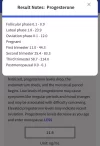
This is ideal for me, as I have been dreading supplementing P right off the bat.
what's the deal with progesterone. It's needed for women who still have a cycle because it will stop some forms of cancer.. But then it can cause breast cancer?

Most information seems to point to 300mg progesterone daily for 14 days during the luteal phase after ovulation to coincide with the natural cycle.

But, i'm guessing this dosing is based on the oral forms shorter half life.
 
what's the deal with progesterone. It's needed for women who still have a cycle because it will stop some forms of cancer.. But then it can cause breast cancer?

Most information seems to point to 300mg progesterone daily for 14 days during the luteal phase after ovulation to coincide with the natural cycle.

But, i'm guessing this dosing is based on the oral forms shorter half life.
It's also very important for women's sleep health
 
what's the deal with progesterone. It's needed for women who still have a cycle because it will stop some forms of cancer.. But then it can cause breast cancer?

Most information seems to point to 300mg progesterone daily for 14 days during the luteal phase after ovulation to coincide with the natural cycle.

But, i'm guessing this dosing is based on the oral forms shorter half life.
I have PMDD and am sensitive to P surges/dominance (the mid-late luteal stage of my cycle is unbearable). For me it causes horrible anxiety and depression-like symptoms, so supplementation might offset the benefits of the E. I will eventually have to do it anyway, but I’m waiting til my E is high enough first since my P levels aren’t bad.

A lot of women take 100-200 mg of it for half their cycle. The E to P ratio is what’s important. But an overwhelming amount of women don’t seem to tolerate the oral forms well, and decide to bypass the liver entirely via vaginal delivery.
 
Last edited:
I have PMDD and am sensitive to P surges/dominance (the mid-late luteal stage of my cycle is unbearable). For me it causes horrible anxiety and depression-like symptoms, so supplementation might offset the benefits of the E. I will eventually have to do it anyway, but I’m waiting til my E is high enough first since my P levels aren’t bad.

A lot of women take 100-200 mg of it for half their cycle. The E to P ratio is what’s important. But an overwhelming amount of women don’t seem to tolerate the oral forms well, and decide to bypass the liver entirely via vaginal delivery.
im currently reading through this book about hormones. More related to exercise but it discusses the various hormones and the peaks and valleys and variations. Seems attempting to accurately mimic the natural cycle with drugs would be near impossible.
 
probably common knowledge for women but..

transdermal e2 application doesn't change fat oxidation whereas oral E2 has negative effects on lypodystrophy. The liver accounts for appx. 25% whole body resting metabolism and oxidizes more fat than skeletal muscle.
By avoiding first pass through the liver GH and GH binding protein level concentrations increase fat oxidation in those taking transdermal over oral route.
 
Seems attempting to accurately mimic the natural cycle with drugs would be near impossible.
Absolutely, and there are many who choose to just seek out optimization and not necessarily what’s “normal” in a cycle. Most women feel best around ovulation when E and T are at their peak, so they’ll chase those levels for HRT so they can feel that good and stable all month long. I think those might be the women who do better supplementing P continuously rather than cyclically.
 
Absolutely, and there are many who choose to just seek out optimization and not necessarily what’s “normal” in a cycle. Most women feel best around ovulation when E and T are at their peak, so they’ll chase those levels for HRT so they can feel that good and stable all month long. I think those might be the women who do better supplementing P continuously rather than cyclically.
what about the estradiol? Does it make sense to take a steady dose in a woman who still has a fairly normal menstrual cycle but is concerned about the negative effects of low E2. or to take a lesser dose in the follicular phase, a peak in the ovulation then tapering down through the luteal phase?

Like these estradiol cyp/progestin once a month shots for birth control that completely go against the natural order must be horrible for a womans health?
 
what about the estradiol? Does it make sense to take a steady dose in a woman who still has a fairly normal menstrual cycle but is concerned about the negative effects of low E2. or to take a lesser dose in the follicular phase, a peak in the ovulation then tapering down through the luteal phase?

Like these estradiol cyp/progestin once a month shots for birth control that completely go against the natural order must be horrible for a womans health?
As far as I’m aware, keeping the estradiol levels stable is the standard. Quite honestly it sounds exhausting to figure out dosing that accounts for the fluctuations, and a lot more frequent blood testing would be required to make sure you’re getting that right. The amount of stress involved in all of that is a hard pass for me, to be honest. My E Cyp injections will be twice a week, 1mg each time. I’m not interested in complicating that.
 
As far as I’m aware, keeping the estradiol levels stable is the standard. Quite honestly it sounds exhausting to figure out dosing that accounts for the fluctuations, and a lot more frequent blood testing would be required to make sure you’re getting that right. The amount of stress involved in all of that is a hard pass for me, to be honest. My E Cyp injections will be twice a week, 1mg each time. I’m not interested in complicating that.
apparently too much e2 can increase risks for cancer.

but yeah to know when the ovulation was occuring you would need to test for it then administer the e2 then the p..

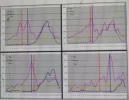
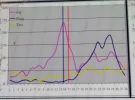
here's some charts that show just how unpredictable the fluxuations are from 4 different women all on a 28 day cycle.

between the blue and red lines is the ovulation. IMG_20250825_102345_edit_30297683715688.webpIMG_20250825_102426_edit_30321668493289.webp
 
apparently too much e2 can increase risks for cancer.
This is why supplementation of P is needed. Unopposed estrogen is the big danger.

In my case, my day 3 follicular blood draw showed me as being extremely P-dominant in that moment. So I’m okay with running just E without the P for a little while until I get those E levels up.
 
This is why supplementation of P is needed. Unopposed estrogen is the big danger.

In my case, my day 3 follicular blood draw showed me as being extremely P-dominant in that moment. So I’m okay with running just E without the P for a little while until I get those E levels up.
at the moment we are trying to increase her sleep, dial back training and lower stress/reduce cortisol and adjust diet.

but...
2f6e721d-f83b-4c42-a749-fbdfea1d7cbb_text-641009207.gif
 
Back
Top