Non-aromatising substitute for testosterone

i read from chatgpt a few days ago that high doses of iron are extremely pro oxidative for men and that iron supplements arent reccomended even in a multi
Would you recommend letting my ferritin sit at around 30 ug/l? That’s where my ferritin is without any iron supplements. All my FBC markers were fine with my ferritin that low, so I had “iron-deficiency without anemia”.

Do you want to run a cycle at 400mg, thus keeping letrozole dose same? If not, I don't follow why you wouldn't take less letro.
Two reasons.
1: I want to test how I feel on 400mg of testosterone, which will also get my e2 closer to my target
2: I want to do another estradiol test, which means I can assess how much my e2 rises with testosterone whilst still taking the same letrozole dose. It’s possible letrozole will keep my e2 disproportionately crushed despite more testosterone. With this data in conjunction with my previous blood tests, I can make a sort of “calculator” unique to me where I can put in my testosterone dose, my letrozole dose, and anticipate what my e2 will be without needing a test.
 
i would try to figure out the root cause instead of pounding iron to put a bandaid on it
The root cause is the testosterone, right? I thought low ferritin was to be expected on even TRT doses.

Testosterone increases RBC production, which depletes ferritin. As those of us here have testosterone levels that never trough, we’re producing RBCs 24/7.

I take 1050mg of iron biglycinate over a 7 day period every 5 weeks, and my ferritin is now at 100 trough. That means my average daily dose is 30mg.

Prior to doing this, I was taking 70mg of iron biglycinate every day, and my ferritin went from 30 to like 35.

As my ferritin tripled by taking half of the iron supplements across one week instead of five, I’m guessing the underlying cause is low hepcidin and high RBC production.

I’m also stretching my knowledge by making this statement, but as my RBC markers have never been historically low despite historically low ferritin and historically no iron supplementation, I’m obviously getting enough iron into my blood. The issue was none of the iron was becoming ferritin.

Unfortunately any iron supplementation does also raise my hemoglobin and hematocrit, but not by much. So I’m not sure if I’d rather have borderline low ferritin or slightly elevated (but still within range) hemoglobin and hematocrit.
 
Last edited:
The root cause is the testosterone, right? I thought low ferritin was to be expected on even TRT doses.

Testosterone increases RBC production, which depletes ferritin. As those of us here have testosterone levels that never trough, we’re producing RBCs 24/7.

I take 1050mg of iron biglycinate over a 7 day period every 5 weeks, and my ferritin is now at 100 trough. That means my average daily dose is 30mg.

Prior to doing this, I was taking 70mg of iron biglycinate every day, and my ferritin went from 30 to like 35.

As my ferritin tripled by taking half of the iron supplements across one week instead of five, I’m guessing the underlying cause is low hepcidin and high RBC production.

I’m also stretching my knowledge by making this statement, but as my RBC markers have never been historically low despite low ferritin and no supplementation, I’m obviously getting enough iron into my blood. The issue is none of the iron is becoming ferritin.

Unfortunately any iron supplementation does also raise my hemoglobin and hematocrit, but not by much. So I’m not sure if I’d rather have borderline low ferritin or slightly elevated (but still within range) hemoglobin and hematocrit.
yeah im not sure man, just something i came across when seeking other information.
 
yeah im not sure man, just something i came across when seeking other information.
lol no worries.

Another point, which again stretches my knowledge to the point where I have 0 confidence in what I say and I am probably totally wrong:

When I do these week-long iron megadoses, after 2 days my shit becomes a dark grey, which suggests I am absorbing little to no dietary iron. If I am not absorbing it, it’s not entering my blood, and it can’t cause any iron-associated ill health effects.

As far as I am aware, taking iron megadoses has only the following effects:
1: my gut microbiome is flooded with iron
2: hepcidin rises, preventing most absorption of iron
3: as a result, erythropoiesis is temporarily slowed, and ferritin rises as a result
 
The root cause is the testosterone, right? I thought low ferritin was to be expected on even TRT doses.

Testosterone increases RBC production, which depletes ferritin. As those of us here have testosterone levels that never trough, we’re producing RBCs 24/7.

I take 1050mg of iron biglycinate over a 7 day period every 5 weeks, and my ferritin is now at 100 trough. That means my average daily dose is 30mg.

Prior to doing this, I was taking 70mg of iron biglycinate every day, and my ferritin went from 30 to like 35.

As my ferritin tripled by taking half of the iron supplements across one week instead of five, I’m guessing the underlying cause is low hepcidin and high RBC production.

I’m also stretching my knowledge by making this statement, but as my RBC markers have never been historically low despite historically low ferritin and historically no iron supplementation, I’m obviously getting enough iron into my blood. The issue was none of the iron was becoming ferritin.

Unfortunately any iron supplementation does also raise my hemoglobin and hematocrit, but not by much. So I’m not sure if I’d rather have borderline low ferritin or slightly elevated (but still within range) hemoglobin and hematocrit.


This study indicates that TRT doesn’t deplete ferritin at all. This might not apply to supraphysiological levels of testosterone.


“Our data show clearly that the administration of testosterone increases hemoglobin concentrations and hematocrit significantly in patients with HH over the 15 weeks of testosterone treatment. There is, in parallel, a reduction in plasma hepcidin concentrations while there is a significant increase in the expression of ferroportin, plasma concentrations of transferrin and the expression of transferrin receptor. Consistent with this, total and unsaturated iron binding capacity increased. The increase in unsaturated iron binding capacity was greater, consistent with a reduction in serum iron concentration. In addition, there was a marked increase in the expression of ferroportin. Thus, testosterone treatment potentially facilitates the transport of iron from the intestinal cell and the macrophage into the circulation through the suppression of hepcidin and increase in ferroportin. In addition, it would appear to facilitate the transport within the circulation through an increase in transferrin concentrations and to stimulate the cellular uptake of iron through an increase in the expression of the transferrin receptor at the cellular level. These novel actions are in addition to the known effect of testosterone in increasing erythropoietin concentrations which stimulate erythropoiesis”

“The increase in transferrin concentrations would potentially facilitate the transport of exported iron and thus increase the bio-availability of iron at the issue and cellular level. It would thus appear that testosterone replenishment in testosterone deficient states may suppress hepcidin while increasing ferroportin, transferrin and transferrin receptor and thus help reverse the anemic state through improvements in iron metabolism, beyond its known role as a modulator of erythropoietin.”
 
This study indicates that TRT doesn’t deplete ferritin at all. This might not apply to supraphysiological levels of testosterone.


“Our data show clearly that the administration of testosterone increases hemoglobin concentrations and hematocrit significantly in patients with HH over the 15 weeks of testosterone treatment. There is, in parallel, a reduction in plasma hepcidin concentrations while there is a significant increase in the expression of ferroportin, plasma concentrations of transferrin and the expression of transferrin receptor. Consistent with this, total and unsaturated iron binding capacity increased. The increase in unsaturated iron binding capacity was greater, consistent with a reduction in serum iron concentration. In addition, there was a marked increase in the expression of ferroportin. Thus, testosterone treatment potentially facilitates the transport of iron from the intestinal cell and the macrophage into the circulation through the suppression of hepcidin and increase in ferroportin. In addition, it would appear to facilitate the transport within the circulation through an increase in transferrin concentrations and to stimulate the cellular uptake of iron through an increase in the expression of the transferrin receptor at the cellular level. These novel actions are in addition to the known effect of testosterone in increasing erythropoietin concentrations which stimulate erythropoiesis”

“The increase in transferrin concentrations would potentially facilitate the transport of exported iron and thus increase the bio-availability of iron at the issue and cellular level. It would thus appear that testosterone replenishment in testosterone deficient states may suppress hepcidin while increasing ferroportin, transferrin and transferrin receptor and thus help reverse the anemic state through improvements in iron metabolism, beyond its known role as a modulator of erythropoietin.”
The only change in ferritin due to exogenous testosterone is in table 2. Where ferritin fell by about 7%. Hepcidin fell by about 30%, and hemoglobin and hematocrit rose by about 10% each.

Keep in mind in table 2 it’s a “true TRT” dose. Not our “TRT+++ super-megalodon-ultrakill 3000” doses.
 
Last edited:
I'm doing 60mg Test E a week with 150mg Deca.

Feels better than any dose of Test by itself I've ever tried. Sex drive great. Erection quality great. Great energy. And no E2 issues... Also my knees and ankles don't hurt for the first time in 10 years.

The results in the gym far outweigh what I was expecting on just 210mg a week of total gear. It is absolutely better than 250mg Test solo. And my blood pressure is well under 120/80 for the first time in a while...
 
I'm doing 60mg Test E a week with 150mg Deca.

Feels better than any dose of Test by itself I've ever tried. Sex drive great. Erection quality great. Great energy. And no E2 issues... Also my knees and ankles don't hurt for the first time in 10 years.

The results in the gym far outweigh what I was expecting on just 210mg a week of total gear. It is absolutely better than 250mg Test solo. And my blood pressure is well under 120/80 for the first time in a while...
No deca dick?
 
lol what I mean is “why didn’t you get deca dick”?
Why would I get Deca dick? Deca has been used medically for over 60 years on north of a hundred thousand patients in countries all over planet earth, I guarantee most of those patients didn't get Deca dick LOL.

If you use the right ratio of Test with Deca, you will never get Deca dick. Ever.
 
Not true. It’s individual

Ran 2.4g test 1.6g deca never any issues
Some people can get away with anything.

If we're talking numbers, I would wager a hearty sum that low Test, high Deca is going to result in way fewer side effects than equal Test equal Deca or high Test medium Deca. Pretty much every Deca dick story, ever, started with "so there I was taking 500mg/1000mg of Test and then I added Deca and now my dick doesn't work ."
 
I am having good success with letrozole powder mixed with MCC. Taken with a microspoon daily on an empty stomach before bed.

On the following drugs:
-90mg TE EoD
-200iu HCG EoD
-1.1mg letrozole daily

My e2 was undetectable on these drugs. I started off with 1.1mg letrozole, as 1.1mg is about 45% of a normal dose given for breast cancer, and I needed 45-60% of the normal dose of anastrozole/exemestane to get my e2 in range.

I then lowered the letrozole to 0.3mg per day and retested 2 weeks later. My e2 was undetectable here as well.

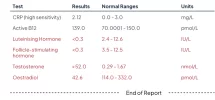
I then lowered it to 0.07mg per day, and on the same dose of TE and HCG, my e2 is at 68pmol/l.

So for me I’m quite happy with letrozole powder. I’m not sure if it’s the letrozole or the pharmacokinetics of a powdered drug that proved effective. But either way, this ultra low dose of letrozole is enough to get my e2 normal.

For what it’s worth, I’m also on 0.5mg cabergoline E3D. I tested my TSH and T4, worried about thyroid suppression from dopamine agonism. I am similarly borderline hyperthyroidic whether I am on cabergoline or not.
 
I am having good success with letrozole powder mixed with MCC. Taken with a microspoon daily on an empty stomach before bed.

On the following drugs:
-90mg TE EoD
-200iu HCG EoD
-1.1mg letrozole daily

My e2 was undetectable on these drugs. I started off with 1.1mg letrozole, as 1.1mg is about 45% of a normal dose given for breast cancer, and I needed 45-60% of the normal dose of anastrozole/exemestane to get my e2 in range.

I then lowered the letrozole to 0.3mg per day and retested 2 weeks later. My e2 was undetectable here as well.

I then lowered it to 0.07mg per day, and on the same dose of TE and HCG, my e2 is at 68pmol/l.

So for me I’m quite happy with letrozole powder. I’m not sure if it’s the letrozole or the pharmacokinetics of a powdered drug that proved effective. But either way, this ultra low dose of letrozole is enough to get my e2 normal.

For what it’s worth, I’m also on 0.5mg cabergoline E3D. I tested my TSH and T4, worried about thyroid suppression from dopamine agonism. I am similarly borderline hyperthyroidic whether I am on cabergoline or not.
this sounds like me except with adex, started at .12mg and got down to .01mg adex ED , the shit is not linear lol

also started .5mg caber e3d aswell, took second dose yesterday.
 
Back
Top