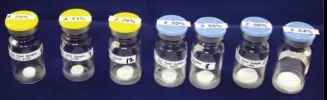
Lyophilized powder shrinkage

What factors could cause the lyophilized powder in a peptide, namely Selank, to shrink down into a puck that's a few times smaller in volume than what the other Selank vials have in them? I got a kit of Selank from a Chinese sources domestic warehouse, and 2 of the 10 vials have these tiny little dense looking pucks of lyophilized powder, while the other 8 look like typical lyophilized powder. The source will offer a discount on my next order equaling the value of the 2 vials, and said that this "can happen during international shipping". Both pucks seem stuck to the vial, with one being in an elevated position half way up the vial. Is this a vacuum failure with moisture ingress? I'm guessing it's compromised and should not be used.
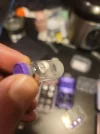
20250705_132253.webp20250705_132236.webp
 

Attachments

  • 20250705_132313.webp
    20250705_132313.webp
    694.8 KB · Views: 10
They are kind of cute. Lol

My guess is that happened during the lyophilization process causing excessive cake shrinkage. I have no idea if that affects the effectiveness of the peptide but I would assume so.
 
What factors could cause the lyophilized powder in a peptide, namely Selank, to shrink down into a puck that's a few times smaller in volume than what the other Selank vials have in them? I got a kit of Selank from a Chinese sources domestic warehouse, and 2 of the 10 vials have these tiny little dense looking pucks of lyophilized powder, while the other 8 look like typical lyophilized powder. The source will offer a discount on my next order equaling the value of the 2 vials, and said that this "can happen during international shipping". Both pucks seem stuck to the vial, with one being in an elevated position half way up the vial. Is this a vacuum failure with moisture ingress? I'm guessing it's compromised and should not be used.
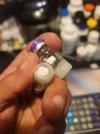
View attachment 335628View attachment 335629

Is there vacuum?
 
What factors could cause the lyophilized powder in a peptide, namely Selank, to shrink down into a puck that's a few times smaller in volume than what the other Selank vials have in them? I got a kit of Selank from a Chinese sources domestic warehouse, and 2 of the 10 vials have these tiny little dense looking pucks of lyophilized powder, while the other 8 look like typical lyophilized powder. The source will offer a discount on my next order equaling the value of the 2 vials, and said that this "can happen during international shipping". Both pucks seem stuck to the vial, with one being in an elevated position half way up the vial. Is this a vacuum failure with moisture ingress? I'm guessing it's compromised and should not be used.
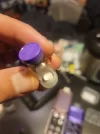
View attachment 335628View attachment 335629
I think it’s due to either the blend having the wrong proportions of excipients, or the operator of the freeze dryer not setting the right parameters.

Moisture ingress could also be possible.
 
It was cold!

Sorry, tagging to follow input
2qns0l.gif

They are kind of cute. Lol

My guess is that happened during the lyophilization process causing excessive cake shrinkage. I have no idea if that affects the effectiveness of the peptide but I would assume so.
It's most likely moisture ingress like you guessed. Checking for vacuum would answer that.

View attachment 335633
I'll check for vacuum and post results.

Ghoul, are the percentages on those vials moisture levels?
 
SSA used to sell a bunch of peptides that had no vacuum in them, they used to list which products had no vacuum in their price-list. However they no longer list it anymore, probably cause its bad for sales.

It might be one of those no vacuum products.
 
Correct. Counterintuitive as it is, moisture shrinks pucks. Think of shrunken dry pucks like dry cotton balls exposed to very high humidity.
Interesting document, thanks for sharing. It supports moisture ingress as being one of several causes of cake collapse.

“It is important to recognize that collapse can not only take place during the time course of the freeze-drying process itself, but also during storage. In the latter case, of course, viscous flow takes place over a much longer time scale, where the storage temperature is close to the glass transition temperature (Tg) of the freeze-dried solid. This viscous flow can be promoted by residual moisture levels that are perhaps too high to begin with, as well as by water vapor transfer from the elastomeric closure to the freeze-dried solid.”
 
SSA used to sell a bunch of peptides that had no vacuum in them, they used to list which products had no vacuum in their price-list. However they no longer list it anymore, probably cause its bad for sales.

It might be one of those no vacuum products.
I've had to relieve negative pressure in all the vials I've reconstituted from this company as to not blast the powder with bac, so I'm assuming this is just a possible seal failure on those two vials.
 
SSA used to sell a bunch of peptides that had no vacuum in them, they used to list which products had no vacuum in their price-list. However they no longer list it anymore, probably cause its bad for sales.

It might be one of those no vacuum products.
I’ve received a lot of peptide vials over the years without vacuum. I’ve never seen one have a mini puck.
 
Back
Top