Qingdao Sigma Chemical Co., Ltd (International, US, EU, Canada and Australia domestic

Skin sensitivity is a thing of all the glp1 Tirzepatide and Semaglutide have it reported too.

Retatrutide has 7% of ppl participating in the trials reporting it.

Is mostly transient for all the glp1, except for few cases.

So no your assumption that is UGL thing is not correct..plenty of reports online from ppl injecting ozempic and mounjaro that have it

Full body skin sensitivity is not reported in any clinical data for pharma Tirz or Sema, including studies with over 10,000 participants carefully monitored for 4 years, and they list 50+ reported side effects with as few as 4 people experiencing them.

Maybe the anecdotal reports to you're referring to are psychosomatic, picking it up from all the UGL user reports, or perhaps they leave their pens in warm temps for extended periods forming aggregates, but in controlled conditions with pharma grade meds, it has not been observed.
 
You make a comment or two per day that is super attention seeking.. it’s like you want us to coddle you and assure you everything is going to be okay. Guess what man, everything will be okay… life is great. If Tracy comes back that surely makes everyone’s life in here better - if he doesn’t… nothing changes.
That exactly what I want attention and coddled. It couldn’t actually just be shit posting like much everyone else. Or just be bored off my ass at work and just want to throw some random shit out there. But I appreciate you quoting me and replying and giving me the attention I was seeking.
 
Skin-related side effects
Another side effect reported in the clinical trials was skin sensitivity to touch, pain, pressure and heat. These events were reported in approximately 7% of the participants receiving retatrutide, compared to 1% in the placebo group.

Importantly, these skin-related side effects were generally mild to moderate in severity and did not result in the discontinuation of retatrutide or placebo.

I said it wasn't in the Sema and Tirz clinical data, which is extensive, and mentioned I hadn't seen it in the limited Reta data that's been released.

Without identifying the underlying cause, if it's related to glucagon, you have to wonder what else this novel agonist might be doing that hasn't been identified yet.

Then again, it could just be an issue with
the formulation. I've seen FDA documents where pharma and FDA agreed to tweak a rHGH formulation (or storage conditions) before approving it for sale to reduce aggregate formation, in order to lessen the chance of reactions like this.
 
Full body skin sensitivity is not reported in any clinical data for pharma Tirz or Sema, including studies with over 10,000 participants carefully monitored for 4 years, and they list 50+ reported side effects with as few as 4 people experiencing them.

Maybe the anecdotal reports to you're referring to are psychosomatic, picking it up from all the UGL user reports, or perhaps they leave their pens in warm temps for extended periods forming aggregates, but in controlled conditions with pharma grade meds, it has not been observed.
Allodynia has been reported on other glp1 drugs and doctors are reporting that their patients are starting to develop it on ozempic and Tirzepatide.

There are plenty of ppl on mounjaro and ozempic reporting it too. Unless we don't believe ppl first hand experience or we believe that everyone is on grey GLP1 even when they clearly state they are not. I would stop beating the aggregates war drum incessantly because there are plenty of ppl that filter their GLP1 and still get the allodynia from it.

If you assume that everything is because of ONE single reason you create a narrative that is impossible to agree with and it makes no sense as well plus it makes it a clown joke instead of a good harm reduction practice.

Not everything can be fixed with bed filtration or filtering of peptides, because sometime there is nothing to fix, it's just a side effect and ignoring it or making it seems like they are all mad and it's all because of poor UGL quality makes the whole debate ridiculous.
 
So potentially useful if you may be dabbling with insulin???
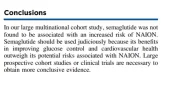
The risk is there, but consider that it's majorly for Men, over the age of 55, Obese with sleep apnea and type 2 diabetes, and worst in those previously at risk for NAION..
The peak is around 22 months. I'm pushing 18 months so I'll let you know in 4 months :D :D .

Actually There's another study that says well there's sort of a risk that isn't generalizable to the public, and worry may be excessive, plus the benefits of GLP1s outweigh said risks (I paraphrase)
 
The risk is there, but consider that it's majorly for Men, over the age of 55, Obese with sleep apnea and type 2 diabetes, and worst in those previously at risk for NAION..
The peak is around 22 months. I'm pushing 18 months so I'll let you know in 4 months :D :D .

Actually There's another study that says well there's sort of a risk that isn't generalizable to the public, and worry may be excessive, plus the benefits of GLP1s outweigh said risks (I paraphrase)
Well yeah if one is obese or diabetic and can improve is quality of life consistently and the risk is minuscule it's well worth it. That side effect however could interest more ppl like BBs using it for glucose control where the benefit of using it could be not really worth it compared of risking blindness xD

Again it's all theoretical as you well said at the moment there are no certainty and it's not clear if there is a direct correlation.
 
l

Sema 7.2mg and CagriSema trials both ended up being failures(hitting Novo's stock price) , despite early promising results, so worth keeping in mind that Reta may yet turn up with a few surprises of its own, especially with so little data regarding glucagon.

Didn't you and others develop full body skin sensitivity for some unknown reason?

I haven't seen that mentioned in the Reta trial, so maybe it's a special feature of our perfectly made, safety focused Chinese UGL produced copies.
I wouldn't say Sema 7.2 was a failure.. You cannot use stock prices to gauge. Norvo stocks dropped one week because of a super bowl add by hims or whatever their name is, then another week it slightly rebounds again because of links to Sema dampening addiction..
Even Eli Lilly stocks dropped sightly because of moujaro and zep missing targets, but rose again because of another unrelated med
 
Well yeah if one is obese or diabetic and can improve is quality of life consistently and the risk is minuscule it's well worth it. That side effect however could interest more ppl like BBs using it for glucose control where the benefit of using it could be not really worth it compared of risking blindness xD

Again it's all theoretical as you well said at the moment there are no certainty and it's not clear if there is a direct correlation.
I just said that the other study states that the concern is not applicable to the general population, and I can assure you even people with diabetes do not want to go blind vs blood sugar control. There were diabetes meds before GLPS. I'll find it then runway for the rest of the day.

Meso eating info serious work time :D
 
It's not reported in any of the clinical data for the pharma versions of either of those compounds, including the 3 and 4 year studies, which strongly suggests a systemic immunogenic reaction to me.

Not to be confused with a limited site reaction, also an immune response, but much more limited.

Filtering to remove aggregates could help stop that from happening,

It's not immune mediated sensitivity. It's allodynia.
 
I just said that the other study states that the concern is not applicable to the general population, and I can assure you even people with diabetes do not want to go blind vs blood sugar control. There were diabetes meds before GLPS. I'll find it then runway for the rest of the day.

Meso eating info serious work time :D
Yeah I probably overstated, only obese ppl would probably trade one eye for not being obese anymore xD
 
Allodynia has been reported on other glp1 drugs and doctors are reporting that their patients are starting to develop it on ozempic and Tirzepatide.

There are plenty of ppl on mounjaro and ozempic reporting it too. Unless we don't believe ppl first hand experience or we believe that everyone is on grey GLP1 even when they clearly state they are not. I would stop beating the aggregates war drum incessantly because there are plenty of ppl that filter their GLP1 and still get the allodynia from it.

If you assume that everything is because of ONE single reason you create a narrative that is impossible to agree with and it makes no sense as well plus it makes it a clown joke instead of a good harm reduction practice.

Not everything can be fixed with bed filtration or filtering of peptides, because sometime there is nothing to fix, it's just a side effect and ignoring it or making it seems like they are all mad and it's all because of poor UGL quality makes the whole debate ridiculous.
Correct. A reaction to the 'active ingredient' in a medication cannot be solved by filtering. It's just what it is.
 
Well yeah if one is obese or diabetic and can improve is quality of life consistently and the risk is minuscule it's well worth it. That side effect however could interest more ppl like BBs using it for glucose control where the benefit of using it could be not really worth it compared of risking blindness xD

Again it's all theoretical as you well said at the moment there are no certainty and it's not clear if there is a direct correlation.
1740151985740.webp
 

Attachments

If anyone used QSC trest/ment A from Eu warehouse, please pm me I would appreciate it as Im running it with zero effects after few weeks.
 
Allodynia has been reported on other glp1 drugs and doctors are reporting that their patients are starting to develop it on ozempic and Tirzepatide.

There are plenty of ppl on mounjaro and ozempic reporting it too. Unless we don't believe ppl first hand experience or we believe that everyone is on grey GLP1 even when they clearly state they are not. I would stop beating the aggregates war drum incessantly because there are plenty of ppl that filter their GLP1 and still get the allodynia from it.

If you assume that everything is because of ONE single reason you create a narrative that is impossible to agree with and it makes no sense as well plus it makes it a clown joke instead of a good harm reduction practice.

Not everything can be fixed with bed filtration or filtering of peptides, because sometime there is nothing to fix, it's just a side effect and ignoring it or making it seems like they are all mad and it's all because of poor UGL quality makes the whole debate ridiculous.

I'm talking about controlling what is in our power to control, and looking at the balance of probabilities. And yes, I give far more weight to high-power clinical studies than a handful of anecdotes.

VS

Proudly boasting that "I don't filter and everything's fine." (not you Sampei)

My idea of harm reduction is lessening of known risks, even if they can't be specifically measured. That's the same approach taken by professionals, who to this day haven't established the precise mechanisms of immunogenicity, but they know enough that aggregates are closely linked so that tremendous effort and expense is invested by pharma and regulators to reduce that risk, and ZERO effort by UGL.

I don't care what strangers do, or if they hurt themselves. This is an intellectual exercise for me, and I put the information out there for those receptive to it and decide they'd prefer to reduce potential harms.

One side defines harm reduction as saving the expense of 50¢ worth of filters and 2 minutes of time, and I define it as taking the precaution of removing particulates that are certainly damaging health, and aggregates that may or may not be.

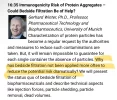
Filtering at the individual level, even of carefully produced pharma peptides and not our UGL garbage, is recognized as reducing the risk of negative effects, "dramatically". Not my words, but by the world's leading scientists who specialize in this field.

IMG_0603.webp

Here they are covering this topic at a high level conference on protein drugs:

 
Last edited:
I'm talking about controlling what is in our power to control, and looking at the balance of probabilities. And yes, I give far more weight to high-power clinical studies than a handful of anecdotes.

VS

Proudly boasting that "I don't filter and everything's fine." (not you Sampei)

My idea of harm reduction is lessening of known risks, even if they can't be specifically measured. That's the same approach taken by professionals, who to this day, haven't established the precise mechanisms of immunogenicity, but they know enough that aggregates are closely linked that tremendous effort and expense is invested by pharma and regulators, and ZERO effort by UGL.

I don't care what strangers do, or if they hurt themselves. This is an intellectual exercise for me, and I put the information out there for those receptive to it and decide they'd prefer to reduce potential harms.

One side defines harm reduction as saving the expense of 50¢ worth of filters and 2 minutes of time, and I define it as taking the precaution of removing particulates that are certainly damaging health, and aggregates and that may or may not be.

Filtering at the individual level, even of carefully produced pharma peptide and not our UGL garbage, is recognized as reducing the risk of negative effects, "dramatically". not my words, but by the world's leading scientists who specialize in this field.

View attachment 317608

Here the are just 3 months ago covering this topic at a high level conference on protein drugs:

Wow so they suggest even doing this for those who receive peptides through Rx at compound pharmacies?
 
Well yeah if one is obese or diabetic and can improve is quality of life consistently and the risk is minuscule it's well worth it. That side effect however could interest more ppl like BBs using it for glucose control where the benefit of using it could be not really worth it compared of risking blindness xD

Again it's all theoretical as you well said at the moment there are no certainty and it's not clear if there is a direct correlation.
You could use metformin for glucose control but then there are other side effects correct?
 
Wow so they suggest even doing this for those who receive peptides through Rx at compound pharmacies?

It's been standard practice at numerous high level hospitals in Europe for years.

Increasingly, for critical lifesaving peptide drugs it's required by the manufacturers. Because if aggregates form, they can cause immunity to develop (as they can against any peptide) and especially with no alternative treatment available, the patient could die as a result.

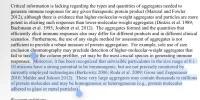
The reason is simple. No matter how aggregate free the peptide is when it leaves the manufacturer, if it's accidentally exposed to excessive heat, or improperly reconstituted, or dropped, aggregates could form, so better to ensure they're eliminated with a simple filter step than risk injecting them.

As the FDA keeps tightening restrictions on peptide aggregates (they recently lowered the size "of concern" down to .1um to 10um) I suspect we'll see injector pens with filters become the norm. .22um filters obviously eliminate most of them. (below 100um they're sub-visible).

It basically comes down to "can't hurt" and almost certainty a worthwhile precaution.

We don't sterilize vial tops (those of us who do) because failing to do so will likely send you to the hospital. It's to protect against the 1 in 5,000 chance that it does.

IMG_0604.webp

 
Last edited:

Sponsors

Latest posts

Back
Top