Sarcopenia/Frailty

Michael Scally MD

Doctor of Medicine
10+ Year Member
McKee A, Morley JE, Matsumoto AM, Vinik A. Sarcopenia: an Endocrine Disorder? Endocr Pract. http://journals.aace.com/doi/10.4158/EP171795.RA?code=aace-site

Sarcopenia is defined as low muscle function (walking speed or grip strength) in the presence of low muscle mass. A simple screening test - the SARC-F - is available to identify persons with sarcopenia. The major endocrine causes of sarcopenia are diabetes mellitus and male hypogonadism.

Other causes are decreased physical activity, loss of motor neuron units, weight loss, inflammatory cytokines, reduced blood flow to muscles, very low 25(OH) vitamin D levels and decreased growth hormone and IGF-1.

Treatment for sarcopenia includes resistance and aerobic exercise, leucine enriched essential amino acids, and vitamin D. In hypogonadal males, testosterone improves muscle mass, strength and function. Selective androgen receptor molecules and antimyostatin activin II receptor molecules are under development as possible treatments for sarcopenia.
 

Attachments

[OA] Muscle Wasting and Sarcopenia in Heart Failure and Beyond

Sarcopenia (loss of muscle mass and muscle function) is a strong predictor of frailty, disability and mortality in older persons and may also occur in obese subjects. The prevalence of sarcopenia is increased in patients suffering from chronic heart failure.

However, there are currently few therapy options. The main intervention is resistance exercise, either alone or in combination with nutritional support, which seems to enhance the beneficial effects of training.

Also, testosterone has been shown to increased muscle power and function; however, a possible limitation is the side effects of testosterone. Other investigational drugs include selective androgen receptor modulators, growth hormone, IGF-1, compounds targeting myostatin signaling, which have their own set of side effects.

There are abundant prospective targets for improving muscle function in the elderly with or without chronic heart failure, and the continuing development of new treatment strategies and compounds for sarcopenia and cardiac cachexia makes this field an exciting one.

Springer J, Springer JI, Anker SD. Muscle wasting and sarcopenia in heart failure and beyond: update 2017. ESC Heart Fail 2017;4(4):492-8. Muscle wasting and sarcopenia in heart failure and beyond: update 2017
 
Swiecicka A, Eendebak R, Lunt M, et al. Reproductive hormone levels predict changes in frailty status in community-dwelling older men: European Male Ageing Study prospective data. J Clin Endocrinol Metab 2017. https://academic.oup.com/jcem/advance-article-abstract/doi/10.1210/jc.2017-01172/4657090

Context: Clinical sequelae of androgen deficiency share common features with frailty. Evidence supporting the role of androgens in the development of frailty is limited and conflicting.

Objective: To determine associations between male reproductive hormones and prospective changes in frailty status. Design/ Setting: 4.3-year prospective cohort study of community-dwelling men participating in the European Male Ageing Study.

Participants: 3369 men aged 40-79 from 8 European centres. Intervention: nil.

Main Outcome Measure: Frailty status was determined using frailty index (FI n=2278) and frailty phenotype (FP, n=1980).

Results: After adjusting for baseline frailty, age, centre and smoking, the risk of worsening FI decreased with higher testosterone (T), free T and dihydrotestosterone (DHT) [% change (95%CI) in FI associated with 1SD higher hormone level: -3.0 (-5.9, -1.0) for total T; -3.9 (-6.8, -2.0) for free T; and -3.9 (-6.8, -2.0) for DHT]. After further adjustment for BMI, only free T remained a significant predictor of FI change. In fully adjusted models, higher LH and FSH were positively related to worsening FI only in men <60 years and higher estradiol predicted lower likelihood of improving FP [OR 0.68 (0.52, 0.88)].

Conclusions: These prospective data support the hypothesis that higher androgen levels may protect elderly men from worsening frailty. However, the causal nature of these relationships requires further investigation. Whereas raised gonadotropins in men <60 yr might be an early marker of frailty, the role of estradiol in frailty needs further clarification.
 
Therapist-Assisted Progressive Resistance Training, Protein Supplements, and Testosterone Injections in Frail Older Men with Testosterone Deficiency: Protocol for a Randomized Placebo-Controlled Trial

BACKGROUND: Fall accidents are a major cause of mortality among the elderly and the leading cause of traumatic brain injury. After a fall, many elderly people never completely recover and need help in coping with everyday life. Due to the increasing older population in the world, injuries, disabilities, and deaths caused by falls are a growing worldwide problem.

Muscle weakness leads to greatly increased risk of falling, decreased quality of life, and decline in functional capacity. Muscle mass and muscle power decrease about 40% from age 20 to 80 years, and the level of testosterone decreases with age and leads to impaired muscle mass. In addition, 20% of men older than 60 years-and 50% older than 80 years-have low levels of testosterone.

Treatments after a fall are significant financial burdens on health and social care, and it is important to find treatments that can enhance function in the elderly people.

OBJECTIVE: The purpose of this study is to investigate whether testosterone and progressive resistance training alone or combined can improve muscle strength and reduce the risk of falls in older men. Additionally, we will examine whether such treatments can improve quality of life, functional capacity, including sexual function, and counteract depression.

METHODS: This is a randomized placebo-controlled, double-blind trial in which frail older men with testosterone deficiency are treated with testosterone supplemental therapy and therapist-assisted progressive resistance training for 20 weeks, with the possibility to continue treatment for 1 year. Four study arms of 48 participants each are provided based on factorial assignment to testosterone supplemental therapy and progressive resistance training.

The 4 groups are as follows:
· controls given placebo injections without physical exercise for 20 weeks,
· testosterone-alone group given testosterone injections without physical exercise for 20 weeks,
· training-alone group given placebo injections for 20 weeks combined with 16 weeks of progressive strength training, and
· combination group given testosterone injections for 20 weeks combined with 16 weeks of progressive strength training.

Performance in the 30-second chair stand test to measure improvement of general strength, balance, and power in lower extremities is the primary endpoint. Secondary endpoints comprising tests of cognition, muscle strength, and quality of life are applied before and after the training.

RESULTS: Funding was provided in October 2016. Results are expected to be available in 2020. Sample size was calculated to 152 participants divided into 4 equal-sized groups. Due to age, difficulty in transport, and the time-consuming intervention, up to 25% dropouts are expected; thus, we aim to include at least 192 participants.

CONCLUSIONS: This investigation will evaluate the efficacy of testosterone supplemental therapy alone or combined with progressive resistance training. Additionally, improvements in quality of life and cognition are explored.

TRIAL REGISTRATION: Clinicaltrials.gov NCT02873559; https://clinicaltrials.gov/ct2/show/NCT02873559

Rasmussen R, Midttun M, Kolenda T, et al. Therapist-Assisted Progressive Resistance Training, Protein Supplements, and Testosterone Injections in Frail Older Men with Testosterone Deficiency: Protocol for a Randomized Placebo-Controlled Trial. JMIR research protocols 2018;7:e71. https://www.researchprotocols.org/2018/3/e71/
 
Have heard of doctors treating HIV patients with steroids for muscle wasting BEFORE they have wasting. Then the doc gets in trouble.

Doing so seems to help them. It is called PREVENTIVE medicine which is better than breakdown treatment.

Treating early with androgens should apply to all as a need begins to become apparent, not waiting until they are frail and bones are brittle. The change last year of the reference range for testosterone is not based on science but rather political motives.
 
Muscle Wasting Diseases: Novel Targets and Treatments

Adequate skeletal muscle plasticity is an essential element for our well-being, and compromised muscle function can drastically affect quality of life, morbidity, and mortality.

Surprisingly, however, skeletal muscle remains one of the most under-medicated organs. Interventions in muscle diseases are scarce, not only in neuromuscular dystrophies, but also in highly prevalent secondary wasting pathologies such as sarcopenia and cachexia.

Even in other diseases that exhibit a well-established risk correlation of muscle dysfunction due to a sedentary lifestyle, such as type 2 diabetes or cardiovascular pathologies, current treatments are mostly targeted on non-muscle tissues.

In recent years, a renewed focus on skeletal muscle has led to the discovery of various novel drug targets and the design of new pharmacological approaches.

This review provides an overview of the current knowledge of the key mechanisms involved in muscle wasting conditions and novel pharmacological avenues that could ameliorate muscle diseases.

Furrer R, Handschin C. Muscle Wasting Diseases: Novel Targets and Treatments. Annual Review of Pharmacology and Toxicology 2018. https://doi.org/10.1146/annurev-pharmtox-010818-021041

Capture.PNG

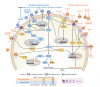
Signaling pathways involved in secondary muscle wasting, and potential drugs to reduce loss of muscle mass. Several classes of drugs are tested in clinical trials aimed at either inhibiting catabolic signaling, thereby reducing protein degradation (orange), or stimulating anabolic pathways and thereby increasing protein synthesis (blue).

Activation via IGF-1 or other upstream signals such as GH, androgens, or β2-agonist stimulates the PI3K-Akt-mTOR pathway, and as a consequence, protein synthesis is increased. In addition, Akt suppresses protein degradation by phosphorylating FoxO, thereby reducing its transcriptional activity.

Several catabolic pathways contribute to muscle atrophy by increasing expression of the E3 ligases MAFbx and MuRF1 via the transcription factors FoxO, TFEB, or NF-κB, which all stimulate protein degradation, and by inhibiting PI3K-Akt-mTOR signaling and thereby reducing protein synthesis.

MSTN acts as a major negative regulator of muscle mass by inhibiting Akt signaling.

The multifactorial nature of secondary muscle wasting and the different signaling pathways involved in muscle atrophy aggravate the development of effective drugs.

Abbreviations: FoxO, forkhead box O; GC, glucocorticoid; GH, growth hormone; IGF-1, insulin-like growth factor 1; MAFbx, muscle atrophy F-box protein; MSTN, myostatin; mTOR, mammalian target of rapamycin; MuRF1, muscle RING finger-containing protein 1; NF-κB, nuclear factor κB; T, testosterone.
 

Attachments

The Stair Climb Power Test as an Efficacy Outcome in Randomized Trials of Function Promoting [Anabolic] Therapies

Background - Standardization of performance-based physical function measures that are reliable and responsive to intervention is necessary for efficacy trials of function promoting anabolic therapies (FPTs).

Herein, we describe a standardized method of measuring stair climbing power (SCP) and evaluate its ability to assess improvements in physical function in response to an FPT (testosterone) compared to gait speed.

Methods - We used a 12-step SCP test with and without carrying a load (loaded, LSCP or unloaded, USCP) in two testosterone trials in older men. SCP was determined from mass, total step-rise, and time of ascent measured with an electronic timing system.

Associations between SCP and leg press performance (strength and power), testosterone levels, and gait speed were assessed. Test–retest reliability was evaluated using interclass correlation and Bland–Altman analyses.

Results - Baseline SCP was negatively associated with age and positively with leg strength and power and gait speed. Both tests of SCP were safe and showed excellent reliability (intra-class correlation 0.91–0.97 in both cohorts).

Changes in testosterone concentrations were associated with changes in USCP and LSCP, but not gait speed in mobility-limited men. Changes in leg press performance were associated with SCP in both trials.

Conclusions - Both USCP and LSCP are safe and have high test–retest reliability. Compared to gait speed, SCP is associated more robustly with leg press performance and is sensitive to testosterone therapy. The LSCP might be a more responsive outcome than gait speed to evaluate the efficacy of FPT in randomized trials.

Gagliano-Jucá T, Li Z, Pencina KM, et al. The Stair Climb Power Test as an Efficacy Outcome in Randomized Trials of Function Promoting Therapies in Older Men. The Journals of Gerontology: Series A 2019. Stair Climb Power Test as an Efficacy Outcome in Randomized Trials of Function Promoting Therapies in Older Men
 
Bhasin S, Travison TG, Manini TM, et al. Sarcopenia definition: the position statements of the sarcopenia definition and outcomes consortium. J Am Geriatr Soc. 2020. Error - Cookies Turned Off.

OBJECTIVES - To develop an evidence‐based definition of sarcopenia that can facilitate identification of older adults at risk for clinically relevant outcomes (eg, self‐reported mobility limitation, falls, fractures, and mortality), the Sarcopenia Definition and Outcomes Consortium (SDOC) crafted a set of position statements informed by a literature review and SDOC's analyses of eight epidemiologic studies, six randomized clinical trials, four cohort studies of special populations, and two nationally representative population‐based studies.

METHODS - Thirteen position statements related to the putative components of a sarcopenia definition, informed by the SDOC analyses and literature synthesis, were reviewed by an independent international expert panel (panel) iteratively and voted on by the panel during the Sarcopenia Position Statement Conference. Four position statements related to grip strength, three to lean mass derived from dual‐energy x‐ray absorptiometry (DXA), and four to gait speed; two were summary statements.

RESULTS - The SDOC analyses identified grip strength, either absolute or scaled to measures of body size, as an important discriminator of slowness. Both low grip strength and low usual gait speed independently predicted falls, self‐reported mobility limitation, hip fractures, and mortality in community‐dwelling older adults. Lean mass measured by DXA was not associated with incident adverse health‐related outcomes in community‐dwelling older adults with or without adjustment for body size.

CONCLUSION - The panel agreed that both weakness defined by low grip strength and slowness defined by low usual gait speed should be included in the definition of sarcopenia. These position statements offer a rational basis for an evidence‐based definition of sarcopenia. The analyses that informed these position statements are summarized in this article and discussed in accompanying articles in this issue of the journal.
 
Bhasin S, Travison TG, Manini TM, et al. Sarcopenia definition: the position statements of the sarcopenia definition and outcomes consortium. J Am Geriatr Soc. 2020. Error - Cookies Turned Off.

OBJECTIVES - To develop an evidence‐based definition of sarcopenia that can facilitate identification of older adults at risk for clinically relevant outcomes (eg, self‐reported mobility limitation, falls, fractures, and mortality), the Sarcopenia Definition and Outcomes Consortium (SDOC) crafted a set of position statements informed by a literature review and SDOC's analyses of eight epidemiologic studies, six randomized clinical trials, four cohort studies of special populations, and two nationally representative population‐based studies.

METHODS - Thirteen position statements related to the putative components of a sarcopenia definition, informed by the SDOC analyses and literature synthesis, were reviewed by an independent international expert panel (panel) iteratively and voted on by the panel during the Sarcopenia Position Statement Conference. Four position statements related to grip strength, three to lean mass derived from dual‐energy x‐ray absorptiometry (DXA), and four to gait speed; two were summary statements.

RESULTS - The SDOC analyses identified grip strength, either absolute or scaled to measures of body size, as an important discriminator of slowness. Both low grip strength and low usual gait speed independently predicted falls, self‐reported mobility limitation, hip fractures, and mortality in community‐dwelling older adults. Lean mass measured by DXA was not associated with incident adverse health‐related outcomes in community‐dwelling older adults with or without adjustment for body size.

CONCLUSION - The panel agreed that both weakness defined by low grip strength and slowness defined by low usual gait speed should be included in the definition of sarcopenia. These position statements offer a rational basis for an evidence‐based definition of sarcopenia. The analyses that informed these position statements are summarized in this article and discussed in accompanying articles in this issue of the journal.

Ata AM, Kara M, Kaymak B, Özçakar L. "Zooming" in the Anterior Thigh Muscle for the Diagnosis of Sarcopenia [published online ahead of print, 2020 Jun 13]. J Am Geriatr Soc. 2020;10.1111/jgs.16572. doi:10.1111/jgs.16572 Error - Cookies Turned Off

Bhasin S, Cawthon PM. Reply to: "Zooming" in the Anterior Thigh Muscle for the Diagnosis of Sarcopenia [published online ahead of print, 2020 Jun 13]. J Am Geriatr Soc. 2020;10.1111/jgs.16571. doi:10.1111/jgs.16571 Error - Cookies Turned Off
 
Sarcopenia Definition & Outcomes Consortium Defined Low Grip Strength in Two Cross-Sectional, Population-Based Cohorts

BACKGROUND/OBJECTIVES: The extent to which the prevalence of muscle weakness in the US population varies by different putative grip strength constructs developed by the Sarcopenia Definitions and Outcomes Consortium (SDOC) has not been described.

DESIGN: Cross-sectional analysis.

SETTING: Two nationally representative cohorts-2010 and 2012 waves of the Health and Retirement Survey and round 1 (2011) of the National Health and Aging Trends Survey.

PARTICIPANTS: Adults aged 65 years and older (n = 12,984) were included in these analyses.

MEASUREMENTS: We analyzed three constructs of muscle weakness developed by the SDOC, and found to be associated with mobility disability for men and women, respectively: absolute grip strength (<35.5 kg and 20 kg); grip strength standardized to body mass index (<1.05 kg/kg/m(2) and 0.79 kg/kg/m(2)); and grip strength standardized to weight (<0.45 kg/kg and 0.337 kg/kg).

We estimated the prevalence of muscle weakness defined by each of these constructs in the overall older US population, and by age, sex, race, and ethnicity. We also estimated the sensitivity and specificity of each of the grip strength constructs to discriminate slowness (gait speed <0.8 m/s) in these samples.

RESULTS: The prevalence of muscle weakness ranged from 23% to 61% for men and from 30% to 66% for women, depending on the construct used. There was substantial variation in the prevalence of muscle weakness by race and ethnicity. The sensitivity and specificity of these measures for discriminating slowness varied widely, ranging from 0.30 to 0.92 (sensitivity) and from 0.17 to 0.88 (specificity).

CONCLUSIONS: The prevalence of muscle weakness, defined by the putative SDOC grip strength constructs, depends on the construct of weakness used.

Patel SM, Duchowny KA, Kiel DP, et al. Sarcopenia Definition & Outcomes Consortium Defined Low Grip Strength in Two Cross-Sectional, Population-Based Cohorts. Journal of the American Geriatrics Society 2020. Error - Cookies Turned Off
 
Identification of Sarcopenia Components That Discriminate Slow Walking Speed

BACKGROUND: The Sarcopenia Definitions and Outcomes Consortium (SDOC) sought to identify cut points for muscle strength and body composition measures derived from dual-energy x-ray absorptiometry (DXA) that discriminate older adults with slow walking speed. This article presents the core analyses used to guide the SDOC position statements.

DESIGN: Cross-sectional data analyses of pooled data.

SETTING: University-based research assessment centers.

PARTICIPANTS: Community-dwelling men (n = 13,652) and women: (n = 5,115) with information on lean mass by DXA, grip strength (GR), and walking speed.

MEASUREMENTS: Thirty-five candidate sarcopenia variables were entered into sex-stratified classification and regression tree (CART) models to agnostically choose variables and cut points that discriminate slow walkers (<0.80 m/s). Models with alternative walking speed outcomes were also evaluated (<0.60 and <1.0 m/s and walking speed treated continuously).

RESULTS: CART models identified GR/body mass index (GRBMI) and GR/total body fat (GRTBF) as the primary discriminating variables for slowness in men and women, respectively. Men with GRBMI of 1.05 kg/kg/m(2) or less were approximately four times more likely to be slow walkers than those with GRBMI of greater than 1.05 kg/kg/m(2).

Women with GRTBF of less than 0.65 kg/kg were twice as likely to be slow walkers than women with GRTBF of 0.65 kg/kg or greater. Models with alternative walking speed outcomes selected only functions of GR as primary discriminators of slowness in both men and women. DXA-derived lean mass measures did not consistently discriminate slow walkers.

CONCLUSION: GR with and without adjustments for body size and composition consistently discriminated older adults with slowness. CART models did not select DXA-based lean mass as a primary discriminator of slowness. These results were presented to an SDOC Consensus Panel, who used them and other information to develop the SDOC Position Statements.

Manini TM, Patel SM, Newman AB, et al. Identification of Sarcopenia Components That Discriminate Slow Walking Speed: A Pooled Data Analysis. Journal of the American Geriatrics Society 2020. Error - Cookies Turned Off
 
Application of Cut-Points for Low Muscle Strength and Lean Mass in Mobility-Limited Older Adults

BACKGROUND: The Sarcopenia Definitions and Outcomes Consortium (SDOC) is a collaborative initiative seeking to develop and evaluate cut-points for low muscle strength and lean mass that predict an increased risk for slowness (usual walking speed <.8 m/s) among older adults.

OBJECTIVES: The goal of the present study was to provide clinicians and researchers with an understanding of the diagnostic implications of using SDOC variables and cut-points in mobility-limited older adults. Using data from older individuals with specific conditions that render them at increased risk for mobility limitation, we evaluated the performance characteristics (ie, sensitivity and specificity) of five putative sarcopenia parameters and then compared these values with previously recommended diagnostic criteria for sarcopenia.

DESIGN: Retrospective analysis of six randomized controlled trials enriched in persons at risk for mobility limitation.

SETTING: National and international geriatric clinical research centers.

PARTICIPANTS: A total of 925 mobility-limited older adults (>/=55 years of age; 58% women) were included in the analysis.

MEASUREMENTS: The prevalence of low muscle strength and lean mass were assessed using five candidate metrics discriminative of slowness. Analyses of sensitivity and specificity were used to compare muscle weakness criteria with published diagnostics for sarcopenia.

RESULTS: Odds ratios (ORs) supported maximal grip strength (Grip max <35.5 and 20.0 in men and women, respectively) as the most discriminative of slowness in both men and women (OR = 3.66 and 3.53, respectively). More men (58%) than women (30%) fell below sex-specific maximal grip cut-points. When applying previously recommended sarcopenia component definitions in our population, we found that fewer individuals met those criteria (range = 6%-32%).

CONCLUSION: A greater number of individuals fall below SDOC Grip max cut-points compared with previous recommendations. Clinicians and researchers working with older adults may consider these thresholds as an inclusive means to identify candidates for low-risk lifestyle promyogenic and function-promoting therapies.

Grosicki GJ, Travison TG, Zhu H, et al. Application of Cut-Points for Low Muscle Strength and Lean Mass in Mobility-Limited Older Adults. Journal of the American Geriatrics Society 2020. Error - Cookies Turned Off
 
Putative Cut-Points in Sarcopenia Components and Incident Adverse Health Outcomes: An SDOC Analysis

OBJECTIVES: Analyses performed by the Sarcopenia Definitions and Outcomes Consortium (SDOC) identified cut-points in several metrics of grip strength for consideration in a definition of sarcopenia. We describe the associations between the SDOC-identified metrics of low grip strength (absolute or standardized to body size/composition); low dual-energy x-ray absorptiometry (DXA) lean mass as previously defined in the literature (appendicular lean mass [ALM]/ht(2) ); and slowness (walking speed <.8 m/s) with subsequent adverse outcomes (falls, hip fractures, mobility limitation, and mortality).

DESIGN: Individual-level, sex-stratified pooled analysis. We calculated odds ratios (ORs) or hazard ratios (HRs) for incident falls, mobility limitation, hip fractures, and mortality. Follow-up time ranged from 1 year for falls to 8.8 +/- 2.3 years for mortality.

SETTING: Eight prospective observational cohort studies.

PARTICIPANTS: A total of 13,421 community-dwelling men and 4,828 community-dwelling women.

MEASUREMENTS Grip strength by hand dynamometry, gait speed, and lean mass by DXA.

RESULTS: Low grip strength (absolute or standardized to body size/composition) was associated with incident outcomes, usually independently of slowness, in both men and women. ORs and HRs generally ranged from 1.2 to 3.0 for those below vs above the cut-point. DXA lean mass was not consistently associated with these outcomes. When considered together, those who had both muscle weakness by absolute grip strength (<35.5 kg in men and <20 kg in women) and slowness were consistently more likely to have a fall, hip fracture, mobility limitation, or die than those without either slowness or muscle weakness.

CONCLUSION: Older men and women with both muscle weakness and slowness have a higher likelihood of adverse health outcomes. These results support the inclusion of grip strength and walking speed as components in a summary definition of sarcopenia.

Cawthon PM, Manini T, Patel SM, et al. Putative Cut-Points in Sarcopenia Components and Incident Adverse Health Outcomes: An SDOC Analysis. Journal of the American Geriatrics Society 2020. Error - Cookies Turned Off
 
Effect of Testosterone Supplementation on Sarcopenic Components in Middle-Aged and Elderly Men

Highlights
· Testosterone supplementation is associated with positive gains in lean body mass.
· Testosterone it is also associated with gains in strength in men.
· The testosterone supplementation it may be a strategy to prevent sarcopenia in men.
· A better standardization of the testosterone supplementation method is necessary.

The aim of this study was to conduct a systematic review of the literature of randomized controlled trials on the effect of testosterone (T) supplementation compared to the placebo group or lower dose on sarcopenic components (muscle mass, strength and physical performance) in middle-aged and elderly men.

Major electronic databases were searched for articles published on or before December 2019. Studies including individuals with age ≥ 40 years and which described the effect of T supplementation on sarcopenic components were found eligible (11 studies). Outcomes were calculated as the difference in means between the experimental and control/placebo groups, and data were presented as effect size with 95% confidence limits (95%CI). The meta-analysis was performed using a random effects model.

Regarding lean body mass (LBM), eight studies evaluated the effect of T supplementation on this outcome, of these, seven reported gains after the intervention period. Our meta-analysis showed a beneficial effect on LBM of 2.54 kg (95% CI, 1.27 to 3.80) (p < 0.001). In muscle strength (MS), seven included studies evaluated the handgrip strength (HGS) and just one reported gain after the intervention period, but the meta-analysis showed an increase for HGS of 1.58 kgf (95%CI, 0.17 to 3.0) (p = 0.03).

The second outcome for MS was leg strength (LS), where nine studies were included and five demonstrated gains in this parameter after the intervention period. In the meta-analysis, two out of three tests showed an effect on LS: T supplementation increase the leg press strength in 91.23 N (95%CI, 0.23 to 182.22) (p = 0.05) and leg extension in 144.10 N (95%CI, 44.21 to 244.00) (p < 0.01).

In physical performance, four studies evaluated this outcome, with three of them showing positive effects in this parameter. In the meta-analysis, only two studies that reported the same assessment test (Physical Performance Test) were included, but no effect of T supplementation on this parameter was found.

It can be concluded that T supplementation influences sarcopenic components in middle-aged and older men, because is associated with increased in muscle mass and strength in addition to physical performance.

Parahiba SM, Ribeiro ÉCT, Corrêa C, Bieger P, Perry IS, Souza GC. Effect of testosterone supplementation on sarcopenic components in middle-aged and elderly men: A systematic review and meta-analysis. Experimental Gerontology 2020:111106. Effect of testosterone supplementation on sarcopenic components in middle-aged and elderly men: A systematic review and meta-analysis - ScienceDirect
 
[OA] Sarcopenia - Molecular Mechanisms and Open Questions

Highlights

Sarcopenia represents a muscle-wasting syndrome during normal aging.
Several molecular mechanisms have been described as causes for sarcopenia.
These mechanisms cover lead to a disruption of proteostasis and mitochondrial function.

Sarcopenia represents a muscle-wasting syndrome characterized by progressive and generalized degenerative loss of skeletal muscle mass, quality, and strength occurring during normal aging. Sarcopenia patients are mainly suffering from the loss in muscle strength and are faced with mobility disorders reducing their quality of life and are, therefore, at higher risk for morbidity (falls, bone fracture, metabolic diseases) and mortality.

Several molecular mechanisms have been described as causes for sarcopenia that refer to very different levels of muscle physiology. These mechanisms cover e. g. function of hormones (e. g. IGF-1 and Insulin), muscle fiber composition and neuromuscular drive, myo-satellite cell potential to differentiate and proliferate, inflammatory pathways as well as intracellular mechanisms in the processes of proteostasis and mitochondrial function.

In this review, we describe sarcopenia as a muscle-wasting syndrome distinct from other atrophic diseases and summarize the current view on molecular causes of sarcopenia development as well as open questions provoking further research efforts for establishing efficient lifestyle and therapeutic interventions.

Wiedmer P, Jung T, Castro JP, Pomatto LCD, Sun PY, Davies KJA, Grune T. Sarcopenia - Molecular Mechanisms and Open Questions. Ageing Res Rev. 2020 Oct 29:101200. doi: 10.1016/j.arr.2020.101200. Epub ahead of print. PMID: 33130247. Sarcopenia – Molecular Mechanisms and Open Questions

 
Back
Top