


Ghoul
Member
TLDR: Eli Lilly proposes peptide impurity limits. ie, 1mg/day for daily use peptide drugs, as a reasonable amount unlikely to threaten health over the long term. Something to keep in mind when considering the importance of what "purity" levels of peptides / HGH is acceptable to you. IE, 15mg of 94% pure peptides exceeds that, and in reality, the risk is higher because "impurities" in pharma are analyzed and considered low risk, unlike the "mystery impurities" in UGL. This also emphasizes the importance of proper storage and handling to prevent more impurities developing in your peptides.
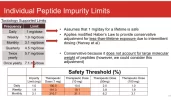
(note: where they say "high molecular weight peptides", that's essentially aggregates, which are not considered in this proposed impurity limit for reasons I mention below.)
There are ~20,000 FDA approved drugs, and only ~100 of those are peptide/protein based.
Its a very new category, relatively, with the understanding of their unique risks still evolving at a rapid pace, and new guidelines (mostly directed at pharma companies) from FDA and its European counterparts coming out every month.
One of the areas of intense focus is "impurities", a broad category that includes everything from the drug peptide "aggregating" into large particles, degraded forms of the peptide, but also "other" things, in effect, completely different unintended peptides resulting from manufacturing issues, poor storage, etc.
Unlike the impurities in UGL peptides, pharma must identify and ensure these impurities don't represent a significant risk. They must also be kept below a certain overall level. The increasing demands from drug regulators are placing an undue burden on manufacturers, who say the impurities in their products are characterized and well managed (not the random stuff in UGL), and therefore, a more reasonable level of impurities should be permitted.
Here's a presentation given by Eli Lily to USP, the standards setting body for pharma that the FDA bases their regulations on.
They suggest 1mg/day for peptides used daily is a reasonable limit for impurities, because statistically that wouldn't likely lead to problems over a lifetime.
Of course they have their own motivations, to keep costs down, so that's worth bearing in mind, but still the most comprehensive overview of the issue I've seen in one document.
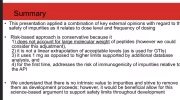
So far no word on whether USP (made up of volunteer scientists and engineers from the pharma industry) will adopt the Eli Lilly's recommendations.
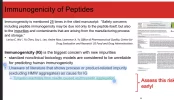
By the way, one threat to health, immunogenicity, is noted as only confirmed as being caused by large (HMW - high molecular weight) aggregates, and they assume those are "controlled by other processes" like proper excipients, PH of the reconstituted drug, proper storage etc. The impurity limit they refer to doesn't include aggregates, which have long been recognized to be a known health threat and pharma keeps to minimum by design. UGL does little/nothing to prevent aggregation, but large aggregates are easily removed by .2um filtration.
(note: where they say "high molecular weight peptides", that's essentially aggregates, which are not considered in this proposed impurity limit for reasons I mention below.)
There are ~20,000 FDA approved drugs, and only ~100 of those are peptide/protein based.
Its a very new category, relatively, with the understanding of their unique risks still evolving at a rapid pace, and new guidelines (mostly directed at pharma companies) from FDA and its European counterparts coming out every month.
One of the areas of intense focus is "impurities", a broad category that includes everything from the drug peptide "aggregating" into large particles, degraded forms of the peptide, but also "other" things, in effect, completely different unintended peptides resulting from manufacturing issues, poor storage, etc.
Unlike the impurities in UGL peptides, pharma must identify and ensure these impurities don't represent a significant risk. They must also be kept below a certain overall level. The increasing demands from drug regulators are placing an undue burden on manufacturers, who say the impurities in their products are characterized and well managed (not the random stuff in UGL), and therefore, a more reasonable level of impurities should be permitted.
Here's a presentation given by Eli Lily to USP, the standards setting body for pharma that the FDA bases their regulations on.
They suggest 1mg/day for peptides used daily is a reasonable limit for impurities, because statistically that wouldn't likely lead to problems over a lifetime.
Of course they have their own motivations, to keep costs down, so that's worth bearing in mind, but still the most comprehensive overview of the issue I've seen in one document.
So far no word on whether USP (made up of volunteer scientists and engineers from the pharma industry) will adopt the Eli Lilly's recommendations.
By the way, one threat to health, immunogenicity, is noted as only confirmed as being caused by large (HMW - high molecular weight) aggregates, and they assume those are "controlled by other processes" like proper excipients, PH of the reconstituted drug, proper storage etc. The impurity limit they refer to doesn't include aggregates, which have long been recognized to be a known health threat and pharma keeps to minimum by design. UGL does little/nothing to prevent aggregation, but large aggregates are easily removed by .2um filtration.
Last edited:


