

High hemoglobin -> aspirin?

Mads

Member
Hey fellas. I recently had my bloodwork done.
As a first, when I had my blood pressure drawn it was 111/71 which iv never had before. Im always around 130/75. Always had elevated BP. What could be the cause of this? No lifestyle changes.
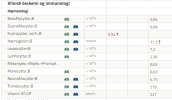
Secondly, my bloodwork looked all good, altho my hemoglobin (which has always been in the higher end) just recently exceeded the "regular" values.
(Regular 8,3-10.5) mine came out at 11,3. Usually around 10.
The doc told me not to worry about it. The cause is from slightly elevated erytrozites, red blood cells.
Also, it should be stated as of now im only on TRT, so it might further increase slightly if i were to go on a cycle at some point.

Would baby aspirin be ideal for a man in my situation, who seemingly have higher than average red blood cell count, to prevent clotts? I dont fully understand aspirin which is why im seeking advice.
Cheers
 

Attachments

  • blood.png
    blood.png
    42.4 KB · Views: 35
Hey fellas. I recently had my bloodwork done.
As a first, when I had my blood pressure drawn it was 111/71 which iv never had before. Im always around 130/75. Always had elevated BP. What could be the cause of this? No lifestyle changes.
Secondly, my bloodwork looked all good, altho my hemoglobin (which has always been in the higher end) just recently exceeded the "regular" values.
(Regular 8,3-10.5) mine came out at 11,3. Usually around 10.
The doc told me not to worry about it. The cause is from slightly elevated erytrozites, red blood cells.
Also, it should be stated as of now im only on TRT, so it might further increase slightly if i were to go on a cycle at some point.

Would baby aspirin be ideal for a man in my situation, who seemingly have higher than average red blood cell count, to prevent clotts? I dont fully understand aspirin which is why im seeking advice.
Cheers

Where is your serum TT, SHGB, Albumin? And the numbers you'll provide, are they peak or through and ofc, what is your pinning schedule and what test are you running? Not to mention other important serum values like iron panel, ...

Btw, you are basically B12 deficient.
 
Where is your serum TT, SHGB, Albumin? And the numbers you'll provide, are they peak or through and ofc, what is your pinning schedule and what test are you running? Not to mention other important serum values like iron panel, ...

Btw, you are basically B12 deficient.
I didnt get a hormonal panel.
220mg test ew
My iron was also within range. Always ben. Im not a red meat guy either.
B12 within range too
 
The doc told me not to worry about it. The cause is from slightly elevated erytrozites, red blood cells.

Why open a thread if doctor say itś OK ?

@Jin23

If Hema and Hemo are high, you can choose for blood-letting. No wheel of fortune needed.
 
The doc told me not to worry about it. The cause is from slightly elevated erytrozites, red blood cells.

Why open a thread if doctor say itś OK ?

@Jin23

If Hema and Hemo are high, you can choose for blood-letting. No wheel of fortune needed.
The medical philosophy in my country is very restrictive. They only offer aspirins to people with previous clotts. Not in a preventable manner
 
Do not get into taking aspirin daily - It's extremely bad for the stomach and also kidneys with it being an NSAID, it limits blood flow to them whilst it is active in the body - same with Ibuprofen.
 
Do not get into taking aspirin daily - It's extremely bad for the stomach and also kidneys with it being an NSAID, it limits blood flow to them whilst it is active in the body - same with Ibuprofen.
Thanks. This is exactly the kind of answer i needed. Thanks! :)
 
Thanks. This is exactly the kind of answer i needed. Thanks! :)
Nobody can stand in your shoes and determine whether the tradeoffs between efficacy and tolerability make sense for you to take it.

Here is what you need to actually know to do this balancing of interests for yourself:

Aspirin doses of 80 - 100 mg daily ("daily low dose Aspirin") broadly reduce cardiovascular disease risk rather than lowering HCT. It prevents clotting by inhibiting cyclooxygenase (COX) enzyme in thrombocyte (platelets), thereby ↓thrombotic but ↑bleeding risk. Daily, low dose Aspirin is not recommended by European Guidelines, that are known for risk averseness versus North American medical recommendations. There is a risk of rebound upon cessation/withdrawal if you are to stop the daily low dose Aprisin, in the form of an increased risk of a thrombotic event for weeks after Aspirin discontinuation.

The absolute risks of thromboembolic events are low for otherwise healthy men with mild erythrocytosis/polycythymia characteristic of TRT or AAS use. For normal men, the
while the relative risk seems tremendous in that for every 5% ↑ in haematocrit, there was a 33% ↑ in the probability for a venous thromboembolic event in men, adjusted for age, BMI, and smoking, the picture is quite different in terms of absolute risk.

In terms of absolute risk of a thromboembolic event in normal/healthy men with average haematocrit (43 - 46%), there is a 0.16% probability for such an event within 10 years (1.6 per 1,000 person-years). If haematocrit ↑ by 5%, that chance ↑ by 33% to 0.21% within the next 10 years (2.1 per 1,000 person-years).

All of this information comes from @PeterBond's Book on Steroids. It should be required reading for every AAS user in my view. I believe that it qualifies as light reading for an average university-educated person, and can be used a reference for all sorts of questions that arise on a daily basis on this forum.

While Aspirin on an empty stomach can hurt the stomach lining, besides that, daily low dose Aspirin is regarded as quite safe for the kidneys and liver. It actually enhances/increases bloodflow to the extremities, one important mechanism in its reduction of CVD risk.
 
Nobody can stand in your shoes and determine whether the tradeoffs between efficacy and tolerability make sense for you to take it.

Here is what you need to actually know to do this balancing of interests for yourself:

Aspirin doses of 80 - 100 mg daily ("daily low dose Aspirin") broadly reduce cardiovascular disease risk rather than lowering HCT. It prevents clotting by inhibiting cyclooxygenase (COX) enzyme in thrombocyte (platelets), thereby ↓thrombotic but ↑bleeding risk. Daily, low dose Aspirin is not recommended by European Guidelines, that are known for risk averseness versus North American medical recommendations. There is a risk of rebound upon cessation/withdrawal if you are to stop the daily low dose Aprisin, in the form of an increased risk of a thrombotic event for weeks after Aspirin discontinuation.

The absolute risks of thromboembolic events are low for otherwise healthy men with mild erythrocytosis/polycythymia characteristic of TRT or AAS use. For normal men, the
while the relative risk seems tremendous in that for every 5% ↑ in haematocrit, there was a 33% ↑ in the probability for a venous thromboembolic event in men, adjusted for age, BMI, and smoking, the picture is quite different in terms of absolute risk.

In terms of absolute risk of a thromboembolic event in normal/healthy men with average haematocrit (43 - 46%), there is a 0.16% probability for such an event within 10 years (1.6 per 1,000 person-years). If haematocrit ↑ by 5%, that chance ↑ by 33% to 0.21% within the next 10 years (2.1 per 1,000 person-years).

All of this information comes from @PeterBond's Book on Steroids. It should be required reading for every AAS user in my view. I believe that it qualifies as light reading for an average university-educated person, and can be used a reference for all sorts of questions that arise on a daily basis on this forum.

While Aspirin on an empty stomach can hurt the stomach lining, besides that, daily low dose Aspirin is regarded as quite safe for the kidneys and liver. It actually enhances/increases bloodflow to the extremities, one important mechanism in its reduction of CVD risk.
Golden reply! Thanks :)
 
Do not get into taking aspirin daily - It's extremely bad for the stomach and also kidneys with it being an NSAID, it limits blood flow to them whilst it is active in the body - same with Ibuprofen.
You are talking about high dose aspirin here not 50-80mg... show me the study where low dose aspirin impacts kidney function in people with normal functioning kidneys!
 
Back
Top